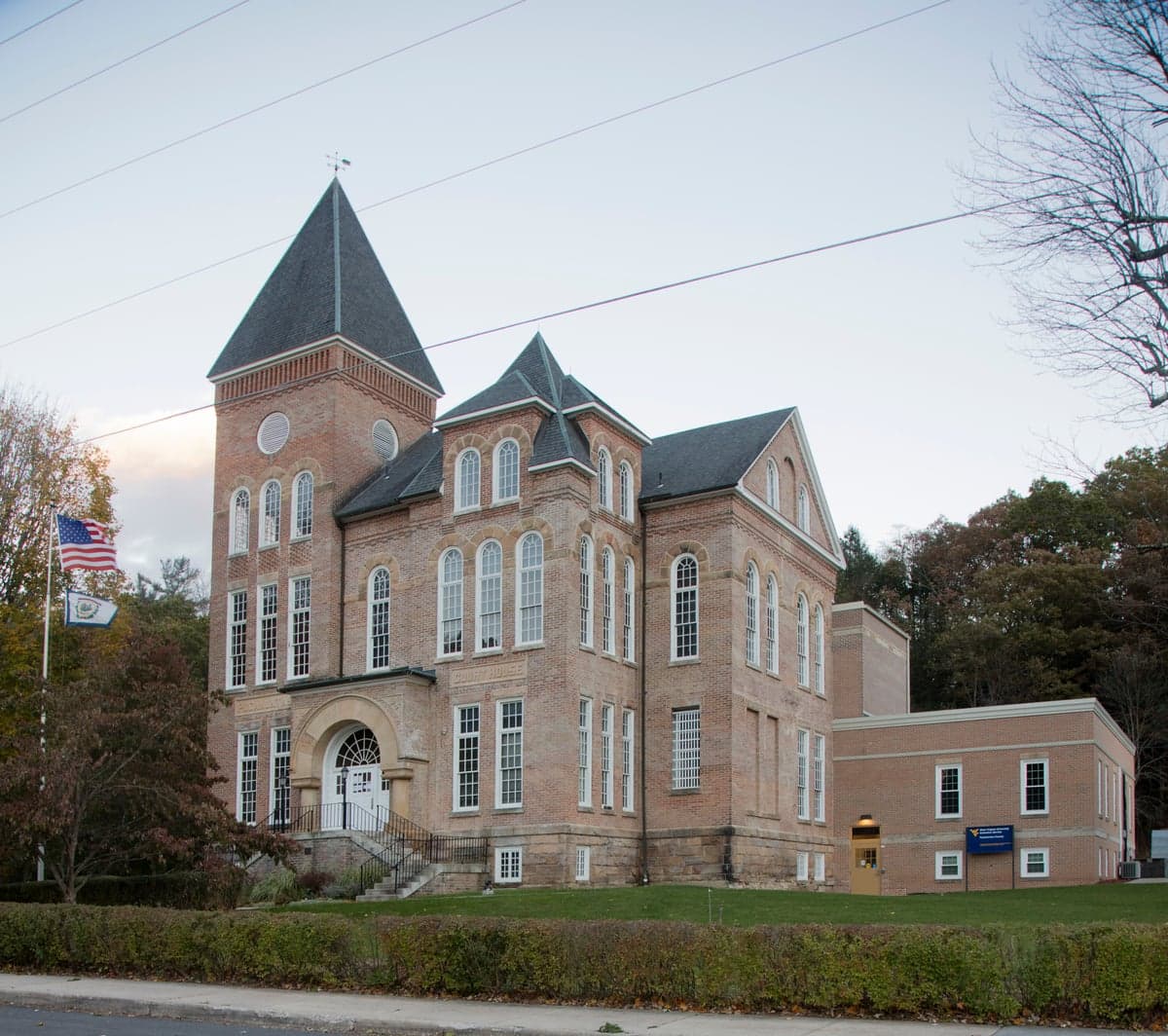
Photo: Wikipedia
Political ClimatePolitical Climate in Pocahontas County
Showing county-level results — no local-only data available.
Lean and PVI are calculated from this county’s 2020 and 2024 presidential results, Cook-style.
Political rankings in West Virginia
- Most Conservative Cities in West Virginia
- Most Liberal Cities in West Virginia
- Best Liberal-Leaning Towns in the South
- Best Liberal-Leaning Towns in Appalachia
- Safest Liberal-Leaning Towns in the South
- Safest Conservative-Leaning Towns in the South
- Affordable Small Towns for Conservatives
- Safest Conservative-Leaning Cities in the U.S.
- Most Conservative Counties in West Virginia
- Most Liberal Counties in West Virginia
Local Political AnalysisPolitical Analysis of Pocahontas County
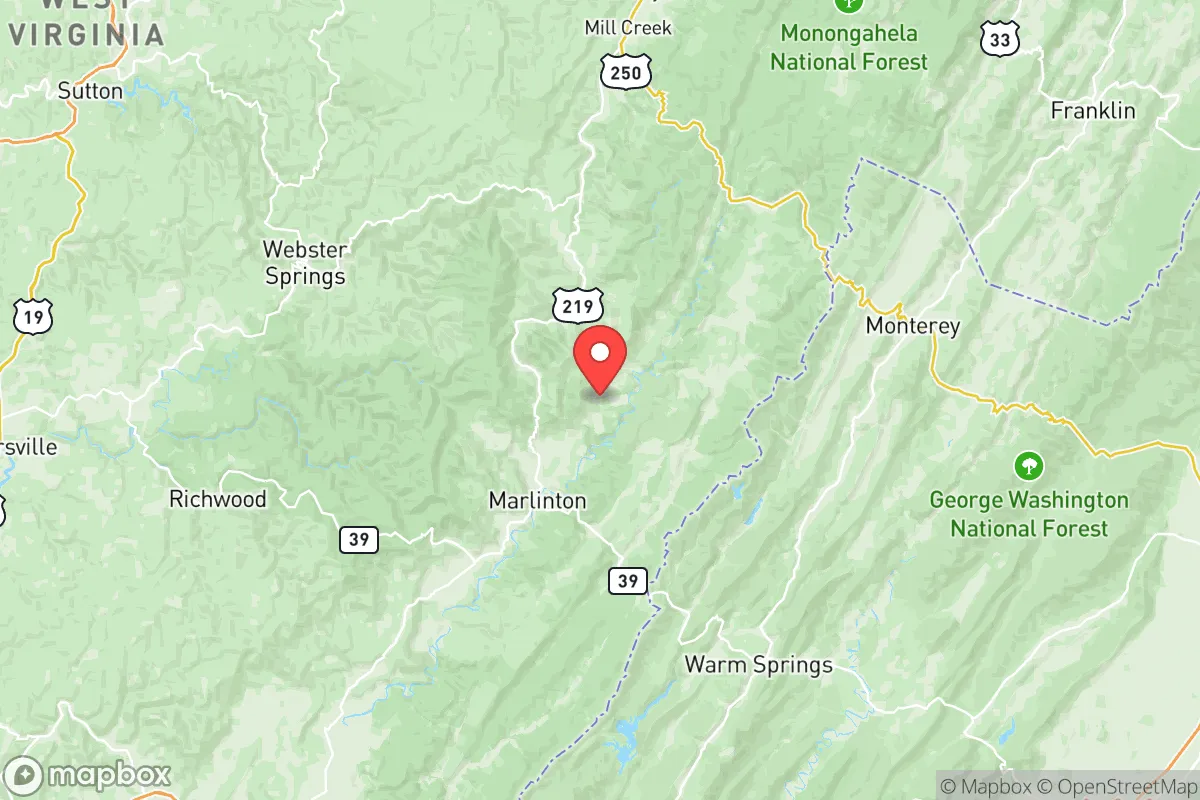
Pocahontas County is one of the most reliably Republican counties in West Virginia, carrying a Cook Partisan Voting Index of R+25. That puts it well to the right of the state as a whole, which has trended red for decades but still contains pockets of Democratic strength in the northern panhandle and coalfields. The county has voted for the GOP presidential candidate in every election since 2000, and the margin has only widened — Donald Trump carried it by over 40 points in both 2020 and 2024. But if you spend time in the county seat of Marlinton, you'll notice the politics aren't monolithic. The town itself, with its artsy Main Street and a smattering of second-home owners from D.C., tilts slightly more moderate than the surrounding countryside. Up in Snowshoe, the resort village leans noticeably left of the county average, driven by seasonal workers and out-of-state property owners. The real red meat is in the rural precincts like Hillsboro and Green Bank, where Trump routinely pulled 80% or more of the vote.
How it compares to West Virginia as a whole
West Virginia's statewide Cook PVI isn't officially calculated, but it's generally estimated around R+20 to R+22 based on recent presidential results. That means Pocahontas County is about 3-5 points more Republican than the state average — a meaningful gap. The difference comes down to demographics. Pocahontas has a higher share of native-born, non-college-educated residents than the state median, and it lacks the union-heavy industrial base that once made parts of the northern panhandle and Kanawha County competitive. The county also has a very small African American population (under 2%), which in West Virginia correlates with stronger GOP margins. On the other hand, the county's reliance on tourism and second-home development creates a small but visible liberal-leaning constituency in Snowshoe and along the Greenbrier River, something you don't see in deep-red counties like Mingo or McDowell. So while Pocahontas is redder than the state overall, its political texture is more varied than many of its neighbors.
What this means for residents
For conservative residents, the R+25 lean means their values are well-represented at every level of local government. The county commission, school board, and sheriff's office are all held by Republicans, and there's little appetite for progressive policy experiments. Tax levies for schools and infrastructure tend to pass, but only when they're framed as practical necessities rather than ideological projects. For liberal residents — and they do exist, especially around Snowshoe and in the artist community in Marlinton — the reality is more about finding your niche. You won't change the county's politics, but you can find like-minded people at the library, the farmers market, or the weekly contra dance. The county's small size (under 8,000 people) means personal relationships often transcend political labels. A liberal carpenter and a conservative hunting guide might disagree on national politics but work together on a trail maintenance project. That's the Pocahontas way.
Culturally, the county stands apart from the rest of West Virginia in a few notable ways. It's one of the few places in the state where the National Radio Quiet Zone imposes strict limits on cell service and Wi-Fi, which has attracted a community of tech-averse homesteaders and off-grid enthusiasts — a group that doesn't fit neatly into left-right boxes. The county also has a strong tradition of local environmental stewardship, with the Monongahela National Forest covering over half its land area. That creates occasional tension between property-rights advocates and conservationists, but the fights are usually local and pragmatic, not nationalized. If you're moving here, expect a place where the national political drama feels distant, and where your neighbors care more about whether you'll help with the haying than which cable news channel you watch.

State Political ClimatePolitical Climate in West Virginia
State Political AnalysisPolitical Environment in the State
West Virginia is one of the most reliably Republican states in the nation, with a partisan lean of roughly +40 points for the GOP in federal elections as of 2024. The state’s political transformation over the past 20 years has been dramatic: it voted for George W. Bush in 2000 and 2004, then flipped to Barack Obama in 2008, but by 2016 it had swung hard for Donald Trump and has only gotten redder since. Today, the dominant coalition is a mix of rural conservatives, former Democrats who shifted party allegiance over cultural and energy issues, and a growing number of out-of-state transplants drawn by low taxes and a slower pace of life. For a relocator, this means you’re moving into a place where conservative values are the default, but the flavor is more “populist” than “country club” — think strong support for gun rights, coal and gas, and local control, with a healthy skepticism of federal authority.
Urban vs. rural divide
The political map of West Virginia is starkly divided between a handful of small urban islands and a vast, deeply red rural landscape. The state’s largest city, Charleston, and its surrounding Kanawha County, lean Democratic — Charleston itself voted about 60% for Joe Biden in 2020, though the county as a whole went for Trump. Morgantown, home to West Virginia University, is another blue dot, with Monongalia County trending Democratic in recent cycles thanks to the student and academic population. Huntington and Cabell County are more purple, swinging between parties depending on the race. Outside these pockets, the rest of the state is overwhelmingly Republican. Berkeley County in the Eastern Panhandle, part of the DC exurbs, has become a GOP stronghold as commuters and retirees move in. Greenbrier County, home to the Greenbrier Resort, leans Republican but with a libertarian streak. The northern panhandle around Wheeling and Weirton, once solidly Democratic union territory, has flipped hard to the GOP over cultural and energy issues. The rural counties along the Ohio River and in the coalfields — places like Mingo, Logan, and McDowell — are now among the most Republican in the nation, often voting 80%+ for Trump. For a new resident, this means your political experience will vary dramatically depending on where you settle: Morgantown and Charleston offer a more mixed environment, while most other places are deeply conservative.
Policy environment
West Virginia’s policy environment is aggressively conservative, shaped by a Republican supermajority in the legislature and a GOP governor (Jim Justice, who switched parties in 2017). The state has no personal income tax on most wages — it was phased out in 2023, dropping from a top rate of 6.5% to zero over four years. Property taxes are among the lowest in the nation, capped by the state constitution at 1% of assessed value for most property. Sales tax is 6%, with no local add-ons. The regulatory posture is business-friendly, especially for energy extraction: coal, natural gas, and timber industries face minimal hurdles. Education policy has shifted toward school choice, with the 2021 creation of the Hope Scholarship program, which gives families about $4,600 per child to use on private school or homeschooling. Healthcare is a mixed bag: the state expanded Medicaid under the Affordable Care Act, but the legislature has resisted further expansion of government-run options. Election laws are restrictive by national standards — voter ID is required, early voting is limited to 10 days, and no-excuse absentee voting was ended in 2021. Abortion is banned after fetal cardiac activity is detected (around 6 weeks), with no exceptions for rape or incest, only for medical emergencies. For a conservative relocator, this is a very friendly policy environment; for a liberal one, it will feel like a constant uphill battle.
Recent policy direction
Over the past five years, West Virginia has moved decisively to the right on nearly every front. In 2021, the legislature passed the Second Amendment Preservation Act, which prohibits state enforcement of any future federal gun bans or registration schemes — a direct challenge to federal authority. In 2023, it enacted constitutional carry, allowing anyone 21 or older to carry a concealed firearm without a permit. On education, the 2021 Hope Scholarship law was followed by a 2023 expansion that made nearly all students eligible, and the state has banned critical race theory and divisive concepts in public schools. On parental rights, a 2023 law requires schools to notify parents of any changes to a child’s mental or physical health, effectively mandating parental consent for gender-related care. On property rights, the state has strengthened eminent domain protections for landowners. On voting, the 2021 Voter ID Act tightened requirements, and the state purged inactive voters from rolls. On medical freedom, West Virginia banned gender-affirming care for minors in 2023 and has resisted vaccine mandates. On taxes, the elimination of the income tax was the signature achievement of Governor Justice’s second term. The overall direction is toward maximum individual liberty in areas like guns, education, and property, combined with strict government control on social issues like abortion and gender. A relocator should expect this trajectory to continue, with further school choice expansion and potential further tax cuts.
Civil unrest & political movements
West Virginia has a long history of labor activism, but in recent years, political movements have shifted to the right. The 2018 teachers’ strike was a major flashpoint — it shut down schools across the state for nine days and led to a 5% pay raise, but it also galvanized conservative backlash against union power. Since then, the state has passed right-to-work laws and weakened public-sector unions. The “Take Back West Virginia” movement, a conservative grassroots effort, has successfully pushed for school choice and gun rights. Immigration politics are less visible here than in border states — the foreign-born population is under 2% — but there is strong support for border security and opposition to sanctuary policies. No West Virginia city has declared itself a sanctuary, and the legislature has banned such policies. Election integrity controversies flared after 2020, with the state GOP pushing for audits and tighter laws, though no widespread fraud was found. The Mountain State has seen occasional protests over natural gas pipelines and mountaintop removal mining, but these are small and localized. For a new resident, the political atmosphere is generally calm — protests are rare, and most political activity happens at the ballot box or in local party meetings. The most visible flashpoint is likely to be the annual West Virginia State Fair in Lewisburg, where political booths and rallies draw crowds.
Projection
Over the next 5-10 years, West Virginia is likely to become even more Republican, driven by two trends: out-migration of younger, more liberal residents to cities like Charlotte and Columbus, and in-migration of conservative retirees and remote workers from high-tax states like California, New York, and Virginia. The Eastern Panhandle, particularly Berkeley and Jefferson counties, will continue to grow as DC-area commuters and telecommuters move in, reinforcing the GOP majority. The coalfields will continue to depopulate, reducing the influence of the old Democratic machine. The state’s demographic profile — older, whiter, and more rural than the national average — will keep it solidly red. However, there are potential wild cards: if the state’s opioid crisis worsens or if the coal industry collapses faster than expected, economic desperation could fuel populist backlash against the GOP establishment. For now, the most likely scenario is a continuation of the current trajectory: lower taxes, more school choice, stricter social policies, and a political culture that is deeply skeptical of federal authority. A relocator moving in now should expect to find a state that is stable, predictable, and conservative — but also one that is aging and struggling economically, with limited opportunities outside of energy, healthcare, and government.
For a new resident, the bottom line is this: if you’re a conservative looking for low taxes, strong gun rights, and a community that shares your values, West Virginia is a great fit. If you’re a liberal, you’ll find yourself in a clear minority, especially outside of Morgantown and Charleston. The state’s political climate is not hostile — people are generally polite and neighborly — but the policy environment is unapologetically right-wing. Your daily life will be shaped by low costs, limited government services, and a culture that prizes self-reliance. Just be prepared for a slower pace, fewer amenities, and a political conversation that revolves around energy, education, and the federal government’s overreach. It’s a place where your vote counts heavily in the GOP primary, but not much in the general election — and that’s exactly how most residents like it.
* Values derived from national, state, county, city and local statistics and may differ in a specific area. Last updated: 2026-11-11T23:11:40.000Z
Narrative content on this page is AI-generated and may contain mistakes. Verify any details that matter before acting on them.
ReloMaps may earn a commission from affiliate links at no extra cost to you.

