
Photo: Wikipedia
Personal Sovereignty in Pocahontas County
Viable for self-reliance. Generally workable, though some barriers may limit total independence.
What does Personal Sovereignty tell us?
Personal Sovereignty measures your capacity for self-reliance and independence with minimal government friction. Higher scores mean fewer barriers between you and the way you want to live... but it assumes you have the space you need and good neighbors.
What does this tell us?
Personal Sovereignty measures your capacity for self-reliance and independence with minimal government friction. Higher scores mean fewer barriers between you and the way you want to live... but it assumes you have the space you need and good neighbors.
State Policy
Energy independence: Net exporter (754% of energy produced in-state)
Personal Liberty
Homesteading

Personal Liberty Analysis
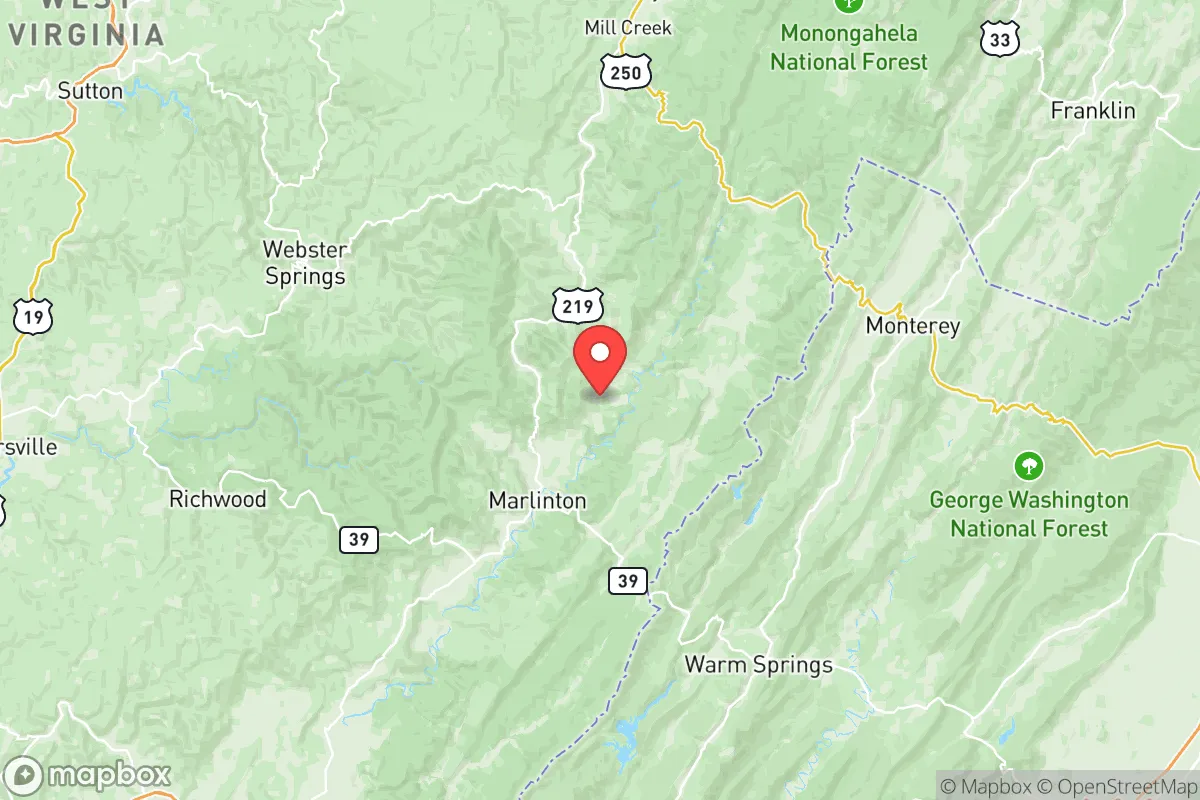
Pocahontas County, West Virginia, offers one of the strongest personal sovereignty environments in the eastern United States, combining a deeply rural, low-regulation culture with state-level protections for gun rights, medical autonomy, and property freedom. Unlike more populated areas of the Mountain State, this county’s remote geography and small population—roughly 8,000 residents—create a de facto autonomy that few places can match. For individuals and families prioritizing independence, the trade-off is clear: maximum personal freedom in exchange for minimal services and infrastructure.
Tax burden and regulatory posture in Pocahontas County
West Virginia’s state-level tax structure is moderate compared to neighboring states, but Pocahontas County’s local implementation keeps the overall burden light. The state income tax is a flat 5.12% as of 2026, with no local income tax added. Property taxes in the county are among the lowest in the nation, with effective rates typically below 0.6% of assessed value, thanks to the state’s classification system that caps residential rates. Sales tax is 7%, but the county’s lack of major retail means most residents buy essentials elsewhere or online. Regulatory posture is notably hands-off: the county has no countywide zoning ordinance, leaving land use decisions almost entirely to property owners. Towns like Marlinton and Durbin have minimal municipal codes, primarily focused on basic health and safety. The county commission does not impose business licensing beyond state requirements, making it straightforward to start a home-based enterprise. This light regulatory touch extends to building permits—only required for new structures in floodplains or near public roads—so adding a workshop, barn, or tiny home on your own land is largely unrestricted.
Self-defense and gun law specifics in a rural mountain county
Pocahontas County sits in a state with some of the most permissive firearm laws in the country. West Virginia is a constitutional carry state, meaning no permit is required to carry a concealed firearm for anyone legally allowed to possess one. The county sheriff’s office issues permits for those who want reciprocity with other states, but the process is straightforward and typically completed within days. There are no county-level restrictions on magazine capacity, firearm types, or ammunition. Open carry is legal without a permit, and the county’s culture strongly supports armed self-defense—many residents carry daily, especially in remote areas like Snowshoe and Green Bank where law enforcement response times can exceed 30 minutes. Stand-your-ground laws apply statewide, with no duty to retreat in any place where the individual is lawfully present. The county has no firearm-specific ordinances, and the sheriff’s office publicly supports Second Amendment rights. For hunters, the county’s vast national forest and state park lands offer abundant public hunting access, with no additional county permits beyond state licenses.
Self-reliance and homesteading viability across the county
Pocahontas County is one of the most viable locations in the eastern U.S. for off-grid living and homesteading. The absence of countywide zoning means you can build a cabin, install solar panels, dig a well, and set up a composting toilet on your own land without bureaucratic hurdles. Lot sizes vary widely: parcels under 2 acres are common near Marlinton, while Hillsboro and Bartow offer larger tracts of 10 to 100 acres at prices often below $2,000 per acre. Off-grid feasibility is high—the county has no mandate to connect to utility grids, and many residents rely on solar, propane, and wood heat. Water rights are favorable: landowners can drill wells without a permit for domestic use, and rainwater collection is unrestricted. The county’s agricultural extension office supports small-scale farming, and the local farmers market in Marlinton provides a sales outlet. However, the growing season is short (zone 5b/6a), and soil quality varies, so serious homesteaders should plan for raised beds or greenhouses. The Green Bank area, home to the National Radio Quiet Zone, has unique restrictions on certain electronic devices and solar inverter types, but these are manageable for most off-grid setups. Overall, the county’s regulatory environment makes it easier to achieve self-reliance here than in almost any other part of the eastern seaboard.
Personal liberties: parental rights, medical autonomy, and property freedom
West Virginia law provides strong protections for parental rights in education and healthcare. Parents can opt their children out of any public school curriculum or activity without penalty, and the state’s homeschool laws are among the most lenient in the nation—no notification, testing, or curriculum approval is required. The county has a robust homeschool community, particularly in the Marlinton and Hillsboro areas, with co-ops and support groups. Medical autonomy is protected by state law allowing direct primary care agreements and out-of-network healthcare choices. The county has no hospital—the nearest is in Elkins, 45 minutes north—so residents often rely on telemedicine or travel for care. Vaccine mandates are not enforced at the county level, and the sheriff’s office has stated it will not enforce federal health orders. Property rights are strongly protected: eminent domain is rarely used, and the county assessor’s office is responsive to property owner concerns. Free speech is robust, with no local noise or signage ordinances that restrict political expression. The county’s small population means that community reputation matters more than formal regulation—disputes are often resolved informally rather than through litigation.
Compared to other rural counties in the eastern U.S., Pocahontas County stands out for its combination of low taxes, minimal regulation, strong gun rights, and genuine off-grid viability. While the trade-offs include limited healthcare access, a short growing season, and few employment opportunities, the sovereignty environment here is among the most permissive in the region. For a family or individual who values personal autonomy above convenience, this county offers a level of freedom that is increasingly rare in the 21st-century United States.

* Values derived from national, state, county, city and local statistics and may differ in a specific area. Last updated: 2026-11-11T23:11:40.000Z
Narrative content on this page is AI-generated and may contain mistakes. Verify any details that matter before acting on them.
ReloMaps may earn a commission from affiliate links at no extra cost to you.

