Political ClimatePolitical Climate in Mcdowell County
Showing district-level results — no local-only data available.
Local Political AnalysisPolitical Analysis of Mcdowell County
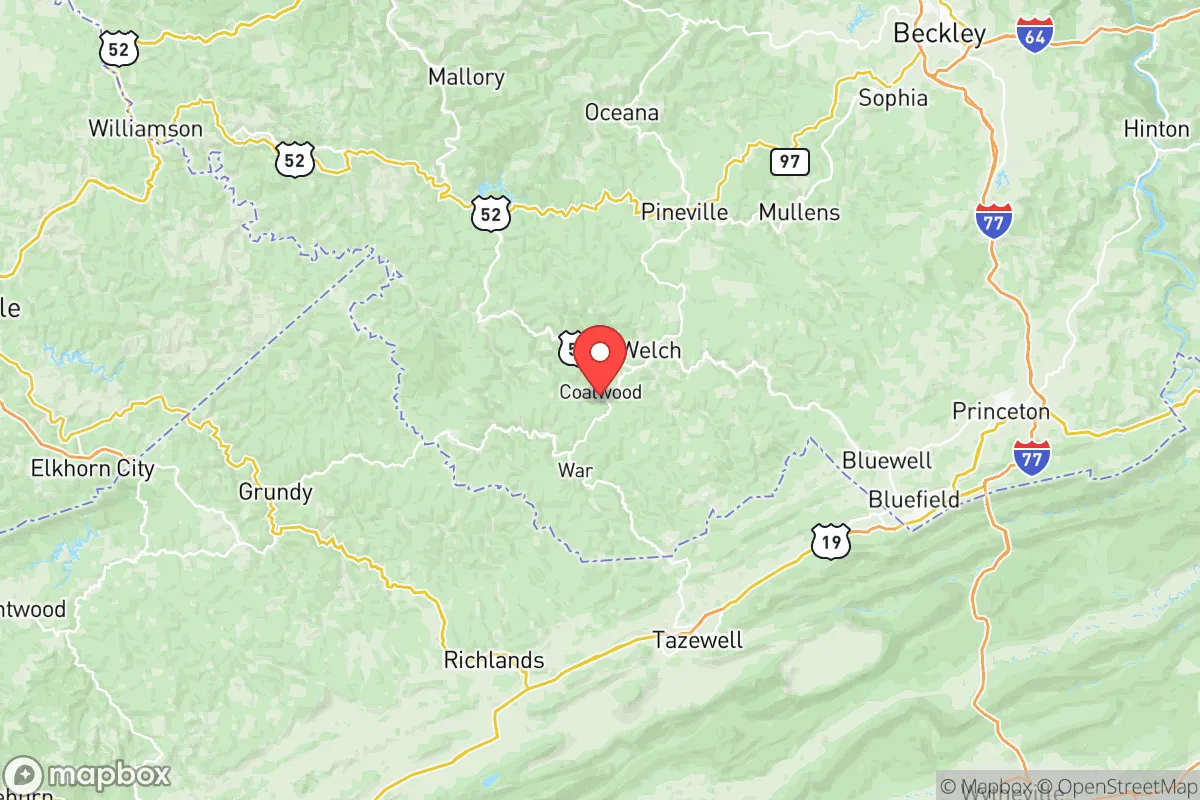
McDowell County, West Virginia, is one of the most reliably Republican counties in the entire state, with a Cook Partisan Voting Index (PVI) of R+22. That’s a hair more conservative than West Virginia’s overall R+21 rating, but the real story is how deeply entrenched that red lean has become over the past two decades. The county hasn’t voted for a Democratic presidential candidate since 1996, and in 2024, Donald Trump carried it by a margin north of 70 points. But if you talk to folks who’ve been here a while, they’ll tell you it wasn’t always this way — and that the shift tells you a lot about what’s happened to the region.
How it compares
McDowell County’s R+22 PVI puts it in the same ballpark as the state’s R+21, but the comparison masks a sharper local reality. The county is actually more Republican than the state average in presidential elections, often running 5–10 points redder than West Virginia as a whole. That’s a dramatic reversal from the 1970s and 80s, when McDowell was a Democratic stronghold thanks to unionized coal miners. Today, the only precincts that occasionally lean blue are in the county seat of Welch and the small town of Kimball, where a handful of older, union-tied voters still pull the lever for Democrats. Meanwhile, the rural precincts around Gary, Iaeger, and Northfork are deep red — often voting 85%+ Republican. The swing precincts, if you can call them that, are in War and Anawalt, where a mix of retired miners and younger service workers can shift the margin by 5–10 points depending on the down-ballot race. But even there, the trend is steadily rightward.
What this means for residents
For conservative residents, the political climate is comfortable and affirming. Local offices — from the county commission to the school board — are almost entirely held by Republicans, and conservative values around gun rights, energy development, and limited government dominate public discourse. For liberal residents, it can feel isolating. There’s no organized Democratic Party presence to speak of, and progressive viewpoints are rarely voiced in public meetings or local media. That said, the county’s politics are less about culture-war battles and more about economic survival and coal-country identity. Most folks, regardless of party, agree on the need for jobs, better roads, and keeping the hospital in Welch open. The real divide isn’t left vs. right — it’s between those who see coal’s decline as a tragedy and those who see it as an inevitable shift that requires new thinking.
One cultural distinction that sets McDowell apart from the rest of West Virginia is its deeply rooted African American community, a legacy of the coal boom when Black miners came from the Deep South. That history gives the county a slightly more diverse political conversation than you’d find in, say, Mingo or Wyoming counties. But even that diversity is fading — the Black population has shrunk from 30% in 1950 to under 10% today, and with it, the last vestiges of a once-competitive two-party system. Looking ahead, expect McDowell to stay R+22 or even nudge redder as older Democratic-leaning voters pass on and younger residents, raised in a solidly Republican environment, take their place. The only wildcard is if a major economic shift — like a new industrial park or a big infrastructure project — brings in new residents from outside the region. Until then, the county’s politics are as stable as its coal seams: deep, dark, and unlikely to change anytime soon.

State Political ClimatePolitical Climate in West Virginia
State Political AnalysisPolitical Environment in the State
West Virginia is politically one of the most reliably Republican states in the country, with a Cook PVI of R+21 and a trajectory that has shifted sharply rightward over the past two decades. As recently as 2000, the state was a classic Democratic stronghold — it voted for Al Gore and had a Democratic-dominated legislature — but the collapse of the coal economy and a cultural realignment drove blue-collar voters away from the national Democratic Party. Today, Republicans hold a supermajority in the state House and Senate, all three U.S. House seats, and every statewide executive office except the Attorney General. The shift is so complete that even the once-reliable Democratic strongholds like Morgantown and Charleston are now only competitive at the local level; statewide races are effectively decided in the GOP primary.
Urban vs. rural divide
The political map is starkly divided between a handful of small urban centers and the vast rural and small-town rest of the state. The only reliably blue metro area is Morgantown, home to West Virginia University; Monongalia County voted for Joe Biden in 2020 and is a pocket of progressive activism, particularly around environmental and LGBTQ issues. Charleston, the capital, swings but leans slightly Democratic in local races — Kanawha County voted narrowly for Biden. By contrast, the rural southern coalfields and the eastern panhandle are deeply red. Huntington (Cabell County) has shifted rightward rapidly, voting for Trump by 20+ points in 2020 after being a swing county in the 1990s. Martinsburg and Berkeley County in the Eastern Panhandle are now solidly Republican, driven by an influx of former Washington D.C. area conservatives seeking lower taxes and more space. The western counties along the Ohio River, like Parkersburg and Wheeling, are reliably red but with a strong independent streak — voters there still split tickets for moderate Democrats at the local level. What unites these places is a shared skepticism of federal authority and a culture of self-reliance that cuts across party lines.
Policy environment
West Virginia's policy landscape is unambiguously conservative. The state has no income tax on Social Security benefits, a flat 4.12% personal income tax rate (down from 6.5% in recent reforms), and a property tax structure that heavily caps levies for owner-occupied homes — the effective property tax rate is one of the lowest in the nation. The regulatory climate is business-friendly: the state is a right-to-work state, has no state-level minimum wage above the federal $7.25, and has aggressively courted natural gas and chemical industries. Education policy has shifted sharply toward school choice: in 2021, West Virginia became the first state to pass a universal school choice program (the Hope Scholarship), which initially was blocked by courts but now provides state-funded education savings accounts to any public school student, with a value of roughly $4,400 per child. Healthcare is a mixed bag: the state expanded Medicaid under the Affordable Care Act, but the legislature has resisted further expansion of public options and restricts abortion — a near-total ban (with exceptions for rape, incest, and life of the mother) was enacted in 2022 following the Dobbs decision. Election law in West Virginia is among the least restrictive in the country for voters: there is no voter ID requirement (a rarity in red states), same-day registration is available, and absentee voting is permitted without an excuse. The state also has strong ballot-access laws for third parties, which has allowed the Libertarian and Constitution parties to appear regularly on statewide ballots.
Recent policy direction
The last five years have seen a cascade of conservative legislation that points in a clear libertarian-leaning direction on some fronts and a socially conservative one on others. On gun and self-defense law, West Virginia became a constitutional carry state in 2016 (no permit required to carry concealed firearms) and passed a "Stand Your Ground" law in 2018. The state also passed laws in 2021 prohibiting the enforcement of federal gun laws that conflict with state law — a form of nullification that has not been challenged in court. On parental and education rights, the 2021 Hope Scholarship and subsequent expansions have made West Virginia a national leader in school choice. The legislature also passed a ban on teaching "divisive concepts" related to race and sex in public schools (2021) and required schools to adopt policies on transgender student participation in sports (2021). On speech and privacy, the state has relatively weak privacy laws — no comprehensive data privacy act — but has passed a ban on mandatory COVID-19 vaccines for employees (2022) and prohibits businesses from requiring vaccine passports. On medical and bodily autonomy, abortion is banned except in very narrow exceptions, but the state has legalized medical cannabis (though the program has been slow to roll out) and does not have any specific restrictions on gender-affirming care for adults — the debate has largely focused on minors, where the legislature has considered but not passed a ban as of 2024. On property rights, West Virginia has strong eminent domain protections and requires a supermajority legislative vote for any state-funded land acquisition. On taxation, the trend is toward elimination of the personal income tax entirely: Governor Jim Justice has proposed a path to zero, and the legislature has repeatedly cut rates. On voting and ballot access, as noted, the state remains relatively open — no voter ID, same-day registration, and generous absentee voting — which is somewhat atypical for a deep-red state. The overall policy direction is toward smaller government at the state level, particularly on taxes and guns, with more government intervention on social and cultural issues.
Civil unrest & political movements
West Virginia has a notable history of labor and political activism that remains alive today, though the targets have shifted. The most significant recent flashpoint was the 2018 statewide teachers' strike, which shut down every public school in the state for nine days and led to a 5% pay raise. This strike, which was organized without union leadership (West Virginia is a right-to-work state with weak public-sector unions), was a genuinely cross-partisan movement — rural conservative teachers walked alongside urban liberals. Since then, the state has seen periodic protests over coal mine closures and environmental regulations, particularly in southern counties like Boone and Mingo. On the right, the Patriot movement and constitutional sheriffs have a visible presence, particularly in the eastern panhandle and along the Ohio River. There have been several confrontations between local sheriffs and federal firearms rule enforcement; in 2020, sheriffs in Hampshire and Berkeley counties issued statements refusing to enforce any new federal gun laws. Immigration politics are almost entirely symbolic — West Virginia has one of the smallest foreign-born populations in the country (under 2%), but the legislature has passed anti-sanctuary city laws and resolutions supporting border security. Election integrity has not been a major controversy; the 2020 election results were accepted by state officials, and no high-profile audits were demanded. The state does have a small but vocal secession movement — mostly symbolic — advocating for West Virginia to join the "Free West Virginia" project that explores withdrawing from the United States, though this has no serious political traction. New residents will notice that political signs and bumper stickers are common and often aggressive — this is a state where people wear their politics visibly, but it's also a state where a Trump flag and a union sticker can sit on the same truck without cognitive dissonance.
Projection
Over the next five to ten years, expect West Virginia to become more Republican, not less. The state is one of the oldest in the country by median age (over 43), and its small population is declining overall except in the eastern panhandle, which is growing with ex-DC conservative refugees. The in-migration pattern favors the right — people moving to Jefferson County or Parkersburg from elsewhere are often seeking lower taxes and fewer regulations. Meanwhile, the younger residents who lean left — particularly in Morgantown and Charleston — tend to leave for bigger cities after college. This demographic loss means even Morgantown could shift redder over time as retiring boomers move in. Climate change and the green energy transition will continue to hammer the coal economy, but that hasn't yet pushed voters back to Democrats — instead, it has fueled resentment against federal environmental policy, which the GOP capitalizes on. The most likely realistic scenario in a decade: unified Republican control with supermajorities, continued elimination of the income tax (possibly phased out entirely by 2030), further school choice expansion, and a gun-rights and social policy landscape that is among the most conservative in the country. There is no real prospect of a Democratic comeback at the statewide level — the party has essentially collapsed outside of a few city council races. New residents moving in now should expect a state that is deeply conservative and becoming more so, but with a distinct West Virginia flavor: it's a conservatism that mixes libertarian instincts on guns and taxes with populist anger at big business and government, not the managerial conservatism of the suburbs.
For anyone considering a move to West Virginia, the practical takeaway is straightforward: if you are conservative, you will find a state government that reflects your views on virtually every major issue, from guns to taxes to education. If you are liberal, you will find yourself in a clear minority, but the state's small size means you can still carve out a community — particularly in Morgantown or the more diverse parts of Charleston — and the state's history of labor solidarity and populism ensures that even conservative neighbors can often be reasonable on economic issues. The cost is the lack of cultural amenities, limited healthcare infrastructure outside of the main cities, and a stagnating population that the state's politics have not yet reversed. The biggest unknown is demographic: if the state finds a way to attract younger families (as the tax cuts and school choice programs are designed to do), the political character could shift again — but for now, the direction is a deepening shade of red.
* Values derived from national, state, county, city and local statistics and may differ in a specific area. Last updated: 2026-06-29T03:23:13.000Z
Narrative content on this page is AI-generated and may contain mistakes. Verify any details that matter before acting on them.
ReloMaps may earn a commission from affiliate links at no extra cost to you.

