Quality of Life in Mcdowell County
A livable area that tracks near national norms for affordability, walkability, and neighborhood health.
What does Quality of Life tell us?
Quality of Life measures an area by evaluating factors like cost of living, nearby amenities, country club access, airport proximity, socioeconomic signals and neighborhood character. For large states, this is a general average — quality of life can vary dramatically between metro areas, suburbs, and rural communities within the same state.
What does this tell us?
Quality of Life measures an area by evaluating factors like cost of living, nearby amenities, country club access, airport proximity, socioeconomic signals and neighborhood character. For large states, this is a general average — quality of life can vary dramatically between metro areas, suburbs, and rural communities within the same state.
Cost of Living
58% below national average
116%
The Real Cost of Living in Mcdowell County for 2026
| Tier | Individual | Family (4) |
|---|---|---|
| Survival | $11k | $21k |
| Comfortable | $18k | $26k |
| Luxury | $54k+ | $84k+ |
| Elite (Top 5%) | $67k+ | $104k+ |
Quality-of-Life Analysis
McDowell County, West Virginia, offers a quality-of-life spectrum that ranges from the small-town conveniences of its largest community, Welch, to the deep isolation of its remote coal-camp hollows, all within a county where the cost of living sits at a striking 42 on the COL index (100 = US average). The county’s character is defined by its rugged Appalachian topography and a legacy of coal mining, attracting people who value extreme affordability, quiet privacy, and a strong sense of place over urban amenities. Different parts of the county serve different lifestyles: the town of Welch provides a modest hub of services, while unincorporated communities like Kimball, Iaeger, and Anawalt offer a quieter, more rural existence, and the far-flung hollows along the Tug Fork River appeal to those seeking near-total seclusion.
Largest town(s) & population centers
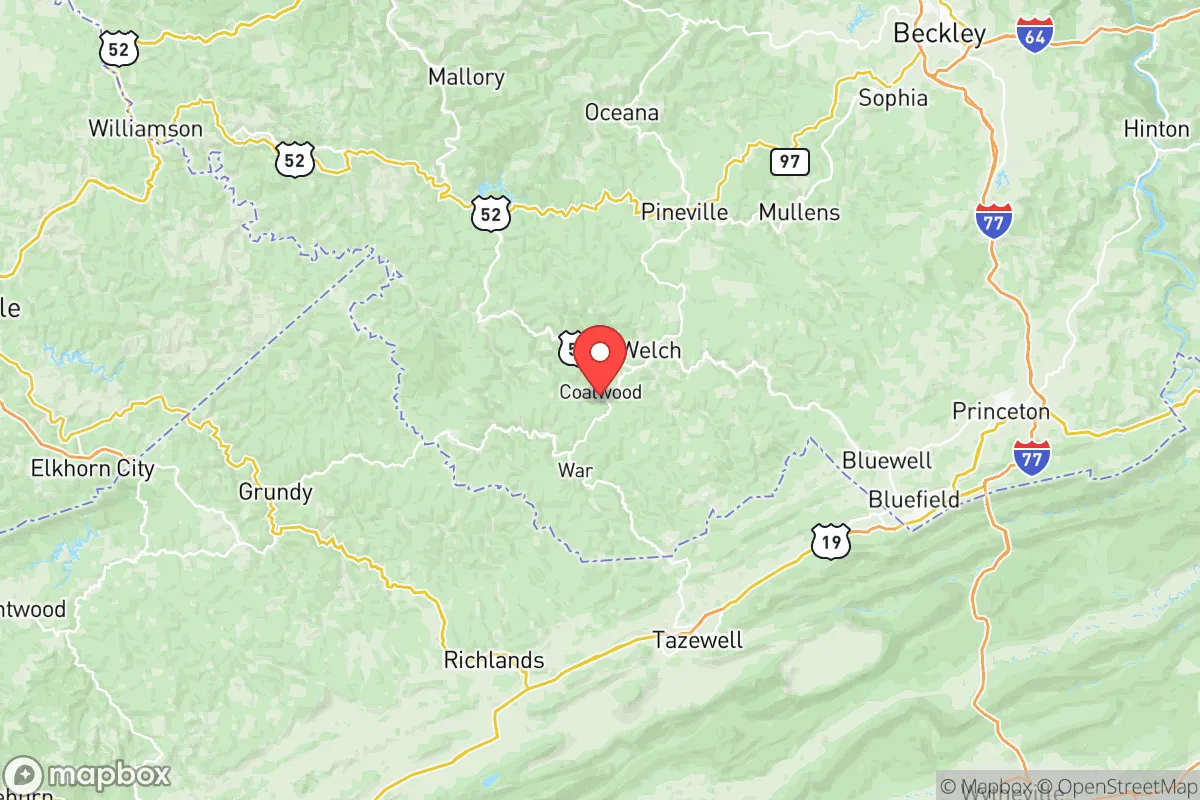
Welch, the county seat and largest town, is the primary population center and the closest thing McDowell County has to an urban core. Daily life here revolves around the courthouse, a few local restaurants, and essential services like the Walmart and Food City. The town’s historic downtown, with its early 20th-century architecture, is quiet but functional, and the nearby Welch Community Hospital provides critical healthcare access for the entire county. With a median home value of just $49,200 and median rent at $686, housing in Welch is among the most affordable in the nation, drawing retirees on fixed incomes and remote workers who can tolerate the average commute of 34.8 minutes to jobs in Welch or neighboring counties. The town also hosts the annual McDowell County Fair and the historic Welch Theatre, offering limited but cherished community gathering spots. For families, the McDowell County School system is centered here, though many residents commute to Bluefield or Princeton for higher-paying employment.
Smaller towns & rural pockets
Beyond Welch, the county is dotted with smaller towns and unincorporated communities that each have distinct identities. Kimball, just north of Welch, is known for the Kimball War Memorial Building and a tight-knit residential feel, with many homes dating to the coal boom. Iaeger, along the Tug Fork River, is a classic Appalachian coal town with a population under 300, where life is centered on the post office, a few churches, and the surrounding forest. Anawalt and Northfork are even smaller, with populations below 200, offering extreme quiet and minimal traffic. The unincorporated areas of Bradshaw and War (pronounced “Wor”) are deeply rural, with homes tucked into narrow valleys and hollows where residents often rely on gravel roads and well water. These areas attract hunters, off-grid enthusiasts, and those seeking land for under $10,000 per acre, but they come with trade-offs: limited cell service, few retail options, and a long drive to the nearest grocery store in Welch or Bluefield.
Cost & lifestyle range
The cost of living varies noticeably across McDowell County, though it remains exceptionally low by national standards. At the lower end, homes in communities like Anawalt and Bradshaw can be found for under $30,000, with some fixer-uppers selling for as little as $15,000. Rent in these areas often falls below $500 per month, reflecting the limited demand and aging housing stock. At the higher end, Welch and the Big Creek area near the county’s eastern edge see median home values closer to $60,000–$70,000, with newer or renovated properties occasionally reaching $100,000. The lifestyle range is equally broad: in Welch, residents have access to a pharmacy, a hardware store, and a handful of dining options, while in Iaeger or Northfork, the nearest Walmart is a 20–30 minute drive. For outdoor recreation, the entire county offers access to the Pocahontas Trail and the Bluestone National Scenic River, but amenities like gyms, movie theaters, or specialty shopping are nonexistent outside Welch. The average commute of 34.8 minutes reflects the reality that many residents drive to jobs in Mercer County (Bluefield) or even into Virginia, trading time for the county’s low housing costs and quiet lifestyle.
Who thrives in McDowell County? The county is best suited for those who prioritize extreme affordability, privacy, and a slower pace of life over job variety, nightlife, or modern conveniences. Retirees on fixed incomes, remote workers with reliable internet (available in Welch and some surrounding areas), and outdoor enthusiasts who hunt, fish, or hike find the county’s low cost of living and vast public lands appealing. Families should weigh the limited school resources and long commutes, while those seeking a vibrant social scene or diverse employment will likely find the county too isolated. For the right person, McDowell County offers a rare chance to own a home outright and live debt-free in a landscape of striking natural beauty, but it demands self-reliance and a tolerance for the trade-offs of rural Appalachian life.

Crime in Mcdowell County
Generally safer than 68% of comparable U.S. locations.
Violent CrimeViolent Crime Analysis
Property CrimeProperty Crime Analysis
Crime Analysis
McDowell County, West Virginia, presents a mixed safety picture that is heavily shaped by its rural, post-industrial character and the economic challenges that followed the decline of the coal industry. With a violent crime rate of 227.7 per 100,000 residents and a property crime rate of 941 per 100,000, the county is not among the most dangerous in the state, but specific communities within it experience noticeably higher risks, particularly related to drug-related offenses and property theft. Understanding where these incidents concentrate—and how the local justice system responds—is critical for anyone considering a move to this remote corner of southern West Virginia.
Crime in context
McDowell County’s violent crime rate of 227.7 per 100,000 is roughly 35% lower than the national average of about 380 per 100,000, but it sits slightly above the West Virginia state average of approximately 210 per 100,000. The property crime rate of 941 per 100,000 is well below the national average of roughly 1,950 per 100,000, though it is slightly elevated compared to the state average of around 900 per 100,000. These figures place McDowell in a middle tier among West Virginia’s 55 counties—safer than higher-crime areas like Kanawha County (home to Charleston) or Berkeley County, but riskier than many of the state’s more remote, low-population counties. The county’s crime is heavily driven by drug-related activity, particularly methamphetamine and opioid trafficking, which fuels both violent disputes and property theft.
What residents experience
Residents in McDowell County report that property crime—especially burglary, theft from vehicles, and copper wire theft from abandoned structures—is the most common safety concern in daily life. The county seat, Welch, and the small town of Gary have historically seen higher concentrations of drug-related arrests and property crime, while more isolated communities like Anawalt and Northfork tend to experience lower incident rates due to their smaller populations and tighter-knit social networks. The local judicial system, overseen by the McDowell County Prosecuting Attorney’s Office and the 27th Judicial Circuit, has taken a relatively traditional approach to prosecution, with a focus on drug court diversion for non-violent offenders. However, the county’s limited law enforcement resources—the McDowell County Sheriff’s Office and West Virginia State Police detachment in Welch cover a vast, mountainous area—mean that response times can be slow in remote hollows, and many property crimes go unsolved. Residents often emphasize the importance of neighborhood watch-style vigilance and securing homes against theft, particularly in unincorporated areas like Big Sandy and Maybeury.
Neighborhood-level variation and safety tips
Crime in McDowell County is not evenly distributed. The downtown areas of Welch, particularly along McDowell Street and the surrounding blocks, see the highest concentration of reported incidents, including aggravated assaults and drug-related disturbances. In contrast, the small communities of Iaeger and Kimball report far fewer violent crimes, though property theft remains a concern. For newcomers, the safest housing options tend to be in the county’s more rural, low-density areas where homes are set back from main roads and neighbors know each other. The county’s proximity to the Virginia border also means that cross-border drug trafficking from the Bristol, Virginia area occasionally spills over into southern McDowell communities. Overall, while McDowell County is not a high-crime area by national standards, the combination of drug-driven property crime, limited police coverage, and a traditional but resource-strapped justice system means that personal safety largely depends on choosing a well-established, low-traffic neighborhood and maintaining strong community ties.
* Values derived from national, state, county, city and local statistics and may differ in a specific area. Last updated: 2026-06-29T03:23:13.000Z
Narrative content on this page is AI-generated and may contain mistakes. Verify any details that matter before acting on them.
ReloMaps may earn a commission from affiliate links at no extra cost to you.

