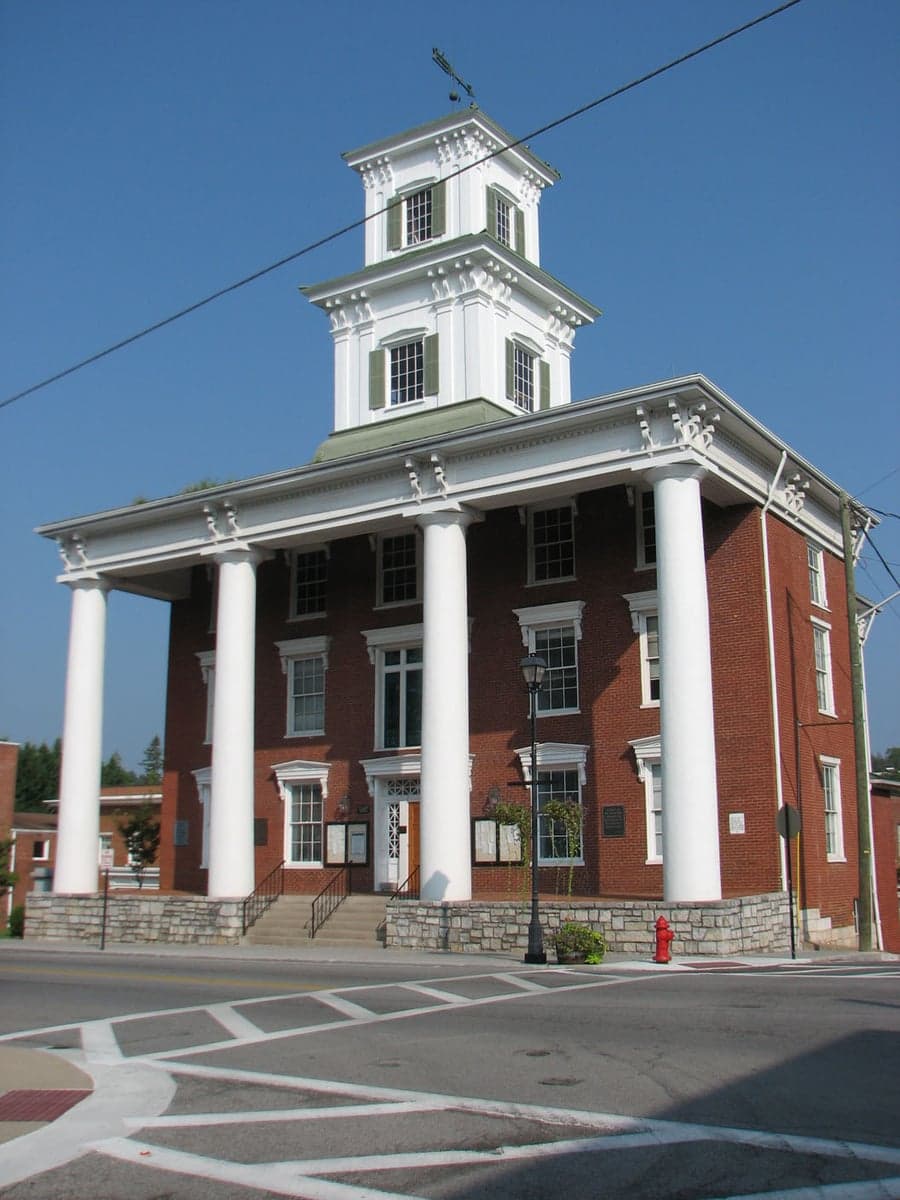
Photo: Wikipedia
Personal Sovereignty in Washington County
Viable for self-reliance. Generally workable, though some barriers may limit total independence.
What does Personal Sovereignty tell us?
Personal Sovereignty measures your capacity for self-reliance and independence with minimal government friction. Higher scores mean fewer barriers between you and the way you want to live... but it assumes you have the space you need and good neighbors.
What does this tell us?
Personal Sovereignty measures your capacity for self-reliance and independence with minimal government friction. Higher scores mean fewer barriers between you and the way you want to live... but it assumes you have the space you need and good neighbors.
State Policy
Energy independence: Importer (32% of energy produced in-state)
Personal Liberty
Homesteading

Personal Liberty Analysis
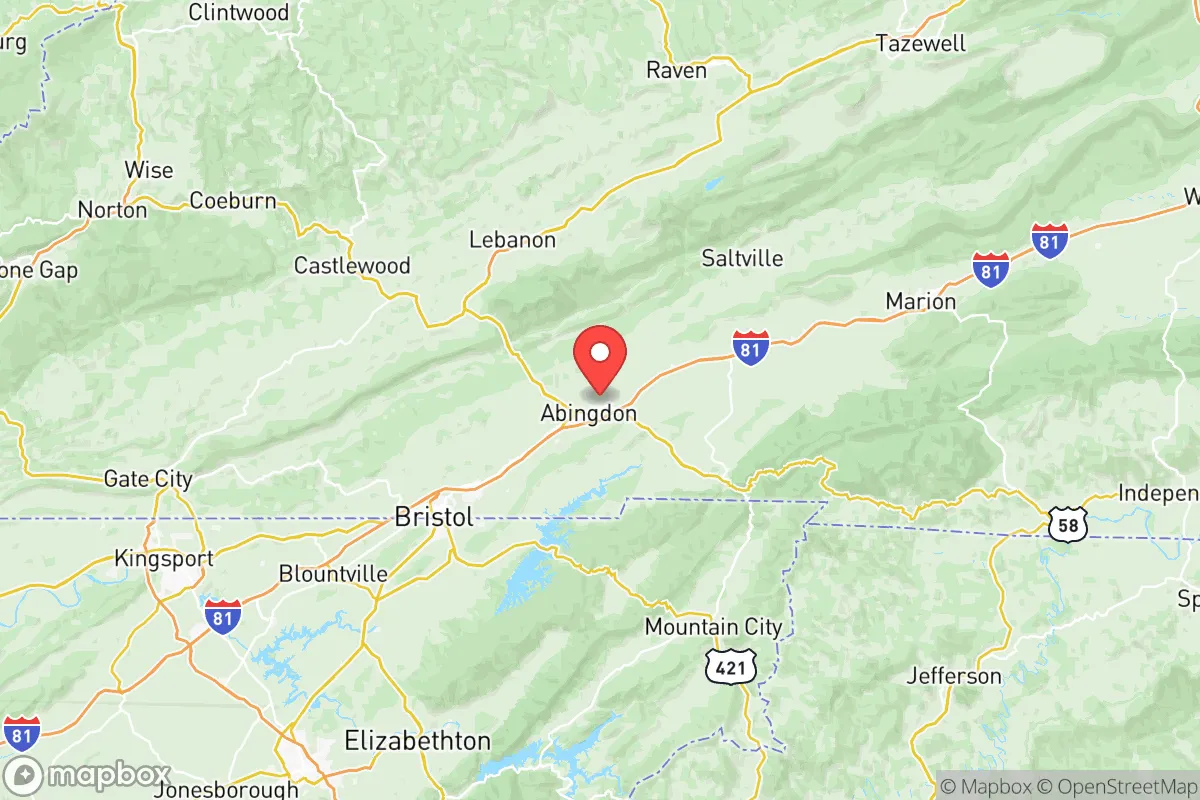
Washington County, Virginia, offers one of the more autonomy-friendly environments in the mid-Atlantic, with a light regulatory touch that stands in sharp contrast to nearby urban centers like Roanoke or the Northern Virginia suburbs. The county seat, Abingdon, anchors a region where local government leans heavily toward property rights, low taxation, and a live-and-let-live ethos, while the unincorporated areas around Glade Spring, Damascus, and Meadowview provide even more breathing room for those seeking self-reliance. For a single individual or family weighing personal sovereignty, this corner of the Blue Ridge Highlands delivers a practical balance of legal freedom and economic independence that is increasingly rare east of the Mississippi.
How the tax burden and regulatory climate compare to Virginia's urban corridors
Washington County's fiscal posture is decidedly light-touch, with a real estate tax rate that typically hovers around $0.50 to $0.60 per $100 of assessed value — roughly half of what homeowners pay in Roanoke City or Fairfax County. The county operates under Virginia's Dillon Rule, meaning localities only exercise powers explicitly granted by the state, but in practice Washington County officials interpret that authority narrowly, keeping zoning minimal outside the town limits of Abingdon, Damascus, and Glade Spring. There is no county-wide zoning ordinance governing most unincorporated land; instead, the county relies on subdivision ordinances and state-level health codes, which means a landowner in the rural stretches near Holston Lake or along the Clinch Mountain foothills can typically erect a barn, workshop, or secondary dwelling without a lengthy permitting gauntlet. Personal property tax on vehicles and business equipment is modest, and Virginia's income tax — a flat 5.75% top rate — applies uniformly, but the absence of local income or sales add-ons keeps the total burden manageable. For comparison, a household earning $75,000 annually in Washington County will pay roughly $2,000 to $3,000 less in combined state and local taxes than the same household in Arlington or Loudoun County, primarily due to lower property assessments and no local option sales tax.
Self-defense rights and gun law specifics in Washington County
Virginia is a shall-issue state for concealed handgun permits, and Washington County's circuit court processes applications with minimal friction — typically a 30- to 45-day turnaround for residents of Abingdon, Emory, and the surrounding areas. The county is a Second Amendment sanctuary, having passed a formal resolution in December 2019 declaring that local law enforcement will not expend resources to enforce any state or federal gun measures deemed unconstitutional. This matters practically: the sheriff's office in Washington County takes a deferential stance toward lawful gun owners, and open carry is fully legal without a permit for anyone 18 or older who can legally possess a firearm. Private property rights extend to self-defense, as Virginia law presumes a homeowner's use of deadly force is justified against an intruder in the home — a castle doctrine that Washington County juries have historically applied generously. For those considering a suppressor or short-barreled rifle, the county's FFL dealers, including several in Glade Spring and Meadowview, regularly handle NFA transfers, and the local sheriff's office signs off on the required CLEO notifications without the delays seen in more restrictive Virginia jurisdictions like Richmond or Charlottesville. One caveat: Virginia's 2020 "one-handgun-a-month" law remains on the books, though Washington County's rural culture means most gun purchases are private transfers, which remain legal without a background check between individuals.
Homesteading viability, lot sizes, and off-grid feasibility across the county
Off-grid living is not just feasible in Washington County — it is a normalized lifestyle in the county's northern and eastern tiers. Unincorporated land near Mendota, Rosedale, and the Hayters Gap area offers parcels of 5 to 20 acres at prices between $3,000 and $8,000 per acre, with no county requirement to connect to municipal water or sewer. Well drilling runs $15 to $25 per foot, and the water table in the limestone valleys around the North Fork of the Holston River is reliable at 100 to 200 feet. Septic systems require a health department permit, but the county's review process is straightforward for standard gravity-fed systems on lots of two acres or more. Solar panels are unregulated at the county level — no permitting or inspection requirement exists for residential photovoltaic arrays — and net metering is available through Appalachian Power, the region's dominant utility, though the 2023 interconnection queue has lengthened to about six months. Zoning is the key variable: the town of Abingdon enforces a 1-acre minimum lot size and restricts livestock within town limits, while Damascus and Glade Spring have similar but slightly looser codes. Outside those municipal boundaries, the county imposes no minimum acreage for a dwelling, and agricultural uses — including poultry houses, cattle operations, and apiaries — are permitted by right on parcels of five acres or more. For the truly self-sufficient, the county's extension office in Abingdon offers soil testing and livestock management workshops, and the local farmers' co-op in Meadowview supplies feed and hardware at rural prices.
Personal liberties: parental rights, medical autonomy, speech, and property
Washington County's cultural and legal environment tilts strongly toward individual discretion in family and medical matters. Parental rights are robust: Virginia's 2023 "Parents Matter" legislation requires school boards to notify parents of any curriculum involving sexually explicit content, and Washington County Public Schools — which serves Abingdon, Glade Spring, and the county's rural districts — has implemented a conservative interpretation, with the school board voting in 2024 to maintain a parental opt-out for any health or family life education materials. Medical autonomy is more nuanced: Virginia is not a vaccine-mandate state, and Washington County's health department does not enforce any local vaccination requirements beyond state school-entry standards, which allow broad religious and philosophical exemptions. The county's two hospitals — Johnston Memorial in Abingdon and the smaller Smyth County Community Hospital just across the line in Marion — both respect advance directives and do not impose institutional protocols that override patient choice on end-of-life care. Free speech is protected in practice; the county's public meetings are routinely attended by citizens speaking on everything from school library content to solar farm siting, and the local paper, the Bristol Herald Courier, covers these debates without editorial suppression. Property rights receive the strongest protection: Washington County has no county-wide historic district overlay outside Abingdon's small downtown, and the county's 2022 comprehensive plan explicitly states that "private property rights shall not be diminished by land use regulations." This means a landowner near Emory or along the Virginia Creeper Trail corridor can build, subdivide, or develop without the design-review boards and tree-preservation ordinances that choke similar projects in Floyd County or the Shenandoah Valley.
Relative to the rest of Virginia and the broader mid-Atlantic, Washington County ranks in the top tier for personal sovereignty — comparable to Pittsylvania County to the east or Highland County to the north, but with better infrastructure and a functioning small-city economy in Abingdon. The regulatory climate is permissive without being chaotic, the tax burden is light without starving essential services, and the gun culture is welcoming without being aggressive. For a family or individual who wants to live by their own rules — whether that means raising chickens on a five-acre parcel near Rosedale, running a home business out of a workshop in Glade Spring, or simply owning firearms without bureaucratic hassle — Washington County delivers a level of autonomy that most of the East Coast simply no longer offers. The trade-off is distance: the nearest major airport is Tri-Cities (TRI) about 30 minutes south, and the region's job market is strongest in healthcare, education, and manufacturing rather than white-collar remote work. But for those who measure freedom in acreage, permits avoided, and decisions made at the kitchen table rather than the county courthouse, this corner of Virginia is hard to beat.

* Values derived from national, state, county, city and local statistics and may differ in a specific area. Last updated: 2026-11-01T14:23:49.000Z
Narrative content on this page is AI-generated and may contain mistakes. Verify any details that matter before acting on them.
ReloMaps may earn a commission from affiliate links at no extra cost to you.

