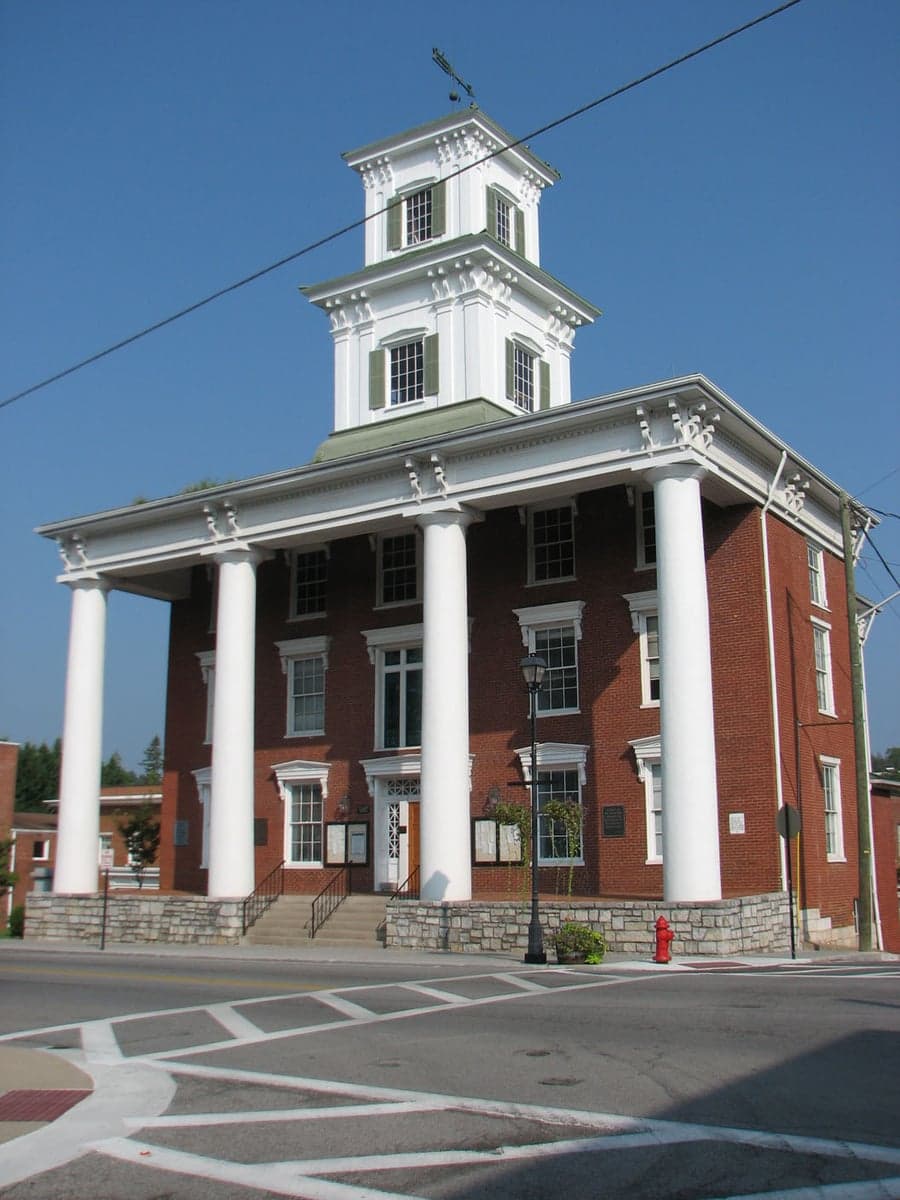
Photo: Wikipedia
Quality of Life in Washington County
A livable area that tracks near national norms for affordability, walkability, and neighborhood health.
What does Quality of Life tell us?
Quality of Life measures an area by evaluating factors like cost of living, nearby amenities, country club access, airport proximity, socioeconomic signals and neighborhood character. For large states, this is a general average — quality of life can vary dramatically between metro areas, suburbs, and rural communities within the same state.
What does this tell us?
Quality of Life measures an area by evaluating factors like cost of living, nearby amenities, country club access, airport proximity, socioeconomic signals and neighborhood character. For large states, this is a general average — quality of life can vary dramatically between metro areas, suburbs, and rural communities within the same state.
Cost of Living
28% below national average
109%
The Real Cost of Living in Washington County for 2026
| Tier | Individual | Family (4) |
|---|---|---|
| Survival | $13k | $25k |
| Comfortable | $39k | $58k |
| Luxury | $113k+ | $176k+ |
| Elite (Top 5%) | $156k+ | $241k+ |
Quality-of-Life Analysis
Washington County, Virginia offers one of the widest quality-of-life spectrums in the Appalachian highlands, anchored by the college town of Abingdon and stretching into the remote mountain hollows of the Mount Rogers National Recreation Area. The county’s character shifts dramatically within a 30-minute drive: you can go from a walkable, arts-driven downtown with craft breweries to a 100-acre farm with no neighbor in sight. This range attracts two distinct groups — professionals and retirees drawn to Abingdon’s cultural amenities, and families, farmers, and remote workers seeking land and solitude in the county’s northern and western reaches.
Largest town(s) & population centers
Abingdon is the undisputed hub, with roughly 8,000 residents and the region’s densest concentration of services. Daily life here revolves around the historic downtown, anchored by the Barter Theatre (the state theater of Virginia) and the 34-mile Virginia Creeper Trail, which brings thousands of cyclists through town each year. The town’s Main Street is lined with independent restaurants, galleries, and the Martha Washington Inn & Spa, giving it a curated, tourism-friendly feel that is rare for a town of its size. Emory, about 10 miles east, functions as a secondary center built around Emory & Henry College; its daily rhythm is quieter, with a few fast-food stops, a grocery store, and student housing dominating the commercial strip along US-11.
For big-box retail and hospital-grade healthcare, residents drive 15–20 minutes south to Bristol, Tennessee/Virginia, a twin city of about 44,000 that serves as the metro anchor for the entire county. The Bristol Regional Medical Center is the primary trauma center for the area, and The Falls shopping complex on the Virginia side provides the county’s main concentration of national chain stores.
Smaller towns & rural pockets
Outside the two population centers, Washington County is a patchwork of unincorporated communities, each with its own identity. Damascus, population ~800, is the trail town at the southern terminus of the Virginia Creeper Trail; its economy is built almost entirely on bike rentals, outfitters, and Appalachian Trail hiker traffic. Glade Spring (pop. ~1,400) is a classic railroad town with a preserved Main Street, a working Amtrak station, and a growing number of antique shops. Meadowview and Chilhowie (pop. ~1,700) sit along I-81 and offer the most affordable housing in the county, with several subdivisions of 3-bedroom homes listed under $200,000. The far northern reaches — Hayters Gap, Alvarado, and the Green Spring area — are true rural pockets where paved roads give way to gravel, cell service drops out, and the nearest grocery store can be a 25-minute drive.
Cost & lifestyle range
The county’s overall cost of living index sits at 72 (28% below the U.S. average), but that figure masks a wide internal spread. At the high end, Abingdon’s historic district and the Stone Mill Road corridor feature renovated Victorian homes and new construction priced between $350,000 and $600,000, with some riverfront properties on the Middle Fork of the Holston River exceeding $700,000. At the low end, Chilhowie and Meadowview offer starter homes and older farmhouses in the $120,000–$180,000 range, and the county’s median home value of $201,800 reflects this mix. Renters see a similar spread: a one-bedroom apartment in Abingdon’s newer complexes runs $850–$1,000/month, while comparable units in Glade Spring or Damascus lease for $600–$700. The median rent countywide is $832.
The average commute of 24.4 minutes is manageable but varies by direction: residents of Damascus and Glade Spring often commute 30–35 minutes to jobs in Bristol or the Eastman Chemical plant in Kingsport, Tennessee, while Abingdon residents typically keep commutes under 15 minutes. Amenities follow the same gradient — Abingdon has a full-service YMCA, a regional library, and multiple medical clinics, while rural residents in Hayters Gap rely on volunteer fire departments and drive 20+ minutes for a pharmacy.
The county rewards self-sufficient types who value scenery and space over convenience. Retirees and remote workers with flexible schedules thrive in Abingdon’s walkable core, while homesteaders, equestrians, and outdoor enthusiasts find the best value in the northern and western districts where land runs $3,000–$6,000 per acre. Families needing daily access to schools, sports leagues, and pediatric care will find the Abingdon–Emory corridor the most practical choice; those willing to trade amenities for acreage will feel at home in the county’s quieter corners.

Crime in Washington County
Generally safer than 61% of comparable U.S. locations.
Violent CrimeViolent Crime Analysis
Property CrimeProperty Crime Analysis
Crime Analysis
Washington County, Virginia, reports a violent crime rate of 203 incidents per 100,000 residents, a figure that sits below the national average but warrants attention given the county’s rural character. Property crime, however, runs higher at 1,344.2 per 100,000, driven largely by theft and vehicle break-ins in the county’s more populated corridors. The overall safety picture is mixed: residents in the county seat of Abingdon and the town of Damascus generally enjoy predictable, low-level crime, while the Interstate 81 corridor near Bristol and the Emory & Henry University area sees a disproportionate share of reported incidents.
Crime in context
Washington County’s violent crime rate of 203 per 100,000 compares favorably to the Virginia state average of roughly 240 per 100,000 and the national figure of about 380 per 100,000. The county’s property crime rate of 1,344.2 per 100,000, however, exceeds the state average of approximately 1,150 per 100,000, placing it closer to urbanized jurisdictions like Roanoke than to neighboring rural counties such as Smyth or Russell. The disparity reflects a simple geographic reality: Washington County sits astride I-81, a major freight and travel artery, which brings transient property crime—particularly catalytic converter thefts and vehicle break-ins—into Abingdon, Glade Spring, and the commercial strip around Exit 17 near Bristol. Violent crime, by contrast, is concentrated in a small number of repeat addresses, mostly along the US-11 corridor and in the apartment complexes near the county’s southern border with Tennessee.
What residents experience
For most residents, daily life in Washington County does not involve direct exposure to violent crime. The 203 per 100,000 violent crime rate translates to roughly 110 reported incidents per year across the county’s 54,000 residents—a figure that includes domestic disputes and simple assaults that rarely spill into public spaces. The more pressing day-to-day concern is property crime. Residents in Abingdon’s historic district and the neighborhoods around the Martha Washington Inn report occasional porch thefts and unlocked-car entries, while the Damascus area, a popular trail town on the Virginia Creeper Trail, sees seasonal spikes in bicycle theft and vehicle break-ins during peak tourist months. The county sheriff’s office, which patrols unincorporated areas, has responded by increasing visibility in the Meadowview and Mendota communities, where rural outbuilding thefts have been a recurring complaint. Notably, the 28th Judicial Circuit, which covers Washington County and the city of Bristol, operates under a conservative prosecutorial approach; the Commonwealth’s Attorney’s office in Abingdon maintains a conviction rate above 90% for felony cases, and judges in this circuit are not known for progressive diversion programs that critics say shorten sentences or release repeat offenders early.
Neighborhood-level variation is significant. The safest areas by reported crime per capita are the rural western communities of Mendota and Hayters Gap, where violent crime is nearly nonexistent and property crime is limited to isolated farm equipment thefts. The highest-crime zones are the commercial corridors along I-81—specifically the Exit 7 area near the Bristol border and the Exit 19 interchange at Glade Spring—where motel and gas station parking lots generate a steady stream of theft and drug-related arrests. The town of Abingdon itself falls in between: its downtown core is heavily patrolled and statistically safe, but the apartment complexes on the north side near the Washington County Public Schools administrative offices account for a disproportionate share of the county’s domestic violence and drug possession charges. For families considering relocation, the practical takeaway is that Washington County’s crime problem is not a violent one—it is a property crime issue concentrated along transportation corridors, and it is managed by a judicial system that leans toward enforcement rather than leniency.
* Values derived from national, state, county, city and local statistics and may differ in a specific area. Last updated: 2026-11-01T14:23:49.000Z
Narrative content on this page is AI-generated and may contain mistakes. Verify any details that matter before acting on them.
ReloMaps may earn a commission from affiliate links at no extra cost to you.

