Quality of Life in Suffolk City County
A livable area that tracks near national norms for affordability, walkability, and neighborhood health.
What does Quality of Life tell us?
Quality of Life measures an area by evaluating factors like cost of living, nearby amenities, country club access, airport proximity, socioeconomic signals and neighborhood character. For large states, this is a general average — quality of life can vary dramatically between metro areas, suburbs, and rural communities within the same state.
What does this tell us?
Quality of Life measures an area by evaluating factors like cost of living, nearby amenities, country club access, airport proximity, socioeconomic signals and neighborhood character. For large states, this is a general average — quality of life can vary dramatically between metro areas, suburbs, and rural communities within the same state.
Cost of Living
23% above national average
96%
The Real Cost of Living in Suffolk City County for 2026
| Tier | Individual | Family (4) |
|---|---|---|
| Survival | $24k | $45k |
| Comfortable | $64k | $94k |
| Luxury | $153k+ | $237k+ |
| Elite (Top 5%) | $180k+ | $278k+ |
Quality-of-Life Analysis
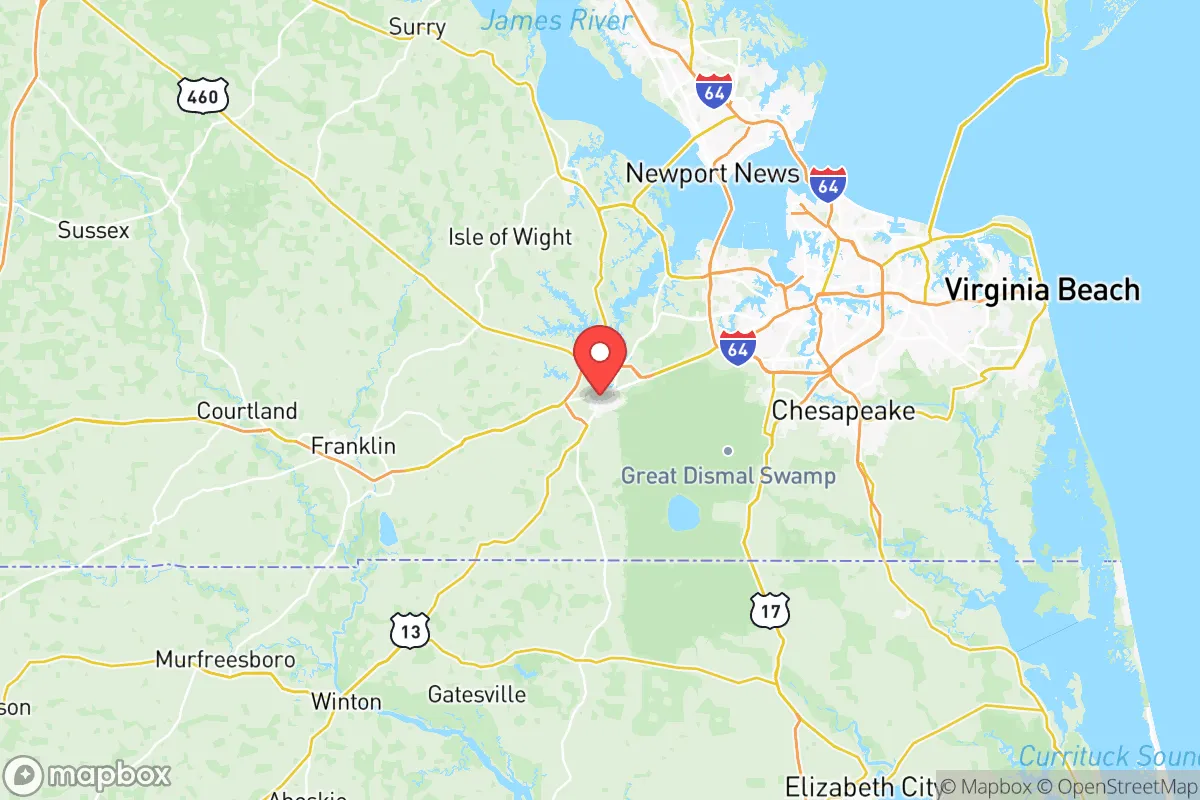
Suffolk City County, Virginia, presents a unique quality-of-life spectrum that blends a rapidly growing suburban hub with deeply rural farmland and historic riverfront communities. As the largest city by land area in Virginia, Suffolk offers residents a choice between the convenience of a mid-sized city and the solitude of country living, all within commuting distance of the Hampton Roads metro. The county attracts a diverse mix of people: young professionals and military families drawn to new subdivisions near the city center, long-time farming families in the rural northern and western reaches, and retirees seeking quiet waterfront properties along the Nansemond River.
Largest town(s) & population centers
The primary population center is the city of Suffolk itself, which functions as the county seat and the hub for commerce, government, and services. Daily life in central Suffolk revolves around the downtown area along the Nansemond River, where historic homes, local restaurants, and the Suffolk Seaboard Station Railroad Museum anchor a walkable core. The majority of new residential development is concentrated in the Harbour View area near the Monitor-Merrimac Memorial Bridge-Tunnel, a fast-growing corridor filled with shopping centers, medical offices, and planned communities like Sleepy Hole and Riverfront Golf Club. This section of Suffolk feels most like a typical suburban Virginia city, with chain retailers, top-rated schools like Nansemond River High School, and easy access to Norfolk and Virginia Beach. Commuters here face an average drive time of just under 30 minutes, which aligns closely with the regional average.
Smaller towns & rural pockets
Beyond the suburban core, Suffolk’s vast land area encompasses several distinct smaller communities and unincorporated areas. Whaleyville, located in the southwestern part of the county, retains a small-town feel with its historic crossroads and agricultural surroundings. Driver, along the Nansemond River, is a quiet residential area known for its waterfront homes and proximity to the Driver Historic District. Further north, Holland and Magnolia are rural hamlets where farmland and pine forests dominate the landscape. These areas lack the retail density of central Suffolk but offer larger lots, lower property taxes, and a slower pace of life. The Great Dismal Swamp National Wildlife Refuge borders the southern edge of the county, providing a natural buffer that keeps development sparse and preserves the area’s wild character.
Cost & lifestyle range
The cost of living in Suffolk City County sits at 123 on the COL index, notably above the national average of 100, driven largely by housing demand in the Harbour View corridor. The median home value is $329,600, and median rent is $1,484, figures that reflect the premium for newer construction and proximity to the Hampton Roads job market. At the high end, waterfront properties along the Nansemond River and golf course homes in Riverfront Golf Club can exceed $500,000, attracting professionals who commute to Norfolk or work at the nearby Joint Base Langley-Eustis. At the lower end, older homes in central Suffolk and rural properties near Whaleyville and Holland often fall below the county median, offering more affordable entry points for first-time buyers or those willing to trade convenience for space. Renters face a tight market, with newer apartment complexes in Harbour View commanding premium rates while older units near downtown offer more modest options. The lifestyle range is stark: residents in the suburban east enjoy walkable shopping and short commutes, while those in the rural west experience long drives to grocery stores but gain privacy, acreage, and lower density.
Suffolk City County is best suited for people who want the option to shift between suburban convenience and rural tranquility without leaving the same jurisdiction. Families who prioritize good schools and new housing will gravitate toward Harbour View and Sleepy Hole, while farmers, equestrians, and nature enthusiasts will find their niche in Whaleyville and the northern farmlands. Commuters who can tolerate a 30-minute drive will find that Suffolk offers a broader range of housing and lifestyle choices than neighboring cities like Chesapeake or Norfolk, making it a versatile choice for those who value space and variety over urban density.

Crime in Suffolk City County
Generally safer than 60% of comparable U.S. locations.
Violent CrimeViolent Crime Analysis
Property CrimeProperty Crime Analysis
Crime Analysis
Suffolk City County, Virginia, presents a mixed safety profile for prospective residents. The city's overall violent crime rate of 209 incidents per 100,000 residents sits notably below the national average, while its property crime rate of 1,389.4 per 100,000 residents aligns closely with state and national figures. As a rapidly growing independent city within the Hampton Roads metropolitan area, Suffolk offers a blend of suburban and rural environments, though safety conditions vary considerably between its established neighborhoods and newer developments near the North Carolina border.
Crime in context
Suffolk's violent crime rate of 209 per 100,000 is approximately 40% lower than the national average of 380 per 100,000, placing it among the safer jurisdictions in southeastern Virginia. Property crime, however, at 1,389.4 per 100,000, closely mirrors the national rate of 1,954 per 100,000 and runs slightly higher than neighboring Isle of Wight County. The city benefits from being outside the direct influence of progressive prosecutors found in larger Hampton Roads cities like Norfolk and Portsmouth, where more lenient judicial philosophies have been linked to higher recidivism rates. Suffolk's Commonwealth's Attorney's office maintains a more traditional approach to prosecution, which contributes to the city's comparatively lower violent crime figures.
What residents experience
Daily life in Suffolk involves navigating property crime as the primary concern. Vehicle break-ins and package thefts occur most frequently in the Harbour View and North Suffolk areas, where denser suburban development and proximity to the Monitor-Merrimac Memorial Bridge-Tunnel attract transient criminal activity. The Downtown Suffolk historic district experiences lower incident rates due to active neighborhood watch programs and a visible police presence. Residents in Whaleyville and Chuckatuck report the fewest safety concerns, benefiting from their rural character and tight-knit community dynamics. The city's police department has implemented targeted patrols in commercial corridors along Route 17 and Route 58, which has helped stabilize property crime trends since 2022.
Neighborhood-level safety in Suffolk correlates strongly with housing density and proximity to major transportation corridors. The Sleepy Hole and Driver areas maintain some of the lowest crime rates in the city, while the Wilroy Industrial Corridor sees elevated property crime due to commercial activity. Newer subdivisions near the Chesapeake border generally report fewer incidents than older neighborhoods closer to downtown. Prospective residents should examine block-level crime data for specific subdivisions, as Suffolk's 430 square miles encompass dramatically different safety environments. The city's distance from progressive judicial influences in Norfolk and Portsmouth provides a structural advantage for maintaining public safety, though property crime remains a concern that requires standard urban precautions.
* Values derived from national, state, county, city and local statistics and may differ in a specific area. Last updated: 2026-07-12T08:27:54.000Z
Narrative content on this page is AI-generated and may contain mistakes. Verify any details that matter before acting on them.
ReloMaps may earn a commission from affiliate links at no extra cost to you.

