
Photo by Chandler Cruttenden on Unsplash
Political ClimatePolitical Climate in Roanoke City County
Showing state-level results — no local-only data available.
Local Political AnalysisPolitical Analysis of Roanoke City County
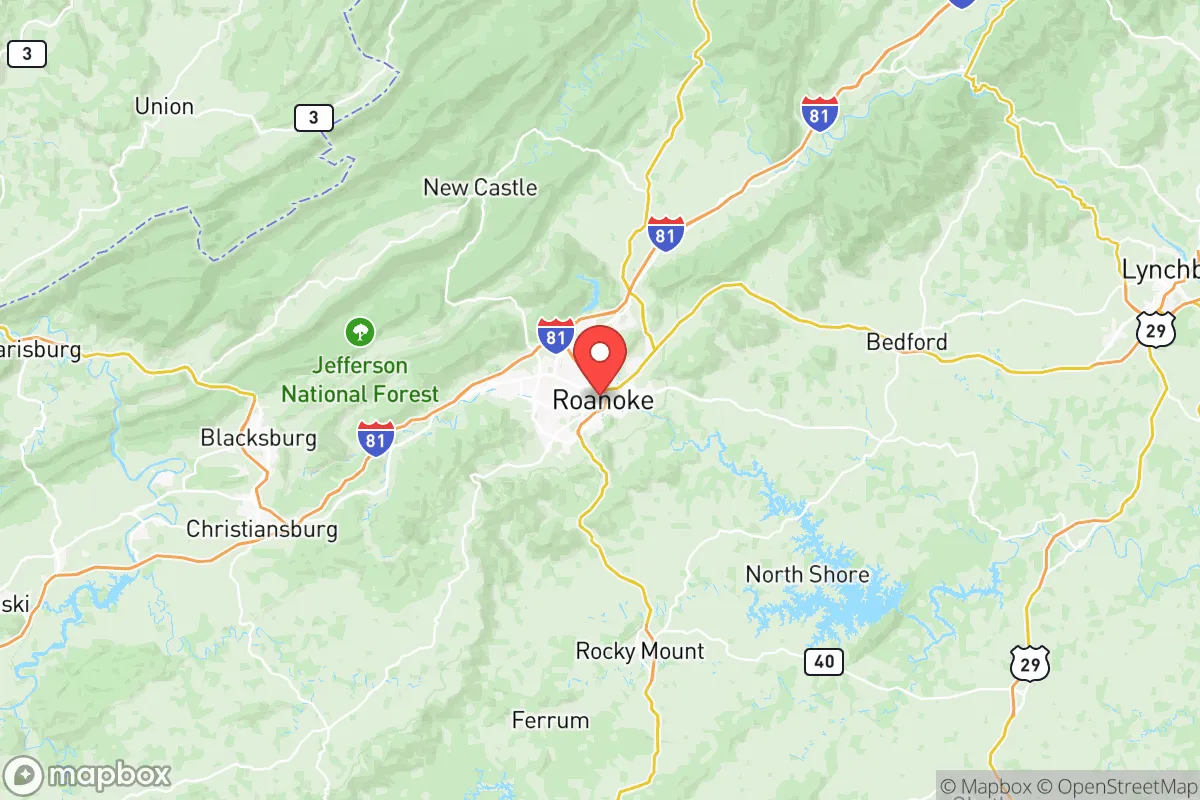
Roanoke City County leans solidly Republican, with a Cook Partisan Voting Index of R+12, meaning the area votes about 12 points more Republican than the national average. This stands in stark contrast to the state of Virginia as a whole, which has shifted to a D+4 rating, reflecting the influence of the fast-growing, Democratic-leaning suburbs of Northern Virginia and Richmond. The city of Roanoke itself is a blue dot in a red sea, consistently voting Democratic in presidential elections, while the surrounding county—places like Vinton, Cave Spring, and the rural stretches near Bent Mountain—pull the overall area decisively to the right. The political trajectory here is one of slow but steady polarization, with the city becoming more liberal and the county more conservative, mirroring the urban-rural divide seen across the country.
How it compares
The R+12 rating for Roanoke City County makes it one of the more conservative metro areas in a state that has trended purple-to-blue over the last two decades. While Virginia as a whole went for Joe Biden by 10 points in 2020, Roanoke City County went for Donald Trump by a comfortable margin. The real split is geographic: inside the city limits, precincts near Grandin Village and the Old Southwest neighborhood are reliably blue, while the county's precincts in places like Glenvar and Mount Pleasant are deep red. The swing areas, such as the precincts around Hollins and parts of the Cave Spring district, tend to break Republican but can be competitive in local races. This dynamic means that a Republican candidate for statewide office can count on a strong base here, but a Democrat can run up the score in the city to keep the overall margin closer than in more rural parts of Southwest Virginia.
What this means for residents
For conservative residents, the R+12 lean means their values are well-represented in local government, from the county board of supervisors to the school board. They can expect a business-friendly environment, lower taxes relative to Northern Virginia, and a general cultural alignment with traditional values. For liberal residents, especially those living in the city of Roanoke, the political climate can feel like a constant battle. They are often outvoted on county-wide issues but find solidarity in city council races and local initiatives, such as the push for more public transit and affordable housing. The practical effect is that the area is a patchwork of policies: the city might pursue progressive zoning reforms while the county holds the line on development, and the school system has to balance the demands of both constituencies. It's not a place where either side gets everything they want, which keeps local politics lively and engaged.
Culturally, the area is distinct from the rest of Virginia in its strong Appalachian and Blue Ridge identity. There is a palpable skepticism of the political establishment in Richmond and Washington, which cuts across party lines. You'll hear folks in Vinton and Bonsack complain about the same things—taxes, regulations, and the feeling that the state government doesn't understand their way of life. This shared identity sometimes blunts the sharpest edges of partisanship, especially during local crises like the 2018 floods or the ongoing opioid epidemic. Policy-wise, the area is more libertarian-leaning than the state average, with a strong preference for local control over schools and land use. Gun rights are broadly supported, and there is little appetite for the kind of strict environmental regulations that are popular in the D.C. suburbs. For anyone moving here, the key takeaway is that Roanoke City County is a place where your vote really does matter, but the outcome is rarely in doubt for the county as a whole.

State Political ClimatePolitical Climate in Virginia
State Political AnalysisPolitical Environment in the State
Virginia has shifted from a reliably conservative Southern state to a competitive, Democratic-leaning battleground over the past 20 years, now carrying a Cook PVI of D+4. The transformation is driven almost entirely by the explosive growth of Northern Virginia suburbs, which have turned the state's electoral math on its head. While the state still elects a Republican governor (Glenn Youngkin in 2021) and has a closely divided House of Delegates, the long-term trajectory favors Democrats as the population centers of Fairfax, Loudoun, and Prince William counties continue to grow and diversify.
Urban vs. rural divide
The political map of Virginia is a textbook case of the urban-rural split that defines American politics in 2026. The Democratic stronghold is the densely populated crescent from Washington D.C. down to Richmond, anchored by Arlington, Alexandria, and Fairfax County — places where Democrats routinely win by 30-40 points. Loudoun County, once a conservative exurb, flipped decisively blue in the Trump era and now delivers massive Democratic margins. The other major Democratic engine is the Richmond metro area, particularly the city itself and surrounding Henrico County. On the Republican side, the rural south and west remain deeply conservative — places like Lynchburg, Roanoke, and the Shenandoah Valley vote Republican by wide margins. The Hampton Roads region around Norfolk and Virginia Beach is a genuine swing area, with military families and defense contractors creating a more mixed electorate. The real story is that the urban crescent now contains enough votes to overcome the rest of the state combined, which is why statewide Democrats have won every presidential election here since 2008.
Policy environment
Virginia's policy landscape reflects its purple status, with a tax structure that leans moderate compared to the Deep South. The state income tax is a flat 5.75% (down from 5.75% under Youngkin's push), and sales tax is 5.3% statewide with local add-ons. Property taxes are set at the local level and vary widely — Loudoun County rates are around $1.20 per $100 of assessed value, while rural counties like Grayson County are under $0.50. Virginia is a right-to-work state, which keeps union influence limited, and it has some of the strongest gun preemption laws in the country — localities cannot pass their own gun restrictions, which matters if you're moving from a state with local control. Education policy has been a flashpoint: Youngkin's administration pushed for expanded school choice and parental notification policies, while the Democratic-controlled Senate blocked many of those efforts. The state has a robust public school system overall, with Fairfax County Public Schools being one of the largest and highest-performing districts in the nation, though conservative parents frequently cite curriculum concerns.
Recent policy direction
The last few years have seen Virginia swing back and forth on several key fronts. On gun rights, the state passed universal background checks and a red flag law in 2020 under Democratic control, but Youngkin's administration has pushed back on enforcement and signed a Second Amendment Sanctuary resolution. On education, Youngkin signed a law requiring schools to notify parents of sexually explicit instructional materials and created a tip line for reporting "divisive practices" in schools — both deeply controversial and emblematic of the culture war battles playing out here. On abortion, Virginia remains an outlier in the South: abortion is legal up to 26 weeks, and the state has not followed the post-Dobbs trend of restrictions. On voting, the state has expanded access with no-excuse absentee voting and 45 days of early voting, while also requiring photo ID — a compromise that both sides have accepted. On taxes, Youngkin's signature achievement was a $4 billion tax cut package in 2022 that reduced the corporate tax rate and expanded the standard deduction, though Democrats argue it primarily benefited higher earners. Property rights are generally strong, with Virginia being a "buyer beware" state in real estate transactions but with robust protections against eminent domain abuse.
Civil unrest & political movements
Virginia has been a flashpoint for political activism on both sides. The 2017 Unite the Right rally in Charlottesville remains a defining moment, leading to ongoing debates about Confederate monuments and public memory. The 2020 protests in Richmond over the Robert E. Lee statue were among the largest and most sustained in the country. On the right, the "Second Amendment Sanctuary" movement swept through rural counties in 2019-2020, with over 100 localities passing resolutions opposing new gun laws. The 2021 gubernatorial election saw massive turnout driven by parental rights activism, particularly in Loudoun County, where school board meetings became national news. Immigration politics are less heated here than in border states, but the issue flares up periodically — Prince William County has been a battleground over sanctuary policies, with the board flipping between parties on the issue. Election integrity remains a live concern among conservatives, though the state's 2020 election was widely considered well-administered, and no major fraud was found.
Projection
Over the next 5-10 years, Virginia will continue its gradual shift toward the Democratic column, driven by the relentless growth of Northern Virginia. The state is adding about 100,000 new residents annually, with most settling in the D.C. suburbs. This means the Republican path to statewide victory will become increasingly narrow, requiring either a moderate candidate who can peel off suburban voters or a national environment that depresses Democratic turnout. The state legislature will likely remain closely divided, with the House of Delegates and Senate often controlled by different parties. For a new resident, the practical implication is that Virginia will remain a place where your experience depends heavily on where you live — a conservative family in Lynchburg will have a very different daily reality than a liberal family in Arlington. The state's political future is essentially the story of Northern Virginia's continued growth and its cultural and political influence spreading outward.
For someone moving to Virginia, the bottom line is that you're getting a state that is politically competitive but trending blue, with policy outcomes that swing with each election cycle. If you're conservative, you'll find welcoming communities in the western and southern parts of the state, but you'll be living under a state government that is often controlled by Democrats. If you're liberal, you'll find strong communities in the urban crescent, but you'll need to contend with a state that still has significant conservative influence in the legislature. The key is to choose your locality carefully — Virginia is less a single political entity than a collection of distinct regions with their own political cultures, and your experience will be shaped more by your county than your state.
* Values derived from national, state, county, city and local statistics and may differ in a specific area. Last updated: 2026-07-08T07:06:00.000Z
Narrative content on this page is AI-generated and may contain mistakes. Verify any details that matter before acting on them.
ReloMaps may earn a commission from affiliate links at no extra cost to you.

