
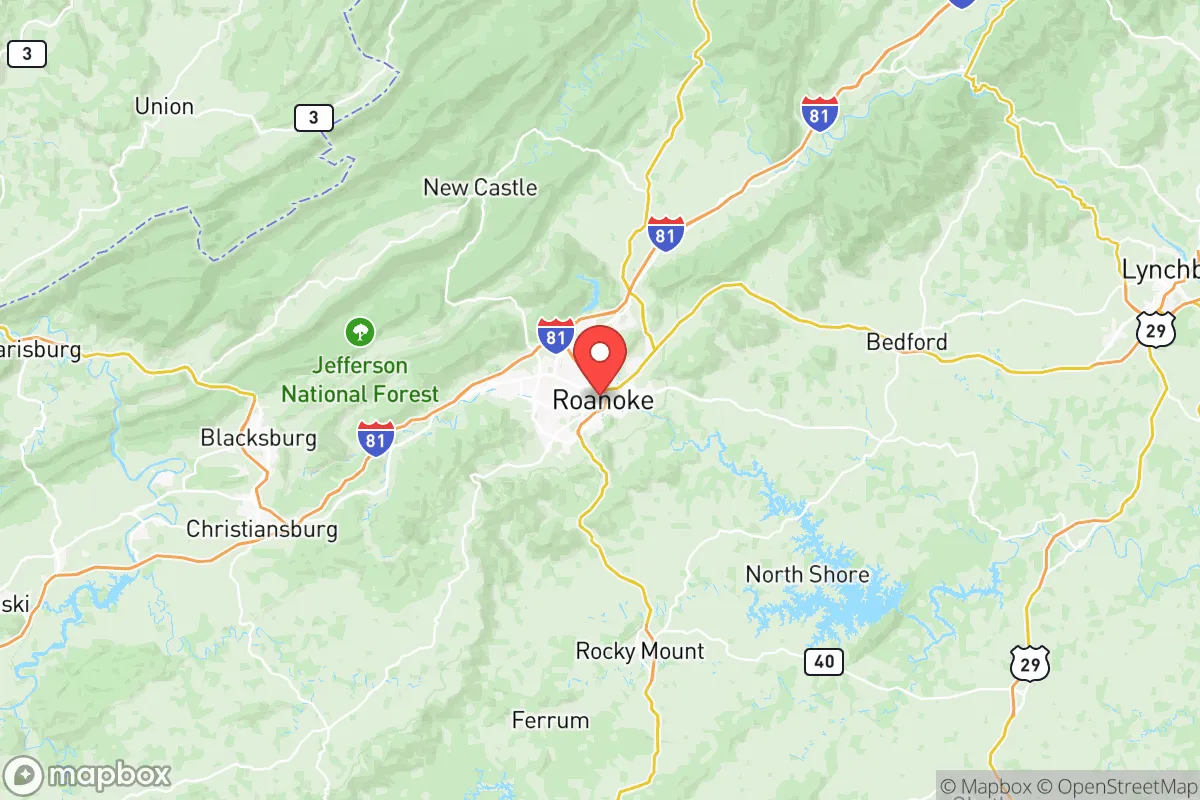
Photo by Chandler Cruttenden on Unsplash
Quality of Life in Roanoke City County
A livable area that tracks near national norms for affordability, walkability, and neighborhood health.
What does Quality of Life tell us?
Quality of Life measures an area by evaluating factors like cost of living, nearby amenities, country club access, airport proximity, socioeconomic signals and neighborhood character. For large states, this is a general average — quality of life can vary dramatically between metro areas, suburbs, and rural communities within the same state.
What does this tell us?
Quality of Life measures an area by evaluating factors like cost of living, nearby amenities, country club access, airport proximity, socioeconomic signals and neighborhood character. For large states, this is a general average — quality of life can vary dramatically between metro areas, suburbs, and rural communities within the same state.
Cost of Living
25% below national average
102%
The Real Cost of Living in Roanoke City County for 2026
| Tier | Individual | Family (4) |
|---|---|---|
| Survival | $15k | $29k |
| Comfortable | $35k | $52k |
| Luxury | $95k+ | $147k+ |
| Elite (Top 5%) | $132k+ | $205k+ |
Quality-of-Life Analysis
Roanoke City County, Virginia, offers a broad spectrum of quality-of-life options, from the urban core of Roanoke City to the quiet, rural expanses of the county's western and northern reaches. The county's character shifts dramatically within a short drive, attracting a diverse mix of residents: young professionals and creatives drawn to the city's walkable neighborhoods and arts scene, families seeking suburban schools and larger lots in communities like Cave Spring, and retirees or homesteaders looking for land and solitude in areas like Bent Mountain or the Catawba Valley. With a cost of living index of 75 (well below the national average of 100) and an average commute of just under 20 minutes, the county provides a rare balance of affordability and accessibility across its varied landscapes.
Largest town(s) & population centers
The primary population center is Roanoke City, an independent city that serves as the region's economic and cultural hub. Daily life here is defined by a walkable downtown with a growing food scene, the historic Roanoke City Market, and access to the Blue Ridge Parkway. Neighborhoods like Grandin Village and Old Southwest offer historic homes and a strong sense of community, while the city's hospital systems (Carilion and LewisGale) and Virginia Tech Carilion School of Medicine anchor the local economy. Outside the city limits, the Cave Spring area in the southern part of the county is a major suburban center, known for its highly-rated public schools, shopping at Tanglewood Mall, and a more family-oriented, car-dependent lifestyle. The unincorporated community of Vinton, just east of Roanoke City, functions as a smaller town with its own downtown strip and a tight-knit, working-class feel.
Smaller towns & rural pockets
Beyond the main population centers, Roanoke County is dotted with smaller communities that offer a distinctly different pace. Bent Mountain, in the county's southwest, is a rural, high-elevation area known for its apple orchards, wineries, and panoramic mountain views; it attracts residents seeking privacy and acreage. Catawba, to the north, is a historic valley community with a strong agricultural identity, home to the Catawba Valley Farmers Market and the popular Catawba Mountain hiking trails. Glenvar, west of Salem, is a small, unincorporated village with a few local businesses and a strong sense of community centered around its elementary school. Further out, Mason Cove and Hanging Rock offer a mix of lakefront properties on Carvins Cove Reservoir and rural subdivisions, appealing to those who want water access without leaving the county.
Cost & lifestyle range
The cost of living and lifestyle options vary significantly across the county. At the lower end of the cost spectrum, parts of Roanoke City (particularly older neighborhoods near downtown) and the Vinton area offer median home values well below the county's overall $180,500 median, with some fixer-uppers available under $150,000. Median rent across the county is $964, but can dip below $800 in older apartment complexes in Vinton or along Williamson Road. At the higher end, the Cave Spring area and newer subdivisions in South Roanoke County (near the Franklin County line) see median home values often exceeding $300,000, with larger homes on half-acre to multi-acre lots. The lifestyle trade-off is clear: urban dwellers in Roanoke City enjoy walkability and cultural amenities but may have smaller yards and older housing stock, while rural residents in Bent Mountain or Catawba get land and quiet but must drive 20-30 minutes for groceries or dining. The county's short average commute of 19.9 minutes makes this trade-off manageable for most.
Roanoke City County is best suited for people who value geographic diversity and want the option to shift between urban, suburban, and rural living without moving counties. Young professionals and empty-nesters often thrive in the city's walkable neighborhoods, while families gravitate toward Cave Spring's schools and suburban amenities. Those seeking a slower, land-based lifestyle—whether hobby farmers, remote workers, or retirees—find their niche in the county's rural pockets. The low cost of living and short commutes make it a practical choice for anyone who wants access to the Blue Ridge outdoors without sacrificing urban conveniences.

Crime in Roanoke City County
Generally safer than 60% of comparable U.S. locations.
Violent CrimeViolent Crime Analysis
Property CrimeProperty Crime Analysis
Crime Analysis
Roanoke City County presents a mixed safety picture, with violent crime rates significantly below national averages but property crime rates that exceed both state and national benchmarks. The city's 2024 violent crime rate of 209 incidents per 100,000 residents is roughly half the national average of 380 per 100,000, while its property crime rate of 1,389.4 per 100,000 sits notably above the national figure of 1,954 per 100,000. This disparity means residents face a lower risk of violent confrontation but a heightened chance of theft, burglary, or vehicle break-ins compared to many peer communities in Virginia.
Crime in context
Roanoke's violent crime rate of 209 per 100,000 is substantially lower than the Virginia state average of approximately 240 per 100,000 and well below the national rate. However, the property crime rate of 1,389.4 per 100,000 is roughly 30% higher than the Virginia average of about 1,070 per 100,000. This pattern is common in mid-sized cities that serve as regional economic hubs—Roanoke's downtown, shopping corridors, and transit-adjacent neighborhoods see higher foot traffic and opportunistic theft. By comparison, the nearby town of Salem, which operates its own police department and has a more suburban character, reports property crime rates closer to 800 per 100,000. The contrast is even sharper with the town of Vinton, where property crime rates hover around 600 per 100,000, making it one of the safer enclaves within the broader Roanoke metropolitan area.
What residents experience
In practice, Roanoke's safety profile means that violent crime—such as robbery, aggravated assault, and homicide—is concentrated in specific corridors rather than spread evenly across the city. The Northwest quadrant, particularly along Melrose Avenue and the Orange Avenue corridor, accounts for a disproportionate share of reported violent incidents. Meanwhile, neighborhoods like South Roanoke, Wasena, and the Grandin Court area report violent crime rates that are a fraction of the citywide figure, often comparable to suburban communities. Property crime, however, is more diffuse. Vehicle break-ins and package thefts occur in nearly every neighborhood, including traditionally affluent areas like Old Southwest and Raleigh Court. Residents in these areas often report that unlocked cars and visible valuables are the primary drivers of theft, rather than targeted burglary.
Neighborhood-level variation and judicial climate
Neighborhood safety in Roanoke varies dramatically by location. The Raleigh Court and South Roanoke neighborhoods consistently rank among the safest in the city, with violent crime rates below 100 per 100,000 and property crime rates under 800 per 100,000. In contrast, the Hurt Park and Southeast Roanoke neighborhoods experience violent crime rates above 400 per 100,000, driven largely by drug-related disputes and domestic violence. The city's judicial environment is a concern for some residents: Roanoke City's elected Commonwealth's Attorney and judges have, in recent years, emphasized diversion programs and reduced sentencing for non-violent property offenses. While this approach aims to reduce recidivism, critics argue it has contributed to a perception among repeat offenders that property crime carries minimal consequences. The nearby city of Salem, which operates under a more conservative judicial philosophy with a separate Commonwealth's Attorney, has seen property crime rates remain roughly half of Roanoke's over the past five years. For prospective residents, choosing a neighborhood with strong neighborhood watch programs and proximity to the Roanoke County police jurisdiction—which has a lower crime rate than the city proper—can significantly improve daily safety experience.
* Values derived from national, state, county, city and local statistics and may differ in a specific area. Last updated: 2026-07-08T07:06:00.000Z
Narrative content on this page is AI-generated and may contain mistakes. Verify any details that matter before acting on them.
ReloMaps may earn a commission from affiliate links at no extra cost to you.

