
Photo by Damien Santos on Unsplash
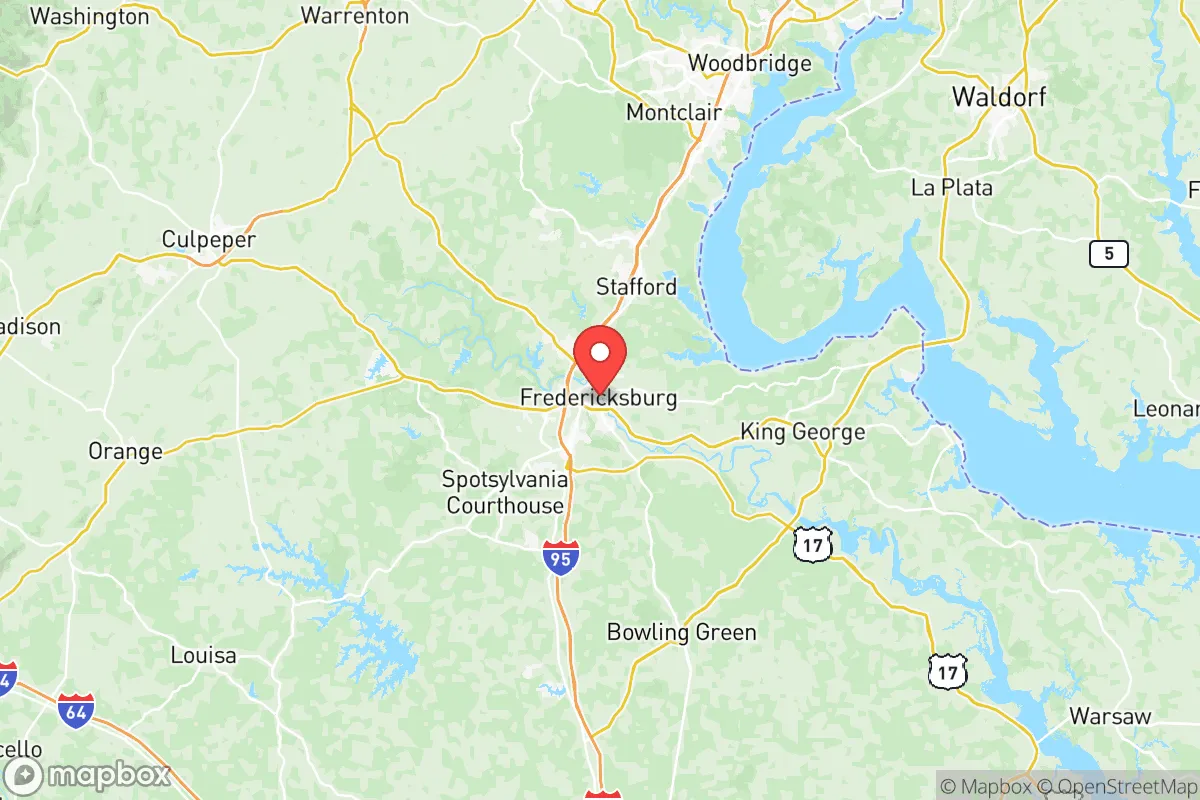
Personal Sovereignty in Fredericksburg City County
Viable for self-reliance. Generally workable, though some barriers may limit total independence.
What does Personal Sovereignty tell us?
Personal Sovereignty measures your capacity for self-reliance and independence with minimal government friction. Higher scores mean fewer barriers between you and the way you want to live... but it assumes you have the space you need and good neighbors.
What does this tell us?
Personal Sovereignty measures your capacity for self-reliance and independence with minimal government friction. Higher scores mean fewer barriers between you and the way you want to live... but it assumes you have the space you need and good neighbors.
State Policy
Energy independence: Importer (20% of energy produced in-state)
Personal Liberty
Homesteading

Personal Liberty Analysis
Fredericksburg City County, Virginia, presents a nuanced personal sovereignty environment that balances state-level preemption with local municipal oversight, creating a landscape where individual autonomy is generally respected but requires careful navigation of specific regulatory layers. As a small, independent city surrounded by more rural counties, Fredericksburg offers a distinct blend of urban convenience and personal freedom that appeals to those seeking self-determination without complete isolation. The city’s governance leans moderately conservative on fiscal matters while maintaining a hands-on approach to land use and public safety, making it a viable option for relocation-minded individuals and families who prioritize personal liberty but value access to amenities and infrastructure.
Tax burden and regulatory posture in Fredericksburg City County
Fredericksburg City County imposes a combined state and local sales tax rate of 5.3%, which is moderate by national standards and lower than many Northern Virginia jurisdictions. The city’s real property tax rate sits at $0.87 per $100 of assessed value, a figure that is competitive with surrounding counties like Spotsylvania ($0.86) and Stafford ($0.85), but notably higher than more rural areas such as Caroline County ($0.72). Virginia’s state income tax is a flat 5.75%, which applies uniformly across the state. The regulatory posture in Fredericksburg is characterized by a business-friendly approach to zoning for commercial development, particularly along the Route 1 and I-95 corridors, but residential permitting can be more deliberate, especially for historic district renovations. The city’s small size—roughly 10 square miles—means that most regulatory decisions are made by a city council and planning commission that are accessible to residents, fostering a sense of local control that larger counties lack. However, the city does enforce a stormwater management fee and a meals tax, which adds to the overall cost of living for frequent diners. For those comparing tax burdens, the nearby towns of Spotsylvania Courthouse and Bowling Green offer lower property tax rates but fewer municipal services, making Fredericksburg a middle-ground choice for those who want reasonable taxes without sacrificing urban infrastructure.
Self-defense and gun law specifics in Fredericksburg and surrounding areas
Virginia is a shall-issue state for concealed handgun permits, meaning that Fredericksburg City County issues permits to qualified applicants without discretionary denial, a key factor for those prioritizing self-defense rights. The city itself does not impose additional firearm restrictions beyond state law, which includes a one-handgun-per-month purchase limit and universal background checks for private sales. Open carry is legal for individuals 18 and older who can legally possess a firearm, and there are no local ordinances prohibiting the carrying of firearms in public parks or on city streets. The nearby towns of Falmouth and Hartwood, located in Stafford County, are known for a more permissive gun culture, with multiple shooting ranges and firearms retailers catering to enthusiasts. In contrast, the city of Fredericksburg has a higher population density and a more visible police presence, which some residents feel creates a slightly more restrictive atmosphere for open carry, though no legal barriers exist. The Fredericksburg Police Department is generally professional and responsive, and the city’s crime rate—while above the national average for property crime—has not prompted any local push for additional gun control measures. For those seeking a more rural self-defense environment, the unincorporated areas of Thornburg and Partlow offer larger private properties where shooting on personal land is more feasible, provided local noise ordinances are respected.
Self-reliance and homesteading viability: lot sizes, zoning, and off-grid feasibility
Fredericksburg City County’s dense urban layout makes traditional homesteading challenging, with minimum lot sizes typically around 5,000 to 7,500 square feet in residential zones, limiting space for large gardens or livestock. The city’s zoning code explicitly prohibits keeping chickens, goats, or other farm animals within city limits, a significant constraint for those seeking self-sufficiency. Off-grid living is effectively impossible within the city due to mandatory connections to municipal water and sewer systems, as well as building codes that require grid-tied electrical service. However, the surrounding counties of Spotsylvania and Caroline offer dramatically different possibilities. The town of Spotsylvania Courthouse has agricultural zoning that permits up to 4 livestock animals per acre and allows for private wells and septic systems on parcels as small as 2 acres. The community of Bowling Green in Caroline County is even more permissive, with no county-wide ban on rainwater collection and a relaxed approach to accessory dwelling units that can support multi-generational homesteading. For those willing to commute 20-30 minutes into Fredericksburg for work, the rural areas around Rappahannock Academy offer 5- to 10-acre parcels at prices 40% lower than city lots, making off-grid solar and well water systems financially viable. The city’s farmers market and local food co-ops do provide some support for urban homesteaders, but the regulatory environment clearly favors suburban and rural living for those prioritizing self-reliance.
Personal liberties: parental rights, medical autonomy, speech, and property
Fredericksburg City County operates under Virginia’s state-level framework for parental rights, which includes a statutory right for parents to direct their children’s education and upbringing, though the city’s school board has implemented policies that some conservative families find overly progressive, such as LGBTQ+ inclusive curricula and social-emotional learning programs. Homeschooling is legal and relatively straightforward, requiring only a notice of intent and annual standardized testing or portfolio review, with a growing homeschool community that organizes co-ops and extracurricular activities in the area. Medical autonomy is generally respected, with Virginia allowing conscientious objection for healthcare providers and no state-level vaccine mandate for adults, though COVID-19-era restrictions were enforced in the city’s public buildings. Free speech protections are robust, with the city’s public spaces—including the Fredericksburg City Dock and Hurkamp Park—frequently hosting political rallies and demonstrations without significant permitting hurdles. Property rights are protected by Virginia’s right-to-farm law, which shields agricultural operations from nuisance lawsuits, though this applies more to rural areas than to Fredericksburg itself. The city does enforce a strict rental inspection program that some landlords view as an overreach, but owner-occupied properties face minimal interference. For those seeking maximum personal liberty, the nearby town of Remington in Fauquier County offers a more hands-off approach to property use, with no county-wide building permits for agricultural structures under 200 square feet.
Overall, Fredericksburg City County offers a moderate-to-high level of personal sovereignty compared to other Virginia localities, particularly when measured against the more restrictive policies of Northern Virginia jurisdictions like Arlington or Fairfax County. The city’s tax burden is manageable, its gun laws are permissive within state constraints, and its proximity to rural areas provides an escape valve for those seeking greater self-reliance. However, the city’s urban density and municipal codes do impose real limits on homesteading and off-grid living, making it a better fit for those who value personal liberty in the context of community access rather than complete independence. For relocation-minded individuals and families, the key is to match your sovereignty priorities with the specific neighborhood—choosing Fredericksburg’s historic district for walkable freedom, Spotsylvania’s rural tracts for homesteading, or Stafford’s suburban fringe for a balanced approach. The area’s overall regulatory posture is best described as pragmatic conservatism, where personal freedoms are respected but not absolute, and where local engagement can shape outcomes more effectively than in larger, more bureaucratic jurisdictions.

* Values derived from national, state, county, city and local statistics and may differ in a specific area. Last updated: 2026-06-28T12:31:20.000Z
Narrative content on this page is AI-generated and may contain mistakes. Verify any details that matter before acting on them.
ReloMaps may earn a commission from affiliate links at no extra cost to you.

