
Photo by Damien Santos on Unsplash
Quality of Life in Fredericksburg City County
A livable area that tracks near national norms for affordability, walkability, and neighborhood health.
What does Quality of Life tell us?
Quality of Life measures an area by evaluating factors like cost of living, nearby amenities, country club access, airport proximity, socioeconomic signals and neighborhood character. For large states, this is a general average — quality of life can vary dramatically between metro areas, suburbs, and rural communities within the same state.
What does this tell us?
Quality of Life measures an area by evaluating factors like cost of living, nearby amenities, country club access, airport proximity, socioeconomic signals and neighborhood character. For large states, this is a general average — quality of life can vary dramatically between metro areas, suburbs, and rural communities within the same state.
Cost of Living
44% above national average
65%
The Real Cost of Living in Fredericksburg City County for 2026
| Tier | Individual | Family (4) |
|---|---|---|
| Survival | $24k | $46k |
| Comfortable | $90k | $132k |
| Luxury | $154k+ | $239k+ |
| Elite (Top 5%) | $188k+ | $291k+ |
Quality-of-Life Analysis
Fredericksburg City County, VA, is a compact independent city that functions as a dense urban core surrounded by the more suburban and rural expanses of Spotsylvania and Stafford counties, offering a sharp contrast in quality-of-life options within a single jurisdiction. The city itself draws history enthusiasts, young professionals, and commuters who want walkable access to a revitalized downtown, while the surrounding county areas attract families seeking larger lots, newer schools, and a quieter pace. The spectrum ranges from the historic, pedestrian-friendly streets of downtown Fredericksburg to the sprawling subdivisions and farmland of the outlying county regions, creating a lifestyle gradient that suits everyone from urbanites to rural homesteaders.
Largest town(s) & population centers
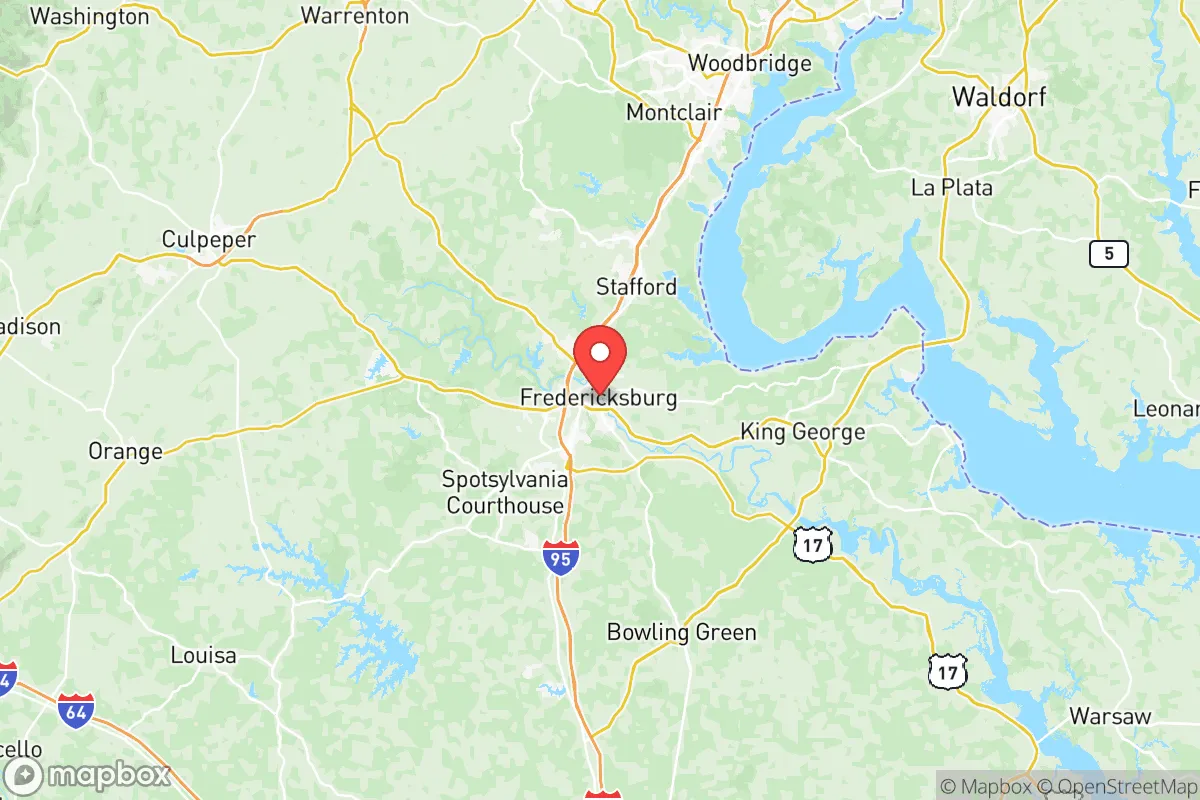
Fredericksburg City is the sole incorporated municipality within the county, functioning as both the urban center and the county seat. Daily life here revolves around the historic downtown district, anchored by the Rappahannock River, the University of Mary Washington, and a dense cluster of 18th-century buildings housing boutiques, breweries, and restaurants. The city’s population of roughly 28,000 lives in a mix of historic townhomes, modern apartments near the VRE commuter rail station, and older single-family neighborhoods like College Heights and Mayfield. Commuters dominate the morning rush, with the average commute of 32.7 minutes reflecting the many residents who drive north to Washington, D.C. (about 50 miles) or south to Richmond (about 55 miles). The city’s walk score is relatively high for the region, and residents often walk or bike to the weekly farmers market at Hurkamp Park or to events at the Fredericksburg Expo & Conference Center.
Smaller towns & rural pockets
While Fredericksburg City itself has no smaller incorporated towns, the county’s character shifts dramatically just beyond its borders into Spotsylvania and Stafford counties, which are often grouped with Fredericksburg for relocation purposes. In Spotsylvania County, the unincorporated community of Spotsylvania Courthouse (about 10 miles southwest) offers a rural feel with historic sites like the Spotsylvania Court House Battlefield, while Massaponax (south of the city) is a commercial corridor with big-box retail and newer subdivisions. In Stafford County, Aquia Harbour (about 15 miles north) is a large waterfront community on the Potomac River, and Garrisonville serves as a suburban hub with access to Marine Corps Base Quantico. True rural pockets exist in the western parts of Spotsylvania, such as Partlow and Thornburg, where horse farms and acreage lots dominate the landscape. These areas lack sidewalks and streetlights, and residents rely entirely on cars for errands and school commutes.
Cost & lifestyle range
The cost of living index of 144 (well above the national average of 100) reflects the premium for proximity to D.C., but the range within the county is wide. At the high end, downtown Fredericksburg’s historic homes and new luxury condos near the river command median home values of $461,500 and median rents of $1,521, with some properties exceeding $700,000. The lifestyle here is walkable, with coffee shops, art galleries, and the Fredericksburg Nationals minor-league baseball stadium within a 10-minute walk. At the lower end, rural areas like Partlow or Thornburg offer homes under $350,000 on 1-5 acre lots, but with no public transit and limited grocery options. Suburban communities like Lee’s Hill in Spotsylvania or England Run in Stafford fall in the middle, with townhomes and single-family homes in the $350,000–$450,000 range, plus access to newer schools and shopping centers like Central Park. Renters in the city pay a premium for proximity to the VRE station, while those in rural areas often find rents below $1,200 for older single-family homes.
This county works best for people who value a clear trade-off: urban energy and historic charm in the city core versus space and lower housing costs in the surrounding counties. History buffs, University of Mary Washington faculty, and D.C. commuters who want a train-accessible downtown thrive in Fredericksburg City. Families seeking good schools and larger yards gravitate to Spotsylvania or Stafford subdivisions. Rural residents who want acreage and privacy find their niche in the western pockets of Spotsylvania. The key is understanding that the city and its surrounding counties function as one interconnected region, with the city providing the cultural and transit hub and the counties offering the residential spread.

Crime in Fredericksburg City County
Generally safer than 60% of comparable U.S. locations.
Violent CrimeViolent Crime Analysis
Property CrimeProperty Crime Analysis
Crime Analysis
Fredericksburg City County, VA, reports a violent crime rate of 209 incidents per 100,000 residents and a property crime rate of 1,389.4 per 100,000, placing it above the national average for property offenses but below many peer cities in the Washington, D.C., exurbs. The city’s compact, 10.5-square-mile footprint and status as a regional hub for shopping, dining, and tourism along the I-95 corridor create concentrated crime patterns that differ sharply from the surrounding rural counties of Spotsylvania, Stafford, and King George. While Fredericksburg is not a high-danger city by national standards, its property crime rate—driven largely by vehicle break-ins and theft from retail areas—demands attention from prospective residents.
Crime in context
Fredericksburg’s violent crime rate of 209 per 100K is roughly 40% below the national average of 380 per 100K, but its property crime rate of 1,389.4 per 100K sits about 15% above the national average of 1,200 per 100K. Compared to nearby jurisdictions, the city is safer than Richmond (which reports violent crime near 500 per 100K) but riskier than Spotsylvania County (violent crime around 120 per 100K) and Stafford County (violent crime near 100 per 100K). The disparity reflects Fredericksburg’s dense urban core and transient population—thousands of commuters pass through daily via I-95 and the VRE rail station, creating opportunities for theft and auto crime that rural counties do not face. The Fredericksburg Commonwealth’s Attorney’s Office, which prosecutes all felony cases in the city, has faced criticism from local law enforcement for a progressive approach that emphasizes diversion programs and reduced sentencing for nonviolent offenders, a policy shift that some residents and officers argue has contributed to repeat property crime offenders cycling back onto the streets.
What residents experience
Daily life in Fredericksburg involves a clear divide between the historic downtown core and the residential neighborhoods east of I-95. The downtown area, centered on Caroline Street and the Rappahannock River waterfront, sees elevated rates of larceny and vehicle break-ins, particularly around the Central Park shopping district and the University of Mary Washington campus. Residents in the College Heights and Mayfield neighborhoods report occasional burglaries and package thefts, while the newer subdivisions near the Spotsylvania line—such as those off Harrison Road—experience lower crime rates. The Fredericksburg Police Department has responded by increasing patrols in the downtown corridor and launching a property crime task force, but the city’s limited geographic size means that no neighborhood is entirely insulated from spillover. The Rappahannock Regional Jail, which houses both city and county inmates, has seen a rising population of property crime defendants awaiting trial, a trend that local judges attribute to the city’s pretrial release policies.
Neighborhood-level variation and judicial climate
Crime in Fredericksburg is not evenly distributed. The area around the Bragg Hill and Idlewild neighborhoods—closer to the I-95 interchange and the city’s commercial strip—consistently reports the highest call volumes for theft and disorderly conduct. In contrast, the Kenmore and Dixon Street historic districts see far fewer incidents, benefiting from active neighborhood watch programs and higher home values that discourage casual crime. The city’s proximity to the larger Washington, D.C., metro area also introduces a regional dynamic: Fredericksburg serves as a bedroom community for thousands of federal workers and military personnel stationed at Quantico Marine Corps Base and Fort Belvoir, and the transient nature of this population can complicate community policing efforts. The Fredericksburg Circuit Court, under judges appointed by the Virginia General Assembly, has maintained a generally moderate sentencing record, but the city’s reliance on a progressive pretrial services program—which releases many nonviolent offenders without cash bail—has drawn concern from residents who see the same individuals arrested repeatedly for theft and drug possession. For families and retirees considering a move, the safest bet is to focus on the western half of the city near the Spotsylvania line or the established single-family-home neighborhoods off Fall Hill Avenue, where crime rates more closely mirror the surrounding counties than the urban core.
* Values derived from national, state, county, city and local statistics and may differ in a specific area. Last updated: 2026-06-28T12:31:20.000Z
Narrative content on this page is AI-generated and may contain mistakes. Verify any details that matter before acting on them.
ReloMaps may earn a commission from affiliate links at no extra cost to you.

