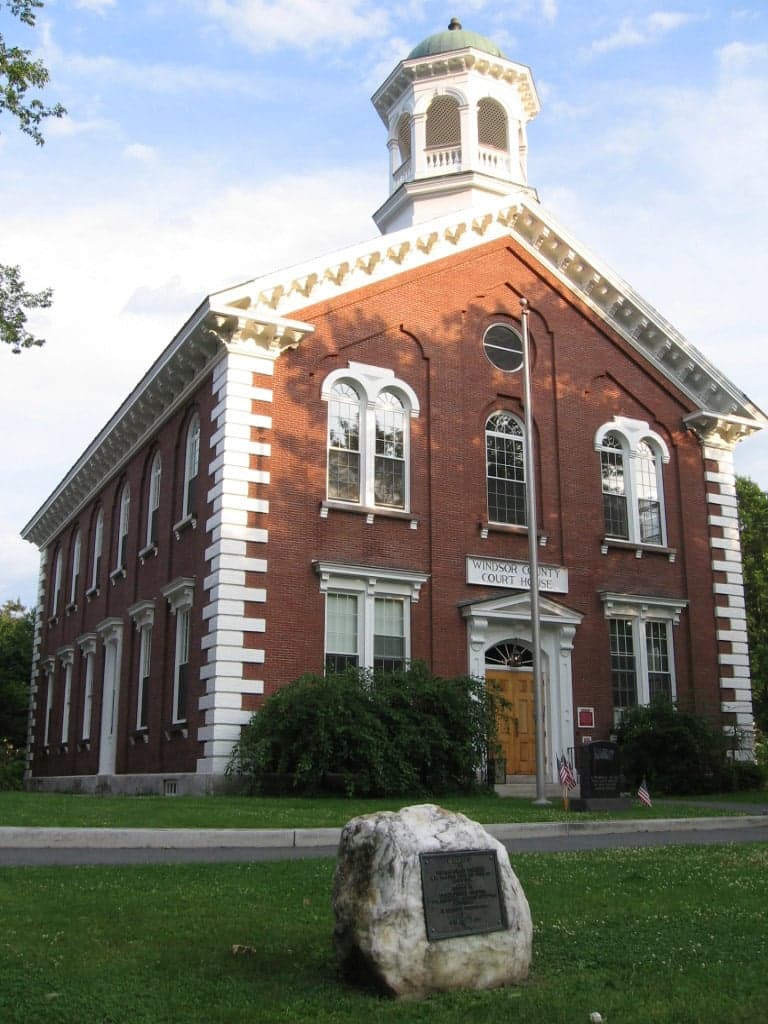
Photo: Wikipedia
Political ClimatePolitical Climate in Windsor County
Showing state-level results — no local-only data available.
Local Political AnalysisPolitical Analysis of Windsor County
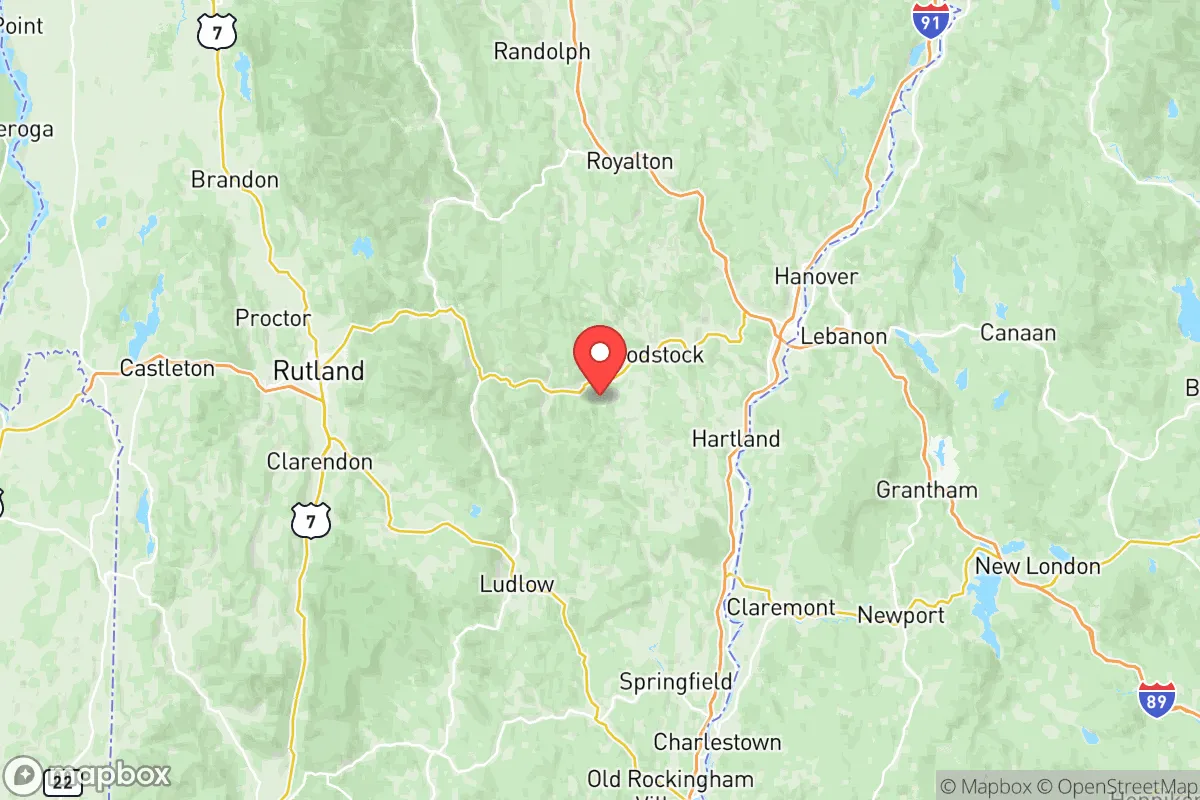
Windsor County, Vermont, carries a Cook Partisan Voting Index of D+17, making it one of the most reliably Democratic counties in New England—and it matches the state of Vermont’s overall D+17 rating exactly. That number tells you the county votes about 17 points more Democratic than the national average, but it doesn’t tell you the whole story. The real picture is more textured: you’ve got deep-blue college towns like Norwich and Woodstock, a few red-leaning pockets around Springfield and Windsor village, and a whole lot of independent-minded voters in between who’ll split tickets without a second thought.
How it compares
On paper, Windsor County and Vermont are political twins—both D+17—but the county’s internal dynamics are more polarized than the state average suggests. In the 2024 presidential election, Norwich went about 85% for the Democratic candidate, while Springfield, a former manufacturing hub, came in closer to 55% Democratic. That 30-point spread within a single county is unusual even by Vermont standards. The state as a whole has a few deep-red towns in the Northeast Kingdom, but Windsor County’s variation is driven by a sharp urban-rural and college-town-versus-working-class divide. Towns like Hartland and Weathersfield tend to be swingier, often landing within 5-10 points of the statewide average, while Ludlow and Cavendish lean left but not as hard as the Upper Valley communities. If you’re looking for the county’s political center of gravity, it’s probably somewhere along the I-91 corridor between White River Junction and Windsor—where the mix of commuters, retirees, and small-business owners creates a more moderate Democratic lean.
What this means for residents
For conservative residents, living in a D+17 county means you’re used to being outvoted in local elections, but you’re not isolated. Springfield and Windsor still elect Republicans to local offices, and the county’s state legislative delegation includes a few GOP members who reliably represent the more rural, working-class towns. You’ll find conservative social circles at local gun clubs, snowmobile clubs, and the county fairs in Tunbridge and South Royalton. For liberal residents, the political climate is comfortable but not monolithic—you’ll encounter plenty of fellow progressives in Norwich and Woodstock, but you’ll also have neighbors who disagree on taxes, development, and gun policy. The practical effect of the D+17 lean is that county-level policies—like land-use regulations, school funding, and renewable energy siting—tend to reflect Democratic priorities, but with enough pushback from the more conservative towns to keep things from going too far too fast.
Culturally, Windsor County stands apart from the rest of Vermont in a few ways. It’s home to the state’s only nuclear power plant (Vermont Yankee, now decommissioned), which left a lasting imprint on local politics—especially in Vernon and the surrounding towns, where debates about jobs, safety, and environmental risk still echo. The Upper Valley portion of the county, anchored by Dartmouth College in neighboring New Hampshire, pulls the region toward a more educated, affluent, and nationally connected Democratic base, while the southern end of the county, around Ludlow and Mount Snow, is more seasonal and tourism-driven. Policy-wise, Windsor County residents tend to be pragmatic: they support statewide gun laws and renewable energy mandates, but they also push back on property tax increases and Act 250 reforms that threaten the working landscape. The county’s political identity is best summed up as reliably Democratic but stubbornly independent—a place where party labels matter less than whether you show up to town meeting and speak your piece.

State Political ClimatePolitical Climate in Vermont
State Political AnalysisPolitical Environment in the State
Vermont is one of the most reliably Democratic states in the country, with a Cook Partisan Voting Index of D+17, meaning it votes about 17 points more Democratic than the national average in presidential elections. But that number tells only part of the story. The state has a deep-rooted tradition of independent, libertarian-leaning thought that coexists uneasily with a dominant progressive coalition in the legislature. Over the last 20 years, the Burlington metro area and the Connecticut River Valley have pulled the state sharply left, while rural towns in the Northeast Kingdom and southern counties like Rutland and Bennington have trended Republican, creating a political landscape that feels more like a patchwork of small republics than a monolithic blue state.
Urban vs. rural divide
The political map of Vermont is defined by the contrast between Chittenden County and everywhere else. Chittenden County, home to Burlington, South Burlington, and Winooski, is the engine of the state's Democratic vote. In 2024, Burlington voted over 80% for Kamala Harris, while surrounding towns like Essex and Williston also delivered lopsided Democratic margins. The University of Vermont and the state government workforce anchor this progressive base. Drive east into the Northeast Kingdom — towns like Newport, St. Johnsbury, and Lyndonville — and you'll find a different world. These areas voted for Donald Trump by double digits in 2024, driven by concerns over gun policy, energy regulation, and a sense that Montpelier doesn't listen to them. The divide isn't just about party; it's about lifestyle. Urban voters prioritize climate policy and social programs; rural voters prioritize property rights, low taxes, and the ability to use their land without state interference. The result is a state where a conservative family in Derby Line lives under the same laws as a progressive family in Burlington, but feels like they're in a different country.
Policy environment
Vermont's policy environment is shaped by a legislature that has been under Democratic supermajority control since 2021. The state has a progressive income tax structure with rates ranging from 3.35% to 8.75%, and property taxes are among the highest in the nation, driven largely by school funding. There is no sales tax on most goods, which is a notable relief for consumers. The regulatory posture is generally pro-government intervention: Vermont has some of the strictest environmental regulations in the country, including a ban on fracking and a statewide renewable energy mandate. Education policy is centralized, with Act 46 forcing school district consolidations that have been deeply unpopular in rural areas. Healthcare is a perennial battleground; Vermont attempted a single-payer system in 2014 under Governor Peter Shumlin but abandoned it due to cost. Today, the state runs a public option health insurance program called Vermont Health Connect, which has had mixed reviews. Election laws are among the most accessible in the nation: Vermont has automatic voter registration, same-day registration, no-excuse absentee voting, and universal mail-in ballots for all elections since 2020.
Recent policy direction
The last five years have seen Vermont move decisively left on several fronts, with legislation that a conservative relocator would want to weigh carefully. On gun policy, the state passed S.55 in 2023, which bans the sale of many semi-automatic firearms, limits magazine capacity to 10 rounds for long guns and 15 for handguns, and raises the purchase age to 21. This followed a 2018 package that instituted universal background checks and a 72-hour waiting period. On education and parental rights, Act 1 (2024) codified protections for LGBTQ+ students and staff, including policies on pronoun use and bathroom access that have sparked controversy in conservative towns. Vermont also passed a shield law in 2023 protecting out-of-state abortion providers and patients from legal action, and in 2024 expanded gender-affirming care protections for minors. On privacy and surveillance, Vermont has a strong data privacy law (Act 162 of 2020) that limits how companies can collect and sell personal data. Property rights are constrained by Act 250, a 1970 land-use law that gives the state broad authority over development; recent efforts to reform it have stalled. Taxation remains a flashpoint: in 2024, the legislature passed a 0.44% payroll tax to fund paid family leave, set to take effect in 2025. Voting access has been expanded further with automatic voter registration at the DMV and a requirement that towns offer early voting sites.
Civil unrest & political movements
Vermont is not a state known for large-scale civil unrest, but it has its share of organized political movements. The most visible left-wing activism centers on climate and housing. The group Extinction Rebellion staged a 2023 protest in Montpelier that blocked State Street for several hours, demanding a moratorium on new fossil fuel infrastructure. On the right, the Vermont Republican Party has been energized by gun rights activism; the group Vermonters for Self-Defense has held annual rallies at the Statehouse since 2018, drawing hundreds of attendees. The Second Amendment sanctuary movement has been adopted by over 50 towns, including Rutland, Bennington, and St. Albans, though these resolutions are symbolic and have no legal force. Immigration politics are relatively quiet; Vermont has no sanctuary city laws at the state level, but Burlington has a longstanding policy of not cooperating with federal immigration enforcement. There have been no major election integrity controversies in Vermont; the state's all-mail voting system has been widely accepted across party lines. The most notable political flashpoint in recent years was the 2023 debate over the child welfare system after the death of a two-year-old in state custody, which led to bipartisan calls for reform but no major policy changes.
Projection
Looking ahead five to ten years, Vermont's political trajectory is likely to continue leftward, but with increasing friction from rural areas. In-migration patterns are a wild card: the state has seen an influx of remote workers from New York and Boston since 2020, many of whom are progressive and settle in Chittenden County or the ski towns of Stowe and Manchester. This demographic shift strengthens the Democratic coalition but also drives up housing costs, which could fuel a backlash in working-class towns. The Republican Party in Vermont is not dead; it holds the governorship with Phil Scott, a popular moderate who has won by large margins despite the state's blue lean. But Scott is term-limited in 2026, and the GOP has no obvious successor. The legislature is likely to remain under Democratic control, meaning continued movement on climate policy, gun control, and social issues. A conservative relocator should expect property taxes to rise further, gun laws to remain restrictive, and the regulatory environment to stay hostile to development. A progressive relocator should expect a state that largely aligns with their values, but with persistent friction from rural towns that feel left behind.
For a new resident, the bottom line is this: Vermont is a state where your experience of politics depends heavily on where you live. If you're a conservative, you can find a community in the Northeast Kingdom or southern Vermont where your neighbors share your values, but you will be living under state laws that you likely oppose. If you're a progressive, you'll find Burlington and the surrounding towns to be a comfortable fit, but you'll need to accept that a significant portion of the state votes against the policies you support. The political climate here is not hostile in the way it can be in more polarized states; Vermonters tend to be civil and neighborly across party lines. But the policy direction is clear, and it's not changing anytime soon. Come for the landscape, the community, and the pace of life. Just know what you're signing up for at the ballot box.
* Values derived from national, state, county, city and local statistics and may differ in a specific area. Last updated: 2026-07-01T21:13:53.000Z
Narrative content on this page is AI-generated and may contain mistakes. Verify any details that matter before acting on them.
ReloMaps may earn a commission from affiliate links at no extra cost to you.

