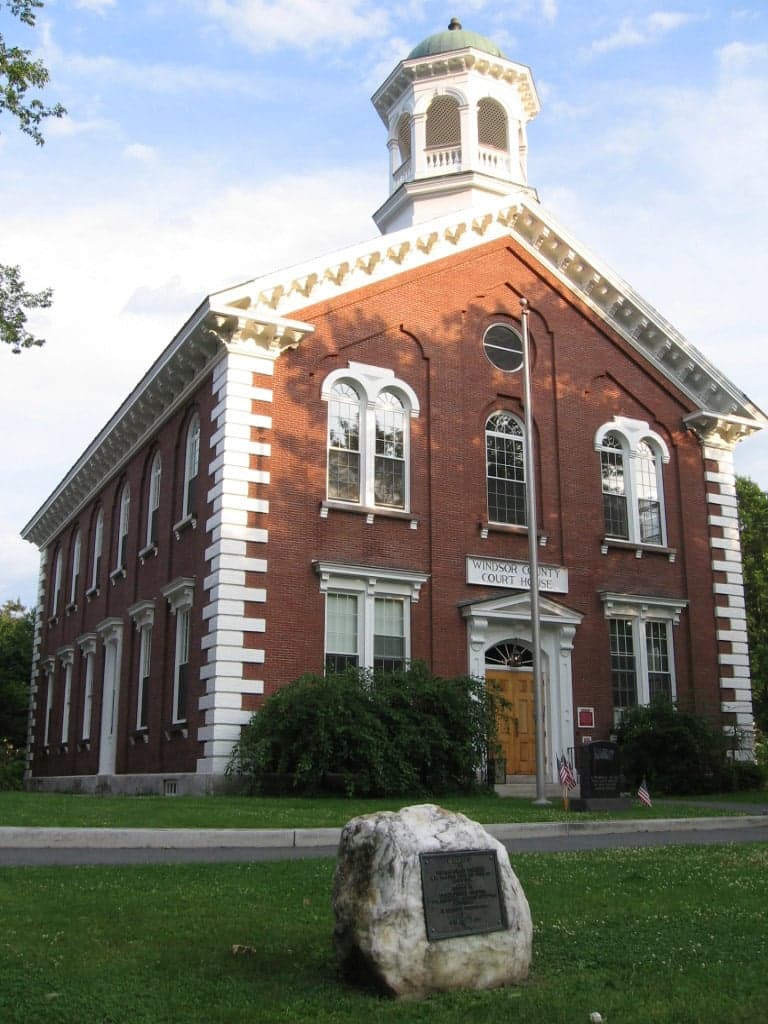
Photo: Wikipedia
Quality of Life in Windsor County
A livable area that tracks near national norms for affordability, walkability, and neighborhood health.
What does Quality of Life tell us?
Quality of Life measures an area by evaluating factors like cost of living, nearby amenities, country club access, airport proximity, socioeconomic signals and neighborhood character. For large states, this is a general average — quality of life can vary dramatically between metro areas, suburbs, and rural communities within the same state.
What does this tell us?
Quality of Life measures an area by evaluating factors like cost of living, nearby amenities, country club access, airport proximity, socioeconomic signals and neighborhood character. For large states, this is a general average — quality of life can vary dramatically between metro areas, suburbs, and rural communities within the same state.
Cost of Living
6% below national average
99%
The Real Cost of Living in Windsor County for 2026
| Tier | Individual | Family (4) |
|---|---|---|
| Survival | $17k | $33k |
| Comfortable | $52k | $76k |
| Luxury | $136k+ | $211k+ |
| Elite (Top 5%) | $175k+ | $272k+ |
Quality-of-Life Analysis
Windsor County, Vermont offers a quality-of-life spectrum that spans from walkable, amenity-rich river towns to remote hill farms and forested hollows, attracting everyone from remote workers and second-home buyers to multigenerational farming families and outdoor recreationists. The county’s character shifts noticeably as you travel along the Connecticut River valley and into the Green Mountain foothills, with each subregion presenting a distinct trade-off between convenience, privacy, and cost. With a cost-of-living index of 94 (100 = U.S. average), the county remains more affordable than much of southern New England, though prices vary significantly between its largest town and its most rural corners.
Largest town(s) & population centers
Hartford (population roughly 9,900) is Windsor County’s largest municipality and its primary commercial and transportation hub. The town includes the villages of White River Junction, Quechee, and Wilder, each with a distinct feel. White River Junction functions as the county’s de facto downtown, with a walkable main street lined with independent bookstores, breweries, co-working spaces, and the Northern Stage theater. Quechee, by contrast, is anchored by the Quechee Lakes planned community — a golf-and-ski resort development with a private lake, a sizable second-home population, and home values well above the county median of $267,400. Windsor (pop. ~5,500), the county seat, is a smaller mill town along the Connecticut River with a compact historic district, the Windsor Welcome Center, and a growing cluster of craft beverage producers. Springfield (pop. ~6,000) is the county’s third-largest population center and retains a working-class industrial character, anchored by the Precision Valley manufacturing corridor and the Springfield Hospital system. Daily life in these towns typically involves short commutes — the county average is just over 23 minutes — and access to grocery stores, medical clinics, and public schools within a 10-minute drive.
Smaller towns & rural pockets
Beyond the population centers, Windsor County is defined by dozens of smaller towns and unincorporated villages where services are sparse but land is more affordable and privacy is abundant. Woodstock is the county’s most famous small town — a postcard-perfect village with a preserved 19th-century green, the Billings Farm & Museum, and the Woodstock Inn. It draws affluent retirees and telecommuters, and its real estate market is among the county’s most expensive. Plymouth, just west of Woodstock, is a tiny, unincorporated town that includes the Calvin Coolidge State Historic Site and large tracts of state forest; it has no downtown, no grocery store, and a year-round population under 200. Rochester, in the county’s western Green Mountain section, is a small valley town popular with backcountry skiers and hikers accessing the Moosalamoo region and the Green Mountain National Forest. Reading and Cavendish are classic Vermont hill towns — each with a general store, a volunteer fire department, and a population under 1,000 — where residents often commute 30–40 minutes to jobs in Springfield or Lebanon, New Hampshire. Barnard, home to Silver Lake and the Barnard General Store, is a seasonal community where summer lakefront cottages and year-round homes sit side by side on narrow dirt roads.
Cost & lifestyle range
The cost spread across Windsor County is wide. At the high end, Woodstock and Quechee command median home prices well above $500,000, with many properties exceeding $800,000; the lifestyle there is resort-oriented, with fine dining, equestrian facilities, and private ski access at Suicide Six. At the low end, Springfield and Windsor offer median home values closer to $200,000–$230,000, and Rochester and Reading still have fixer-upper homes and land parcels under $250,000. Median rent countywide is $1,089, but rental inventory is tight in all towns; two-bedroom apartments in White River Junction often list for $1,400–$1,600, while similar units in Springfield or Windsor rent for $900–$1,100. Property taxes in Vermont are among the highest in the nation — roughly 1.8%–2.2% of assessed value depending on the town — which significantly raises the true cost of homeownership even in lower-priced areas. Amenity access follows the same gradient: Hartford and Woodstock have full-service grocery stores, urgent care, and multiple dining options; residents of Plymouth, Reading, or Barnard typically drive 20–30 minutes for a supermarket or pharmacy.
Windsor County best suits people who value outdoor recreation, small-scale community life, and a slower pace, and who can tolerate limited retail options and long winters. Remote workers, retirees, and families seeking good public schools and low crime rates tend to thrive here, particularly in the larger towns where broadband and services are reliable. Those who need urban amenities, frequent air travel, or a robust rental market will find the county frustrating — but for anyone drawn to the Green Mountains, the Connecticut River, and a genuine small-town social fabric, Windsor County offers one of the most livable rural-urban spectrums in northern New England.

Crime in Windsor County
Generally safer than 71% of comparable U.S. locations.
Violent CrimeViolent Crime Analysis
Property CrimeProperty Crime Analysis
Crime Analysis
Windsor County, Vermont, presents a mixed safety profile that is significantly shaped by its rural character and the progressive criminal justice policies common across the state. With a violent crime rate of 216.7 per 100,000 residents and a property crime rate of 1,438.3 per 100,000, the county is safer than the national average but faces challenges that are amplified by Vermont's lenient approach to prosecution and sentencing. Residents in towns like Springfield, Windsor, and White River Junction report higher incidences of property crime and drug-related offenses, while more isolated communities such as Woodstock and Ludlow experience far fewer incidents, reflecting a stark urban-rural divide within the county.
Crime in context
Windsor County's violent crime rate of 216.7 per 100,000 is roughly 40% lower than the national average of approximately 380 per 100,000, but it is notably higher than the Vermont state average of about 200 per 100,000. Property crime in the county, at 1,438.3 per 100,000, is about 20% below the national rate of 1,954 per 100,000 but aligns closely with the Vermont state average. These figures mask significant variation within the county. The presence of progressive district attorneys in Windsor County's judicial district, who often prioritize diversion programs and reduced incarceration for non-violent offenders, has been linked to higher recidivism rates for property crimes. Towns like Springfield and Windsor see elevated theft and burglary numbers, while Hartland and Norwich report rates well below the county average, benefiting from their proximity to the more conservative-leaning law enforcement culture of neighboring New Hampshire.
What residents experience
For daily life in Windsor County, the most pressing safety concern is not violent crime but property crime and drug-related offenses, particularly in the county's population centers. Residents in White River Junction and Springfield frequently report vehicle break-ins, package thefts, and vandalism, with many incidents linked to the opioid crisis that has deeply affected Vermont. The progressive judicial philosophy in the region means that even repeat property offenders often face minimal jail time, leading to a sense among residents that the system prioritizes offender rehabilitation over public safety. In contrast, communities like Woodstock and Ludlow—which are wealthier, more tourist-oriented, and have their own local police forces—experience far fewer incidents, though they are not immune to the spillover effects of crime from larger towns. The Vermont State Police, which handles law enforcement in many unincorporated areas, maintains a professional presence but is often stretched thin across the county's 976 square miles.
Neighborhood-level variation in Windsor County is pronounced and closely tied to economic conditions and local governance. The Springfield area, with its aging industrial base and higher poverty rates, consistently reports the highest crime numbers, while the Upper Valley region around Norwich and Hanover (the latter across the river in New Hampshire) enjoys some of the lowest crime rates in the state. Residents considering a move to Windsor County should research specific towns carefully: the progressive criminal justice policies that dominate in Vermont's more populated areas mean that property crime is a persistent nuisance in towns like Windsor and Springfield, while the quieter, more conservative-leaning communities of Plymouth and Reading offer a markedly safer daily experience. Overall, Windsor County is a place where the safety landscape is defined less by the raw crime numbers and more by the philosophical approach to justice that governs how those numbers are addressed.
* Values derived from national, state, county, city and local statistics and may differ in a specific area. Last updated: 2026-07-01T21:13:53.000Z
Narrative content on this page is AI-generated and may contain mistakes. Verify any details that matter before acting on them.
ReloMaps may earn a commission from affiliate links at no extra cost to you.

