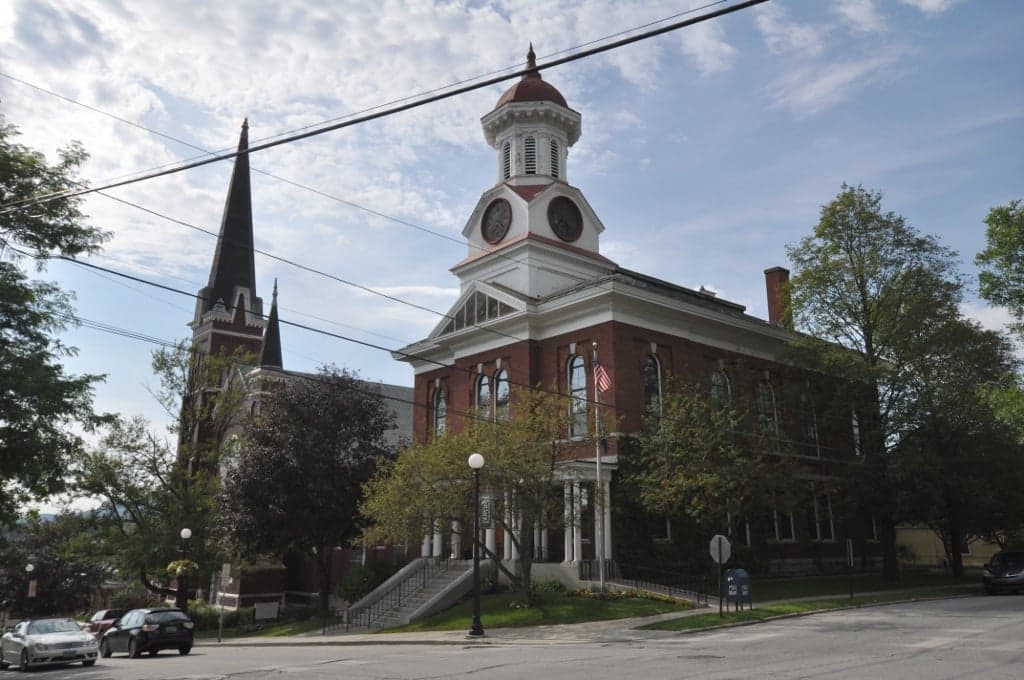
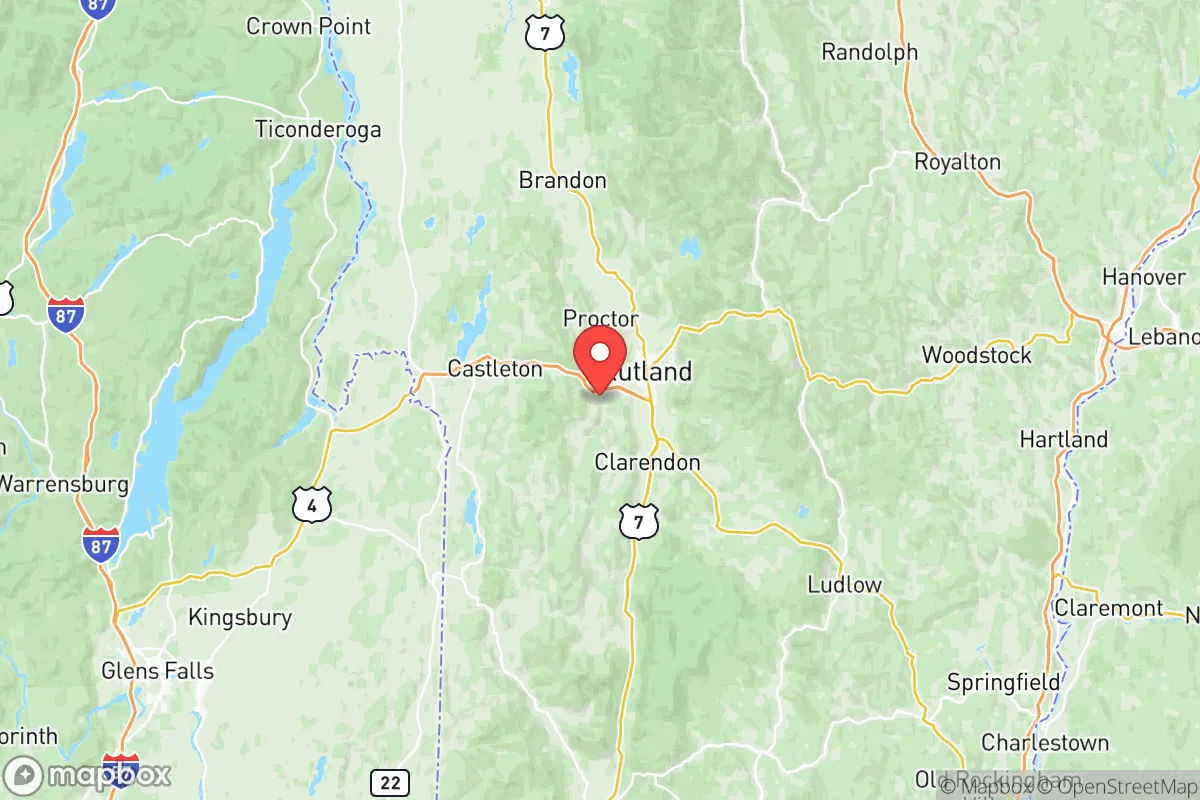
Photo: Wikipedia
Quality of Life in Rutland County
A livable area that tracks near national norms for affordability, walkability, and neighborhood health.
What does Quality of Life tell us?
Quality of Life measures an area by evaluating factors like cost of living, nearby amenities, country club access, airport proximity, socioeconomic signals and neighborhood character. For large states, this is a general average — quality of life can vary dramatically between metro areas, suburbs, and rural communities within the same state.
What does this tell us?
Quality of Life measures an area by evaluating factors like cost of living, nearby amenities, country club access, airport proximity, socioeconomic signals and neighborhood character. For large states, this is a general average — quality of life can vary dramatically between metro areas, suburbs, and rural communities within the same state.
Cost of Living
19% below national average
104%
The Real Cost of Living in Rutland County for 2026
| Tier | Individual | Family (4) |
|---|---|---|
| Survival | $15k | $29k |
| Comfortable | $42k | $62k |
| Luxury | $117k+ | $181k+ |
| Elite (Top 5%) | $141k+ | $218k+ |
Quality-of-Life Analysis
Rutland County, Vermont, offers a quality-of-life spectrum that spans from walkable, amenity-rich small cities to deeply rural, off-grid homesteads, drawing everyone from remote workers and outdoor enthusiasts to families seeking affordable housing and retirees looking for a quieter pace. The county's character shifts noticeably as you move from the regional hub of Rutland City outward to villages like Brandon, Castleton, and the mountain towns of Killington and Mendon, each with its own distinct daily rhythm and cost profile. With a cost of living index of 81 (well below the national average of 100), a median home value of $218,400, and a median rent of $965, the county provides a tangible affordability advantage over much of New England, though the trade-offs in amenities and commute times vary significantly by location.
Largest town(s) & population centers
Rutland City is the county's primary population center, home to roughly 15,000 residents and the region's commercial, medical, and transportation hub. Daily life here centers on the downtown core along Merchants Row and Center Street, with a mix of independent shops, restaurants, and services, plus the Rutland Regional Medical Center as a major employer. The city offers the most diverse housing stock, from historic Victorians near the downtown to more affordable multi-family units and starter homes in neighborhoods like the Northwest and Southeast quadrants. Rutland Town, immediately adjacent, provides a more suburban feel with strip-mall retail along US-7 and larger lot sizes, while Killington (population ~800 year-round, swelling with seasonal residents) is the county's resort and recreation anchor, offering a completely different lifestyle centered on skiing, mountain biking, and second-home ownership. The average commute across the county is 22.8 minutes, but residents of Killington and Mendon often face longer drives to reach Rutland City's grocery stores and medical facilities.
Smaller towns & rural pockets
Beyond the population centers, Rutland County is dotted with historic villages and unincorporated areas that define its rural character. Brandon, along the Neshobe River, is a well-preserved 19th-century village with a walkable downtown, the Brandon Inn, and a strong arts scene anchored by the Brandon Artists Guild. Castleton, home to Castleton University, offers a college-town vibe with a small village green and easy access to Lake Bomoseen, the county's largest lake. Poultney, straddling the New York border, is another college town (Green Mountain College, now closed, but the village retains its historic architecture and a quiet, affordable character). For those seeking true seclusion, Mount Holly and Middletown Springs are tiny, unincorporated communities with minimal services, dirt roads, and large forested tracts—ideal for off-grid living or hunting camps. Wallingford and Clarendon offer a middle ground: small villages with a general store and post office, but residents typically commute to Rutland City for most shopping and employment.
Cost & lifestyle range
The cost and lifestyle spread across Rutland County is stark. At the higher end, Killington and Mendon command premium prices for ski-in/ski-out condos and mountain-view homes, with median values often exceeding $400,000—well above the county median of $218,400. These areas attract second-home owners, remote workers with high incomes, and seasonal renters willing to pay $1,500+ per month for a studio near the slopes. At the lower end, Poultney, West Rutland, and Fair Haven offer some of Vermont's most affordable housing, with fixer-upper homes available for under $150,000 and rents often below $800. These towns have fewer dining and entertainment options but provide a genuine small-town lifestyle with low property taxes relative to Chittenden County. The county's median rent of $965 is a full 30% below the national average, making it one of the most affordable rental markets in Vermont, though inventory is tight and many units are older. Amenities follow the density gradient: Rutland City has a Walmart, multiple grocery chains, a hospital, and a regional airport (Rutland–Southern Vermont Regional Airport), while residents of Mount Holly or Middletown Springs may drive 25-30 minutes for a gallon of milk.
Rutland County is best suited for those who prioritize affordability and outdoor access over urban nightlife and high-end dining. Remote workers, retirees on fixed incomes, and young families priced out of Burlington or southern New England will find the most value here, particularly in the smaller villages and rural pockets. Ski enthusiasts and seasonal residents gravitate toward Killington and Mendon, while those who want walkable amenities and a sense of community without the cost of a larger city will find a comfortable fit in Brandon, Castleton, or Rutland City itself. The county's trade-off is clear: lower costs and slower pace in exchange for fewer job opportunities and longer drives to specialized services, but for the right resident, that equation works well.

Crime in Rutland County
Generally safer than 71% of comparable U.S. locations.
Violent CrimeViolent Crime Analysis
Property CrimeProperty Crime Analysis
Crime Analysis
Rutland County, Vermont, presents a mixed safety profile that demands careful consideration from potential residents. With a violent crime rate of 216.7 per 100,000 residents and a property crime rate of 1,438.3 per 100,000, the county's statistics exceed state averages and approach levels more typical of larger, more urbanized areas in the Northeast. The county's largest municipality, the city of Rutland, drives much of this crime volume, while smaller towns like Brandon, Fair Haven, and Castleton generally report lower incident rates, though they are not immune to the county's broader property crime trends.
Crime in context
Rutland County's violent crime rate of 216.7 per 100,000 is significantly higher than Vermont's statewide average of roughly 170 per 100,000 and approaches the national average of about 230 per 100,000. The property crime rate of 1,438.3 per 100,000 is notably elevated compared to Vermont's state figure of approximately 1,100 per 100,000, though it remains below the national average of roughly 1,950 per 100,000. These numbers place Rutland County among the higher-crime jurisdictions in Vermont, alongside Chittenden County (Burlington area), but well below the most dangerous counties in states like New Hampshire or New York. The city of Rutland itself accounts for a disproportionate share of reported offenses, particularly aggravated assaults and larcenies, while the more rural towns of West Rutland, Proctor, and Pittsford see substantially fewer incidents per capita.
What residents experience
Property crime is the most common safety concern for Rutland County residents, with vehicle break-ins, theft from porches, and burglaries of seasonal homes being recurring issues, especially in the city of Rutland and along the Route 4 corridor. The county's opioid crisis has been a persistent driver of both property and violent crime, with the Rutland City Police Department reporting that a significant percentage of thefts are connected to substance use disorders. Violent crime, while less frequent, is concentrated in specific areas: Rutland City's downtown and certain residential neighborhoods near the city center see the majority of aggravated assaults and robberies. The Rutland County State's Attorney's Office, operating under a progressive prosecutorial philosophy in recent years, has drawn criticism for pursuing alternatives to incarceration and declining to prosecute certain low-level offenses, a policy approach that some residents and local officials argue has emboldened repeat offenders and contributed to a perception of lawlessness in the city core. Towns like Killington and Mendon, which rely heavily on tourism and seasonal residents, experience property crime spikes during the winter and summer seasons, though violent crime remains rare in these communities.
Neighborhood-level safety varies considerably across Rutland County. The city of Rutland's northwest and southwest quadrants, particularly areas near the downtown commercial district and along West Street, report the highest concentrations of both violent and property crime. In contrast, the more affluent neighborhoods in the city's southeast and the suburban areas of Rutland Town, Center Rutland, and North Clarendon experience significantly lower crime rates. The rural towns of Chittenden, Goshen, and Sudbury report very few incidents annually, making them attractive options for those prioritizing safety. However, the county's overall crime picture is heavily influenced by the city of Rutland's struggles with addiction, poverty, and a justice system that many believe prioritizes offender rehabilitation over public safety. Prospective residents should carefully evaluate specific towns and neighborhoods, as the difference between living in Rutland City versus a nearby town like Wallingford or Poultney can mean a dramatically different experience of safety and security.
* Values derived from national, state, county, city and local statistics and may differ in a specific area. Last updated: 2026-07-12T03:42:43.000Z
Narrative content on this page is AI-generated and may contain mistakes. Verify any details that matter before acting on them.
ReloMaps may earn a commission from affiliate links at no extra cost to you.

