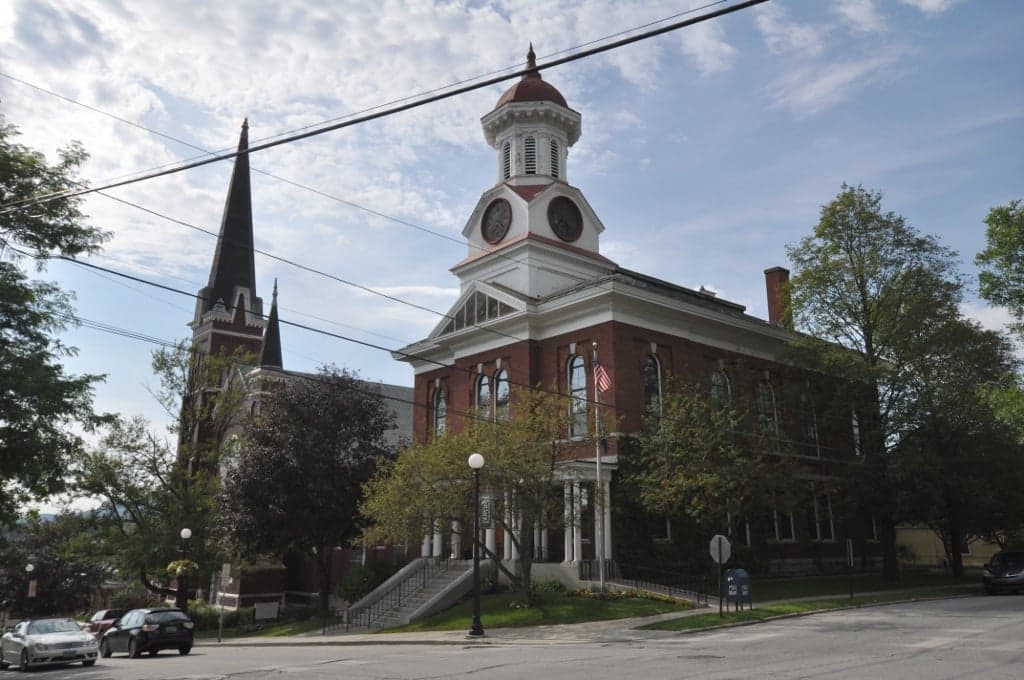
Photo: Wikipedia
Personal Sovereignty in Rutland County
Moderate friction. Expect trade-offs in some aspect of personal liberty and independence.
What does Personal Sovereignty tell us?
Personal Sovereignty measures your capacity for self-reliance and independence with minimal government friction. Higher scores mean fewer barriers between you and the way you want to live... but it assumes you have the space you need and good neighbors.
What does this tell us?
Personal Sovereignty measures your capacity for self-reliance and independence with minimal government friction. Higher scores mean fewer barriers between you and the way you want to live... but it assumes you have the space you need and good neighbors.
State Policy
Energy independence: Importer (15% of energy produced in-state)
Personal Liberty
Homesteading

Personal Liberty Analysis
Rutland County, Vermont, offers a notably high degree of personal sovereignty relative to much of the Northeast, blending a live-and-let-live cultural ethos with a state-level legal framework that is generally permissive on self-defense, property rights, and self-reliance. While Vermont is not a low-tax state overall, the county's rural character and local governance in towns like Pittsford, Brandon, and Castleton create an environment where regulatory oversight is often lighter and more neighborly than in Chittenden County (Burlington) or the state's more populated corridors. For individuals and families prioritizing autonomy, the trade-off is clear: you accept a moderate state tax burden in exchange for some of the strongest personal liberties and gun laws in the country, paired with genuine opportunities for off-grid and homesteading lifestyles.
Tax burden and regulatory climate in Rutland County
Vermont's state-level tax burden is among the highest in the nation, driven by income taxes (a progressive 3.35%–8.75% bracket) and property taxes that fund education. In Rutland County, however, the effective property tax rate is moderated by relatively lower home values compared to the Burlington area. The town of Rutland City itself has a higher tax rate due to municipal services, but surrounding towns like Hubbardton and Sudbury have lower mill rates and less local bureaucracy. The regulatory posture in the county is generally light-touch for small-scale activities: there are no county-level zoning boards, and most land-use decisions are made at the town level. This means that in more rural towns, building permits for owner-built structures, sheds, and fences are often handled informally. Vermont's Act 250, the state's land-use law, applies only to larger developments (typically 10+ acres of subdivision or commercial projects), so most homesteading activities on standard lots are exempt. The state does have a sales tax (6%) and a meals and rooms tax (9%), but no local sales taxes, keeping the cost of daily goods predictable. For a conservative-leaning reader, the key takeaway is that while you cannot escape Vermont's progressive income tax, the county's towns offer a low-friction environment for property use and small-scale enterprise.
Self-defense rights and gun law specifics in Vermont
Vermont is one of the most gun-friendly states in the nation, with a legal framework that prioritizes individual rights. The state has no permit requirement for concealed or open carry of handguns or long guns, no firearm registration, no magazine capacity restrictions, and no waiting periods. This is a constitutional carry state, meaning any law-abiding adult 18 or older can carry a firearm without a license. In Rutland County, this legal reality is matched by a strong gun culture. The Rutland County Fish and Game Club in Poultney and the Green Mountain Rifle and Pistol Club in Mendon are active ranges. Local gun shops in Rutland City and Fair Haven report steady business, and shooting on private land is common and accepted. Vermont does have a "red flag" law (Extreme Risk Protection Order) passed in 2020, which allows law enforcement to petition a court to temporarily remove firearms from an individual deemed a danger to themselves or others. This law is enforced statewide, including in Rutland County, but it is used sparingly and requires a court hearing. For the self-defense-minded individual, Rutland County offers one of the most permissive legal environments in the country, with the only notable restriction being the red flag law.
Self-reliance and homesteading viability across the county
Rutland County is one of the most viable areas in Vermont for off-grid and homesteading lifestyles, thanks to its mix of affordable land, permissive zoning, and a culture of self-reliance. Lot sizes vary widely: in towns like Benson and West Haven, you can find parcels of 5–20 acres for under $100,000, often with no subdivision restrictions. Zoning in these rural towns is minimal; many have no building codes for owner-occupied structures, and permits for solar panels, rainwater collection, and composting toilets are generally straightforward. Off-grid living is legal and common: you can install a septic system, drill a well, and set up solar without connecting to the grid. The town of Shrewsbury is known for its intentional off-grid community, while Chittenden (the town, not the county) has a strong DIY ethos. Vermont's net metering policy allows you to sell excess solar power back to the grid, and the state has a generous solar tax credit. The growing season is short (Zone 4–5), but with a greenhouse, year-round vegetable production is feasible. For families looking to raise livestock, the county has no county-level animal ordinances; towns like Brandon and Pittsford allow chickens, goats, and even small-scale pig farming on standard residential lots. The main constraint is winter: heating with wood is common, and many homesteaders rely on wood stoves as primary heat sources. Overall, Rutland County offers a realistic path to self-reliance that is hard to find in most of the Northeast.
Personal liberties: parental rights, medical autonomy, and property
Vermont's legal framework is generally protective of personal liberties, though with some notable nuances. On parental rights, the state has a strong tradition of local control over education. School choice is available in many towns: students can attend public schools in neighboring districts, and there are several independent and religious schools in the county, including the Mount Saint Joseph Academy in Rutland City and the Long Trail School in Dorset (just over the county line). Homeschooling is legal and requires only a simple enrollment notice; there are no curriculum mandates or testing requirements for homeschoolers. On medical autonomy, Vermont is a progressive state: it has legalized recreational cannabis (with retail stores in Rutland City and Wallingford), and it has a physician-assisted suicide law. Vaccine mandates for schoolchildren exist, but religious and philosophical exemptions are available. On property rights, the state's Act 250 can be a hurdle for larger developments, but for individual landowners, the ability to build, fence, and use your land is broad. Vermont has no statewide ban on short-term rentals like Airbnb, though some towns like Killington have local regulations. Free speech is robustly protected under the Vermont Constitution, which has its own free speech clause that is often interpreted more broadly than the First Amendment. For a conservative-leaning reader, the county offers a high degree of personal freedom in daily life, with the main trade-offs being the state's progressive social policies on cannabis and end-of-life care, which may or may not align with personal values.
In the broader context of the United States, Rutland County ranks as one of the most sovereignty-friendly areas in the Northeast, comparable to parts of New Hampshire's North Country or Maine's Washington County. The combination of constitutional carry, minimal zoning in rural towns, affordable land, and a culture of self-reliance creates an environment where personal autonomy is genuinely high. The main compromises are Vermont's state-level tax burden and its progressive social legislation, but for the individual or family who values the freedom to carry a firearm, build a homestead, and raise children with minimal government interference, Rutland County offers a rare balance of liberty and practicality that is increasingly hard to find in the region.

* Values derived from national, state, county, city and local statistics and may differ in a specific area. Last updated: 2026-07-12T03:42:43.000Z
Narrative content on this page is AI-generated and may contain mistakes. Verify any details that matter before acting on them.
ReloMaps may earn a commission from affiliate links at no extra cost to you.

