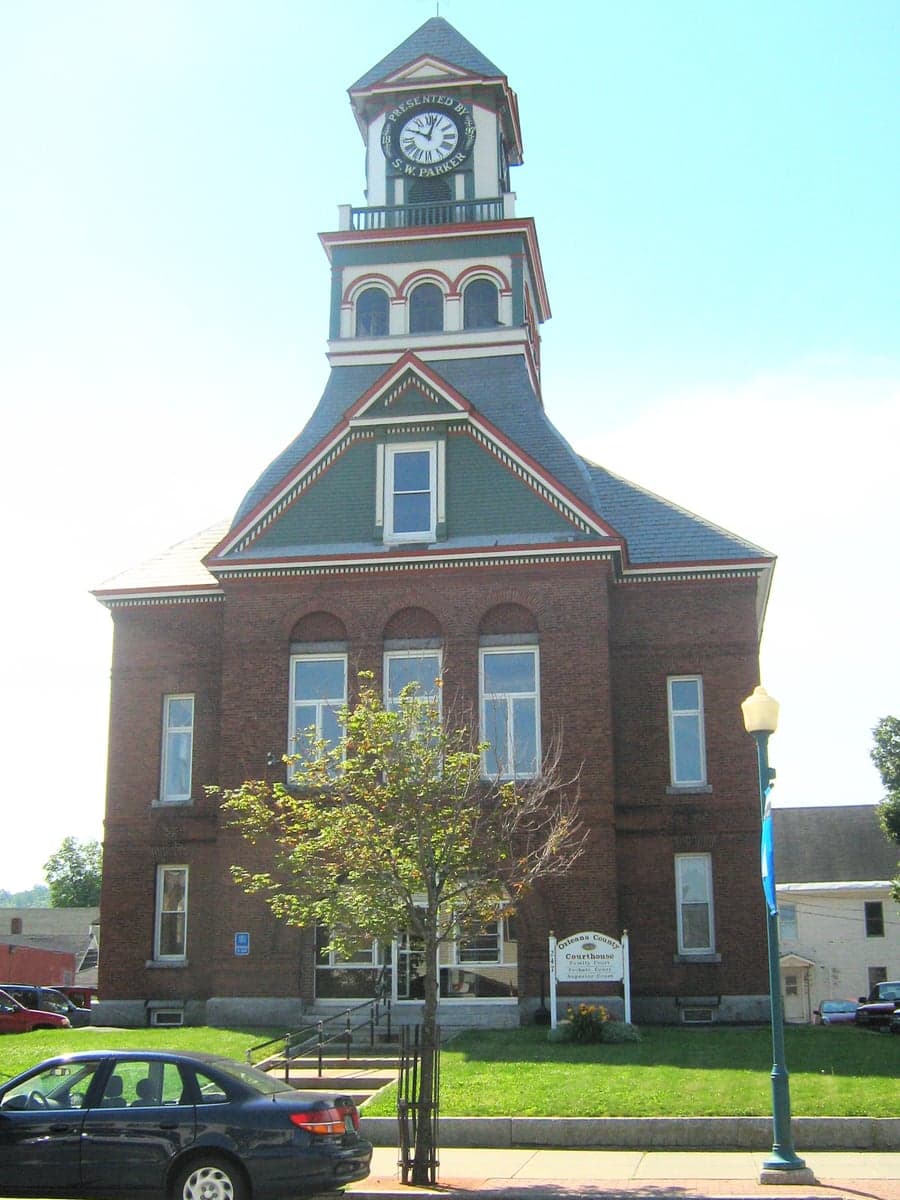
Photo: Wikipedia
Political ClimatePolitical Climate in Orleans County
Showing state-level results — no local-only data available.
Local Political AnalysisPolitical Analysis of Orleans County
Orleans County, Vermont, carries a Cook Partisan Voting Index (PVI) of D+17, meaning it leans about 17 points more Democratic than the national average. This is identical to the statewide Vermont PVI of D+17, placing the county squarely in the state's mainstream political center of gravity. However, that uniform index masks a sharp internal divide: the county's political reality is a patchwork of deep-blue villages and reliably red rural towns, a split that has only widened since the 2016 election. The overall trend is a slow but steady drift leftward, driven by an influx of remote workers and second-home owners from the Boston and New York metro areas, but the pace is uneven and the resistance from long-time conservative communities is real.
How it compares
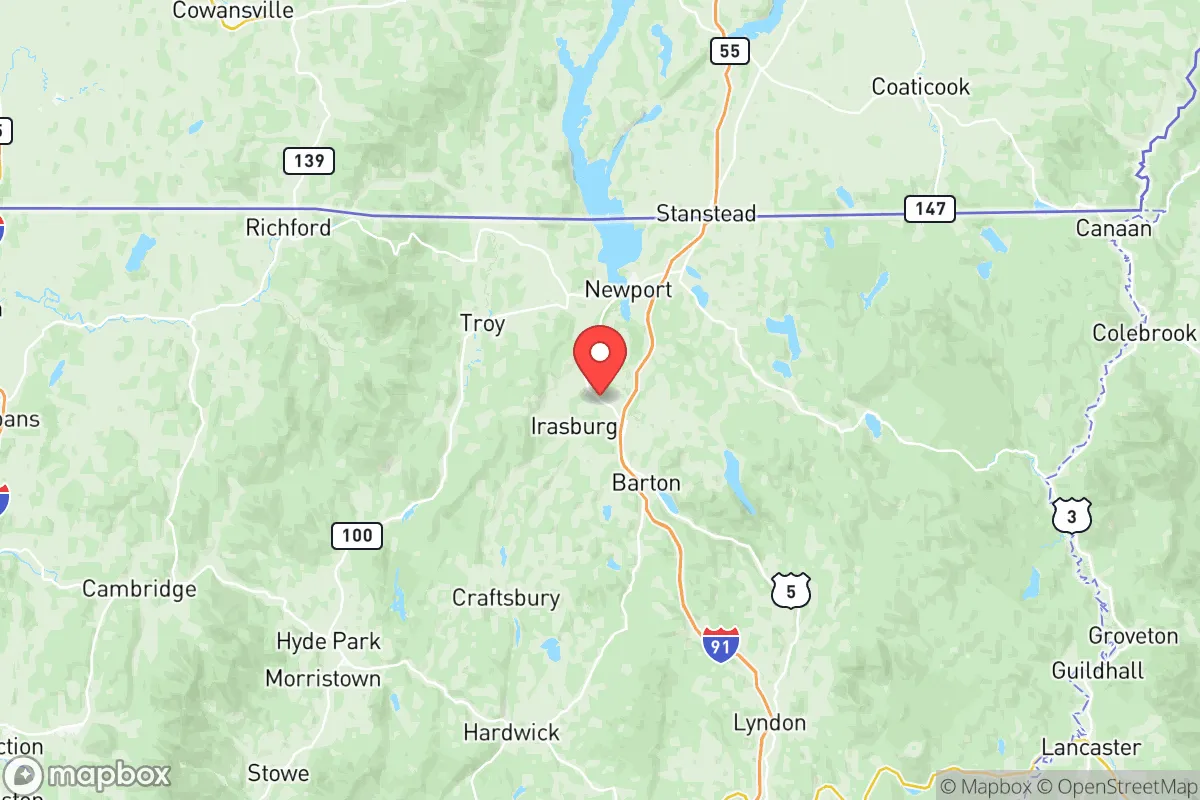
While Orleans County's D+17 PVI matches the state's average, the lived experience of politics here is far more polarized than that number suggests. In the county seat of Newport City, Democratic and Progressive candidates routinely win by 20-30 points, fueled by a concentration of state employees, healthcare workers, and younger families. Drive 15 minutes south to Barton or Irasburg, and the map flips: these towns regularly vote Republican by margins of 10-15 points, with Trump outperforming his statewide numbers in 2020 and 2024. The swing precincts are in Derby and Coventry, where the mix of lakefront property owners and working-class loggers creates races that are often decided by fewer than 100 votes. Compared to the rest of Vermont, Orleans County is less uniformly liberal than Chittenden County (Burlington) but notably more Democratic than the neighboring Northeast Kingdom counties of Essex and Caledonia, which sit closer to D+10. The county's political identity is best understood as a microcosm of the state's urban-rural tension, compressed into a single, small geography.
What this means for residents
For conservative residents, the D+17 lean means they are a clear minority in countywide elections, but they hold real power at the town level. In places like Lowell and Westfield, local selectboards and school boards are dominated by Republicans and independents who prioritize low taxes, gun rights, and local control over state mandates. These towns have been vocal in resisting Act 250 (land use) reforms and the state's paid family leave program. For liberal residents, the county's overall lean provides a comfortable environment for progressive policy advocacy, but they often find themselves frustrated by the slow pace of change in the more rural towns. The practical effect is a kind of live-and-let-live coexistence: you can fly a Trump flag on your porch in Irasburg without getting a side-eye, and you can put a Black Lives Matter sign in your yard in Newport City without fear of vandalism. The friction points are mostly over school funding and land use, where the state's progressive agenda bumps up against local autonomy.
Culturally, Orleans County stands apart from the rest of Vermont in its strong French-Canadian and logging heritage, which tempers the state's otherwise crunchy, environmentalist reputation. Gun ownership is nearly universal across political lines, and the local economy's reliance on agriculture and manufacturing means that even Democratic voters here tend to be more pragmatic and less ideologically pure than their counterparts in Burlington. The county's political future likely hinges on demographic turnover: as older, native-born residents age out and are replaced by newcomers, the D+17 lean may deepen, but the internal town-by-town split is likely to persist for at least another decade.

State Political ClimatePolitical Climate in Vermont
State Political AnalysisPolitical Environment in the State
Vermont is one of the most reliably Democratic states in the country, with a Cook PVI of D+17, meaning it votes about 17 points more Democratic than the national average in presidential elections. The state hasn't voted for a Republican presidential candidate since George H.W. Bush in 1988, and the Democratic lean has only deepened over the last two decades — from a D+9 PVI in 2000 to D+17 today. But calling Vermont simply "blue" misses the real story: it's a state with a fiercely independent streak, a deep libertarian undercurrent, and a political culture that values local control and neighborly consensus over party loyalty. For a conservative-leaning relocator, the reality is more nuanced than the registration numbers suggest.
Urban vs. rural divide
The political map of Vermont is a classic urban-rural split, but with a twist. The Democratic stronghold is Chittenden County, anchored by Burlington — the state's largest city and a progressive hub that routinely elects socialists to city council and sent Bernie Sanders to Congress. Burlington and its inner suburbs like South Burlington and Winooski drive the state's D+17 lean, with precincts regularly hitting 80% Democratic. But drive 30 minutes in any direction and the landscape shifts. Rutland, the state's third-largest city, is a working-class former marble and railroad town that has trended more competitive; it voted for Trump in 2016 before flipping back to Biden in 2020. The Northeast Kingdom — counties like Essex, Orleans, and Caledonia — is culturally and politically closer to northern New Hampshire than to Burlington, with many towns voting 60-65% Republican. St. Johnsbury and Newport are conservative outposts where gun rights and property taxes dominate local conversation. The divide isn't just urban vs. rural — it's also interstate corridor vs. back roads. Towns along I-89 from Burlington down to Montpelier and White River Junction tend to vote Democratic, while the more remote hill towns and southern counties like Bennington and Windham are mixed but lean left, thanks to second-home owners and out-of-state transplants from New York and Massachusetts.
Policy environment
Vermont's policy environment is shaped by a progressive majority in the legislature and a Republican governor who acts as a check. Taxes are high: the state has a progressive income tax with a top rate of 8.75%, a 6% sales tax (with no local add-ons), and some of the highest property tax rates in the country, driven largely by education spending. The state has no right-to-work law, and union density is above the national average. Education policy is dominated by Act 46, a 2015 school consolidation law that forced small districts to merge, which remains deeply unpopular in rural towns that lost their local schools. Healthcare is heavily regulated; Vermont was the first state to create a universal healthcare system (Green Mountain Care), though it never fully launched, and the state now runs a public option called Dr. Dynasaur for children and a state-based insurance exchange. Election laws are among the most accessible in the country: universal mail-in voting was made permanent after 2020, same-day registration is available, and the state has no voter ID law. For a conservative relocator, the tax burden and regulatory density are the biggest practical concerns, though the state's small size means government is generally more accessible than in larger states.
Recent policy direction
Over the last five years, Vermont has moved decisively left on several fronts, but with notable exceptions. Gun policy shifted dramatically after 2018, when the legislature passed S.55, a package that included universal background checks, a waiting period, a ban on magazines over 10 rounds, and a red flag law. This was a major departure for a state with a strong hunting and sporting culture, and it remains a flashpoint — several towns passed resolutions declaring themselves "Second Amendment sanctuaries," though these have no legal force. Parental and education rights saw a major battle in 2024 over Act 1, which expanded protections for LGBTQ+ students and required schools to notify parents of curriculum changes; opponents argued it undermined parental notification, and the law remains controversial. Medical and bodily autonomy is broadly protected: Vermont codified abortion rights in 2019 via Act 47, and in 2023 passed a shield law protecting providers who prescribe or mail abortion pills to patients in states where it's illegal. Property rights are constrained by Act 250, the state's landmark land-use law, which imposes strict permitting on development — a source of frustration for builders and landowners alike. Taxation has trended upward: in 2024, the legislature passed a 0.4% payroll tax to fund paid family leave, set to take effect in 2025. Voting and ballot access expanded with automatic voter registration at the DMV and universal mail-in ballots. On the other hand, privacy and surveillance saw a win for conservatives: Vermont passed a data privacy law in 2024 that limits how companies can collect and sell personal data, drawing bipartisan support.
Civil unrest & political movements
Vermont is not a state known for street protests or civil unrest, but political activism runs deep and organized. The Yellow Vests movement, a loose coalition of gun rights advocates and anti-tax activists, held rallies at the Statehouse in Montpelier in 2019-2020, drawing hundreds. The Rutland County area has seen organized opposition to refugee resettlement programs, particularly after the city of Rutland's 2016 plan to resettle Syrian refugees sparked heated town meetings and a failed lawsuit. Immigration politics are a mixed bag: Burlington is a sanctuary city, and the state has a law limiting cooperation with ICE, but the issue is less visible than in border states. Secession and nullification rhetoric is present but marginal — the "Second Vermont Republic" movement, which advocates for peaceful secession, has a small following but no political power. Election integrity controversies are muted compared to swing states; Vermont's universal mail-in system has broad bipartisan support, and there have been no major fraud allegations. The most visible flashpoint for a new resident would likely be the annual gun rights rally at the Statehouse on Town Meeting Day, where hundreds of activists in orange gather to protest further restrictions.
Projection
Over the next 5-10 years, Vermont is likely to become more Democratic, but also more internally divided. In-migration is driven by remote workers from New York, Boston, and California, who tend to be progressive and settle in Chittenden County and the southern parts of the state. This is slowly shifting the rural-urban balance: towns like Brattleboro and Middlesex are seeing an influx of out-of-state buyers, driving up home prices and pushing the political center of gravity leftward. At the same time, native-born Vermonters in the Northeast Kingdom and southern rural towns are becoming more politically organized and vocal, particularly around property taxes, gun rights, and school consolidation. The Republican Party in Vermont is weak but not dead — it holds the governorship (Phil Scott, a popular moderate, is expected to run again in 2026) and about a third of the legislature, but it has no bench of statewide candidates who can win without Scott's crossover appeal. The most likely scenario is a continued Democratic trifecta in state government, with the governor's office remaining Republican as a check. For a relocator, this means the policy trajectory — higher taxes, tighter gun laws, expanded social programs — will continue, but with enough rural resistance to slow the pace.
For a conservative-leaning individual or family moving to Vermont, the bottom line is this: you will be in the political minority, but you won't be isolated. The state's small size means you'll have neighbors who share your values, particularly in the Northeast Kingdom, Rutland County, and parts of the southern tier. You'll pay higher taxes and deal with more regulation than in a red state, but you'll also get functional government, excellent schools in most districts, and a level of civic engagement that's rare elsewhere. The key is choosing your town carefully — Newport and St. Johnsbury feel very different from Burlington and Montpelier. If you value local control, outdoor recreation, and a slower pace of life, Vermont can work for you regardless of your politics — just don't expect the state's direction to change anytime soon.
* Values derived from national, state, county, city and local statistics and may differ in a specific area. Last updated: 2026-07-02T19:46:59.000Z
Narrative content on this page is AI-generated and may contain mistakes. Verify any details that matter before acting on them.
ReloMaps may earn a commission from affiliate links at no extra cost to you.

