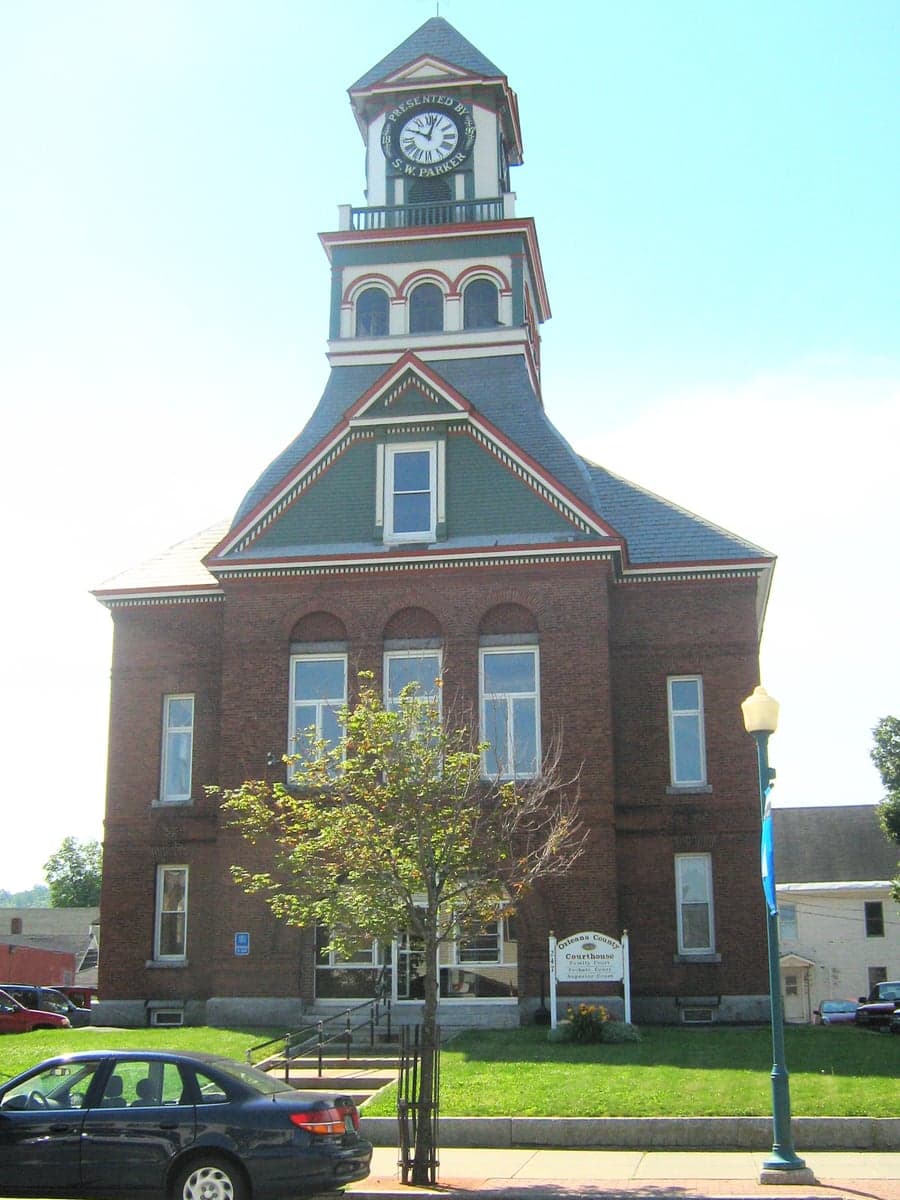
Photo: Wikipedia
Personal Sovereignty in Orleans County
Moderate friction. Expect trade-offs in some aspect of personal liberty and independence.
What does Personal Sovereignty tell us?
Personal Sovereignty measures your capacity for self-reliance and independence with minimal government friction. Higher scores mean fewer barriers between you and the way you want to live... but it assumes you have the space you need and good neighbors.
What does this tell us?
Personal Sovereignty measures your capacity for self-reliance and independence with minimal government friction. Higher scores mean fewer barriers between you and the way you want to live... but it assumes you have the space you need and good neighbors.
State Policy
Energy independence: Importer (15% of energy produced in-state)
Personal Liberty
Homesteading

Personal Liberty Analysis
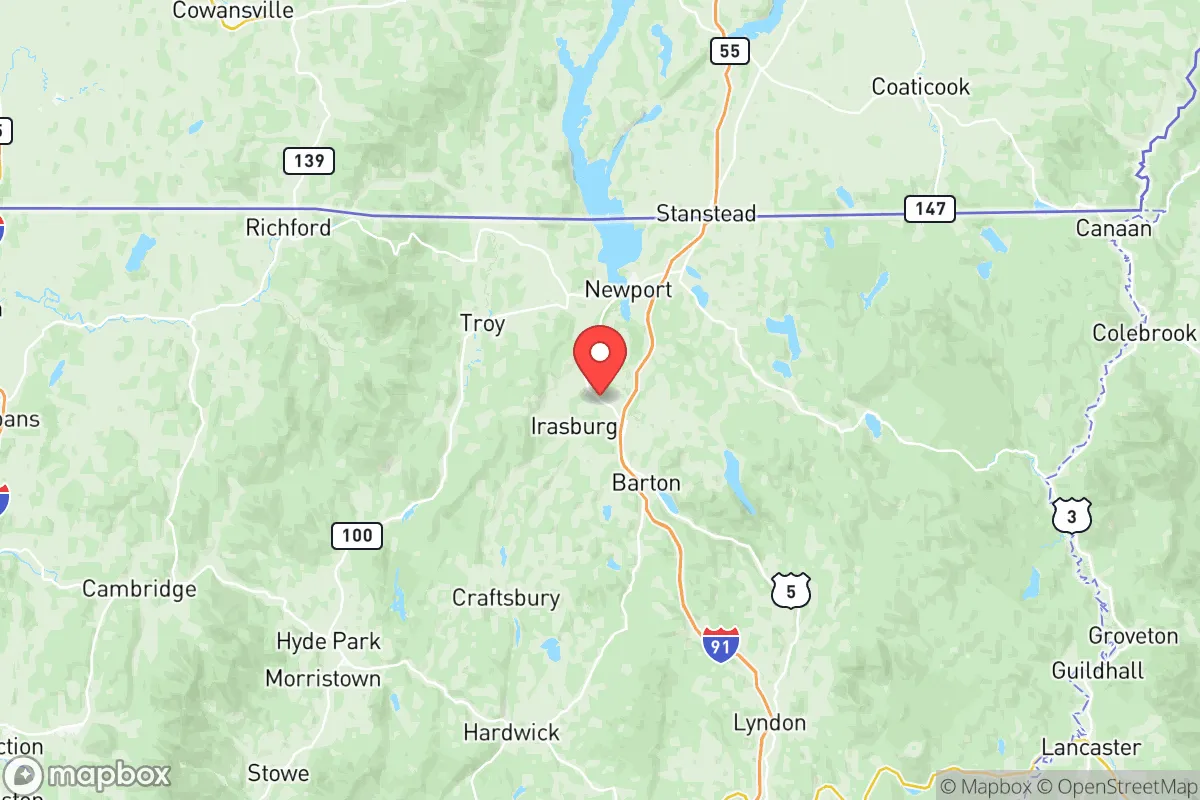
Orleans County, Vermont, offers a distinctive personal sovereignty environment that balances the state's progressive social framework with a deeply rooted rural independence, creating a nuanced landscape for those prioritizing autonomy. While Vermont's statewide policies on taxation and regulation lean moderate compared to neighboring New Hampshire, Orleans County's remote geography and small-town character foster a practical self-reliance that appeals to conservative-leaning individuals and families. The county's population of roughly 27,000 is spread across towns like Newport City, the county seat, and smaller communities such as Derby, Barton, Irasburg, Coventry, and Lowell, each with distinct regulatory and cultural nuances that affect personal freedom.
Tax burden and regulatory posture for residents and small businesses
Orleans County operates under Vermont's statewide tax structure, which is moderate by national standards but higher than neighboring New Hampshire's zero-income-tax model. Vermont's income tax rates range from 3.35% to 8.75%, and the state's property tax system funds education through a statewide pool, with rates varying by town. In Orleans County, property tax rates are generally lower than in Chittenden County (Burlington area), with Newport City and Derby seeing effective rates around 1.5% to 1.8% of assessed value, compared to over 2% in more affluent areas. The regulatory posture for small businesses is relatively light at the county level, with no additional county-level business licensing beyond state requirements. However, Vermont's Act 250 land-use law applies statewide and can add permitting hurdles for development, particularly in towns like Barton and Irasburg where agricultural and forestland conversions require state review. For residents, the absence of a county sales tax (Vermont's state sales tax is 6%) and no local option taxes in most Orleans County towns keeps the day-to-day cost of living manageable, though the overall tax burden is higher than in low-tax states like Texas or Florida.
Self-defense rights and gun law specifics in Vermont
Vermont is a constitutional carry state, meaning no permit is required to carry a concealed firearm for anyone legally allowed to possess one, a policy that aligns with the preferences of conservative-leaning residents. The state also has preemption laws that prevent local municipalities from enacting their own gun ordinances, ensuring uniform gun laws across Orleans County. In practice, this means that in Newport City and Derby, gun ownership and carry are unrestricted by local rules, and the culture is strongly pro-Second Amendment. Vermont does have a red flag law (Extreme Risk Protection Order) enacted in 2020, which allows law enforcement to petition for temporary firearm removal, but enforcement in rural Orleans County is less aggressive than in urban areas. The state also requires background checks for all firearm sales, including private transactions, which is a point of contention for some advocates of absolute gun rights. For self-defense, Vermont law recognizes the Castle Doctrine (no duty to retreat in one's home) but does not have a broad Stand Your Ground statute outside the home, meaning the legal framework is slightly more restrictive than in states like Florida or Texas. Overall, Orleans County's gun-friendly culture and constitutional carry make it a strong choice for those prioritizing self-defense autonomy, though the red flag law and universal background checks are notable limitations.
Self-reliance and homesteading viability across Orleans County
Orleans County's rural character and zoning flexibility make it one of Vermont's more viable areas for homesteading and off-grid living. Minimum lot sizes vary by town: Coventry and Lowell have large rural parcels with minimal zoning, often allowing building on lots of 2 acres or more without subdivision review, while Newport City has standard residential zoning with smaller lots (0.25 to 1 acre) and stricter building codes. Off-grid living is feasible in unincorporated areas and towns with lax enforcement, such as Irasburg and Barton, where residents can install solar panels, composting toilets, and rainwater collection systems without extensive permitting, provided they meet basic state health regulations for wastewater. Vermont's statewide building code (the Vermont Residential Building Energy Standards) applies to new construction, but enforcement in rural Orleans County is often complaint-driven rather than proactive. For those seeking agricultural self-sufficiency, the county's fertile valleys and low land prices (median home values around $200,000, significantly below the state average of $300,000) make it accessible for small-scale farming. However, Vermont's Act 250 can complicate larger homesteading projects, such as building a barn or starting a commercial farm, if the project triggers review thresholds. For families looking to raise livestock, grow food, and minimize reliance on utilities, towns like Lowell and Coventry offer the most permissive environments, while Newport City and Derby are more suited to those who want rural character with easier access to services.
Personal liberties: parental rights, medical autonomy, speech, and property
Vermont's legal framework generally supports personal liberties in several key areas, though with notable differences from conservative-leaning states. Parental rights are strong in practice, with no state-level mandates for critical race theory or comprehensive sex education in K-12 schools, though the state does require schools to have anti-bullying policies that include sexual orientation and gender identity. School choice is limited compared to states with robust voucher programs, but Orleans County has several public schools and a small number of private and religious options, particularly in Newport City and Derby. Medical autonomy is a mixed picture: Vermont has no state income tax deduction for health savings accounts, and the state's all-payer healthcare model (Green Mountain Care) emphasizes universal access, which some conservatives view as limiting choice. However, vaccine mandates for adults are minimal, and the state does not have a religious exemption for school vaccine requirements, which is a point of contention for some families. Free speech protections are robust under both the U.S. and Vermont constitutions, with no state-level hate speech laws that criminalize expression, though local ordinances in Newport City may regulate public demonstrations. Property rights are generally strong, with Vermont's right-to-farm law protecting agricultural activities from nuisance lawsuits, a benefit for homesteaders in Barton and Irasburg. However, Act 250 and local zoning can limit how property is used, particularly near lakes and rivers, which affects waterfront properties in Derby and Newport City. For those prioritizing maximum personal autonomy, Orleans County offers a solid foundation, but the state's progressive social policies on healthcare and education may require compromise.
Overall, Orleans County provides a high degree of personal sovereignty relative to many parts of the Northeast, particularly in terms of gun rights, homesteading feasibility, and low population density that minimizes government intrusion in daily life. The county's tax burden is moderate, and the regulatory environment is lighter than in Vermont's more populous counties, but it does not match the libertarian-leaning policies of neighboring New Hampshire or states like Texas. For conservative-leaning individuals and families who value self-reliance and are comfortable with Vermont's moderate tax and social framework, Orleans County—especially towns like Lowell, Coventry, and Irasburg—offers a viable balance of freedom and practicality. Those seeking the absolute lowest regulatory burden may prefer New Hampshire's Coös County just across the border, but Orleans County's lower land prices and strong rural culture make it a compelling alternative for those willing to accept Vermont's statewide policies in exchange for a quieter, more independent lifestyle.

* Values derived from national, state, county, city and local statistics and may differ in a specific area. Last updated: 2026-07-02T19:46:59.000Z
Narrative content on this page is AI-generated and may contain mistakes. Verify any details that matter before acting on them.
ReloMaps may earn a commission from affiliate links at no extra cost to you.

