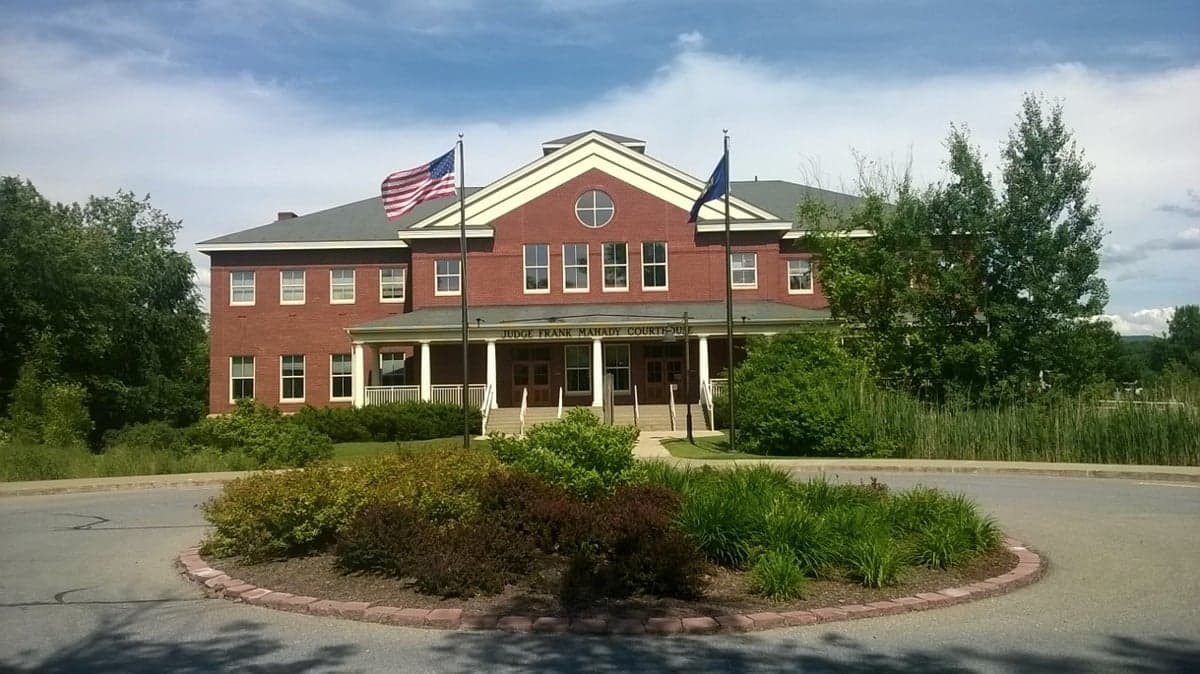
Photo: Wikipedia
Political ClimatePolitical Climate in Addison County
Showing state-level results — no local-only data available.
Local Political AnalysisPolitical Analysis of Addison County
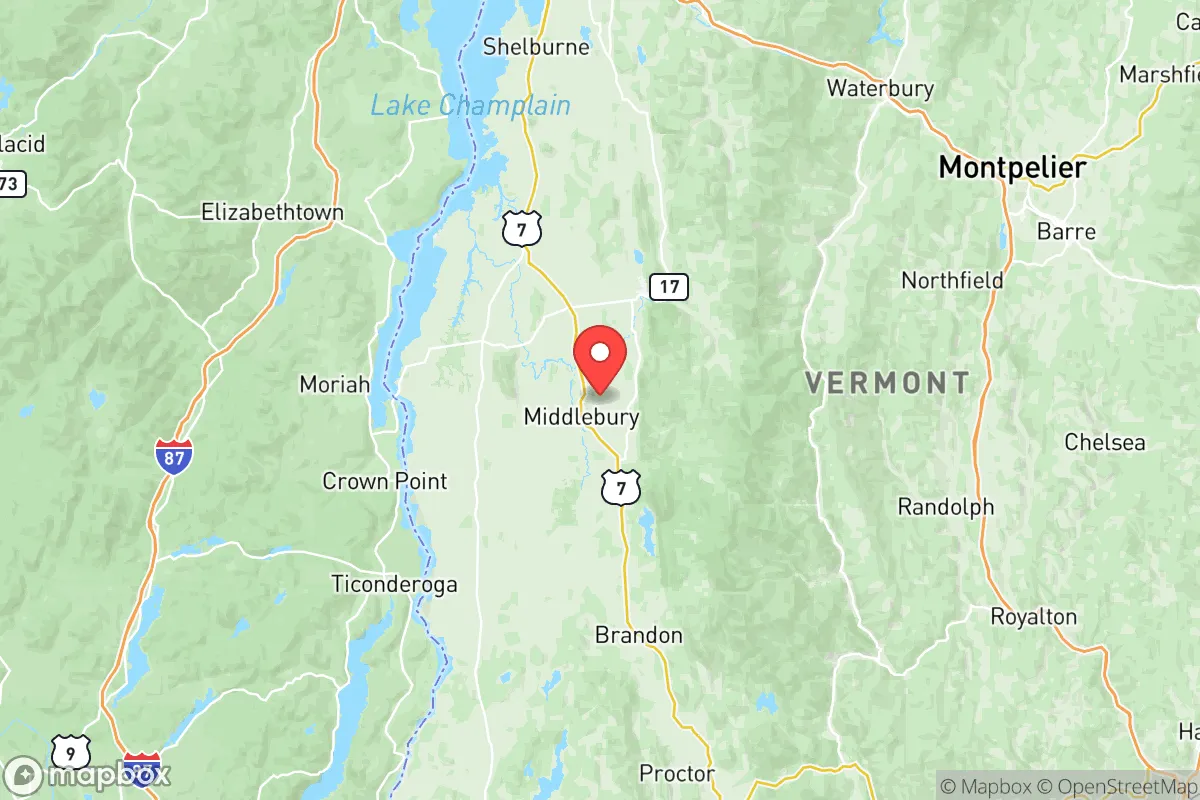
Addison County, Vermont, is a reliably Democratic stronghold with a Cook PVI of D+17, matching the state of Vermont as a whole. This means the county is about 17 points more Democratic than the national average, a lean that has been consistent for decades but has intensified in recent presidential cycles. While the county overall is a safe bet for Democrats, the political reality on the ground is far more nuanced, with a distinct urban-rural split that shapes local elections and daily life.
How it compares
At first glance, Addison County and Vermont share the same D+17 PVI, suggesting identical politics. But the comparison is more revealing at the local level. Vermont’s D+17 is driven by the deep-blue Chittenden County (Burlington), while Addison County’s D+17 is a composite of very different towns. Middlebury, home to Middlebury College, is the county’s liberal anchor, routinely delivering 75-80% of its vote to Democratic candidates. In contrast, towns like Bristol and Vergennes are more moderate, often voting 55-60% Democratic, while Shoreham and Whiting in the Champlain Valley lean Republican, sometimes breaking 55-60% for GOP candidates. This internal variation is wider than in many other Vermont counties, where the urban-rural divide is less pronounced. The county’s overall D+17 masks a real political diversity that you don’t see in, say, Windham County (D+20) or Essex County (R+8).
What this means for residents
For a liberal resident, Addison County is a comfortable place to live. You’ll find broad support for environmental policies, public education, and social services. The county government and school boards are reliably progressive, and you’ll rarely feel like your values are out of step with the majority. For a conservative resident, the picture is more complex. You’re a clear minority in countywide elections, but you’re not isolated. In towns like Shoreham and Whiting, you’ll find like-minded neighbors, and local offices like selectboard and school board are often competitive. The practical impact is that conservative voices are heard on issues like property taxes, land use regulations, and school funding, but they rarely carry countywide policy debates. The political climate is generally civil—people know their neighbors across the aisle—but the cultural divide is real, especially around gun rights and development.
Cultural and policy distinctions
Addison County’s political culture is shaped by its agricultural economy and its college town. The county is the heart of Vermont’s dairy industry, and that farming heritage creates a pragmatic, land-use-focused conservatism in the rural towns that’s different from the culture-war conservatism seen elsewhere. You’ll see more “Vermont Republicans”—fiscally conservative, socially moderate—than in many other parts of the state. At the same time, Middlebury’s influence pulls the county toward progressive environmental and social policies, like the town’s recent push for a renewable energy mandate. A key policy distinction: Addison County has been a testing ground for Vermont’s Act 250 land-use law, with frequent debates over agricultural exemptions and development in the Champlain Valley. This creates a local political dynamic where the environment and farming are the dominant issues, not the national culture wars. The result is a county that votes like the rest of Vermont but feels distinctly its own—a place where a dairy farmer and a college professor can find common ground on protecting open land, even if they disagree on almost everything else.

State Political ClimatePolitical Climate in Vermont
State Political AnalysisPolitical Environment in the State
Vermont is one of the most reliably Democratic states in the union, with a Cook Partisan Voting Index of D+17, meaning it votes about 17 points more Democratic than the national average in presidential elections. That said, the state’s political culture is far from the progressive monolith outsiders often imagine — it’s a deeply independent place with a strong libertarian streak, a fierce attachment to local control, and a Republican governor who has won repeatedly in a legislature dominated by Democrats and Progressives. Over the last 10-20 years, the state has shifted leftward on social and environmental policy, but the pace and direction of that shift have created real friction between the liberal Burlington corridor and the more conservative, rural rest of the state.
Urban vs. rural divide
The political map of Vermont is a textbook case of urban-rural polarization. Chittenden County, home to Burlington, South Burlington, and Winooski, is the state’s Democratic stronghold — Burlington itself is a progressive bastion where the Vermont Progressive Party holds real power, and the county routinely delivers margins of 70-80% for Democratic presidential candidates. Drive 30 minutes south to Rutland or east to Barre, and you’ll find working-class towns that have trended Republican in recent cycles, though they still vote blue in statewide races more often than not. The Northeast Kingdom — counties like Orleans, Essex, and Caledonia — is the most conservative region of the state, with many towns voting 60-70% Republican in 2024. Bennington and Brattleboro in the south lean left but are more moderate than Burlington, while St. Albans and Newport in the north lean right. The divide isn’t just about party — it’s about lifestyle: the urban core wants aggressive climate action and social spending, while rural towns prioritize property tax relief, gun rights, and keeping the state from telling them what to do.
Policy environment
Vermont’s policy environment is a mix of high-tax progressivism and hands-off localism. The state has a progressive income tax with a top marginal rate of 8.75% on income over $213,150, and property taxes are among the highest in the nation — driven largely by school funding through a statewide education fund. There is no sales tax on most goods, which is a notable relief. The regulatory posture is generally business-friendly at the local level but strict on environmental and land-use issues, especially around Act 250, the state’s landmark development control law. Healthcare is a major issue: Vermont has a publicly funded health insurance system for low-income residents (Dr. Dynasaur) and a state-run health insurance exchange, but costs remain high and access in rural areas is a persistent problem. Education policy is dominated by school choice — Vermont has long allowed students to attend public schools outside their district, and many towns use public funds to send kids to private or independent schools. Election laws are among the most accessible in the country: same-day voter registration, universal mail-in ballots for all elections, and no voter ID requirement. This is a point of pride for the left and a concern for conservatives who worry about election integrity.
Recent policy direction
In the last few years, Vermont has moved decisively left on several fronts. Gun and self-defense law: In 2023, the legislature passed a ban on carrying firearms in hospitals, schools, and courthouses, and in 2024 it passed a 72-hour waiting period for all gun purchases, overriding Governor Phil Scott’s veto. Magazine capacity limits and a red-flag law are already on the books. Parental and education rights: The state has some of the strongest LGBTQ+ nondiscrimination protections in schools, and in 2024 it passed a law requiring schools to affirm a student’s chosen name and pronouns without parental notification if the student requests it — a flashpoint for conservative families. Medical and bodily autonomy: Vermont was the first state in the nation to pass a law codifying abortion rights via a constitutional amendment (Article 22) in 2023, and it has no gestational limits on abortion. Property rights: Act 250 continues to be a battleground — recent reforms in 2024 aimed to streamline permitting for housing development, but environmental groups fought to keep strict oversight. Taxation: The state passed a new 3% surcharge on capital gains income over $500,000 in 2024, and there is ongoing debate about a wealth tax on high-value estates. Voting and ballot access: Universal mail-in voting was made permanent in 2023, and automatic voter registration was expanded. For a conservative relocator, the takeaway is clear: Vermont is moving left on guns, education, and taxation, but the pace is moderated by a Republican governor who has vetoed many of these bills — only to be overridden by the supermajority legislature.
Civil unrest & political movements
Vermont is not a state known for street-level political violence, but it has a long tradition of organized activism. The Yellow Vests movement, a loose coalition of gun rights advocates and anti-tax activists, held rallies at the Statehouse in Montpelier in 2020-2021, drawing hundreds. The Rights and Democracy group organizes progressive protests on climate and social justice issues. Immigration politics are relatively quiet — Vermont has no major sanctuary city policy, but Burlington has a long-standing "welcoming city" ordinance that limits cooperation with federal immigration enforcement. Secession and nullification rhetoric is mostly a fringe phenomenon, though the "Second Vermont Republic" movement, which advocates for peaceful secession, has a small but vocal online presence. Election integrity controversies are minimal compared to swing states, but conservative activists have raised concerns about the lack of voter ID and the universal mail-in system — concerns that have not gained mainstream traction. The most visible flashpoint for a new resident would likely be the annual gun rights rally at the Statehouse, which draws a few hundred activists, and the counter-protests from gun control groups. Overall, the political temperature is lower than in many states, but the divide between the progressive urban core and the libertarian-leaning rural towns is real and occasionally heated.
Projection
Over the next 5-10 years, Vermont is likely to continue its leftward drift on social and environmental policy, but the pace will be constrained by demographic and economic realities. The state is aging faster than almost any other, with a median age of 43, and population growth is flat to negative in most rural counties. In-migration from out of state — particularly from New York and Massachusetts — is concentrated in Chittenden County and a few scenic towns like Stowe and Woodstock, and these newcomers tend to be more liberal and wealthier, reinforcing the urban-rural divide. The Republican Party in Vermont is increasingly a rural, older, and more conservative party, while the Democratic Party is becoming younger, more urban, and more progressive. The governor’s office is likely to remain Republican for the near term — Phil Scott is popular and has not yet announced retirement — but the legislature will stay firmly Democratic and Progressive. The biggest wild card is property taxes: if they continue to rise at current rates (they’ve increased 20%+ over the last five years), a tax revolt could shift the political landscape, particularly in the more conservative rural towns. For someone moving in now, expect a state that is increasingly progressive on social issues, increasingly expensive on taxes, and increasingly divided between the Burlington metro and everywhere else.
Bottom line for a new resident: If you’re a conservative, you’ll find a strong community of like-minded people in the Northeast Kingdom, Rutland County, and the rural towns — but you’ll be living in a state where your vote is consistently outnumbered at the statewide level, and where the legislature is actively moving in a direction you may oppose on guns, education, and taxes. If you’re a liberal, you’ll find a state that largely aligns with your values, but you’ll pay for it in high property taxes and a cost of living that is rising faster than wages. Either way, Vermont is a place where local relationships matter more than party labels, and where the independence that defines the state’s character means you can live your life largely as you see fit — as long as you’re willing to pay the price.
* Values derived from national, state, county, city and local statistics and may differ in a specific area. Last updated: 2026-07-19T02:16:58.000Z
Narrative content on this page is AI-generated and may contain mistakes. Verify any details that matter before acting on them.
ReloMaps may earn a commission from affiliate links at no extra cost to you.

