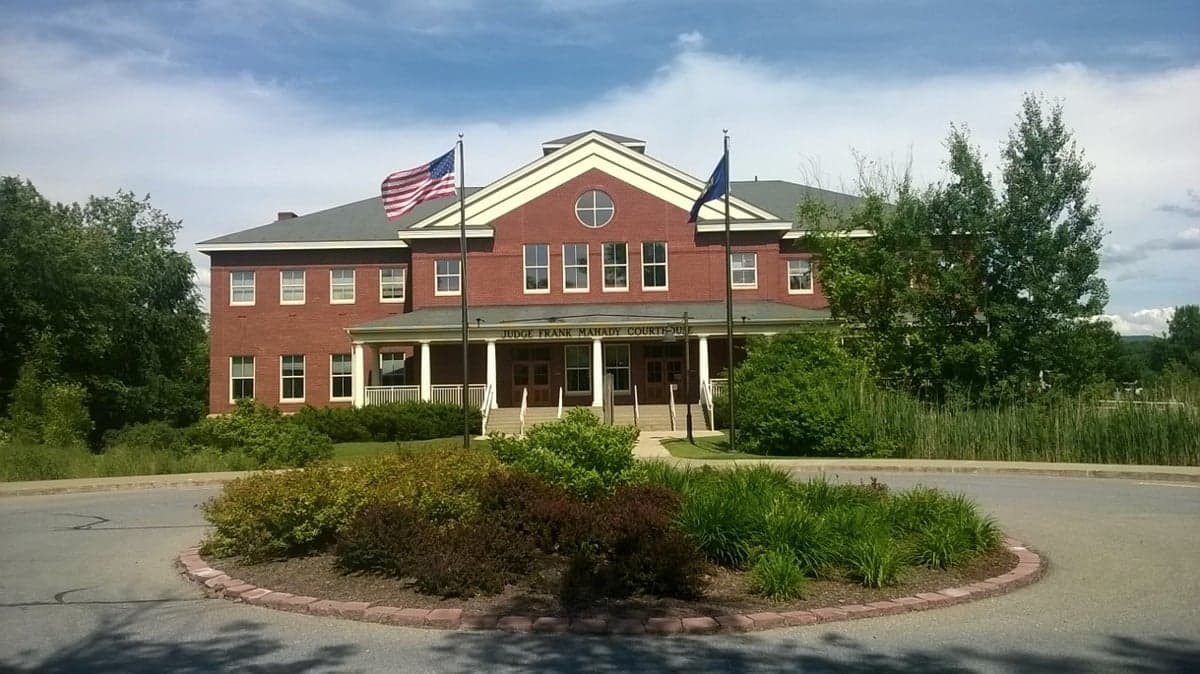
Photo: Wikipedia
Personal Sovereignty in Addison County
Moderate friction. Expect trade-offs in some aspect of personal liberty and independence.
What does Personal Sovereignty tell us?
Personal Sovereignty measures your capacity for self-reliance and independence with minimal government friction. Higher scores mean fewer barriers between you and the way you want to live... but it assumes you have the space you need and good neighbors.
What does this tell us?
Personal Sovereignty measures your capacity for self-reliance and independence with minimal government friction. Higher scores mean fewer barriers between you and the way you want to live... but it assumes you have the space you need and good neighbors.
State Policy
Energy independence: Importer (15% of energy produced in-state)
Personal Liberty
Homesteading

Personal Liberty Analysis
Addison County, Vermont, offers a nuanced personal sovereignty environment that balances the state’s progressive reputation with a deeply rooted rural independence. While Vermont as a whole leans left on many social issues, Addison County’s agricultural economy and small-town character create a lighter regulatory touch than in Chittenden County (Burlington) or Washington County (Montpelier). For a conservative-leaning individual or family, the county provides a meaningful degree of autonomy in daily life, though state-level policies on taxes, guns, and medical freedom impose clear boundaries. The key is understanding where local culture and state law diverge—and which towns offer the most room for self-reliance.
Tax burden and regulatory posture: how Addison County compares to Vermont’s high-cost areas
Vermont’s overall tax burden is among the highest in the nation, ranking 5th in combined state and local taxes as of 2025. Addison County residents pay state income tax (3.35%–8.75% brackets) and property taxes that average 1.72% of assessed home value, slightly below the state average of 1.85%. Towns like Middlebury and Bristol have higher property tax rates due to school and municipal spending, while Shoreham and Whiting in the Champlain Valley tend to have lower mill rates. Regulatory posture is mixed: Vermont has strict Act 250 land-use laws that apply to large developments, but small-scale home construction and agricultural operations face fewer hurdles in unincorporated areas. For example, building a single-family home on a 5-acre lot in Cornwall or Weybridge typically requires only a local zoning permit, not a full Act 250 review. The state’s renewable energy mandate and carbon tax proposals add compliance costs, but enforcement is lighter in rural Addison County than in Burlington’s urban core. Overall, the tax burden is high relative to the South or Midwest, but the regulatory environment is manageable for those who avoid major subdivisions or commercial projects.
Self-defense and gun law specifics: what Vermont’s permitless carry means in practice
Vermont is a constitutional carry state—no permit is required to carry a concealed or open firearm for anyone 18 or older who can legally possess a gun. This is a significant personal sovereignty advantage. However, state law imposes restrictions: magazine capacity is limited to 10 rounds for long guns and 15 for handguns (enacted in 2018), and private sales now require a background check through a licensed dealer. Addison County’s gun culture is strong, especially in towns like Vergennes and Bridport, where hunting and sport shooting are common. The county has no local ordinances that further restrict firearms, unlike some towns in Chittenden County. Self-defense law follows the “duty to retreat” standard outside the home—Vermont does not have a Stand Your Ground statute. Inside the home, the Castle Doctrine applies. For a conservative reader, the permitless carry is a major plus, but the magazine ban and universal background checks are notable limitations. Gun ranges and clubs are available in Middlebury and New Haven, and the county’s low crime rate (violent crime at 1.2 per 1,000 residents in 2024) means self-defense scenarios are rare.
Self-reliance and homesteading viability: lot sizes, zoning, and off-grid feasibility
Addison County is one of Vermont’s most fertile regions, with deep soils and a strong agricultural tradition. Homesteading is viable, but feasibility varies by town. Minimum lot sizes for single-family homes range from 1 acre in Middlebury to 5 acres in unzoned towns like Shoreham and Orwell. Off-grid living is legal but regulated: Vermont requires a wastewater permit for any dwelling, and solar panels must comply with net-metering rules. Rainwater collection is allowed for non-potable uses, but wells are standard. Towns like Leicester and Ripton have minimal zoning and are more permissive for small-scale farming, chicken coops, and home businesses. In contrast, Middlebury and Bristol have stricter building codes and require permits for accessory structures. The state’s Act 250 can apply to agricultural operations over 10 acres, but most homesteads fall under the exemption for “primary agricultural use.” For a family wanting to raise livestock, grow food, and generate solar power, Shoreham and Whiting offer the most freedom with the least regulatory friction. Internet access is limited in rural areas—Starlink is common—so self-reliance extends to connectivity.
Personal liberties: parental rights, medical autonomy, speech, and property
Parental rights in Vermont are strong in education: parents can homeschool without state approval, though they must submit an enrollment notice and annual assessment. The state does not mandate specific curricula, and religious exemptions are recognized. Medical autonomy is more restricted: Vermont has a vaccine mandate for school attendance (personal belief exemptions were eliminated in 2019), and the state’s universal healthcare push limits private options. However, Addison County has a higher rate of alternative medicine practitioners than the state average, and towns like Bristol have a visible natural health community. Free speech is protected under the Vermont Constitution, which has stronger protections than the U.S. First Amendment in some areas (e.g., no “fighting words” exception). Property rights are constrained by Act 250 and local zoning, but eminent domain is rarely used. For a conservative reader, the biggest liberty concern is medical freedom—Vermont’s vaccine mandates and COVID-era restrictions were among the strictest in New England. On the positive side, the county’s small population (about 37,000) means less bureaucracy and more direct access to local officials.
Overall, Addison County offers a moderate-to-high level of personal sovereignty compared to other New England areas, but it falls short of the freedom found in states like New Hampshire or Texas. The tax burden is heavy, gun laws are restrictive on capacity, and medical autonomy is limited. However, the county’s rural character, low crime, and permissive homesteading environment make it a viable option for those who prioritize self-reliance and are willing to navigate state-level constraints. For a conservative-leaning individual or family, the best fit is likely a small town like Shoreham or Orwell, where local culture aligns with independence and state oversight is minimal.

* Values derived from national, state, county, city and local statistics and may differ in a specific area. Last updated: 2026-07-19T02:16:58.000Z
Narrative content on this page is AI-generated and may contain mistakes. Verify any details that matter before acting on them.
ReloMaps may earn a commission from affiliate links at no extra cost to you.

