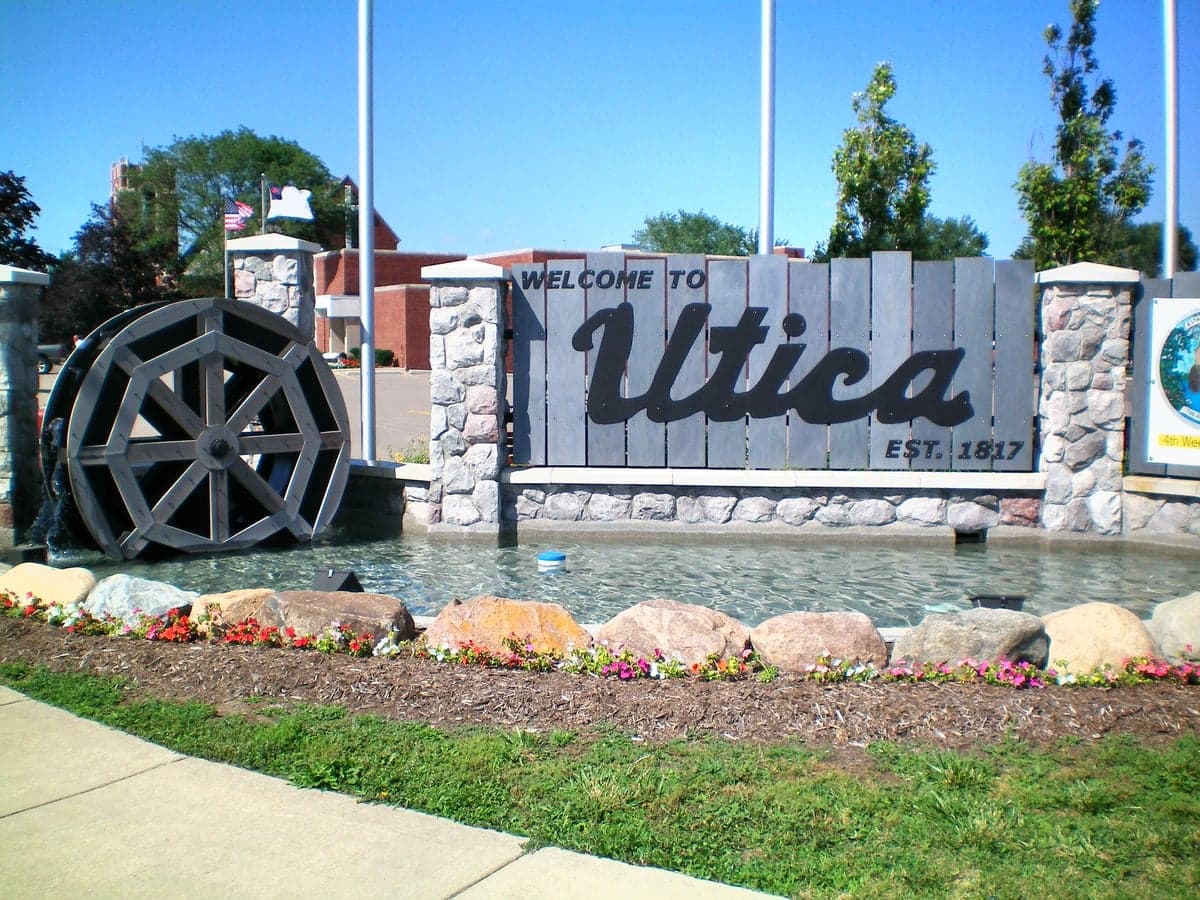
Photo: Wikipedia
Political ClimatePolitical Climate in Utica, MI
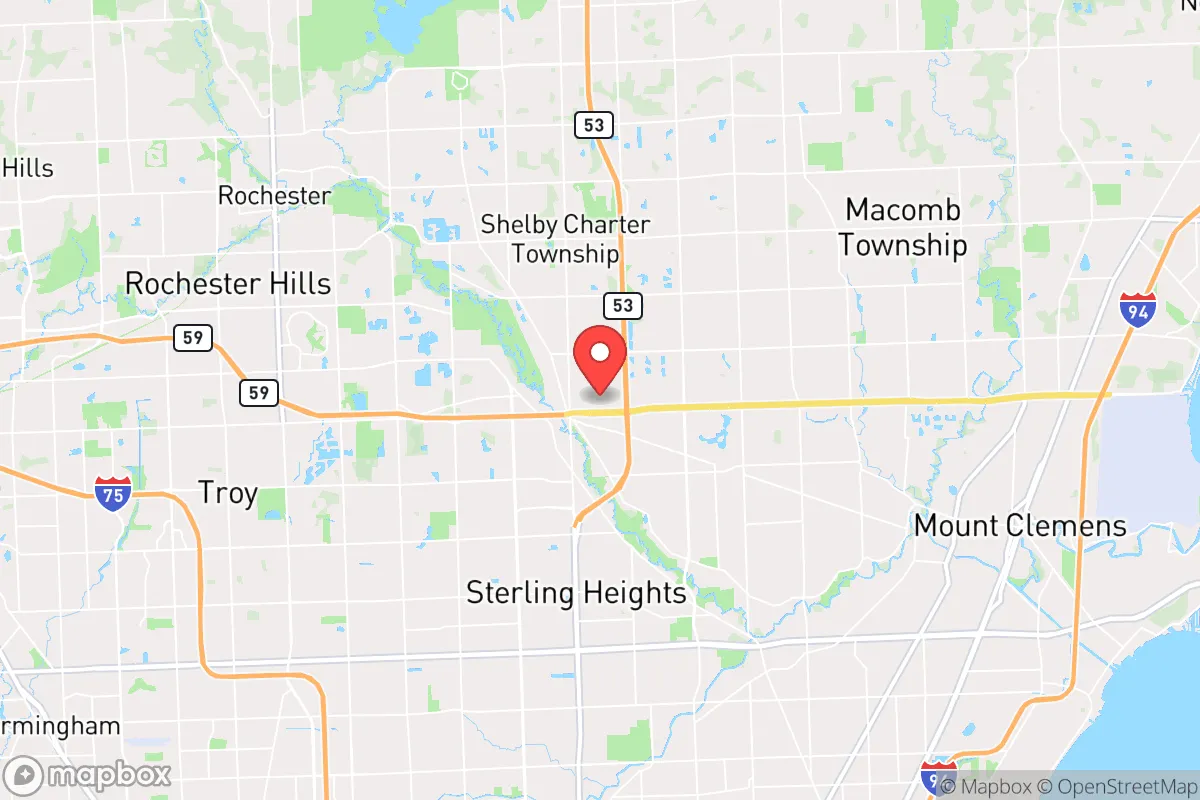
District shown is the primary district for this city’s centroid. Cities may span multiple districts.
Local Political AnalysisPolitical Analysis of Utica, MI
Utica, Michigan, leans reliably Republican, with a Cook Partisan Voting Index of R+3, meaning the area votes about three points more conservative than the national average. That’s a solid red pocket in a state that’s essentially a toss-up—Michigan as a whole has a Cook PVI of EVEN, making it one of the most competitive swing states in the country. Over the last decade, Utica’s political trajectory has stayed pretty steady, with local elections consistently favoring GOP candidates, though the margins have tightened slightly as Macomb County’s suburbs have seen a slow drift toward the center. If you’re looking for a place where the political temperature is warm but not boiling, Utica fits the bill.
How it compares
Compared to Michigan as a whole, Utica is noticeably more conservative. The state’s EVEN rating reflects a near-perfect split between Democrats and Republicans, driven by the heavily blue cities of Detroit, Ann Arbor, and Grand Rapids, and the redder rural and suburban areas. Utica sits in Macomb County, a classic bellwether region that voted for Obama in 2008 and 2012, then flipped hard for Trump in 2016 and 2020. That shift is more pronounced in Utica than in nearby Sterling Heights or Warren, which have larger populations of union workers and immigrant communities that lean more Democratic. Drive 15 minutes south into Detroit, and you’re in a deep blue stronghold; head 20 minutes north to Romeo or Washington Township, and you’ll find even redder turf. Utica sits right in that suburban sweet spot—conservative but not extreme, with a mix of longtime residents and newer families who tend to prioritize low taxes and local control over national partisan battles.
What this means for residents
For conservative residents, Utica’s lean means local policies generally align with their values—lower property tax rates compared to neighboring Oakland County, a strong police presence, and school boards that tend to avoid progressive curriculum shifts. Republicans here feel comfortable, but they’re not in a bubble; they have to contend with the reality that statewide elections can swing either way, which keeps local politics pragmatic rather than dogmatic. For liberal residents, living in an R+3 area means being in the minority, but not an isolated one. You’ll find like-minded neighbors in pockets near the city’s older downtown or among younger professionals commuting to Detroit. The practical effect is that political conversations stay civil for the most part—Utica isn’t the kind of place where yard signs get stolen or neighbors stop talking over election results. Both sides can expect that local government will focus on roads, schools, and public safety rather than hot-button cultural issues, simply because the community is too mixed to push an extreme agenda.
Cultural and policy distinctions
One thing that sets Utica apart from the broader Michigan landscape is its strong sense of local identity, which often trumps partisan loyalty. The city has its own police department, a well-regarded public library, and a historic downtown that residents fiercely protect. You won’t see the same kind of partisan gridlock here that you might in Lansing or Detroit—local council meetings are more about zoning variances and park upgrades than national debates. That said, Utica’s Republican lean does show up in policy choices: the city has resisted adopting some of the more progressive housing and environmental mandates seen in Ann Arbor or Ferndale. For a newcomer, the takeaway is simple: Utica is a place where you can live your life without politics dominating every conversation, but if you care about the direction of your community, you’ll find a clear, stable majority that leans right. It’s a comfortable fit for conservatives, and for liberals, it’s a manageable, respectful environment where your vote still counts in a swing state.

State Political ClimatePolitical Climate in Michigan
State Political AnalysisPolitical Environment in the State
Michigan is the ultimate swing state, with a Cook PVI of EVEN that perfectly captures its knife-edge balance. Over the past 20 years, it’s shifted from reliably blue in presidential races (voting for Democrats from 1992 to 2012) to a true battleground that flipped to Trump in 2016 by 0.2%, then flipped back to Biden in 2020 by 2.8%. The dominant coalitions are a classic Rust Belt mix: union-heavy, blue-collar workers in the southeast, a growing suburban professional class, and deeply conservative rural and exurban voters in the west and north. The trajectory is a slow, grinding realignment where the old Democratic stronghold of Macomb County is now a toss-up, and the once-reliable GOP base in western Michigan is being chipped away by college-educated voters in places like Grand Rapids and Traverse City.
Urban vs. rural divide
The political map is a stark checkerboard. Detroit and its inner-ring suburbs (like Southfield and Dearborn) are the Democratic engine, delivering massive margins from Black voters and Arab-American communities. Ann Arbor and Washtenaw County are the state’s most liberal stronghold, driven by the University of Michigan. Meanwhile, Grand Rapids and Kent County — once the heart of the conservative Dutch Reformed vote — have shifted left in the last decade as the city has boomed with young professionals and transplants, flipping to Biden in 2020. Macomb County, the classic “Reagan Democrat” territory north of Detroit, is the ultimate bellwether: it went for Obama twice, then Trump twice, then narrowly for Biden. Oakland County, the wealthy suburban ring, has trended steadily blue as college-educated voters have abandoned the GOP. Outstate, northern Michigan (traverse City, Petoskey) and the Upper Peninsula are culturally conservative but economically populist, often splitting tickets. The rural thumb and central Lower Peninsula — places like Midland, Mount Pleasant, and Alpena — are deep red, with Trump winning some counties by 30+ points.
Policy environment
Michigan’s policy landscape is a mixed bag that reflects its swing-state status. Taxes: The state has a flat 4.25% income tax and a 6% sales tax, with no tax on Social Security benefits — a plus for retirees. Property taxes are moderate, but the 1978 Headlee Amendment and Proposal A (1994) cap annual increases, which keeps them predictable. Regulatory posture: Michigan is a right-to-work state — but that law was repealed in 2023 by the Democratic legislature, a major shift that will take full effect in 2025. Education: School funding is relatively high, but the state has a robust charter school sector and a strong school choice program (the Schools of Choice law lets students cross district lines). Healthcare: Michigan expanded Medicaid under the Affordable Care Act in 2014, and the state has a competitive insurance market. Election laws: Michigan has no-excuse absentee voting, same-day voter registration, and automatic voter registration — all passed via a 2018 ballot initiative. This makes voting very accessible, but also a flashpoint for election integrity debates.
Recent policy direction
The last two years under a Democratic trifecta (Governor Gretchen Whitmer, state House, and state Senate) have produced a flurry of legislation that will define the state for years. Gun and self-defense law: In 2023, Michigan passed universal background checks, safe storage requirements, and a red flag law (extreme risk protection orders). This was a sharp reversal from years of permissive gun laws, and it remains deeply controversial in rural areas. Parental and education rights: The state repealed its 1931 abortion ban (pre-Roe) in 2023 and codified abortion rights via a 2022 ballot measure (Proposal 3). Speech and privacy: No major changes, but Michigan has a strong shield law for journalists. Medical and bodily autonomy: Proposal 3 enshrined reproductive freedom in the state constitution, and the state has expanded Medicaid coverage for gender-affirming care. Property rights: No major changes, but the state’s land use laws are generally developer-friendly. Taxation: The 2023 budget included a temporary income tax rate cut to 4.05% (triggered by a surplus), but it’s set to revert to 4.25% in 2026. Voting and ballot access: The 2018 Promote the Vote initiative made Michigan one of the most accessible states for voting, but it also led to a 2020 election integrity controversy (the “Sharpiegate” and false fraud claims) that still animates GOP activists.
Civil unrest & political movements
Michigan has been a flashpoint for political activism on both sides. The 2020 Whitmer kidnapping plot and the armed protests at the state capitol over COVID-19 restrictions (Operation Gridlock) put Michigan at the center of the national debate on lockdowns. The “Wolverine Watchmen” militia group was a major story. On the left, the 2020 George Floyd protests in Detroit and Grand Rapids were large and occasionally violent. Immigration politics: Michigan is not a sanctuary state, but Detroit and Ann Arbor have sanctuary city policies. The state has a relatively small immigrant population, but the Arab-American community in Dearborn is politically influential. Election integrity: The 2020 election led to a massive GOP-led “audit” of Antrim County (a rural county that initially reported a software error), which became a national conspiracy theory. The state’s Bureau of Elections has since tightened procedures. Secession/nullification rhetoric: There’s been talk of the Upper Peninsula or northern Lower Peninsula joining Wisconsin or forming a new state, but it’s fringe. What’s real is the cultural divide: a new resident in rural Alpena will feel like they live in a different country from someone in Ann Arbor.
Projection
Over the next 5-10 years, Michigan will likely remain a swing state, but the demographic trends favor Democrats. The population is aging and stagnating, but the growth is concentrated in the liberal-leaning Grand Rapids-Ann Arbor-Detroit corridor. The state is losing population in rural areas, which will slowly erode the GOP’s base. In-migration is modest, but the people moving in tend to be younger and more educated (drawn to the tech and life sciences sectors in Ann Arbor and Grand Rapids). The repeal of right-to-work will likely strengthen unions in the auto and manufacturing sectors, which benefits Democrats. However, the GOP is gaining ground with working-class voters in Macomb and the Thumb, and the state’s large African American population is showing signs of slight drift rightward on cultural issues. Expect the state to remain a presidential battleground, with the winner taking it by 1-3 points. The state legislature will likely remain competitive, with the GOP having a structural advantage in the state House due to gerrymandering (though an independent redistricting commission was created in 2018). A new resident moving in now should expect to live in a state where elections are always close, policy swings with the party in power, and the culture war is a constant background hum.
Bottom line for a new resident: If you’re conservative, you’ll find your people in the rural areas and exurbs, but you’ll be fighting uphill on state-level policy for the foreseeable future. If you’re liberal, you’ll feel at home in the cities and inner suburbs, but you’ll need to accept that the state is not a safe blue haven. For everyone, the practical takeaway is that your local government and school board elections matter more here than in most states, because the state’s balance is so tight. Michigan is a place where your vote genuinely counts — and where the political climate can change dramatically with a single election cycle.
* Values derived from national, state, county, city and local statistics and may differ in a specific area. Last updated: 2026-10-05T07:45:18.000Z
Narrative content on this page is AI-generated and may contain mistakes. Verify any details that matter before acting on them.
ReloMaps may earn a commission from affiliate links at no extra cost to you.

