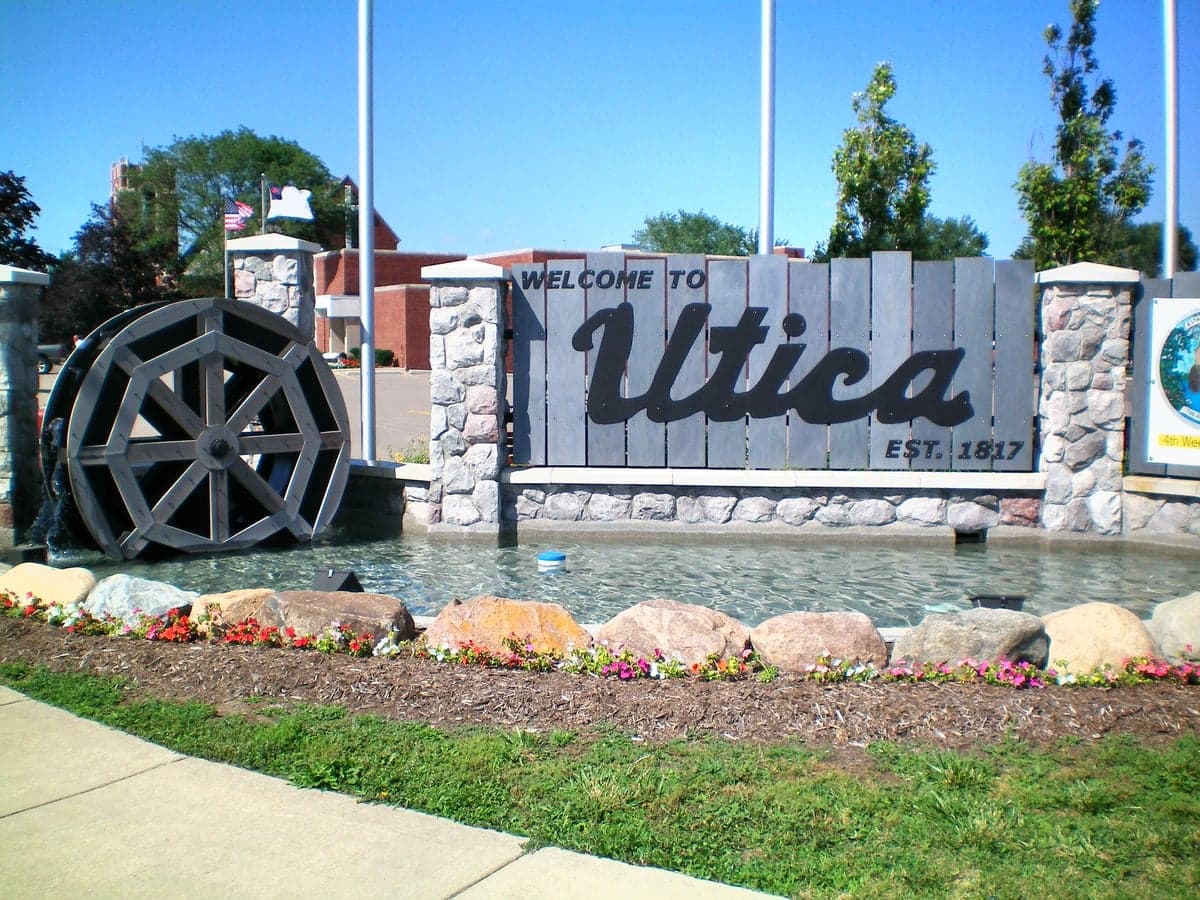
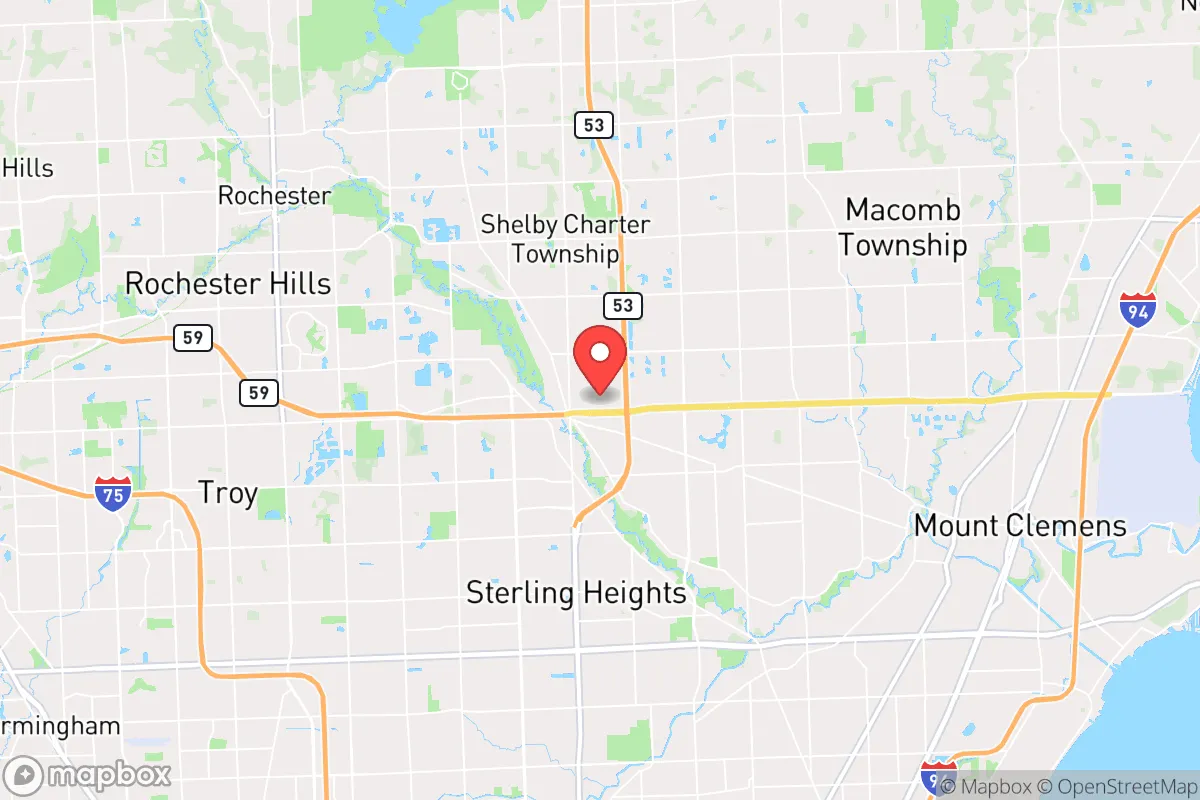
Photo: Wikipedia
Personal Sovereignty in Utica, MI
Strong independent fundamentals that actively favor personal liberty and low regulation.
What does Personal Sovereignty tell us?
Personal Sovereignty measures your capacity for self-reliance and independence with minimal government friction. Higher scores mean fewer barriers between you and the way you want to live... but it assumes you have the space you need and good neighbors.
What does this tell us?
Personal Sovereignty measures your capacity for self-reliance and independence with minimal government friction. Higher scores mean fewer barriers between you and the way you want to live... but it assumes you have the space you need and good neighbors.
State Policy
Energy independence: Importer (20% of energy produced in-state)
Personal Liberty
Homesteading

Personal Liberty Analysis
Utica, Michigan offers a notably strong personal sovereignty environment for a suburban Detroit community, anchored by Michigan’s right-to-work status, constitutional carry law, and relatively light-touch local governance. While not as libertarian as rural northern Michigan, Utica’s regulatory posture is significantly less intrusive than neighboring Macomb County communities like Warren or Sterling Heights, and the city’s zoning and tax policies create a practical middle ground for individuals and families seeking autonomy without complete isolation. The overall sovereignty picture here is one of moderate-to-high personal freedom, with specific strengths in self-defense law and property rights, balanced against the realities of suburban infrastructure and school district oversight.
Tax burden and regulatory posture in Macomb County
Utica’s tax environment is competitive for southeast Michigan, with a city income tax of 1% for residents and 0.5% for non-residents—lower than Detroit’s 2.4% or Warren’s 1.5%. Property taxes are levied at roughly 50 mills on assessed value, which is typical for Macomb County but higher than rural areas like Lapeer County (around 35 mills). The regulatory posture from Utica city government is best described as pragmatic and low-friction: there are no local rent control ordinances, no plastic bag bans, and no excessive business licensing requirements beyond state basics. Home-based businesses are permitted with a simple zoning approval, and the city does not impose additional sales taxes beyond Michigan’s 6% state rate. Michigan’s lack of a state-level property tax on vehicles (the “personal property tax” was phased out for most residents by 2020) further reduces annual compliance burdens. For a family or individual, the annual tax load here is roughly 15-20% lower than in comparable Oakland County suburbs like Troy or Royal Oak, primarily due to lower millage rates and the absence of county-level income taxes.
Self-defense and gun law specifics in Michigan
Michigan became a constitutional carry state in 2023, meaning Utica residents can carry a concealed pistol without a permit or training requirement if they are legally eligible. This is a significant shift from the previous shall-issue system and places Utica in the top tier of suburban communities for firearm freedom. The city itself has no local gun ordinances beyond state law—no magazine capacity limits, no assault weapon bans, and no waiting periods beyond the state’s mandatory 24-hour purchase delay for handguns. Open carry is legal without a permit for anyone 18 or older who can legally possess a firearm. Stand-your-ground law applies statewide, with no duty to retreat in any place where the individual is lawfully present. The Castle Doctrine is codified in Michigan law (MCL 780.951), providing a presumption of reasonable fear of death or great bodily harm if an intruder unlawfully enters a home or occupied vehicle. For self-defense training, Utica is within 15 minutes of several private ranges and firearms training facilities, including the Detroit Sportsmen’s Congress range in nearby Shelby Township. The only notable restriction is that Michigan requires a purchase license for handguns from local law enforcement, which involves a background check and a 10-day wait—a moderate friction point compared to states like Texas or Florida that allow immediate purchase with a concealed carry license.
Self-reliance and homesteading viability in a suburban setting
Utica’s zoning code is moderately permissive for self-reliance activities compared to dense suburbs, but not as flexible as rural townships. Standard residential lots in Utica range from 0.25 to 0.5 acres, with some newer subdivisions offering larger 1-acre parcels on the city’s northern edge near 26 Mile Road. Backyard chickens are permitted on lots of at least 10,000 square feet, with a limit of four hens and no roosters—a common suburban compromise. Beekeeping is allowed with a registration fee of $25 and a setback requirement of 10 feet from property lines. Rainwater collection is unrestricted by city code, though Michigan’s state water rights law technically requires a permit for systems over 2,500 gallons. Vegetable gardens and fruit trees face no restrictions, and several local homeowners maintain substantial edible landscapes. Off-grid living is not practically feasible within city limits due to mandatory connection to municipal water and sewer systems, as well as building code requirements for electrical service. However, the nearby rural townships of Ray Township and Armada (within 15-20 minutes) offer 5-10 acre parcels with well and septic systems, where off-grid solar and composting toilets are permitted under county health department guidelines. For families seeking a balance, Utica’s proximity to these rural areas allows a hybrid approach—suburban residence with a small homestead property nearby.
Personal liberties: parental rights, medical autonomy, speech, and property
Michigan’s legal framework provides strong protections for parental rights in education and medical decisions. The state’s Revised School Code (MCL 380.10) explicitly recognizes parents as the primary decision-makers for their children’s education, and Utica Community Schools—the district serving most of the city—has a policy of notifying parents of any health-related surveys or screenings. Michigan does not have a state-level medical freedom law like Idaho’s, but COVID-19 vaccine mandates were never enforced in Utica schools beyond state health department recommendations, and the district has not implemented mask mandates since 2022. Medical autonomy for adults is generally respected: Michigan allows direct primary care arrangements, and there are no state restrictions on private medical contracts or off-label use of FDA-approved drugs. Speech protections are robust under both the First Amendment and Michigan’s own constitution (Article I, Section 5), which provides broader protections than federal law in some areas—for example, the Michigan Supreme Court has ruled that commercial speech and political speech on private property cannot be restricted by local ordinances in ways that violate the state constitution. Property rights are well-defined: Utica does not have a local rental registry or inspection program beyond state-mandated safety checks, and there is no rent control. The Michigan Property Rights Preservation Act (2019) limits the ability of local governments to impose regulations that reduce property value by more than 20% without compensation. For homeowners, this means zoning changes that would restrict use of their land are legally difficult for the city to enact without paying damages.
Overall, Utica ranks as a strong personal sovereignty choice within the Detroit metro area, particularly for those who prioritize gun rights and low regulatory overhead. It offers a more freedom-oriented environment than inner-ring suburbs like Ferndale or Oak Park, while lacking the full autonomy of rural Michigan counties like Montmorency or Oscoda. The city’s tax burden is moderate but fair, its zoning is permissive enough for meaningful self-reliance activities, and its legal framework respects individual choice in education, medical decisions, and property use. For a family or individual seeking a suburban base with high personal liberty, Utica represents a practical, data-supported option that avoids both the heavy regulation of urban centers and the isolation of remote areas.

* Values derived from national, state, county, city and local statistics and may differ in a specific area. Last updated: 2026-10-05T07:45:18.000Z
Narrative content on this page is AI-generated and may contain mistakes. Verify any details that matter before acting on them.
ReloMaps may earn a commission from affiliate links at no extra cost to you.

