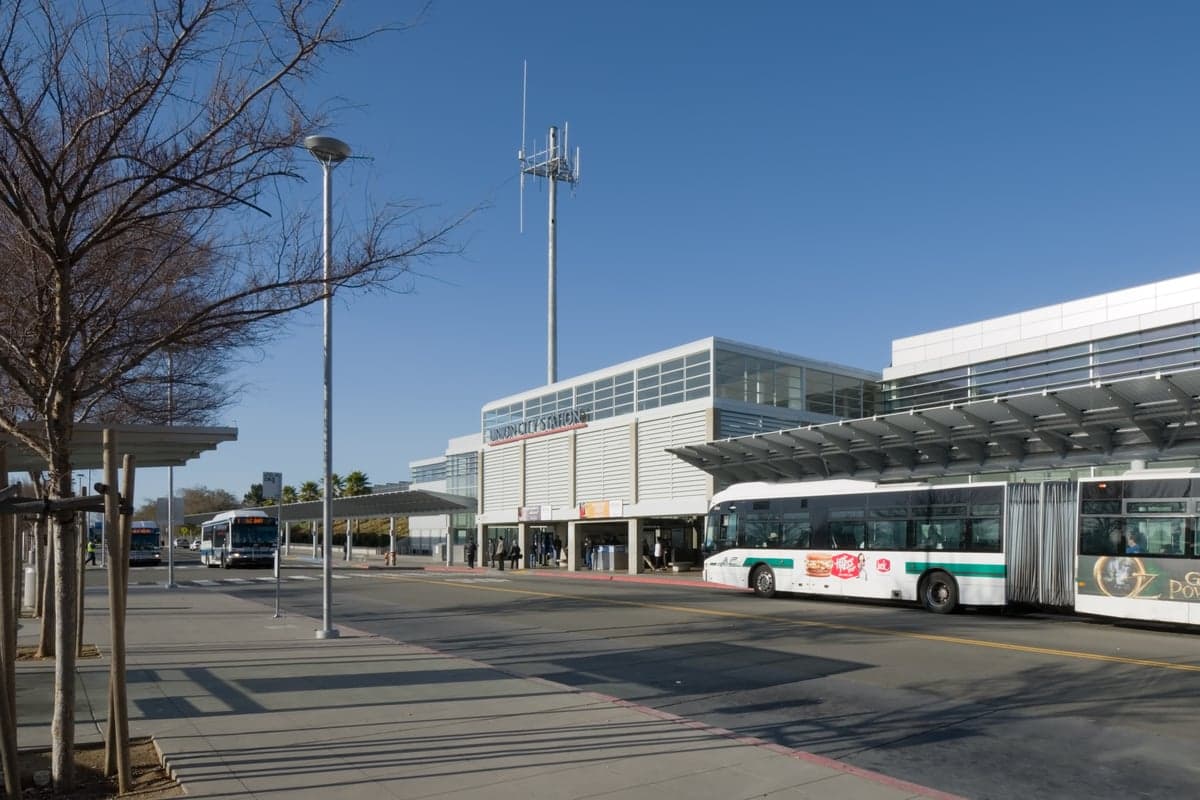
Photo: Wikipedia
Political ClimatePolitical Climate in Union City, CA
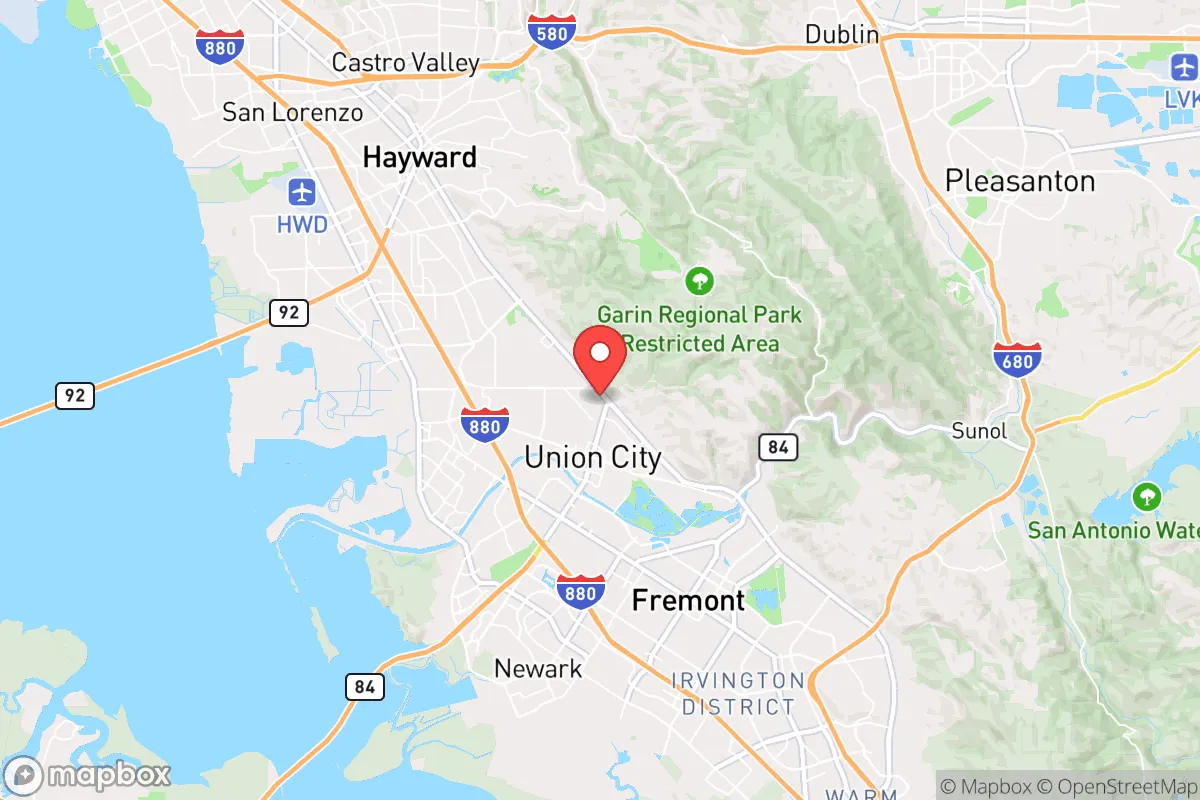
District shown is the primary district for this city’s centroid. Cities may span multiple districts.
Local Political AnalysisPolitical Analysis of Union City, CA
Union City is a deeply blue city in a deeply blue state, with a Cook PVI of D+20 that places it among the most reliably Democratic communities in the Bay Area. That number means the city votes about 20 points more Democratic than the national average, and in practice, it hasn't voted Republican in a presidential race since the 1980s. If you’re a liberal, you’ll find your views reflected in local government, school board decisions, and the general vibe of the town. If you’re a conservative, you’re in a clear minority, but you’re not alone — the city’s large Filipino and South Asian communities include a notable share of moderate and conservative voters, especially on economic and family issues.
How it compares
Union City’s D+20 lean is significantly more Democratic than the state of California as a whole, which sits at roughly D+13 (based on 2024 presidential results). That gap matters: while California is reliably blue, Union City is a blue stronghold even by state standards. Drive 15 minutes south to Fremont, and you’ll find a similar D+18 profile, but head 10 minutes east to the more rural parts of Alameda County like Sunol or Livermore, and the politics shift noticeably — Livermore leans D+5, a much more competitive environment. The contrast is even sharper if you go 30 minutes north to Danville or San Ramon, where the Cook PVI drops to around D+6 and D+8 respectively, reflecting a more moderate, business-oriented electorate. Within Union City itself, the political reality is shaped by a City Council that has been unanimously Democratic for years, and by a school board that rarely sees contested races from the right. The last Republican to hold any elected office in the city was a county supervisor in the 1990s.
What this means for residents
For liberal residents, the D+20 lean means your priorities — affordable housing, public transit expansion, climate action, and immigrant rights — are the default agenda. The city’s rent control ordinance, passed in 2019, and its strong tenant protections are direct results of that political consensus. For conservative residents, the practical effect is that you’ll need to engage in local politics through the minority party or through nonpartisan civic groups like the Chamber of Commerce or neighborhood associations. There’s no active Republican Party club in Union City, but the Alameda County GOP does hold events in nearby Hayward. On the ground, most residents report that political disagreements are civil — the city’s diversity (over 50% Asian American, 20% Latino) means that cultural and economic concerns often cross party lines. You won’t see many yard signs for conservative candidates, but you also won’t face hostility for holding different views in everyday conversation.
Culturally, Union City stands out for its pragmatic, family-first approach to governance. The city has one of the highest rates of two-income households in the Bay Area, and local policy reflects that: there’s a strong emphasis on after-school programs, public safety, and maintaining a business-friendly environment for the small retail and service sector. Unlike nearby Berkeley or Oakland, where politics can feel ideological and performative, Union City’s Democratic lean is more about getting things done — expanding the BART station, building new parks, and keeping property taxes manageable under Prop 13. The long-term trajectory is toward even deeper blue, driven by an influx of tech workers from San Jose and San Francisco who are priced out of those cities but bring their progressive politics with them. If you’re moving here, expect a stable, left-leaning environment where the biggest political fights are about how fast to build, not whether to build at all.

State Political ClimatePolitical Climate in California
State Political AnalysisPolitical Environment in the State
California is a deeply blue state where Democrats hold every statewide office and supermajorities in both legislative chambers, but the reality on the ground is far more complex than the national headlines suggest. Over the past 20 years, the state has shifted from a competitive purple battleground—where Arnold Schwarzenegger won as a Republican in 2003—to a solidly Democratic stronghold, with the party now holding roughly a 2-to-1 registration advantage. However, that blue veneer masks a fierce internal divide: the coastal metros of Los Angeles, San Francisco, and San Jose drive the state’s leftward tilt, while vast inland regions like the Central Valley and far northern counties remain reliably red, and a growing number of suburban voters are beginning to push back against one-party rule.
Urban vs. rural divide
The political map of California is essentially a tale of two states. The urban core—Los Angeles County, the San Francisco Bay Area (including San Jose and Oakland), and Sacramento—votes overwhelmingly Democratic, often by margins of 60-80%. These areas are home to the state’s tech industry, entertainment sector, and largest public universities, and they drive the progressive policy agenda. In contrast, the Central Valley cities of Bakersfield, Fresno, and Visalia lean Republican, with Bakersfield’s Kern County regularly voting +20 points red. The far north, including Redding and the rural counties of Siskiyou and Modoc, is even more conservative, often resembling Idaho or Montana in its politics. A notable shift is occurring in the Inland Empire—cities like Riverside and San Bernardino—which were once swing areas but are now trending blue as suburban sprawl from Los Angeles brings younger, more diverse voters. Meanwhile, Orange County, long a Republican stronghold, flipped blue in 2018 and 2020, though its northern suburbs like Yorba Linda and Huntington Beach remain conservative holdouts.
Policy environment
California’s policy environment is defined by high taxes, heavy regulation, and a robust social safety net. The state has a progressive income tax with a top marginal rate of 13.3%—the highest in the nation—and a state sales tax that can exceed 10% in some cities. Property taxes are capped at 1% of assessed value under Proposition 13, but reassessment upon sale can hit new homeowners hard. The regulatory posture is aggressive: California has its own environmental standards (CARB), its own labor laws (including a $16 minimum wage as of 2024, rising to $18 by 2026), and its own healthcare system (Covered California). Education policy is centralized in Sacramento, with the state’s teachers’ union wielding enormous influence. Election laws are among the most liberal in the country: universal mail-in voting, same-day registration, and no-excuse absentee ballots are standard. For a conservative relocator, the practical effect is a state where your tax bill is high, your business faces extensive red tape, and your vote is one of many in a system designed to maximize turnout.
Recent policy direction
The last five years have seen California double down on progressive governance, with a series of laws that directly affect the liberties a relocator might weigh. On gun rights, the state passed SB 2 in 2023, which bans carrying firearms in most public places—including parks, hospitals, and public transit—and requires a "good cause" permit that is nearly impossible to obtain in many counties. On parental and education rights, AB 1955 (2024) prohibits school districts from requiring parental notification when a child changes their gender identity, a flashpoint for conservative families. On speech, the state’s AB 587 (2022) requires social media companies to report their content moderation policies, a move critics call a backdoor to censorship. On privacy, the California Privacy Rights Act (CPRA) of 2020 gives residents strong data control, but surveillance laws like the 2023 expansion of license plate reader use raise concerns. On medical autonomy, California has enshrined abortion access as a constitutional right (Prop 1, 2022) and expanded gender-affirming care for minors, while also legalizing recreational marijuana (Prop 64, 2016). On property rights, rent control was tightened under the Tenant Protection Act of 2019, and new construction faces extensive CEQA (California Environmental Quality Act) lawsuits that can delay projects for years. On voting, the state has moved to all-mail elections and automatic voter registration, boosting turnout but raising integrity concerns among conservatives. The net direction is clear: California is becoming more regulated, more protective of individual identity rights, and less permissive on guns and parental control.
Civil unrest & political movements
California has a long history of political activism, and recent years have seen both left- and right-wing movements flare up. The 2020 George Floyd protests in Los Angeles and Oakland were among the largest in the nation, leading to property damage and a lasting debate over police funding. On the right, the "Recall Newsom" movement in 2021 gathered over 1.6 million signatures, though the governor easily survived the election. Immigration politics are a constant flashpoint: California is a "sanctuary state" under SB 54 (2017), which limits local law enforcement cooperation with federal immigration authorities, and cities like San Francisco and Los Angeles have doubled down on these policies. Secession rhetoric, while fringe, persists in rural areas—the "State of Jefferson" movement in far northern counties and parts of Oregon has gained some traction, though it remains a symbolic protest. Election integrity controversies have been relatively muted compared to swing states, but conservative groups have raised concerns about the state’s all-mail voting system and the lack of voter ID requirements. A new resident would notice the visible political polarization: in San Francisco, you’ll see homeless encampments and progressive street art; in Bakersfield, you’ll see Trump flags and gun shops. The two Californias coexist uneasily, with the state’s political class firmly in the coastal camp.
Projection
Over the next 5-10 years, California’s political trajectory points toward continued Democratic dominance, but with growing internal friction. Demographic trends favor the left: the state’s Latino population, which leans Democratic, is growing, while white conservative voters are aging out or moving to Texas, Idaho, and Arizona. In-migration from other states is slowing, and net domestic out-migration has been negative for years, with many leavers citing cost of living and politics. However, the state’s economy—driven by tech, entertainment, and agriculture—remains massive, and new arrivals from abroad (legal and otherwise) tend to be younger and more progressive. The practical effect for a conservative moving in now is that you will likely be a minority voice in state politics for the foreseeable future, but you’ll find like-minded communities in the Central Valley, Inland Empire, and far north. The state’s housing crisis and homelessness epidemic are likely to force some moderation on regulation, but don’t expect a rightward shift—California is more likely to see internal battles between moderate and progressive Democrats than any Republican resurgence. A decade from now, expect higher taxes, tighter gun laws, and a continued expansion of the social safety net, but also a more organized conservative grassroots pushing back at the local level.
For a new resident, the bottom line is that California offers a high-cost, high-regulation environment where your political views will be in the minority if you lean conservative, but you’ll find pockets of like-minded people in places like Bakersfield, Redding, and parts of Orange County. If you value low taxes, gun rights, and parental control in education, this state will be a constant frustration. If you prioritize environmental protection, social services, and personal autonomy on issues like abortion and marijuana, you’ll feel at home. The key is to choose your city wisely—your experience in San Francisco will be radically different from one in Fresno. Come for the economy and the climate, but be prepared for a political climate that is unapologetically progressive and unlikely to change anytime soon.
* Values derived from national, state, county, city and local statistics and may differ in a specific area. Last updated: 2026-09-05T18:01:00.000Z
Narrative content on this page is AI-generated and may contain mistakes. Verify any details that matter before acting on them.
ReloMaps may earn a commission from affiliate links at no extra cost to you.

