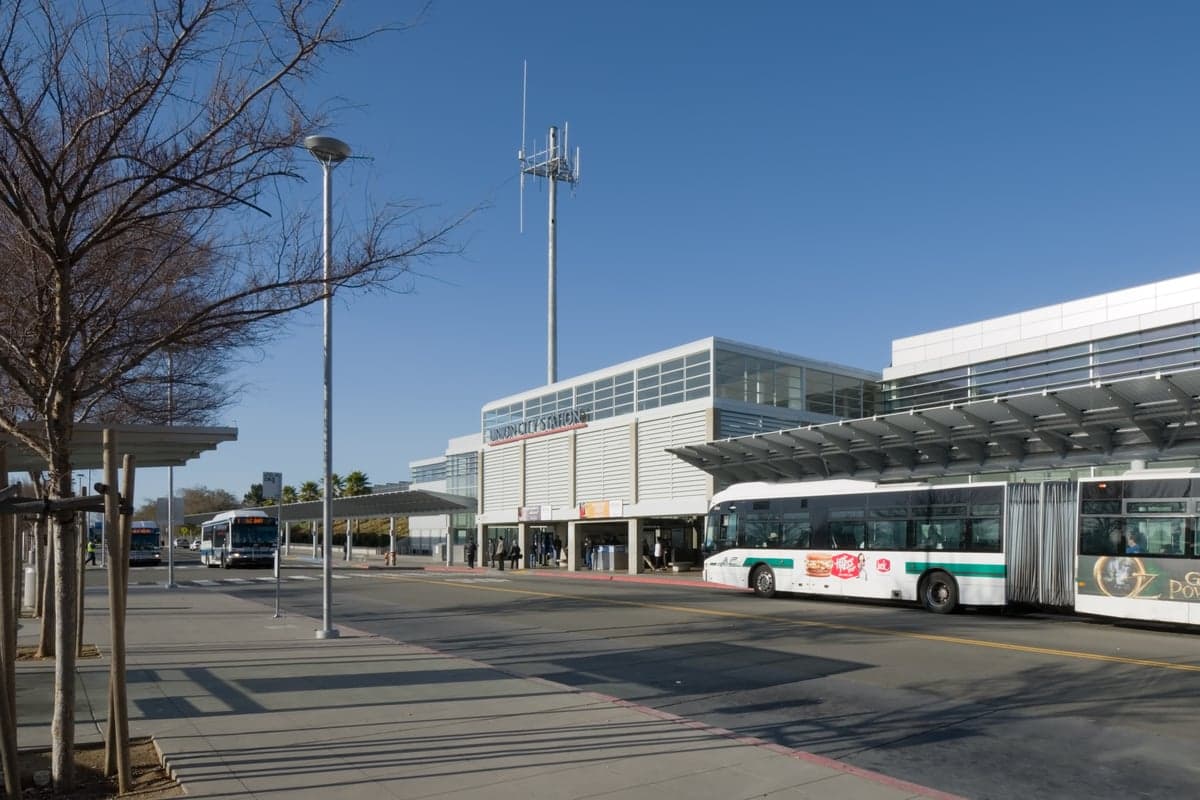
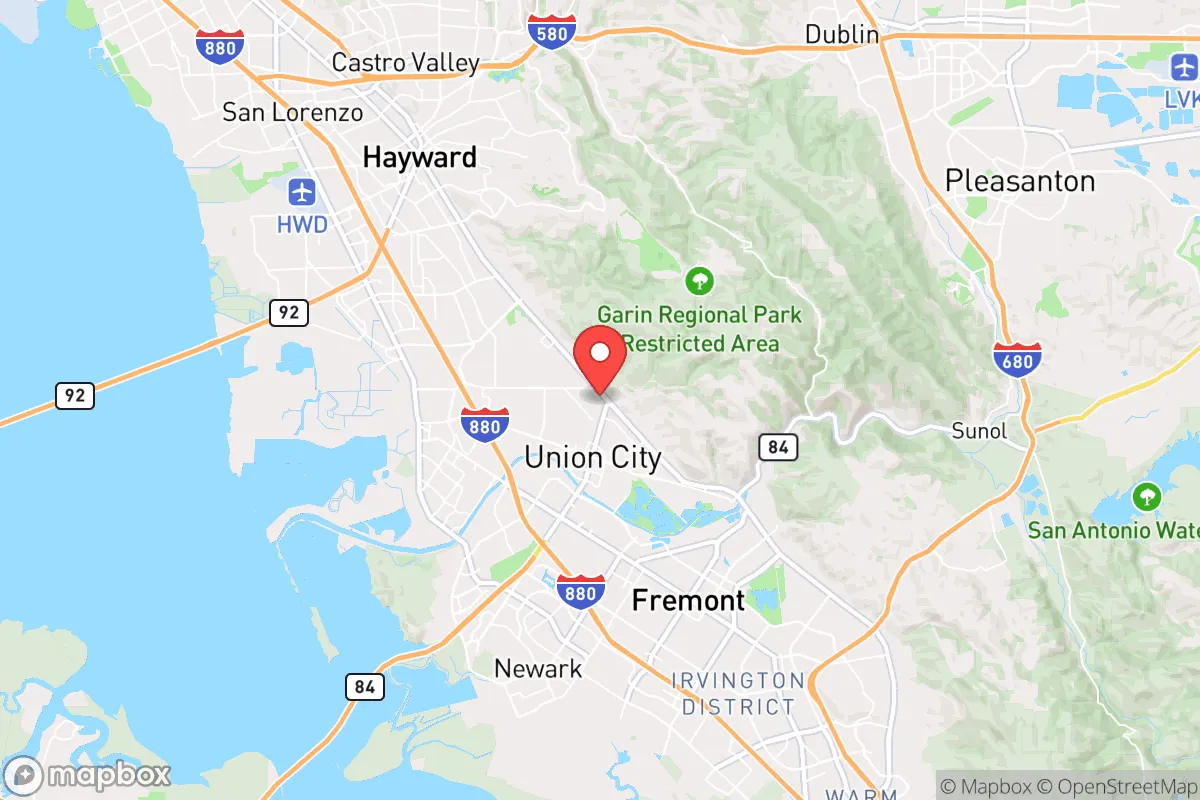
Photo: Wikipedia
Personal Sovereignty in Union City, CA
Viable for self-reliance. Generally workable, though some barriers may limit total independence.
What does Personal Sovereignty tell us?
Personal Sovereignty measures your capacity for self-reliance and independence with minimal government friction. Higher scores mean fewer barriers between you and the way you want to live... but it assumes you have the space you need and good neighbors.
What does this tell us?
Personal Sovereignty measures your capacity for self-reliance and independence with minimal government friction. Higher scores mean fewer barriers between you and the way you want to live... but it assumes you have the space you need and good neighbors.
State Policy
Energy independence: Importer (33% of energy produced in-state)
Personal Liberty
Homesteading

Personal Liberty Analysis
Union City, California, presents a complex personal sovereignty environment where state-level regulatory density significantly constrains local autonomy, creating a trade-off between progressive governance and individual freedom that relocation-minded readers should weigh carefully. As a Bay Area suburb in Alameda County, Union City operates under California’s extensive state preemptions on everything from firearms to land use, meaning local ordinances often layer additional restrictions on top of an already heavy baseline. For a conservative-leaning individual or family prioritizing self-reliance, the area’s appeal lies more in its economic opportunity and community stability than in any broad latitude for personal independence.
Tax burden and regulatory posture in Union City
California’s tax burden ranks among the highest in the nation, and Union City residents feel this acutely. The state’s progressive income tax tops out at 13.3% for top earners, and the sales tax rate in Union City is 10.25% as of 2026, among the highest in Alameda County. Property taxes are capped at 1% of assessed value under Proposition 13, but annual increases are limited to 2%, which benefits long-term homeowners but creates a significant disparity for new buyers facing market-rate assessments. The regulatory environment is similarly dense: California’s California Environmental Quality Act (CEQA) often delays or blocks development, and Union City’s own zoning code imposes strict limits on home-based businesses, accessory dwelling units (ADUs), and property modifications. Permitting for even minor renovations can take months, and the city’s planning department requires extensive environmental review for any new construction. For a reader accustomed to lighter-touch governance, this means every major decision—from starting a side business to adding a workshop—requires navigating a bureaucratic process that prioritizes process over speed.
Self-defense and gun law specifics in Union City
California’s firearm laws are among the most restrictive in the United States, and Union City residents must comply with a dense web of state-level regulations. The state requires a 10-day waiting period for all firearm purchases, a background check through the California Department of Justice, and a Firearm Safety Certificate for each buyer. Handguns must be on the state’s “Roster of Handguns Certified for Sale,” which excludes many popular models. Assault weapons are banned by name and feature, and magazines are limited to 10 rounds. Open carry is prohibited in most circumstances, and concealed carry permits (CCWs) are issued by the Alameda County Sheriff’s Office, which has historically been restrictive. As of 2026, the “good cause” requirement has been loosened following the Supreme Court’s Bruen decision, but the process remains costly and time-consuming, often taking 6-12 months and requiring multiple training courses. Self-defense in the home is legally protected under the “Castle Doctrine,” but California does not have a “Stand Your Ground” law; instead, it imposes a “duty to retreat” in public spaces if safe to do so. For a reader prioritizing personal protection, Union City offers limited flexibility compared to states with constitutional carry or shall-issue permitting.
Self-reliance and homesteading viability in Union City
Union City’s urban-suburban character makes traditional homesteading—raising livestock, keeping large gardens, or living off-grid—largely impractical. The typical single-family lot size in Union City is 5,000 to 7,000 square feet, with many newer developments on even smaller parcels. Zoning restricts livestock to chickens only (hens, no roosters) and limits the number to four per property. Beekeeping is allowed with a permit, but larger animals like goats or pigs are prohibited in residential zones. Off-grid living is effectively impossible: California law requires connection to the municipal water and sewer system in urbanized areas, and solar panels must be grid-tied to qualify for net metering. Rainwater harvesting is legal but limited to 500 gallons per property without a permit, and composting toilets are not allowed in homes connected to sewer. For a reader seeking true self-sufficiency—growing most of their own food, generating their own power, or living without utility bills—Union City is a poor fit. However, the city’s proximity to Fremont’s urban farms and community garden programs offers some space for hobby gardening, and the Union City Farmers Market provides local produce year-round. The regulatory posture here is one of managed density: the city encourages sustainability within the grid, not independence from it.
Personal liberties in Union City: parental rights, medical autonomy, speech, and property
California’s progressive policies shape personal liberties in Union City in ways that may conflict with conservative values. Parental rights are notably constrained: the state’s AB 1955 (2024) prohibits school districts from requiring parental notification when a child changes their gender identity or pronouns, and the California Healthy Youth Act mandates comprehensive sex education starting in 7th grade, with no opt-out for parents. Medical autonomy is similarly state-directed: California has some of the strongest vaccine mandates in the country, including requirements for school attendance, and the state’s SB 523 (2023) protects access to gender-affirming care for minors, overriding parental consent in some cases. Speech is broadly protected under the First Amendment, but California’s AB 587 (2022) requires social media platforms to report hate speech, and the state’s Unruh Civil Rights Act can be used to challenge speech perceived as discriminatory. Property rights are heavily regulated: the California Coastal Commission has jurisdiction over development within the coastal zone (Union City is inland but still subject to state environmental review), and the California Environmental Quality Act allows third parties to sue over any development project, effectively giving neighbors veto power over property modifications. For a reader who values parental control over education, medical decisions, and property use, Union City’s legal environment is significantly more restrictive than in states like Texas or Florida.
Overall, Union City offers a moderate level of personal sovereignty relative to other Bay Area suburbs, but it remains firmly within California’s high-regulation framework. Compared to cities like Fremont or Hayward, Union City’s zoning is slightly more permissive for ADUs and home businesses, but it lags far behind areas like Elko County, Nevada or Maricopa County, Arizona in terms of self-defense rights, tax burden, and homesteading feasibility. For a conservative-leaning individual or family, the trade-off is clear: Union City provides strong economic opportunity, good schools, and a diverse community, but at the cost of significant regulatory oversight over personal choices. The area is best suited for those who prioritize career and community over maximum personal autonomy, and who are willing to work within a system that values collective outcomes over individual independence.

* Values derived from national, state, county, city and local statistics and may differ in a specific area. Last updated: 2026-09-05T18:01:00.000Z
Narrative content on this page is AI-generated and may contain mistakes. Verify any details that matter before acting on them.
ReloMaps may earn a commission from affiliate links at no extra cost to you.

