Photo: Wikipedia
Political ClimatePolitical Climate in Comanche County
Showing district-level results — no local-only data available.
Local Political AnalysisPolitical Analysis of Comanche County
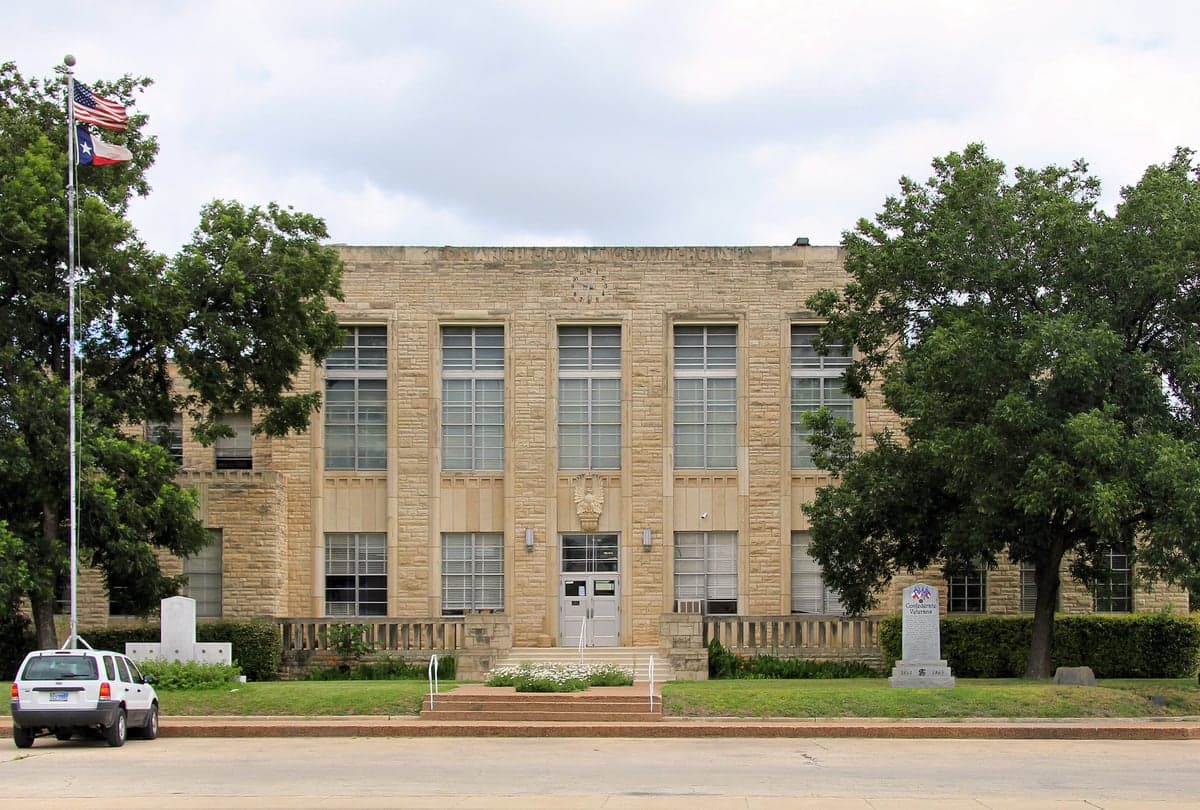
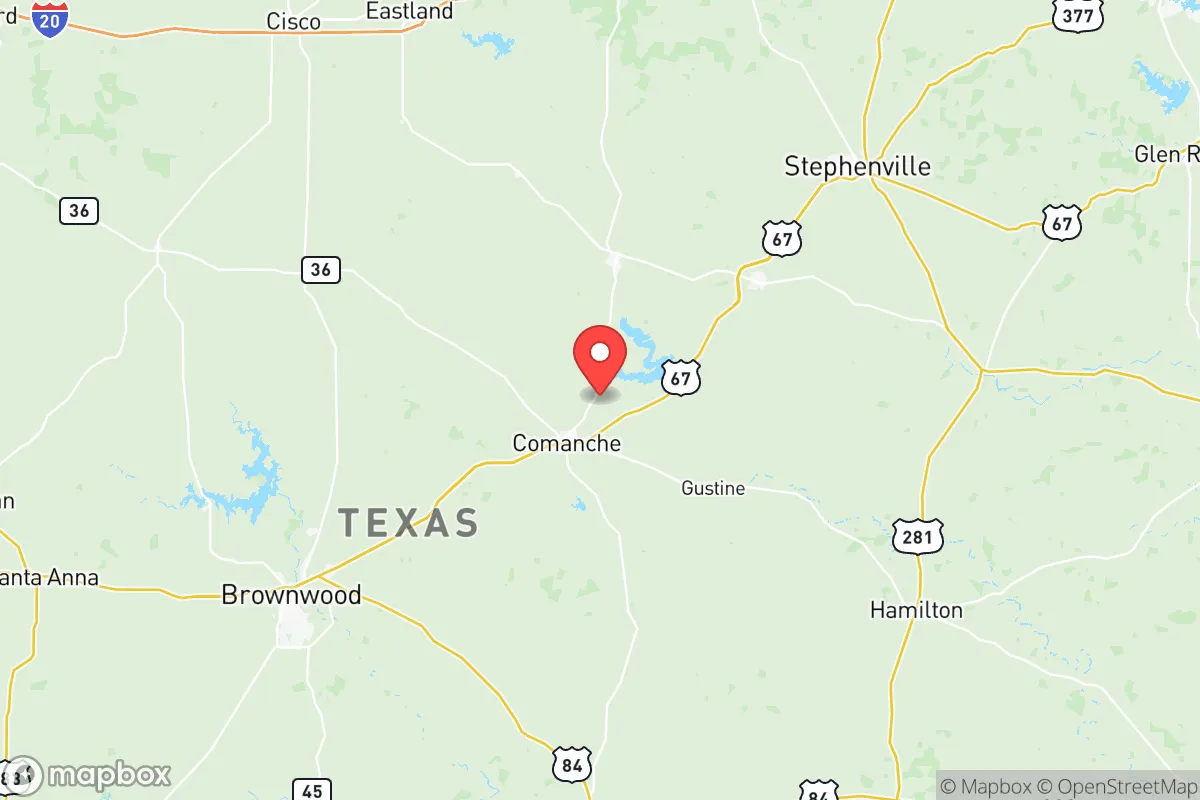
Comanche County, Texas, is a deeply conservative area with a Cook PVI of R+18, making it significantly more Republican than the state of Texas as a whole, which sits at R+4. This isn't a new development; the county has been a reliable red stronghold for decades, with Republican presidential candidates routinely winning by margins of 30 points or more. The political center of gravity is firmly in the county seat of Comanche, but the real story is in the small towns and rural precincts that drive the county's rightward tilt.
How it compares
The R+18 rating means Comanche County is about 14 points more Republican than the state average. To put that in perspective, while Texas statewide races are often competitive—think the 2022 governor's race where Greg Abbott won by 11 points—Comanche County routinely delivers 75-80% of its vote to GOP candidates. The contrast is sharpest when you look at the county's few Democratic-leaning pockets. The town of De Leon, with its larger Hispanic population and agricultural workforce, occasionally shows more competitive precincts, but even there, Democrats rarely crack 40%. Meanwhile, the rural precincts around Gustine and Sidney are among the most conservative in the region, often voting 85%+ Republican. The county's trajectory is stable: there's no sign of the suburban shift toward Democrats that's happening in places like Collin County or Fort Bend. Comanche County is getting older and slightly whiter, which reinforces its conservative character.
What this means for residents
For conservative residents, the political climate means their values are reflected in local governance. The county commission, school board, and city councils in Comanche and De Leon are uniformly Republican. Tax policy is consistently low—the county's property tax rate is among the lowest in the state—and gun rights are broadly supported. For liberal residents, the reality is more isolating. There's no organized Democratic party presence to speak of; the county party is essentially inactive. Socially liberal views on issues like abortion or LGBTQ+ rights are rarely voiced in public forums. That said, the county's small size means politics doesn't dominate daily life the way it might in a more polarized urban area. Neighbors help neighbors regardless of party, and the local economy—centered on ranching, oilfield services, and the Comanche Peak nuclear plant—creates a shared practical focus.
Culturally, Comanche County stands apart from urban Texas in its emphasis on self-reliance and local tradition. The annual Comanche Powwow and the De Leon Peach Festival are community touchstones that transcend politics. Policy-wise, the county has been a testbed for state-level conservative initiatives: it was an early adopter of Second Amendment sanctuary resolutions and has resisted state mandates on renewable energy siting. For anyone moving here, the political reality is straightforward: this is a place where conservative values aren't just held—they're assumed. That can be comforting or confining, depending on your perspective, but it's the honest character of the land.

State Political ClimatePolitical Climate in Texas
State Political AnalysisPolitical Environment in the State
Texas is a solidly Republican state with a Cook PVI of R+4, but that label barely scratches the surface of a deeply complex and rapidly shifting political landscape. The dominant coalition has been conservative for over three decades, driven by a mix of suburban voters, rural strongholds, and a business-friendly ethos. However, the 10-20 year arc shows a clear trend: the GOP’s margin of victory has been shrinking, from double-digit wins in the 2000s to closer races in 2020 and 2024, as explosive growth in the Dallas-Fort Worth metroplex, Houston, and Austin brings in a wave of new residents, many from blue states, who are slowly tilting the suburbs.
Urban vs. rural divide
The political map of Texas is a textbook study in contrast. The state’s biggest metros—Houston, Dallas, San Antonio, and Austin—are the engines of Democratic growth. Harris County (Houston) and Dallas County have both flipped blue in presidential elections since 2016, while Travis County (Austin) is one of the most liberal urban centers in the South. Meanwhile, the rural and exurban counties that ring these cities—like Collin County north of Dallas, Fort Bend County southwest of Houston, and Comal County near San Antonio—remain reliably Republican, though their margins are thinning. The real story is in the suburbs: places like Frisco, McKinney, and Round Rock are still red, but they’re trending purple as younger families and tech workers move in. On the flip side, the vast rural stretches of West Texas (think Lubbock and the Permian Basin) and East Texas (like Tyler) are deeply conservative, often voting 70-80% Republican. The border region, including El Paso and the Rio Grande Valley, is a Democratic stronghold, though the Valley has shown some rightward drift in recent cycles, particularly among Latino voters.
Policy environment
Texas’s policy environment is defined by a low-tax, low-regulation posture that appeals to many relocators. There is no state income tax—funded instead by a reliance on property taxes and a 6.25% state sales tax (localities can add up to 2%). The regulatory climate is famously business-friendly, with minimal red tape for industries from energy to tech. Education policy is a flashpoint: the state funds public schools through a complex, often criticized Robin Hood system that redistributes property tax revenue from wealthy districts to poorer ones, and school choice (vouchers) has been a perennial legislative battle, with Governor Greg Abbott pushing hard for it in 2023. Healthcare is a mixed bag—Texas has the highest uninsured rate in the nation, having refused Medicaid expansion under the Affordable Care Act. Election laws have tightened: the 2021 Senate Bill 1 restricted mail-in voting, added ID requirements, and banned drive-through and 24-hour voting, a move that drew national attention. For a conservative-leaning audience, the state’s posture on gun rights is a major draw: permitless carry was enacted in 2021, allowing most adults to carry a handgun without a license.
Recent policy direction
The last few legislative sessions have pushed Texas decisively to the right on a broad range of liberties. On gun and self-defense law, the 2021 permitless carry law (HB 1927) is the headline, but also notable is the 2023 law (SB 1902) that prohibits state contracts with companies that “discriminate” against the firearm industry. Parental and education rights saw a major win with the 2023 passage of HB 900, which requires age-appropriate ratings for library books and restricts “sexually explicit” material in schools—a direct response to conservative concerns about curriculum content. Speech and privacy: the 2021 law (HB 20) prohibits social media platforms from censoring users based on viewpoint, though it’s been tied up in court. Medical and bodily autonomy is sharply divided: Texas has one of the most restrictive abortion bans in the country (SB 8, the “heartbeat bill” from 2021, and a near-total trigger ban that took effect in 2022), while also passing a 2023 law (SB 14) banning gender-affirming care for minors. Property rights are strong, with no state-level rent control and a robust eminent domain compensation framework. Taxation remains a selling point: the 2023 session saw a $18 billion property tax cut package (Proposition 4), approved by voters, which compresses school tax rates and increases the homestead exemption. Voting and ballot access: beyond SB 1, the state has also tightened rules on voter registration drives and made it a crime for election officials to proactively mail out unsolicited mail-in ballot applications.
Civil unrest & political movements
Texas has been a stage for some of the most visible political flashpoints in the country. The 2020 Black Lives Matter protests in Austin were massive and often confrontational, leading to a city council vote to defund the police by $150 million—a decision that was later partially reversed after a backlash. On the right, the “Come and Take It” movement around gun rights is a cultural touchstone, and the state has seen organized protests against COVID-19 mandates, including a 2021 rally at the Capitol that drew thousands. Immigration politics are a constant: Governor Abbott’s Operation Lone Star, launched in 2021, has deployed state troopers and National Guard to the border, bused migrants to sanctuary cities like New York and Chicago, and installed razor wire along the Rio Grande, leading to ongoing legal battles with the Biden administration. Secession rhetoric, while fringe, has a small but vocal following—the Texas Nationalist Movement, based in Nederland, has pushed for a 2024 referendum on secession, though it has no real political traction. Election integrity remains a hot-button issue: the 2020 and 2022 cycles saw Republican-led audits in several counties, including Harris and Dallas, which found no evidence of widespread fraud but fueled ongoing distrust among some voters. A new resident would notice the omnipresence of political bumper stickers, yard signs, and the occasional protest at the Capitol, but daily life is generally peaceful and civil.
Projection
Over the next 5-10 years, Texas is likely to become more competitive, but not necessarily blue. Demographic shifts are the key driver: the state is growing by about 1,000 people a day, many from California and other blue states, and these newcomers tend to be younger, more diverse, and more moderate-to-liberal. The suburbs of Dallas-Fort Worth and Houston will continue to trend purple, while rural areas will remain deeply red. The Hispanic population, now over 40% of the state, is not monolithic—younger, more urban Latinos lean Democratic, while older, rural, and more religious Latinos are open to Republican appeals. The GOP’s hold on the state legislature is strong due to gerrymandering, but the statewide margin for president and Senate could shrink to within 2-3 points by 2032. What this means for a new resident: the political environment will remain conservative for the foreseeable future, but the culture wars will intensify as the state’s identity is contested. Expect more fights over school curriculum, property taxes, and water rights as the population booms.
For someone moving to Texas, the bottom line is this: you’ll find a state that is still fundamentally conservative in its laws and governance, but the political temperature varies wildly by where you land. If you’re a conservative, you’ll feel at home in most of the state, with low taxes, strong gun rights, and a government that shares your values. If you’re a liberal, you’ll find your community in the urban cores and inner suburbs, but you’ll need to accept that state policy will often be at odds with your views. The practical takeaway is to choose your location carefully—the difference between living in Austin and Lubbock is not just climate and culture, but a fundamentally different political reality. And keep an eye on the 2026 and 2028 elections, because the trajectory is real, and Texas is not done changing.
* Values derived from national, state, county, city and local statistics and may differ in a specific area. Last updated: 2026-07-13T15:01:40.000Z
Narrative content on this page is AI-generated and may contain mistakes. Verify any details that matter before acting on them.
ReloMaps may earn a commission from affiliate links at no extra cost to you.

