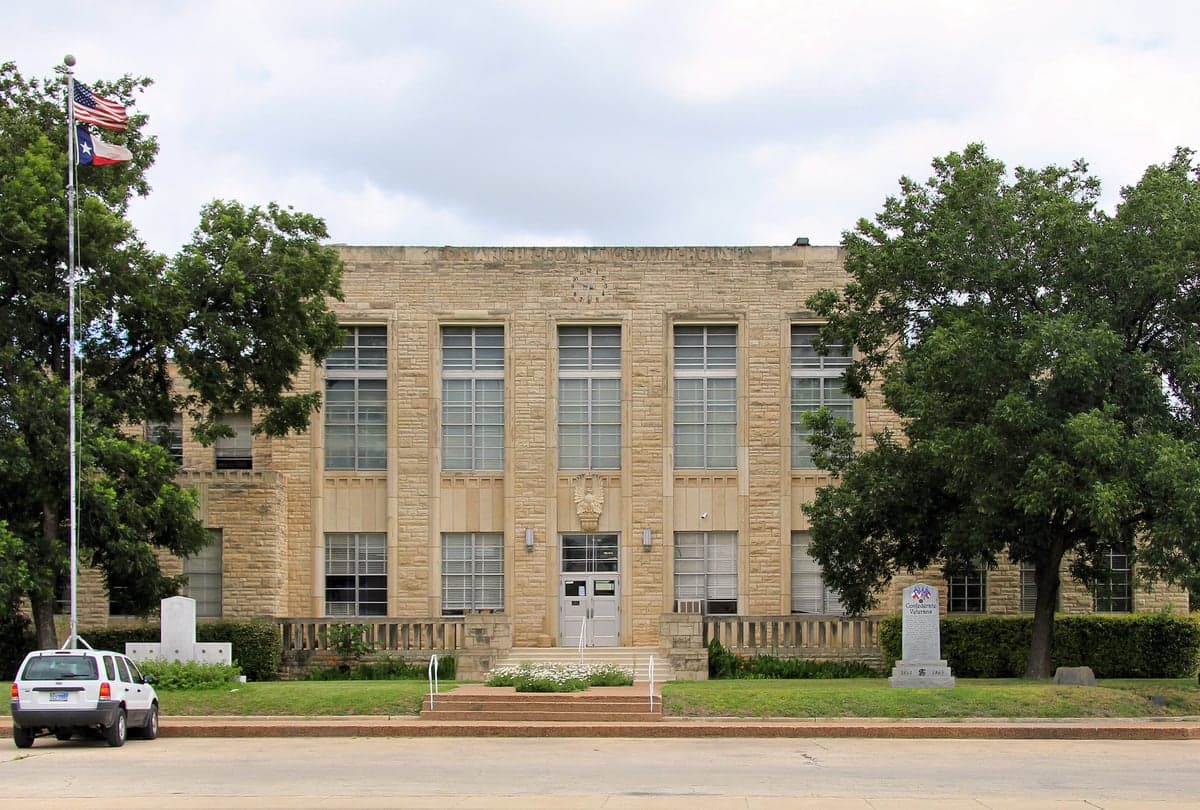
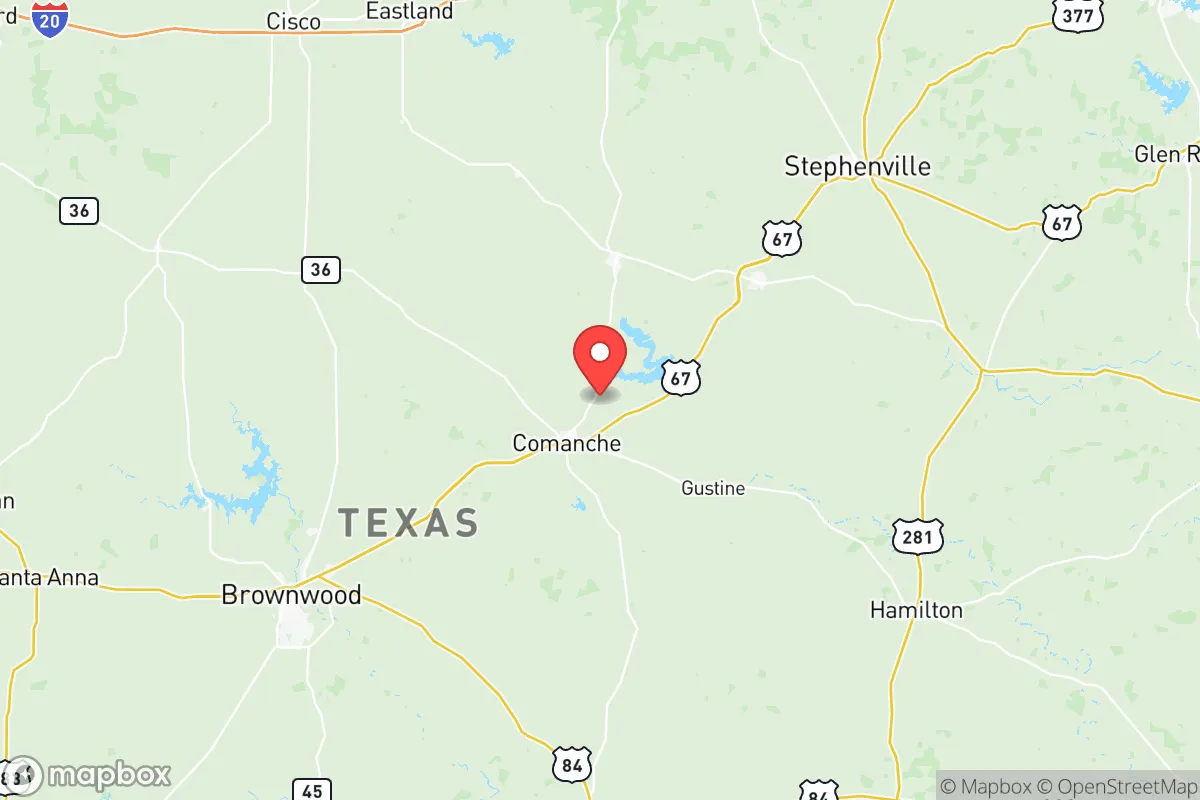
Photo: Wikipedia
Personal Sovereignty in Comanche County
Strong independent fundamentals that actively favor personal liberty and low regulation.
What does Personal Sovereignty tell us?
Personal Sovereignty measures your capacity for self-reliance and independence with minimal government friction. Higher scores mean fewer barriers between you and the way you want to live... but it assumes you have the space you need and good neighbors.
What does this tell us?
Personal Sovereignty measures your capacity for self-reliance and independence with minimal government friction. Higher scores mean fewer barriers between you and the way you want to live... but it assumes you have the space you need and good neighbors.
State Policy
Energy independence: Net exporter (220% of energy produced in-state)
Personal Liberty
Homesteading

Personal Liberty Analysis
Comanche County, Texas, offers a notably high degree of personal sovereignty, grounded in a low-tax, low-regulation state framework and a deeply ingrained culture of self-reliance. The county seat, Comanche, along with smaller communities like De Leon, Gustine, and Sidney, operate with a light governmental touch that prioritizes individual decision-making over collective mandates. For a relocation audience valuing autonomy, this area presents a stark contrast to the more restrictive environments found in major Texas metros like Austin or Dallas, where zoning, permitting, and local ordinances can significantly curtail personal freedom. The county's political and social fabric is woven from a belief that the individual, not the state, is the primary unit of responsibility.
Tax burden and regulatory posture: How low taxes and light-touch rules shape daily life
The financial foundation of personal sovereignty in Comanche County is its exceptionally low tax burden. Texas has no state income tax, and Comanche County's property tax rates are among the most favorable in the state. The total effective property tax rate in the county hovers around 1.2% of assessed value, significantly below the Texas average of roughly 1.6%. This is driven by a combination of a low county tax rate (around 0.35%) and modest school district rates. For a $200,000 home, this translates to annual property taxes of roughly $2,400, compared to over $3,200 in many suburban Texas counties. Sales tax is capped at the state's 6.25% plus a local option, typically bringing the total to 8.25% in Comanche and De Leon—competitive with rural Texas norms. Regulatory posture is equally light. There is no county-wide zoning code; land use is governed primarily by deed restrictions and state-level health and safety codes. This means a resident in Gustine or Sidney can operate a small home-based business, keep livestock, or build a workshop without navigating a thicket of permits. The county's approach is permissive: if it's not explicitly prohibited by state law or a specific subdivision covenant, it is generally allowed.
Self-defense and gun law specifics: Constitutional carry and a culture of armed readiness
Comanche County is a stronghold for Second Amendment rights, operating under Texas's permitless carry law (effective 2021). Any adult who can legally possess a firearm may carry it openly or concealed without a license. The county sheriff's office is publicly supportive of this right, and local gun culture is robust. There are no county-level restrictions on magazine capacity, firearm types, or storage requirements beyond state law. The county's rural nature means that many residents carry firearms for personal protection, predator control, and hunting. In Comanche and De Leon, gun stores and shooting ranges are common, and the annual Comanche County Fair often features shooting sports. The legal environment for self-defense is also favorable. Texas's "stand your ground" law, which removes the duty to retreat before using deadly force in a place where a person has a right to be, is fully in effect. Castle Doctrine protections extend to vehicles and workplaces, not just homes. For a relocation reader, this means the legal framework strongly presumes an individual's right to defend themselves, with minimal bureaucratic hurdles. The practical reality is that a new resident can be fully armed and legally compliant within hours of moving into their home in Sidney or Gustine, with no waiting periods or registration requirements for most firearms.
Self-reliance and homesteading viability: Lot sizes, zoning, and off-grid feasibility
Comanche County is a prime location for homesteading and off-grid living, largely due to its permissive land-use policies and affordable land. Minimum lot sizes in unincorporated areas are typically 1 to 5 acres, though many properties are sold in 10- to 40-acre parcels, particularly around the communities of Proctor and Beattie. There is no county-wide zoning that restricts the keeping of livestock, chickens, or bees, nor are there blanket prohibitions on alternative energy systems. Solar panels, wind turbines, and rainwater collection systems are common and unregulated at the county level. Off-grid feasibility is high: the county does not mandate connection to municipal water or sewer systems. Private wells and septic systems are standard, and the cost to drill a well in the area typically ranges from $5,000 to $12,000, depending on depth. The county's building codes are limited to state-mandated structural and safety standards for new construction; there are no aesthetic or design review boards. This means a resident in Sidney can build a simple, functional home using alternative materials like straw bale or earthship construction, provided it meets basic structural integrity requirements. The county's attitude is one of "live and let live," making it one of the more accommodating areas in Texas for those seeking to minimize their reliance on external systems.
Personal liberties: Parental rights, medical autonomy, speech, and property
Personal liberties in Comanche County are broadly protected by the state's conservative legal framework. Parental rights are strongly prioritized: Texas law grants parents the authority to direct their children's education, including homeschooling and private schooling, with minimal state oversight. The county has a robust homeschooling community, and local co-ops and support groups are active in Comanche and De Leon. Medical autonomy is similarly respected. Texas has no state-level vaccine mandate for adults, and while school vaccine requirements exist, exemptions (including philosophical and religious) are available. The county's rural healthcare system is limited, but residents are free to choose their medical providers and treatments without local interference. Free speech protections are robust, with no county-level ordinances restricting public expression beyond state and federal law. Property rights are the bedrock of local liberty. Comanche County has no rent control, no short-term rental bans (though individual subdivisions may have covenants), and no county-level restrictions on the use of private property beyond basic nuisance laws. Eminent domain is rarely exercised for non-utility purposes. The county's approach to property is best summarized by its lack of a county-wide building moratorium or impact fees, which are common in fast-growing Texas counties. This means a landowner in Beattie or Proctor can develop their property at their own pace, without government-imposed timelines or costs.
Overall, Comanche County ranks among the most sovereignty-friendly areas in Texas for individuals and families who prioritize personal freedom. Its combination of low taxes, permissive gun laws, minimal zoning, and strong property rights creates an environment where self-reliance is not just possible but expected. Compared to the regulatory density of Travis County (Austin) or the high property taxes of suburban Dallas-Fort Worth, Comanche County offers a lighter touch that appeals to those seeking to live with fewer constraints. For a relocation reader who values autonomy over convenience, and who is willing to trade urban amenities for the freedom to live as they see fit, Comanche County represents a compelling choice—one where the government's role is limited, and the individual's responsibility is paramount.

* Values derived from national, state, county, city and local statistics and may differ in a specific area. Last updated: 2026-07-13T15:01:40.000Z
Narrative content on this page is AI-generated and may contain mistakes. Verify any details that matter before acting on them.
ReloMaps may earn a commission from affiliate links at no extra cost to you.

