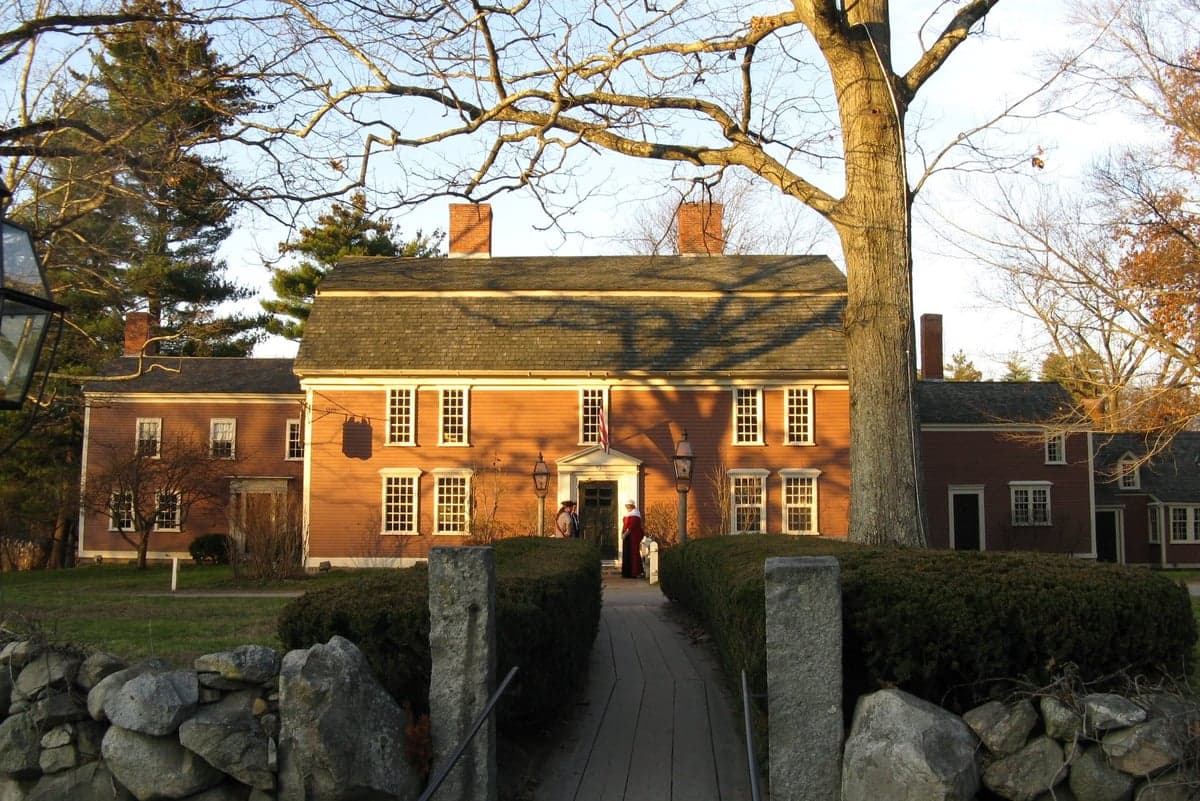
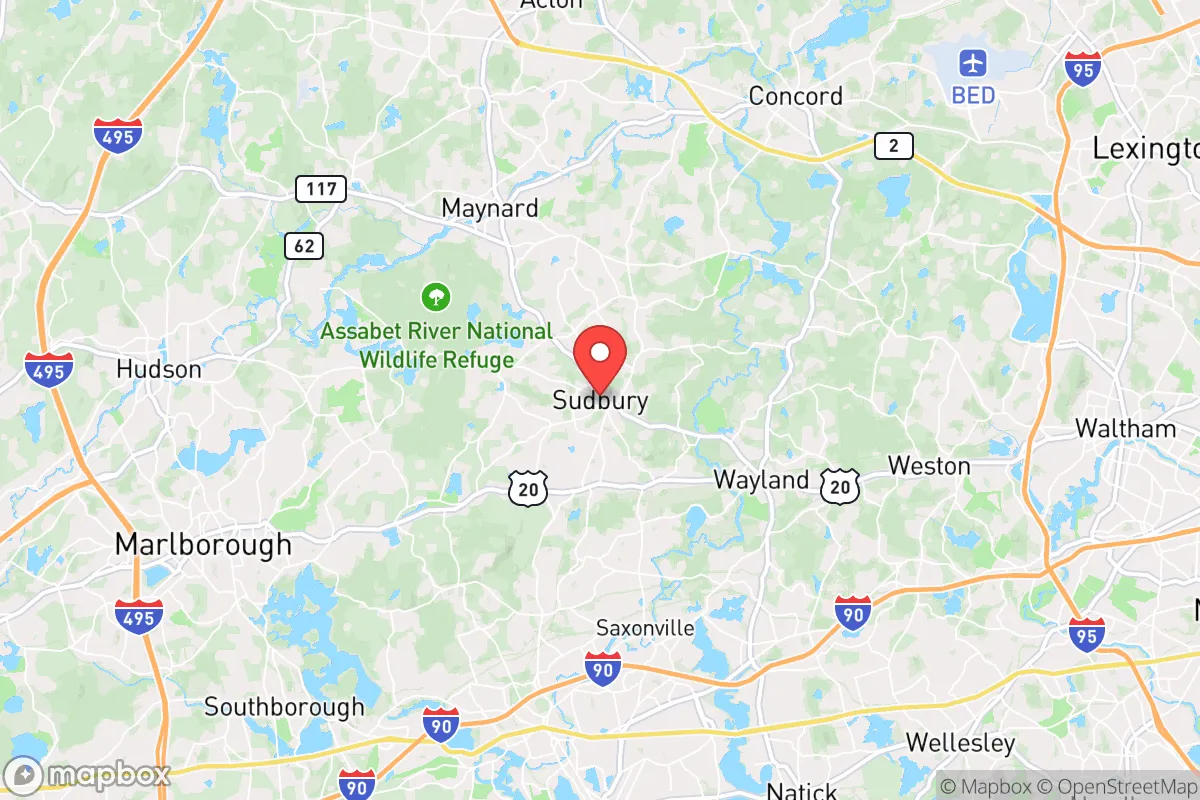
Photo: Wikipedia
Political ClimatePolitical Climate in Sudbury, MA
District shown is the primary district for this city’s centroid. Cities may span multiple districts.
Local Political AnalysisPolitical Analysis of Sudbury, MA
Sudbury is one of the most reliably Democratic towns in Massachusetts, and it’s been trending that way for a generation. The Cook PVI of D+24 puts it a full nine points bluer than the state’s already deep-blue D+15 rating. In practice, that means a Democratic presidential candidate can expect to win Sudbury by roughly 65-70% of the vote, while statewide races are usually closer to 60-65% Democratic. This isn’t a recent flip — the town has voted Democratic in every presidential election since at least 1992, and the margin has only widened since 2016. If you look at the surrounding area, the contrast is sharp: neighboring towns like Wayland and Weston are also solidly blue, but drive 15 minutes west to Hudson or Marlborough, and you’ll find a much more competitive, purple-to-light-red electorate. Sudbury’s political identity is deeply tied to its demographics — highly educated, affluent, and overwhelmingly white-collar, with a large share of professionals working in tech, biotech, and academia in the greater Boston corridor.
How it compares
Compared to Massachusetts as a whole, Sudbury is a Democratic stronghold within a Democratic stronghold. The state’s D+15 PVI already makes it one of the most liberal states in the country, but Sudbury’s D+24 is more in line with the bluest urban cores like Cambridge (D+38) or Brookline (D+33) than with the state’s more moderate suburbs. For example, in the 2020 presidential election, Sudbury gave Joe Biden about 72% of the vote, while Massachusetts overall gave him about 66%. That nine-point gap is consistent across recent cycles. The town’s Republican minority — roughly 10-12% of registered voters — is smaller than the state average of about 15%, and they tend to be more fiscally conservative than socially conservative. In local elections, the board of selectmen and school committee have been all-Democratic or all-Democratic-leaning for years, with Republicans rarely even fielding candidates. The real political action in Sudbury isn’t between parties but within the Democratic primary — debates over school funding, zoning for affordable housing, and environmental policy often split the town’s liberal base.
What this means for residents
For liberal residents, Sudbury is a comfortable place to live politically. You’ll find strong support for public schools, open space preservation, and climate initiatives — the town has a robust sustainability committee and was an early adopter of municipal solar. Conservative residents, while a clear minority, aren’t marginalized. The town’s political culture is polite and process-oriented; town meeting is the real forum for debate, and fiscal conservatives often win arguments on spending restraint, especially around school budgets and capital projects. That said, social conservatives will find little resonance on issues like abortion or gun rights — the town’s values are broadly secular and progressive. The practical effect of Sudbury’s deep-blue lean is that state-level policy — like the Massachusetts gun laws, the state’s universal health care framework, and its strong tenant protections — is largely uncontroversial here. The biggest local political fights tend to be about growth: how much multifamily housing to allow under the MBTA Communities Act, and whether to preserve the town’s semi-rural character or embrace denser development near the commuter rail.
One cultural distinction worth noting: Sudbury’s political identity is less activist and more managerial than in nearby Cambridge or Somerville. You won’t see many protest signs on lawns, but you will see detailed town meeting warrant articles on PFAS contamination in the town’s wells or the fine print of the school district’s diversity, equity, and inclusion plan. The town’s trajectory is toward even deeper blue alignment as younger, more diverse families move in from Boston and the MetroWest tech corridor. If you’re moving here, expect a community that votes overwhelmingly Democratic but governs with a pragmatic, New England sensibility — more about efficient services than ideological purity.

State Political ClimatePolitical Climate in Massachusetts
State Political AnalysisPolitical Environment in the State
Massachusetts is one of the most reliably Democratic states in the country, with a Cook Partisan Voting Index of D+15, meaning it votes about 15 points more Democratic than the national average in presidential elections. Over the past 20 years, the state has shifted leftward in presidential races — from John Kerry winning his home state by 25 points in 2004 to Joe Biden winning by 33 points in 2020 — while the state legislature has remained under near-total Democratic control since the 1990s. However, the political reality is more nuanced than the top-line numbers suggest: the state has a strong tradition of moderate Republican governors (Charlie Baker, Mitt Romney, Bill Weld) who won by appealing to the center, and the political culture is defined less by ideological purity and more by a pragmatic, often technocratic approach to governance that can frustrate both hard-left activists and conservative transplants alike.
Urban vs. rural divide
The political map of Massachusetts is a classic story of a deep-blue urban core surrounded by purple-to-red exurbs and rural areas. The Boston metro area — including Boston proper, Cambridge, Somerville, and Brookline — is the engine of the state's Democratic dominance, regularly delivering 80-90% of the vote for Democratic candidates. The western part of the state, particularly Berkshire County (home to Pittsfield and North Adams), is also reliably blue, driven by a mix of college towns and older industrial cities. The real political contrast shows up in the central and southeastern parts of the state. Worcester County has been trending redder in recent cycles: Donald Trump won 48% of the vote there in 2020, up from 43% in 2016, and the city of Worcester itself remains a Democratic stronghold while the surrounding towns like Holden, Paxton, and Rutland lean conservative. The South Coast — Fall River and New Bedford — has a large working-class Portuguese and Hispanic population that votes Democratic but is culturally conservative on issues like abortion and gun rights, creating a tension that local politicians navigate carefully. The Cape and Islands (Barnstable, Nantucket, Martha's Vineyard) are a mixed bag: the Vineyard is deep blue, while the mid- and upper-Cape towns like Sandwich and Bourne have shown more Republican leanings in local races. The most reliably Republican areas are the small towns in the central and western hill towns — places like Sturbridge, Southbridge, and the towns along the New Hampshire border — where Trump won by 20-30 points in 2020.
Policy environment
Massachusetts has a high-tax, high-service policy environment that is a dealbreaker for some conservatives and a selling point for others. The state has a flat income tax rate of 5% (reduced from 5.15% in 2023 via a voter-approved amendment), but in 2022 voters passed a "millionaire's tax" — a 4% surcharge on income over $1 million — that funds education and transportation. Property taxes are moderate by national standards (around 1.1% of assessed value) but can be high in desirable suburbs like Lexington or Wellesley. The sales tax is 6.25%, with no tax on most groceries or clothing under $175. The regulatory environment is business-friendly in some sectors (biotech, healthcare, education) but heavily regulated in others (housing construction, energy, firearms). The state has some of the strictest gun laws in the country, including a ban on "assault weapons," a licensing system that requires a Firearms Identification Card (FID) for long guns and a License to Carry (LTC) for handguns, and a "red flag" law that allows courts to temporarily seize firearms from individuals deemed a risk. Education policy is a major draw: Massachusetts consistently ranks first in the nation for K-12 outcomes, with strong public schools in most suburbs and a robust system of charter schools and vocational-technical schools (like Assabet Valley Regional Technical High School in Marlborough). Healthcare is near-universal, with the state's 2006 reform law serving as the model for the Affordable Care Act, and the state has a strong public health infrastructure. Election laws are among the most accessible in the country: no-excuse mail-in voting, same-day registration, early voting by mail and in person, and automatic voter registration through the RMV. The state also has a public campaign financing system for state-level offices.
Recent policy direction
Over the past five years, Massachusetts has moved decisively left on several fronts, while maintaining some moderate guardrails. In 2022, the legislature passed the Work and Family Mobility Act, allowing undocumented immigrants to obtain standard driver's licenses, which took effect in 2023 despite a failed ballot repeal effort. The state also passed a comprehensive climate bill in 2022 (the Climate Act) that mandates net-zero emissions by 2050 and includes a ban on new gas hookups in most new construction starting in 2025. On gun policy, the state tightened its already-strict laws in 2024 with a bill that expanded the "assault weapons" ban, required microstamping on new handguns, and created a state-level firearm dealer licensing system. On education, the state passed the Student Opportunity Act in 2019, which increased funding for low-income districts by $1.5 billion over seven years, and in 2023 the Board of Education voted to require all public schools to teach LGBTQ+ history. On abortion, the state passed the ROE Act in 2020, which codified abortion rights into state law, expanded access to later-term abortion, and removed parental consent requirements for minors (replacing it with a judicial bypass). On housing, the state passed the MBTA Communities Act in 2021, requiring 177 cities and towns served by the T to zone for multi-family housing near transit stations — a controversial law that has sparked local resistance in suburbs like Milton and Reading. On criminal justice, the state passed a police reform bill in 2020 that banned chokeholds, created a state certification system for officers, and limited qualified immunity. On voting, the state made mail-in voting permanent in 2022 after a pandemic-era experiment. For a conservative relocator, the net effect is a state that is actively expanding government services and regulation, particularly on guns, housing, and climate, while maintaining relatively high taxes and a strong safety net.
Civil unrest & political movements
Massachusetts has a history of organized political activism on both sides, though the left is far more visible and institutionalized. The state was a major hub for the 2020 Black Lives Matter protests, with large demonstrations in Boston, Cambridge, and Springfield, and the movement led to the police reform bill mentioned above. The left also has a strong presence in the form of the Progressive Massachusetts network, which has successfully pushed for the millionaire's tax and the ROE Act, and the Massachusetts Teachers Association, one of the most powerful unions in the state, which has been a key force in education funding battles. On the right, the state has a smaller but active conservative movement centered around the Massachusetts Fiscal Alliance (a free-market advocacy group) and the Massachusetts Republican Party, which has struggled to maintain relevance after the departure of moderate figures like Charlie Baker. The state saw some pro-Trump rallies in 2020 and 2021, particularly on Boston Common and at the State House, but they were small compared to those in other states. Immigration politics are a flashpoint: Massachusetts is a sanctuary state, with a 2017 law (the Safe Communities Act) that limits state and local cooperation with federal immigration enforcement, and the state has seen tensions in cities like Attleboro and Taunton over the placement of migrant shelters. Election integrity has not been a major controversy in Massachusetts — the state's mail-in voting system ran smoothly in 2020 and 2022, and there have been no significant fraud allegations — but some conservative activists have raised concerns about the state's automatic voter registration and lack of voter ID requirements. Secession rhetoric is virtually nonexistent, though there is a small "New England independence" movement that has no real political traction.
Projection
Over the next 5-10 years, Massachusetts is likely to continue its leftward drift, but the pace may slow as the state grapples with the consequences of its policy choices. The biggest demographic trend is the continued growth of the Boston metro area, driven by the biotech and tech sectors, which will reinforce the state's blue lean. However, the state is also seeing significant out-migration of middle-class families to lower-cost states like New Hampshire, Maine, and Florida — a trend that accelerated after the pandemic and that disproportionately affects the state's tax base. The housing crisis is the wild card: if the MBTA Communities Act succeeds in building more housing, it could slow out-migration and keep the state's economy competitive; if it fails, the state could become even more expensive and exclusive, driving more conservatives and moderates out. On the political front, the state's Republican Party is in a weak position, but the rise of a more moderate, pro-business wing (like former state representative Brad Jones of North Reading) could give the party a path back to relevance in state-level races. The most likely scenario is that Massachusetts remains a solidly Democratic state with a strong progressive wing, but with enough moderate voters to keep the most extreme policies in check — think California, but with a stronger public school system and less homelessness. For a conservative relocator, the state will not become more conservative, but it may become more pragmatic as the costs of its policies become more apparent.
For a new resident, the bottom line is this: Massachusetts is a state where your vote in a presidential election will not matter, but your vote in local and state-level races can have real impact, especially in the suburbs and smaller cities where the margins are closer. The state offers world-class schools, excellent healthcare, and a high quality of life, but you will pay for it in taxes and regulation. If you are a conservative who values strong public services and can tolerate a blue political environment, you can find a comfortable niche in the exurbs or the central hill towns. If you are a liberal, you will find a state that is largely aligned with your values, though you may be frustrated by the slow pace of change on housing and transit. Either way, the state's political culture is less about ideological warfare and more about pragmatic problem-solving — a trait that has served it well, even if it means the state is not for everyone.
* Values derived from national, state, county, city and local statistics and may differ in a specific area. Last updated: 2026-10-12T22:13:34.000Z
Narrative content on this page is AI-generated and may contain mistakes. Verify any details that matter before acting on them.
ReloMaps may earn a commission from affiliate links at no extra cost to you.

