 Popular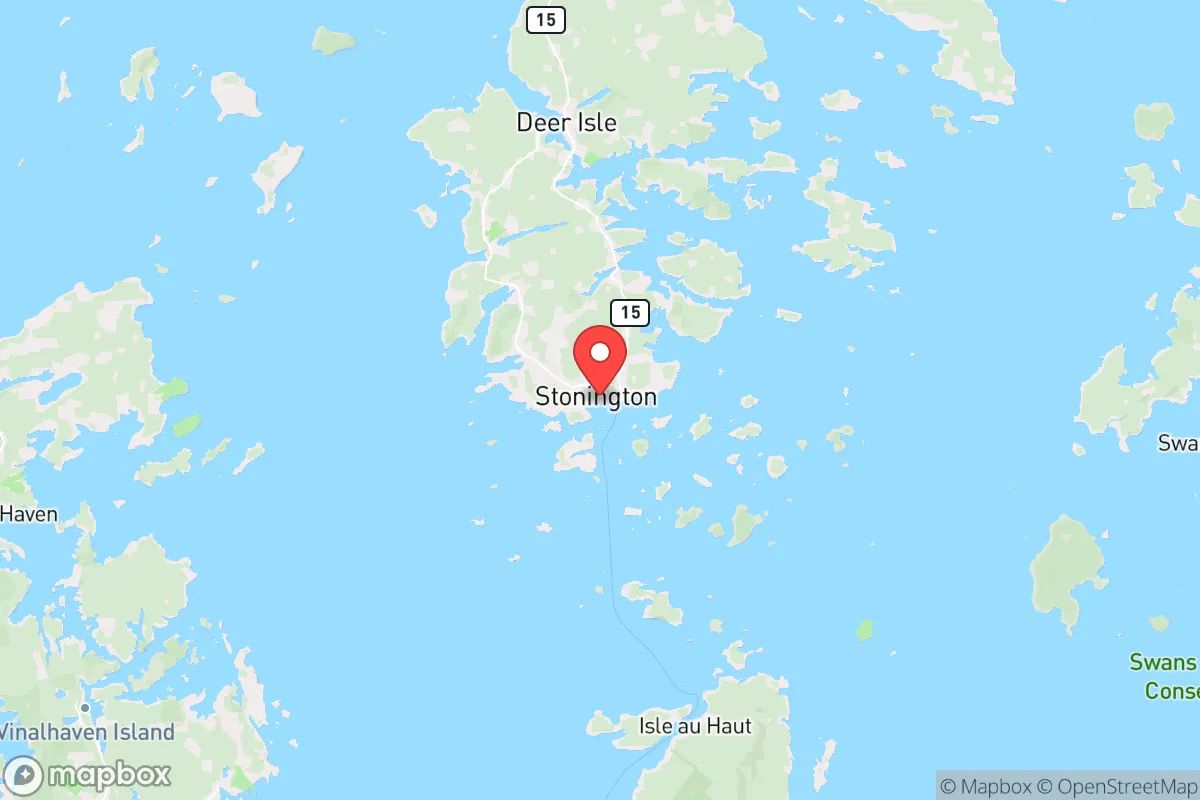
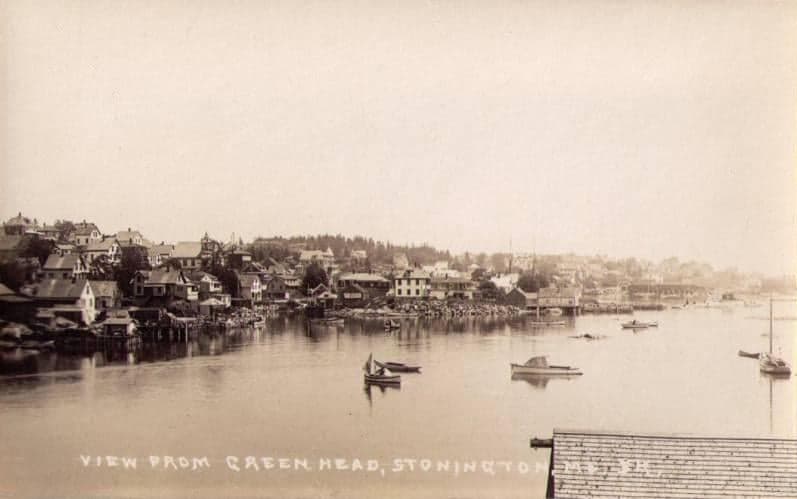
Photo: Wikipedia
Strategic Assessment of Stonington, ME
Meaningful friction. Expect exposure to either population pressure, blast zones, or natural disaster risk. Consider buying a retreat property.
What does the Strategic Assessment tell us?
Our Strategic Assessment grades tactical survivability of an area. Major population centers, military targets, fallout zones, natural disasters, and border exposure all drive risk — lower exposure means a more defensible position in a crisis.
This is heavily inspired by Joel Skousen's Strategic Relocation book. Highly recommended you checkout the book ($)What does this tell us?
Our Strategic Assessment grades tactical survivability of an area. Major population centers, military targets, fallout zones, natural disasters, and border exposure all drive risk — lower exposure means a more defensible position in a crisis.
This is heavily inspired by Joel Skousen's Strategic Relocation book. Highly recommended you checkout the book ($)Strategic Pillars

Key Distances
Regional Safe Places
Below is our recommended "safe zones" in Maine and the surrounding area based on our strategic heuristics. For most people, it's unrealistic to live in a “safe zone” full-time due to work, family or other personal reasons. They tend to be more rural. However, many of these areas are perfect for second homes and retreat properties that double as a vacation home or even a short-term rental.
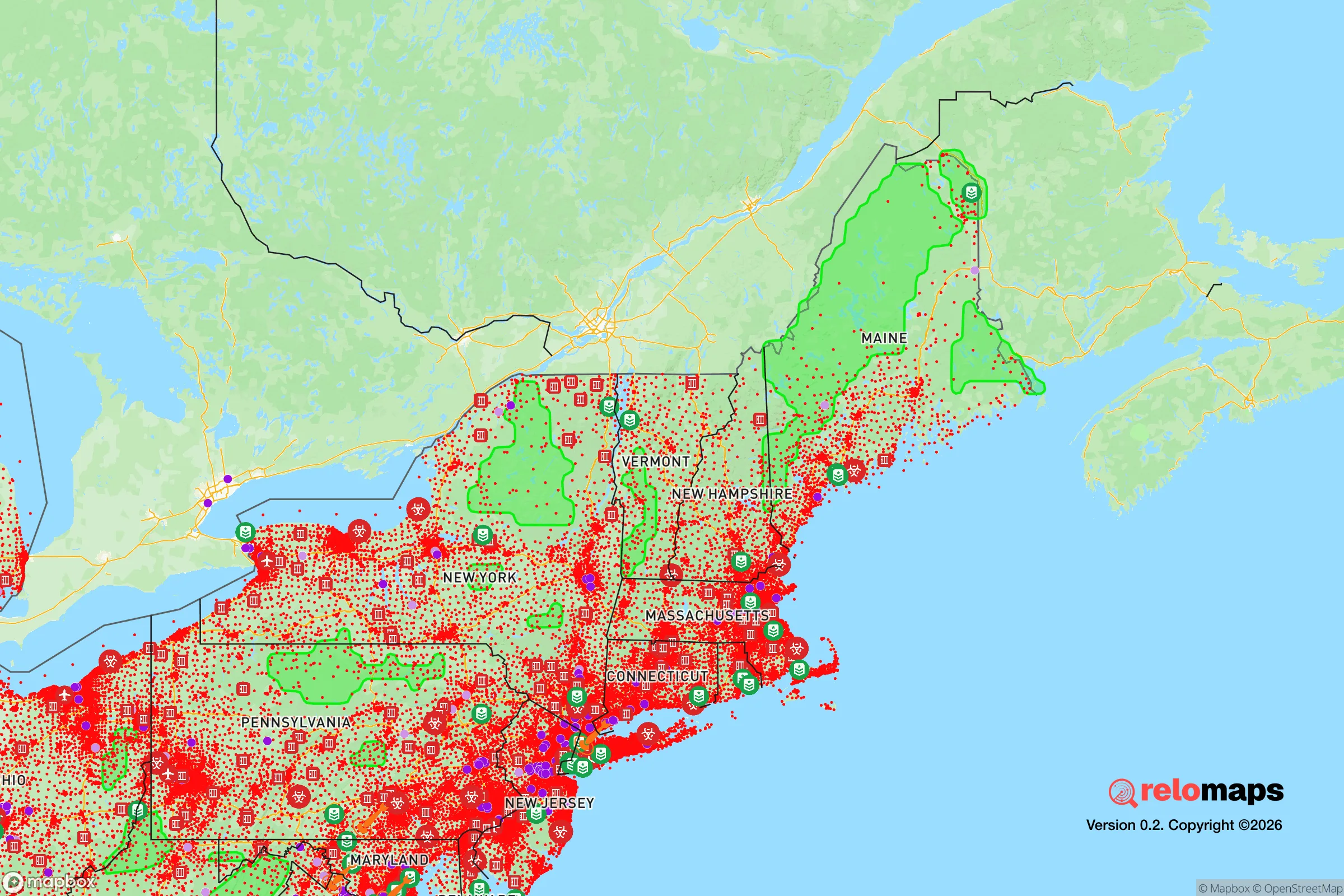
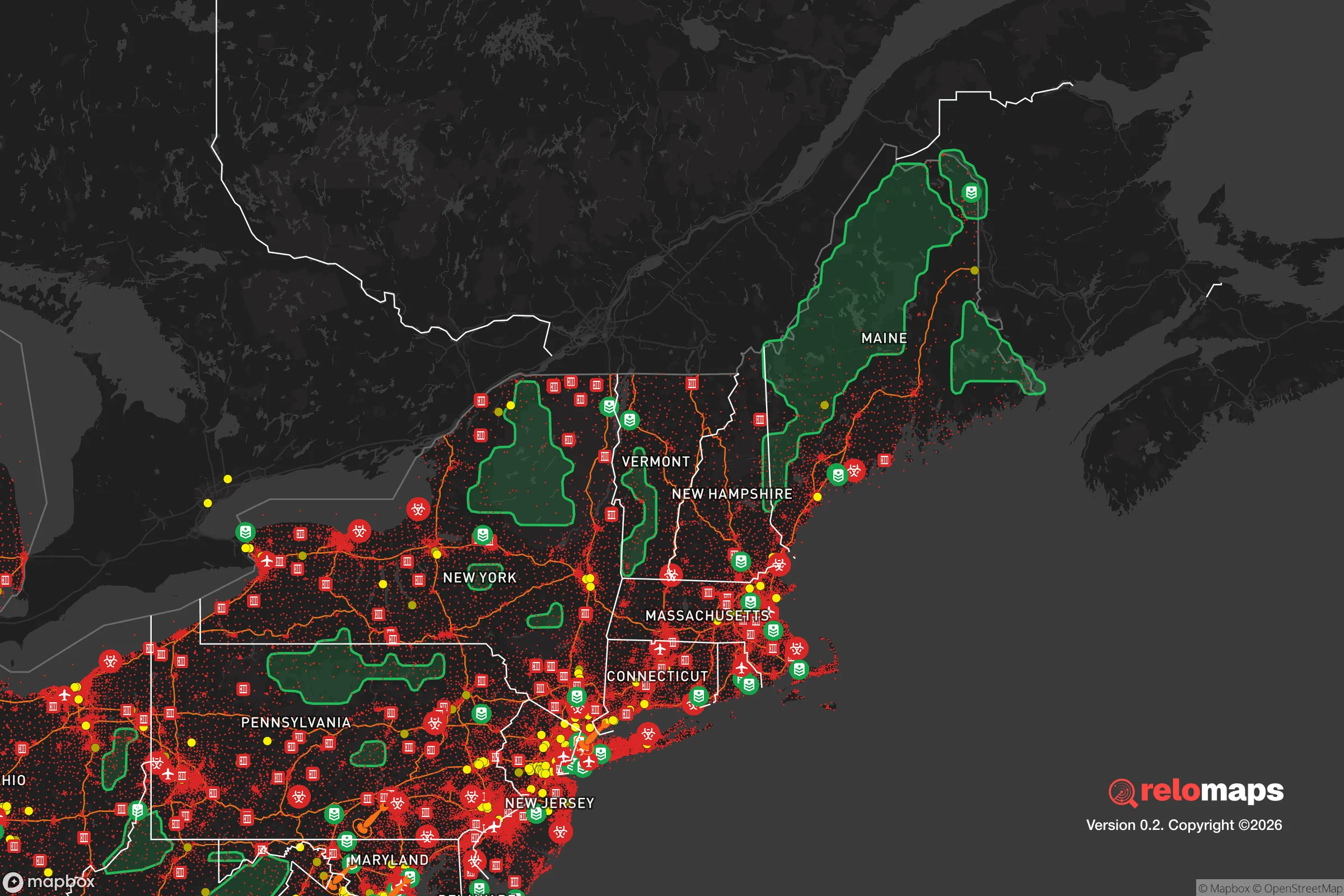


Important Note: For informational purposes only. This does not mean nothing bad ever happens in the green zones. Please use common sense. This is based on public data and modeled with AI. We tried to take a conservative approach but mistakes happen. We update this regularly as new information becomes available.
Solar Generator Recommendations
Backup power matters more here than in safer locations. We've picked three solar generators across budgets and capacity tiers — start with the budget unit if you only need a few essentials, or step up if you want to run a fridge and HVAC for days at a time.

Jackery Portable Power Station Explorer 300
Budget OptionPower on the Go: Weighing only 11 lbs, it's convenient to set up and store with book-sized foldable solar panels

BLUETTI Portable Power Station AC180
Designed for both indoor and outdoor scenarios, AC180 is highly capable as it has a robost capacity and continuous output power.

EF ECOFLOW DELTA Pro Ultra Power Station
Upgraded PickEcoFlow DELTA Pro Ultra is a whole-home energy system designed to grow with your family. Integrated with the Smart Home Panel 2, it scales to meet your evolving energy needs — keeping your home powered, intelligent, and secure through every stage of life.
We earn a commission, at no additional cost to you.
Strategic Assessment Analysis
Stonington, Maine, is one of the most strategically resilient locations on the Eastern Seaboard, offering a combination of geographic isolation, natural resources, and low population density that is hard to match. For a relocator thinking seriously about disaster preparedness and long-term self-sufficiency, this working fishing village on the southern tip of the Deer Isle peninsula presents a compelling case. Its position—roughly 80 miles from Bangor and a solid buffer from the major metropolitan corridors of Boston and Portland—provides a level of natural insulation that few coastal towns can claim.
Geographic position and natural defensive advantages
Stonington’s primary strategic asset is its location at the end of a peninsula, which is both a blessing and a consideration. The town sits on the southern shore of Deer Isle, with the Atlantic Ocean to the south and the Penobscot Bay to the west. This terminal geography means there is essentially one road in and out—Route 15—which creates a natural chokepoint. In a scenario where civil order degrades or you simply want to limit outside traffic, this is a significant defensive feature. The Deer Isle Bridge, connecting the peninsula to the mainland at Sedgwick, is the single point of failure for vehicular access; monitoring it gives residents a clear picture of who is coming and going.
The surrounding waters are equally important. The island is part of a complex archipelago, with hundreds of islands and ledges in the immediate vicinity. This makes the coastline difficult to navigate for anyone unfamiliar with the local waters, which is a natural deterrent to casual maritime approach. For a family, this means the "back door" is not a wide-open beach but a rocky, tidal, and technically challenging shoreline. The local granite quarries, which once supplied stone for buildings across the country, have left a landscape of deep pits and steep ledges that further complicate overland movement off the main roads.
In terms of climate and terrain, Stonington sits in a mixed forest zone with abundant hardwood for fuel and softwood for construction. The area is not prone to the hurricane storm surge that devastates flatter coastal areas further south; the rocky coast and deep water mean that while storms are a fact of life, the catastrophic flooding seen in places like Florida or the Gulf Coast is less of a threat. Winters are harsh, which is a resilience factor in itself—the cold deters transient populations and reduces the viability of many biological threats that thrive in warmer climates.
Risk exposure and proximity to fallout-relevant landmarks
When assessing man-made risks, Stonington’s profile is notably clean. The nearest major population center is Bangor, roughly 80 miles to the north, which is home to the airport and a regional hospital but is not a primary strategic target. Boston, a likely priority target in any major conflict, is over 200 miles to the south. The prevailing weather patterns in Maine move from west to east, meaning fallout from a strike on Boston or Portsmouth would generally be carried out to sea or north into Canada, not directly onto the Deer Isle peninsula. The wind patterns are a critical detail; they generally work in Stonington’s favor.
The nearest nuclear power plant is the decommissioned Maine Yankee site in Wiscasset, about 50 miles southwest. While the spent fuel remains on site in dry casks, the risk profile is far lower than an active reactor. The real industrial risk is closer to home: the port of Searsport, about 30 miles northwest, is a deep-water port that handles liquefied petroleum gas and other bulk cargo. A major incident there could disrupt supply chains, but it is not a strategic target that would invite a nuclear strike. The military presence in the state is minimal, with the primary installations being the Portsmouth Naval Shipyard in Kittery (far south) and the Loring Commerce Centre in Limestone (far north), neither of which places Stonington in a likely blast or fallout zone.
What this means for the relocator is that Stonington offers a rare combination: it is far enough from high-value targets to avoid the immediate effects of a conflict, yet close enough to working ports and infrastructure to maintain access to goods and services during normal times. The primary risk is not a single catastrophic event but the long-term economic disruption that would follow any major crisis. In that scenario, the town’s reliance on fishing and tourism could be a vulnerability, but its ability to feed itself is a significant counterweight.
Practical resilience for a relocator: food, water, energy, and defensibility
For the self-sufficient-minded relocator, Stonington’s practical assets are substantial. The most obvious is food. This is one of the last working fishing ports in Maine, landing millions of pounds of lobster and groundfish annually. A resident with a skiff and basic gear can supplement their diet with seafood year-round. The surrounding waters also hold mussels, clams, and seaweed, and the tidal flats are productive. On land, the growing season is short—roughly 90 to 110 days—but the soil, while rocky, is workable for root vegetables, greens, and hardy brassicas. The local farmers' market and the island’s network of small farms provide a buffer, but the real advantage is the sea.
Water is less of a concern here than in many other parts of the country. The peninsula has numerous freshwater ponds and streams, and most homes rely on private wells. The water table is generally reliable, and the high annual rainfall—averaging over 45 inches—means that rainwater catchment is a viable supplementary strategy. The main issue is not quantity but quality; well water in coastal areas can have high salinity or sulfur content, so testing is essential before purchase. For energy, the picture is mixed. The grid is at the end of the line, meaning power outages are common during winter nor'easters. This is a known quantity for locals, and most full-time residents have wood stoves, generators, or both. Heating oil is the primary fuel, but the abundance of firewood on the peninsula makes wood heat a practical and cost-effective primary source. Solar is viable, though the long, dark winters reduce output; a hybrid approach of solar plus wood is the most realistic path to energy independence.
Defensibility is where Stonington truly shines. The town itself is compact, with a dense village core and a surrounding ring of low-density residential areas. The single road in and out, combined with the rugged coastline, makes it a natural redoubt. A small, organized community could effectively control access to the peninsula. The local population is tight-knit and historically self-reliant; this is a community of fishermen and lobstermen who are accustomed to working in harsh conditions and relying on each other. For a relocating family, the challenge is integration—this is not a transient community, and newcomers are viewed with some skepticism until they prove their commitment. However, once accepted, the social fabric is a resilience asset that cannot be bought.
The overall strategic picture for Stonington is one of high resilience with manageable trade-offs. It offers a rare combination of natural food sources, defensible geography, and distance from primary targets, all within a community that retains a frontier mentality. The downsides are real: the isolation can be psychologically taxing, the winters are long, and the economic base is narrow. But for a family or individual looking to ride out systemic disruption—whether from economic collapse, grid failure, or geopolitical conflict—Stonington is a strong candidate. It is not a prepper compound; it is a real, working town with a century of hard-won independence behind it. That is the kind of foundation that cannot be built overnight, and it is worth serious consideration.

* Values derived from national, state, county, city and local statistics and may differ in a specific area. Last updated: 2026-09-05T23:41:24.000Z
Narrative content on this page is AI-generated and may contain mistakes. Verify any details that matter before acting on them.
ReloMaps may earn a commission from affiliate links at no extra cost to you.

