 Popular
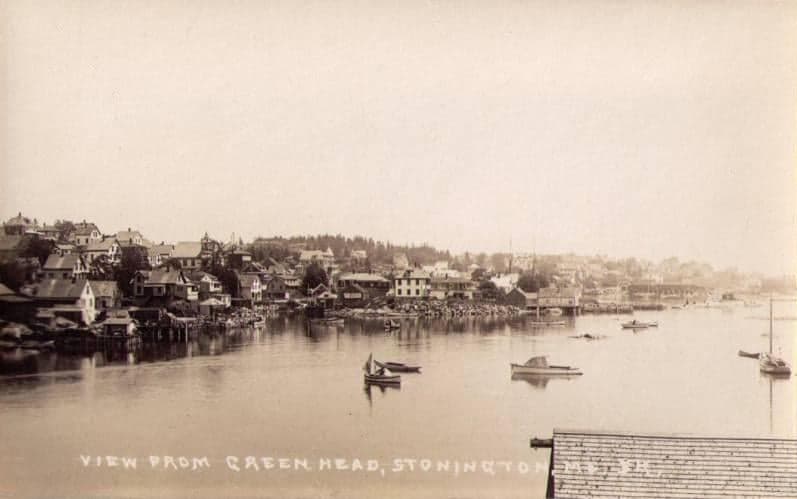
Photo: Wikipedia
Personal Sovereignty in Stonington, ME
Viable for self-reliance. Generally workable, though some barriers may limit total independence.
What does Personal Sovereignty tell us?
Personal Sovereignty measures your capacity for self-reliance and independence with minimal government friction. Higher scores mean fewer barriers between you and the way you want to live... but it assumes you have the space you need and good neighbors.
What does this tell us?
Personal Sovereignty measures your capacity for self-reliance and independence with minimal government friction. Higher scores mean fewer barriers between you and the way you want to live... but it assumes you have the space you need and good neighbors.
State Policy
Energy independence: Importer (30% of energy produced in-state)
Personal Liberty
Homesteading

Personal Liberty Analysis
Stonington, Maine, offers a distinctive blend of coastal isolation and New England self-governance that makes it one of the more sovereignty-friendly towns on the eastern seaboard. For individuals and families weighing personal freedom, the town’s location at the end of the Blue Hill Peninsula on Deer Isle creates a natural buffer from state-level overreach, while Maine’s constitutional protections for self-defense, property rights, and parental authority provide a legal framework that leans libertarian in practice. The regulatory environment here is lighter than in southern Maine’s Portland metro, but it is not a free-for-all — the state’s shoreline zoning and land-use rules still apply, and understanding those boundaries is essential before relocating.
Tax burden and regulatory posture in Hancock County
Maine’s overall tax burden ranks among the highest in the nation, but Stonington’s specific situation is more nuanced than the statewide headline suggests. The state imposes a flat 5.1% individual income tax rate on most earned income, and the 5.5% sales tax applies to most goods, though groceries are exempt. Property taxes in Stonington are set by the town and Hancock County, with the mill rate historically hovering around 12-14 mills — meaning a $300,000 home carries roughly $3,600 to $4,200 in annual property tax. That is moderate for coastal Maine, where waterfront towns often push 20 mills.
Regulatory posture in Stonington is characterized by a hands-off approach to most residential activity, but with strict oversight of the working waterfront. The town’s comprehensive plan emphasizes preserving the commercial fishing industry, so dock access, wharf repairs, and marine-related construction face a heavier permitting process than inland residential projects. For a homeowner building a single-family dwelling on a standard lot, the process is straightforward: a building permit from the town office, compliance with the state’s Uniform Building and Energy Code, and a septic system permit from the Maine Department of Environmental Protection. There is no town-wide zoning ordinance in the traditional sense — Stonington relies on shoreland zoning under state mandate, which restricts building within 75 feet of the high-water mark and limits clearing in the coastal buffer zone. Off that 75-foot line, a property owner has substantial latitude to build, expand, or modify without discretionary review.
Self-defense law and gun rights in Maine
Maine is a shall-issue state for concealed carry permits, but the practical effect is that permits are nearly unnecessary for most residents. Since 2015, Maine has allowed constitutional carry — any adult who can legally possess a firearm may carry it concealed or openly without a permit. The state’s self-defense statute, Title 17-A Section 108, follows the Castle Doctrine and does not impose a duty to retreat in any place where a person has a legal right to be. That includes your home, your vehicle, and your place of business, and it extends to public spaces where you are not engaged in criminal activity.
For Stonington specifically, the practical environment is even more permissive than the state law suggests. The town has no local firearms ordinances, no waiting periods, and no additional registration requirements beyond federal background checks at licensed dealers. Private sales between individuals are unregulated at the state level, meaning a transfer between two private parties requires no paperwork or government involvement. Hunting is deeply embedded in the local culture, and the Deer Isle area has a strong tradition of firearm ownership for both sport and subsistence. The nearest gun shops and ranges are in Ellsworth, roughly 45 minutes north, but the rural character of the region means most residents practice on private land without issue.
Self-reliance and homesteading viability on Deer Isle
Stonington’s homesteading potential is strong but constrained by geography and soil quality. The town’s minimum lot size for a single-family dwelling is one acre in most areas, though many properties on the island are larger — the median parcel size in the 04681 ZIP code is roughly 2.5 acres. The rocky, acidic soil is not ideal for row-crop agriculture, but it supports raised-bed gardening, cold-hardy fruit trees, and small livestock. The town’s zoning does not restrict keeping chickens, goats, or pigs on residential lots, and there is no noise ordinance that would limit roosters or livestock calls during daylight hours.
Off-grid feasibility is genuinely high here, with one significant caveat. Maine’s building code requires a septic system for any dwelling with plumbing, which means a composting toilet alone does not satisfy the legal requirement — you need a state-permitted subsurface wastewater disposal system, which typically costs $8,000 to $15,000 to install. Solar power is unregulated at the town level; a homeowner can install panels without a permit as long as the structural load is verified. Wood heat is the dominant supplemental heating source on Deer Isle, and the town has no restrictions on wood stove installation beyond the state fire code. Rainwater collection is legal in Maine and not subject to the prior-appropriation doctrines found in western states, though the state recommends — but does not require — a filtration system for potable use.
The practical limitation for full self-reliance is winter access. Stonington is connected to the mainland by the Deer Isle Bridge, which is maintained year-round, but the town is roughly 45 minutes from the nearest full-service hospital in Ellsworth and over an hour from Bangor. Grocery stores are limited to a small IGA in Stonington and a slightly larger market in Deer Isle village, so a serious homesteader will want to plan for bulk purchasing and long-term storage. The fishing economy provides a unique advantage — Stonington is one of the largest lobster ports in the country, and a resident with a commercial license can access a reliable year-round protein source that most inland homesteaders lack.
Personal liberties: parental rights, medical autonomy, and property
Maine’s legal framework for parental rights is strong but not absolute. The state requires no vaccination for school attendance beyond the standard childhood schedule, and it allows both medical and philosophical exemptions — a parent can opt out of any or all required vaccines by submitting a written statement to the school. Homeschooling is regulated but permissive: parents must file a notice of intent with the local superintendent, but there is no curriculum approval, no standardized testing requirement, and no home inspection. The state’s religious exemption for homeschooling is broad, and the law does not require parents to hold teaching credentials.
Medical autonomy in Maine is a mixed picture. The state has no law requiring adults to carry health insurance, and it does not mandate COVID-19 vaccination for any resident. However, Maine is one of the states with the most restrictive abortion laws in New England — the procedure is legal up to viability, but parental notification is required for minors, and the state does not fund abortion services through Medicaid except in limited cases. For adults, the state has no restrictions on alternative or complementary medicine, and naturopathic physicians are licensed and regulated. The state’s Right to Try Act allows terminally ill patients to access experimental treatments, and Maine was an early adopter of medical cannabis legalization in 1999, with recreational use legalized in 2016.
Property rights in Stonington are protected by Maine’s strong tradition of private land ownership. The town has no rent control, no inclusionary zoning, and no short-term rental restrictions — a property owner can list on Airbnb or VRBO without a town permit, though the state’s 9% lodging tax applies. The state’s Tree Growth Tax Law is a significant sovereignty tool: landowners who commit their forested acreage to sustainable timber production can reduce their property tax assessment by up to 95%, which is a meaningful incentive for those who want to hold large parcels without a heavy tax drag. Adverse possession law in Maine requires 20 years of continuous, open, and notorious use, which is a longer period than many states, meaning boundary disputes are less likely to be resolved in favor of squatters.
Relative to other coastal New England towns, Stonington ranks high on the personal sovereignty scale. The combination of constitutional carry, no local firearms ordinances, permissive homesteading rules, and a town government that does not micromanage residential life places it closer to a rural New Hampshire or Vermont town than to the heavily regulated communities of Massachusetts or Connecticut. The trade-offs are real — Maine’s income tax is steep, the winter isolation is genuine, and the state’s shoreline zoning does impose some limits on waterfront property — but for a family or individual who values self-reliance, self-defense, and the freedom to live without constant government oversight, Stonington offers one of the more autonomous environments available on the eastern seaboard.

* Values derived from national, state, county, city and local statistics and may differ in a specific area. Last updated: 2026-09-05T23:41:24.000Z
Narrative content on this page is AI-generated and may contain mistakes. Verify any details that matter before acting on them.
ReloMaps may earn a commission from affiliate links at no extra cost to you.

