 Popular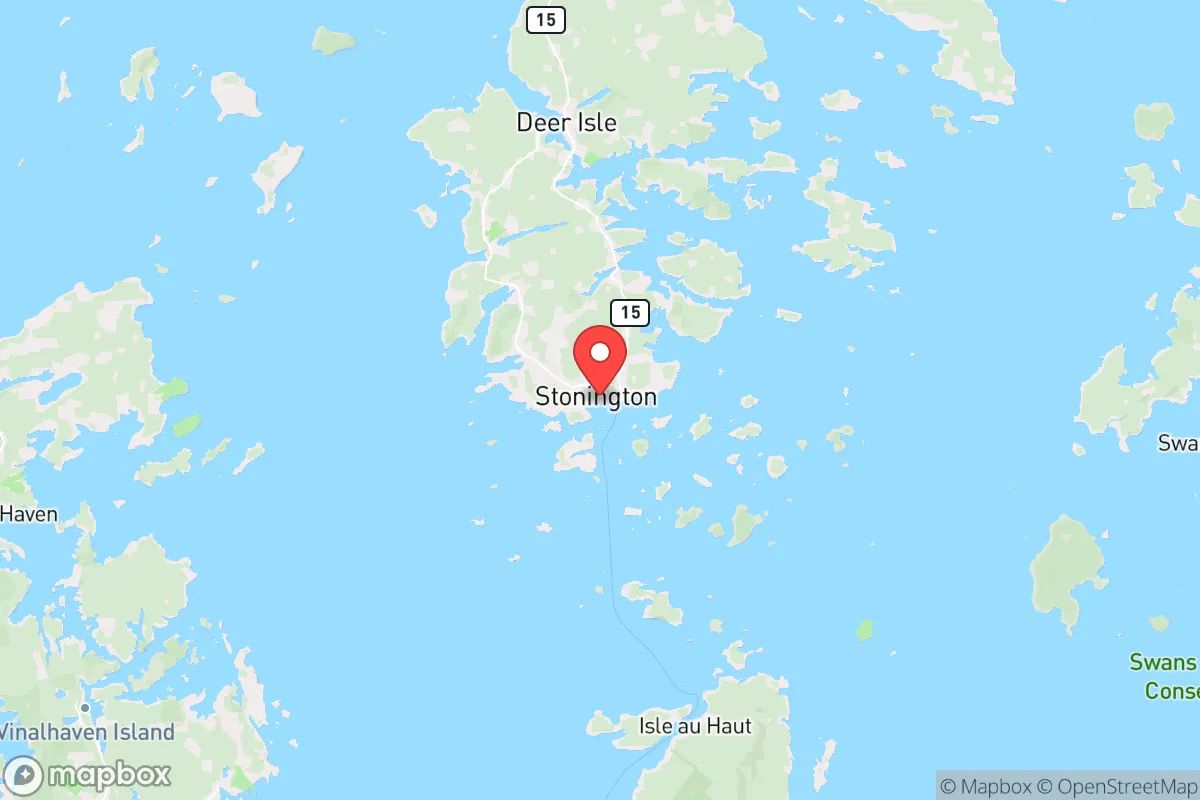
Photo: Wikipedia
Demographics of Stonington, ME
Affluence Level in Stonington, ME
A below-average socioeconomic profile. Incomes, home values, and educational attainment trail the U.S., with higher poverty and unemployment.
People of Stonington, ME
The people of Stonington, Maine, today number roughly 3,180, forming one of the most ethnically homogeneous communities on the New England coast — 96.1% White, with a foreign-born population of just 2.9%. This is a working waterfront town where lobstering, not tourism, still defines the local character, and where a 32.3% college-educated share reflects a growing influx of remote workers and retirees alongside multi-generational fishing families. The community is dense and insular by design, packed onto a peninsula at the southern tip of Deer Isle, with a distinctive identity shaped by centuries of maritime labor and a fierce independence that remains palpable in its narrow streets and working harbor.
How the city was settled and grew
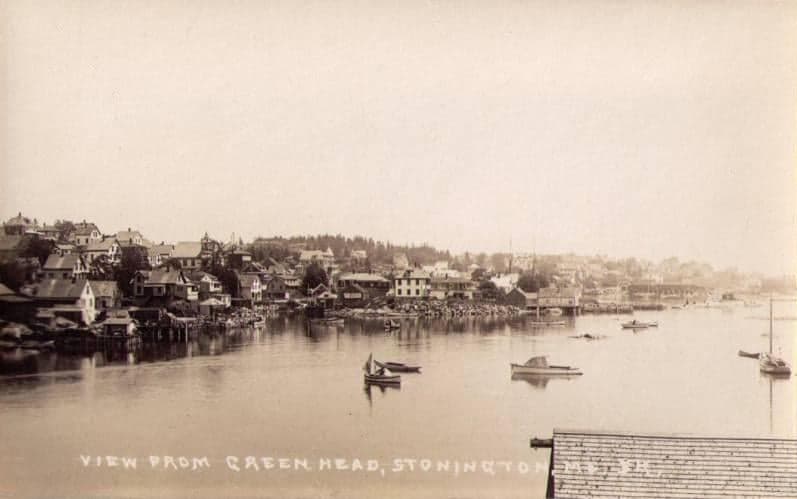
Stonington's permanent European settlement began in the 1760s, when English and Scottish-Irish families from coastal Massachusetts and New Hampshire crossed Penobscot Bay to claim land on what was then called Deer Isle. The earliest arrivals — the Haskell, Eaton, and Billings families among them — established subsistence farms along the island's sheltered eastern shore, in what is now the Oceanville and Burnt Cove districts, where the soil was thin but the fishing was reliable. Granite quarrying, not lobsters, drove the first major population boom in the 1830s, when the distinctive pink granite of Crotch Island drew skilled Scottish and Italian stonecutters who settled in the Green Head and West Penobscot neighborhoods, building the dense rows of worker housing that still line the waterfront. By 1889, when the town was formally incorporated as Stonington, the quarry workforce had swelled the population to over 2,000, making it the largest town on the island. The collapse of the granite trade after World War I pushed many families into the lobster fishery, which remains the economic backbone today, and the mid-20th century saw little new immigration — the population held steady as young people left for mainland jobs while older generations stayed put.
Modern era (post-1965)
The 1965 Hart-Cellar Act had virtually no effect on Stonington's demographics — unlike urban Maine, this remote island town attracted almost no post-1965 immigration, and the foreign-born share of 2.9% today reflects a handful of European-born spouses and Canadian fishing partners rather than any broader wave. The real modern shift has been domestic: beginning in the 1990s, artists, writers, and summer residents from Boston and New York began buying up the old quarry workers' cottages in Minturn and the West Side, converting them into seasonal homes and galleries. This in-migration accelerated sharply after 2020, when remote work allowed a new cohort of college-educated professionals to relocate permanently, drawn by the same isolation that had once pushed young people away. These newcomers have concentrated almost entirely in the walkable village core and the Oceanville ridge, where fiber-optic internet was extended in 2018, while the native fishing families remain concentrated in Burnt Cove and the working harbor. The result is a town that is still 96.1% White but increasingly split between a native, fishery-dependent population and a newer, wealthier, and more educated class of permanent transplants — a divide visible in everything from school enrollment to town meeting attendance.
The future
Stonington's population is aging and slowly shrinking, with the median age rising as younger natives leave for mainland jobs and the seasonal-home market continues to push property values beyond the reach of local families. The town is not becoming more diverse in any meaningful sense — the Hispanic share sits at 1.4%, Black residents at 0.4%, and there are no measurable East/Southeast Asian or Indian-subcontinent communities — and the next decade is unlikely to change that, given the high cost of housing and the lack of rental stock. The more significant demographic shift is economic: the college-educated share of 32.3% will likely climb as more remote workers and retirees arrive, concentrating in the village and Oceanville, while the native fishing population disperses to mainland towns like Ellsworth and Blue Hill where housing is affordable. The cultural identity of the town is evolving from a pure working-waterfront community into a hybrid — a place where $1.5 million summer homes overlook working lobster piers, and where the school district, already consolidated with Deer Isle, may face further enrollment declines as young families become rarer.
For someone moving to Stonington now, the bottom line is this: you are joining a town that is stable, safe, and overwhelmingly White, but one that is quietly bifurcating between a native maritime population and an incoming class of affluent, educated transplants. The fishing culture still dominates the harbor and the town's self-image, but the newcomers are reshaping the village's retail, dining, and property market. If you are looking for genuine diversity or a youthful, growing population, this is not the place — but if you value a tight-knit, historically rooted community where the working waterfront is still real, Stonington offers a character that few coastal Maine towns can match.

* Values derived from national, state, county, city and local statistics and may differ in a specific area. Last updated: 2026-09-05T23:41:24.000Z
Narrative content on this page is AI-generated and may contain mistakes. Verify any details that matter before acting on them.
ReloMaps may earn a commission from affiliate links at no extra cost to you.

