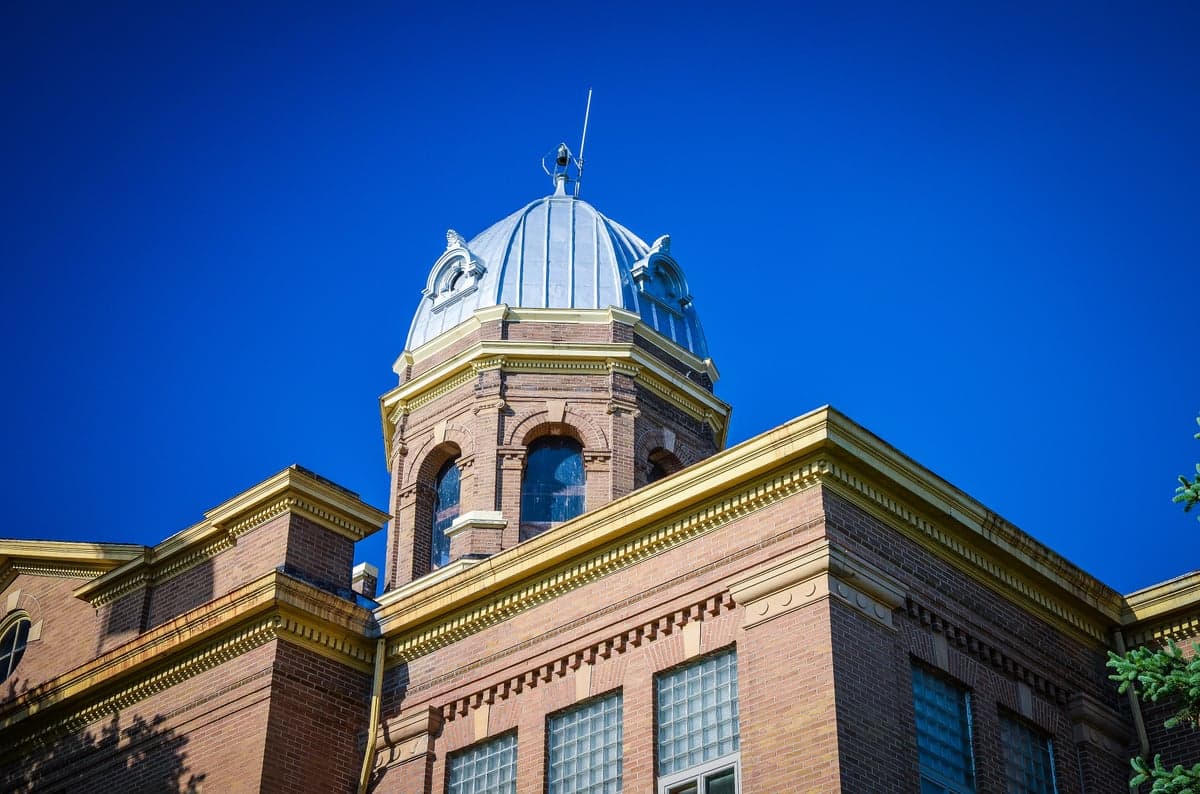
Photo: Wikipedia
Political ClimatePolitical Climate in Roberts County
Showing state-level results — no local-only data available.
Local Political AnalysisPolitical Analysis of Roberts County
Roberts County, South Dakota, is a reliably Republican area with a Cook Partisan Voting Index of R+15, meaning it votes about 15 points more Republican than the national average. However, the county’s political landscape isn’t a monolith—there’s a noticeable split between the eastern, more rural precincts and the communities along the Lake Traverse Reservation. The overall trajectory has been a slow but steady shift rightward since the early 2000s, mirroring the broader state trend, though local races here can still be surprisingly competitive when a strong independent or Democrat runs.
How it compares to South Dakota
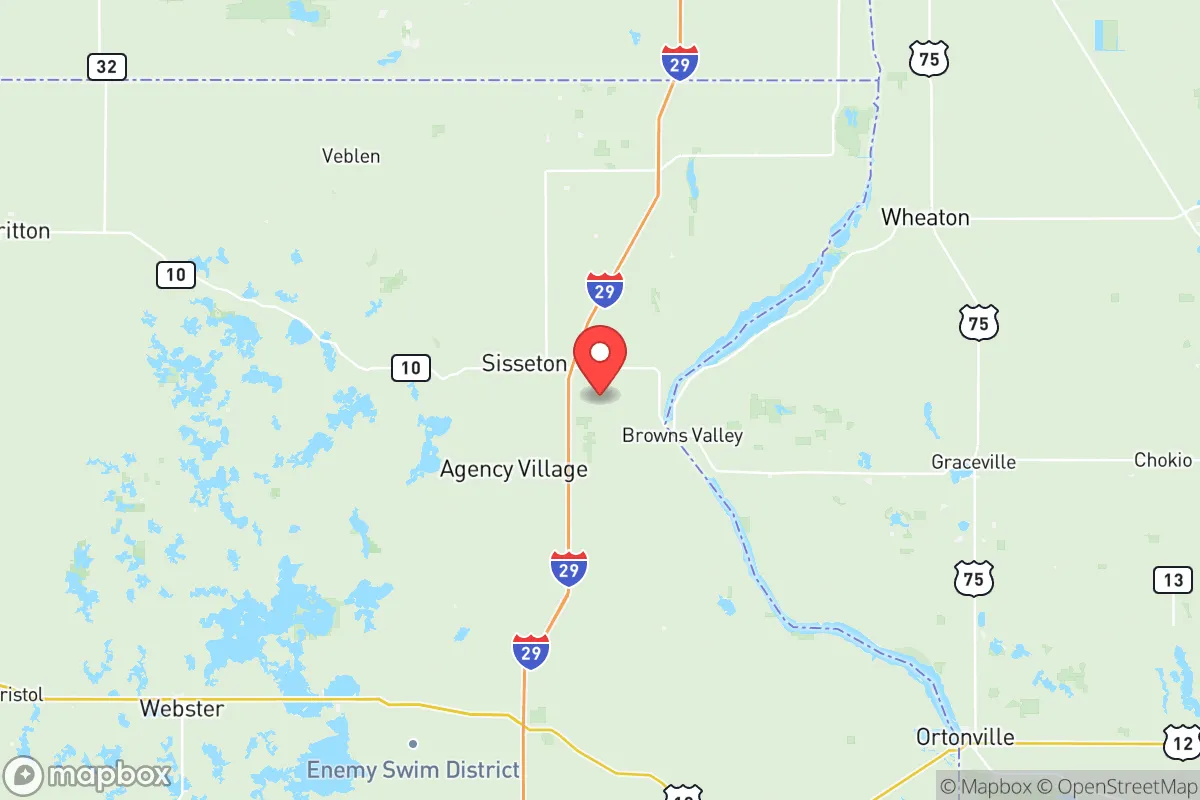
Comparing Roberts County directly to the rest of South Dakota is tricky because the state itself has a Cook PVI that’s unknown—but anyone who’s lived here knows the state leans red, just not as uniformly as Roberts County. For context, Minnehaha County (Sioux Falls) is more of a swing area, while Roberts County is solidly Republican even by state standards. The real variation shows up inside the county line: Sisseton, the county seat, tends to be more moderate or even leans slightly blue in local elections, especially in precincts near the tribal government offices. Wilmont and Veblen are reliably Republican, often voting 65-70% for GOP candidates. Roslyn and Summit are swing precincts—they’ve picked a Democrat for county commission a couple times in the last decade when the candidate had deep local roots. Contrast that with the state as a whole, where a county like Roberts stands out for its consistent 15-point GOP lean, making it a bit more conservative than the statewide average, which balances out with the more competitive eastern counties.
What this means for residents
For conservative residents, living in Roberts County means your votes generally align with the outcome, and you’ll likely see Republican policies reflected in county board decisions, such as lower property tax levies and minimal zoning regulations. For liberal residents, it can feel isolating politically, but practical concerns often override party labels—local water quality, school funding (especially in the Sisseton School District), and road maintenance are the bread-and-butter issues. The tribe’s influence, through the Sisseton Wahpeton Oyate, adds a layer of complexity: tribal voter turnout can shift a close county commission race by several percentage points, making precincts near the reservation (like those around Agency Village) a genuine battleground where candidates often have to court both tribal leadership and rural farm voters. Daily life here is less about partisan arguments and more about who shows up for fire hall meetings and who you can trust to fix the county’s gravel roads.
Culturally, Roberts County has a sharper rural‑vs‑tribal distinction than most of South Dakota. The Dakota language and powwow culture are visible in Sisseton and across the reservation, while outside those communities, the social landscape is dominated by Lutheran and Catholic churches and 4‑H chapters. Policy-wise, the county has resisted any kind of wind turbine zoning regulation—a clear sign of the pro‑property‑rights, low‑tax sentiment that defines most local governance. The state legislature in Pierre might lean conservative, but here in Roberts County, the real political fights are about grain bin placement and the new wastewater plant, not national talking points. It’s a place where your party matters less than your family name and what you’ve done for the local livestock show.

State Political ClimatePolitical Climate in South Dakota
State Political AnalysisPolitical Environment in the State
South Dakota has been a reliably Republican state for decades, with a partisan lean that has only deepened over the past 10-20 years. The state hasn't voted for a Democratic presidential candidate since Lyndon B. Johnson in 1964, and in 2024, Donald Trump carried it by a margin of roughly 30 points. The dominant coalition is a mix of rural conservatives, agricultural interests, and a growing number of libertarian-leaning transplants drawn by low taxes and minimal regulation. The trajectory has been a steady rightward shift, driven by out-migration from the more moderate eastern counties and in-migration of conservatives to the Black Hills region and the Sioux Falls metro area.
Urban vs. rural divide
The political map of South Dakota is a classic story of a few blue islands in a deep red sea. The largest metro, Sioux Falls (Minnehaha and Lincoln counties), is the state's economic engine and its most politically competitive area. While still Republican-leaning, Lincoln County voted +18 for Trump in 2024, down from +24 in 2020, as new residents from blue states have brought a more moderate suburban influence. Rapid City (Pennington County) is more conservative but has a libertarian streak, with a strong Second Amendment culture and a growing tech sector. The state's only reliably Democratic stronghold is Minnehaha County (Sioux Falls proper), which has voted for Democratic candidates in recent state-level races, though it still went for Trump by a narrow margin in 2024. The rural counties—like Harding, Perkins, and Jones—routinely vote 80%+ Republican, driven by agricultural policy, gun rights, and opposition to federal land management. The Pine Ridge Indian Reservation (Oglala Lakota County) is a notable exception, consistently voting over 90% Democratic, but its population is small and turnout is low.
Policy environment
South Dakota's policy environment is defined by a low-tax, low-regulation posture that appeals to conservatives and libertarians alike. There is no state income tax, no corporate income tax, and no personal property tax on vehicles or business inventory. The state sales tax is 4.5%, with local options pushing it to 6.5% in some cities. Property taxes are moderate, averaging about 1.2% of assessed value, with a homestead exemption for primary residences. The regulatory climate is business-friendly, with no state-level minimum wage above the federal $7.25 and a right-to-work law. Education policy is locally controlled, with school choice limited to open enrollment within districts; there are no private school vouchers or charter schools, though a 2023 bill to create education savings accounts failed. Healthcare is a mixed bag: the state expanded Medicaid in 2023 via a ballot initiative, but the legislature has resisted further expansion of abortion access, with a near-total ban in effect since the 2022 Dobbs decision. Election laws are among the most accessible in the country: no voter ID requirement, same-day registration, and mail-in voting for all. The state also has a strong initiative and referendum process, allowing voters to bypass the legislature on key issues.
Recent policy direction
Over the past five years, South Dakota has moved aggressively on several fronts that matter to relocators. On gun and self-defense law, the state enacted constitutional carry (permitless carry) in 2019 and has a strong "stand your ground" law. In 2023, the legislature passed a bill prohibiting enforcement of federal gun laws that conflict with state law, a direct challenge to federal authority. On parental and education rights, Governor Kristi Noem signed a 2022 bill banning "critical race theory" in K-12 schools and a 2023 bill requiring schools to notify parents of any changes to a student's health or well-being, including gender identity. On speech and privacy, the state has no broad surveillance law, but local law enforcement has access to license plate readers and drones. A 2023 bill to ban TikTok on state devices passed easily. On medical and bodily autonomy, abortion is banned at all stages except to save the mother's life, with no exceptions for rape or incest. Medical marijuana was legalized via ballot initiative in 2020, but the legislature has repeatedly attempted to restrict it, including a 2023 bill to cap THC levels. On property rights, the state has strong eminent domain protections and a 2022 law prohibiting foreign ownership of agricultural land. On taxation, the legislature has cut the sales tax on groceries from 4.5% to 4.2% in 2023, with a further reduction to 4.0% proposed for 2025. On voting and ballot access, the state has resisted voter ID laws, but a 2023 bill requiring proof of citizenship for voter registration failed.
Civil unrest & political movements
South Dakota is not a hotbed of civil unrest, but there have been notable flashpoints. The Dakota Access Pipeline protests in 2016-2017 drew thousands to the Standing Rock Reservation, though the main action was in North Dakota. In 2020, Rapid City saw small Black Lives Matter protests that were met with counter-protests, and the city council later passed a resolution declaring the city a "Second Amendment Sanctuary." Immigration politics are muted, as the state has a very small foreign-born population (about 4%), but there have been local controversies over meatpacking plants in Sioux Falls and Huron employing undocumented workers. The state has no sanctuary policies. Secession and nullification rhetoric is present but fringe, mostly centered on federal land management in the Black Hills, where some activists have called for the transfer of federal land to the state. Election integrity controversies are minimal, as the state's mail-in voting system has been widely accepted across party lines. The most visible political movement is the growing libertarian influence in the Black Hills region, where groups like the Liberty Coalition advocate for lower taxes and fewer regulations, often clashing with more traditional conservatives on issues like marijuana legalization and land use.
Projection
Over the next 5-10 years, South Dakota's political trajectory is likely to remain solidly Republican, but with increasing internal tension between traditional conservatives and libertarian-leaning newcomers. The Sioux Falls metro area will continue to grow, driven by in-migration from blue states, which could moderate the state's politics on some issues like marijuana legalization and education funding. The Black Hills region, particularly Rapid City and Spearfish, will see similar growth, with a libertarian tilt that could push the state toward further deregulation and tax cuts. The rural counties will continue to lose population, reducing their political clout. The biggest wildcard is the state's aging population: as younger, more diverse residents move in, the state's politics may shift on social issues, but the economic libertarian consensus is likely to hold. A relocator moving in now should expect a state that remains deeply conservative on social issues, especially abortion and gun rights, but increasingly pragmatic on economic and regulatory matters.
For a new resident, the bottom line is that South Dakota offers a political environment that is highly favorable to conservatives and libertarians, with low taxes, minimal regulation, and strong protections for gun rights and parental authority. For liberals, the state is a challenging place to live, with a near-total abortion ban, limited social services, and a political culture that is hostile to progressive policies. However, the state's strong initiative process means that voters can still enact change at the ballot box, as seen with Medicaid expansion and medical marijuana. The key practical takeaway is that your experience will vary dramatically depending on where you settle: Sioux Falls offers a more moderate, suburban environment, while Rapid City and the rural areas are deeply conservative. If you value low taxes, personal freedom, and a hands-off government, South Dakota is a strong fit. If you prioritize social services, diversity, and progressive policies, you may find it a difficult adjustment.
* Values derived from national, state, county, city and local statistics and may differ in a specific area. Last updated: 2026-06-27T05:06:41.000Z
Narrative content on this page is AI-generated and may contain mistakes. Verify any details that matter before acting on them.
ReloMaps may earn a commission from affiliate links at no extra cost to you.

