
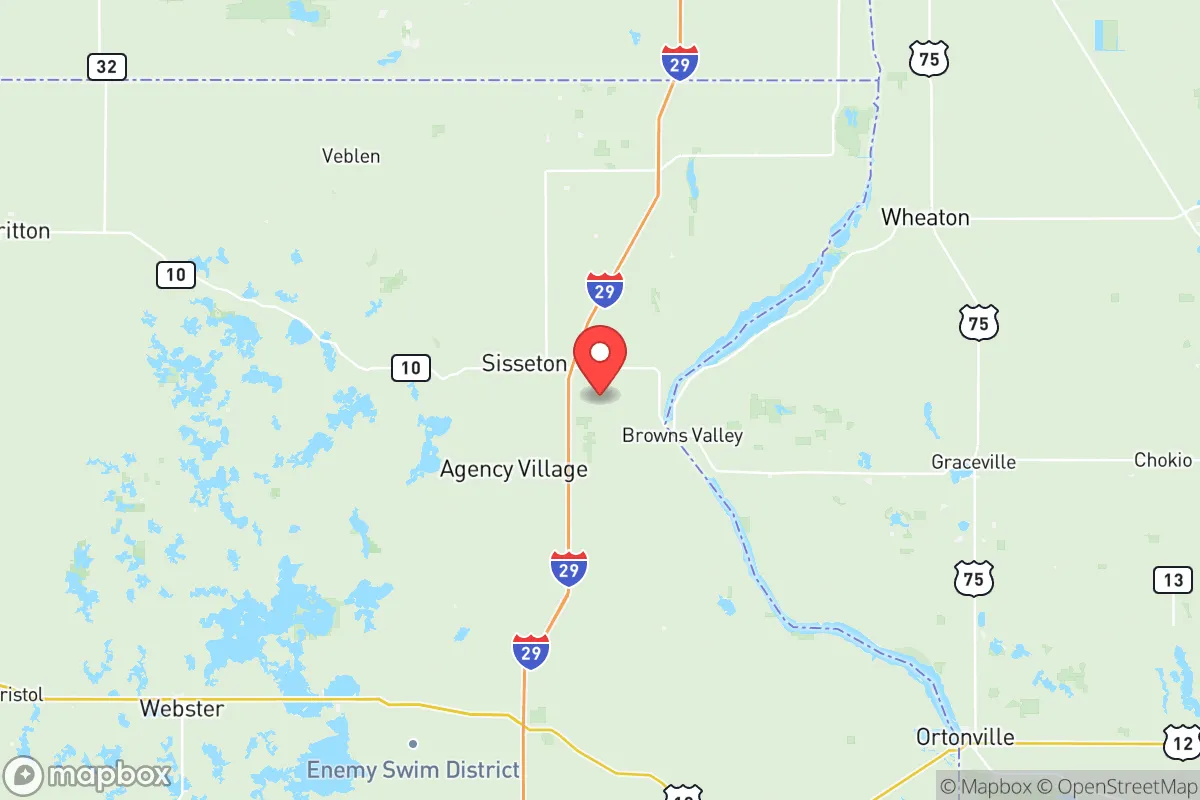
Photo: Wikipedia
Quality of Life in Roberts County
A livable area that tracks near national norms for affordability, walkability, and neighborhood health.
What does Quality of Life tell us?
Quality of Life measures an area by evaluating factors like cost of living, nearby amenities, country club access, airport proximity, socioeconomic signals and neighborhood character. For large states, this is a general average — quality of life can vary dramatically between metro areas, suburbs, and rural communities within the same state.
What does this tell us?
Quality of Life measures an area by evaluating factors like cost of living, nearby amenities, country club access, airport proximity, socioeconomic signals and neighborhood character. For large states, this is a general average — quality of life can vary dramatically between metro areas, suburbs, and rural communities within the same state.
Cost of Living
46% below national average
160%
The Real Cost of Living in Roberts County for 2026
| Tier | Individual | Family (4) |
|---|---|---|
| Survival | $10k | $20k |
| Comfortable | $27k | $40k |
| Luxury | $101k+ | $156k+ |
| Elite (Top 5%) | $118k+ | $183k+ |
Quality-of-Life Analysis
Roberts County, South Dakota, offers a quality-of-life spectrum that ranges

Crime in Roberts County
Generally safer than 61% of comparable U.S. locations.
Violent CrimeViolent Crime Analysis
Property CrimeProperty Crime Analysis
Crime Analysis
Roberts County, South Dakota, reports a violent crime rate of 293.6 per 100,000 residents and a property crime rate of 1,283 per 100,000, placing it in a middle tier of safety compared to both state and national averages. While not among the most dangerous areas in the Upper Midwest, the county's figures exceed those of the safest rural counties in neighboring Minnesota, particularly in categories related to theft and burglary. Residents in towns like Sisseton, the county seat, and smaller communities such as Rosholt and Summit experience different risk levels depending on proximity to major highways and population density.
Crime in context
Roberts County's violent crime rate of 293.6 per 100,000 is roughly 20% below the national average but sits notably higher than the South Dakota state average of approximately 260 per 100,000. Property crime in the county, at 1,283 per 100,000, exceeds the state average of about 1,100 per 100,000 and significantly surpasses rates in safer neighboring counties like Grant County (around 850 per 100,000). The county is served by the Roberts County State's Attorney's Office, which operates under South Dakota's conservative judicial framework—a system that generally favors stricter sentencing compared to progressive jurisdictions. This means that while crime rates are moderate, the justice response is typically more punitive, potentially reducing the revolving-door effect seen in counties with more lenient district attorneys. Sisseton, as the largest town and economic hub, sees a disproportionate share of reported incidents, particularly property-related offenses linked to transient populations along Interstate 29.
What residents experience
Offenses in Roberts County tend to cluster around known traffic corridors and commercial areas. In Sisseton, thefts from vehicles and minor burglaries are the most commonly reported property crimes, with the Sisseton Wahpeton Oyate reservation adjacent to the town contributing to some jurisdictional complexities that can delay prosecution. By contrast, the unincorporated areas near Lake Traverse and the town of Wilmot report very few violent incidents, making them preferred locations for families seeking lower risk. Residents in the western portion of the county, closer to Britton (in neighboring Marshall County), also report feeling safer due to lower population density. However, domestic violence incidents, which are tracked within the violent crime statistic, remain a concern countywide, with social service providers in Sisseton noting higher per-capita reporting than in surrounding counties. The practical takeaway for prospective residents is that rural living in Roberts County offers a noticeably different safety profile than living in or near Sisseton's downtown core.
The county's reliance on a conservative legal philosophy means that offenders who are caught face meaningful consequences, which can serve as a deterrent. Unlike areas with progressive district attorneys who deprioritize property crimes or pursue diversion over incarceration, Roberts County's judicial approach generally prioritizes victim and public safety. This creates a more predictable environment for homeowners and business owners, though it does not eliminate the risk of crime entirely. Prospective residents moving from larger metro areas with soft-on-crime policies should find the local justice system's orientation reassuring, particularly if they are settling in the quieter communities of New Effington or Claire City, where police response times from the Sheriff's Office remain under 15 minutes for urgent calls.
Neighborhood-level variation is most pronounced between Sisseton's east and west sides. The area immediately east of SD-127 sees higher call volumes for disorderly conduct and theft, while the western residential neighborhoods near Coteau des Prairies consistently report fewer incidents. For those prioritizing safety, property on the western edge of Sisseton or in the outlying towns of Peever and Ortley offers the lowest crime exposure in the county, while still providing reasonable access to schools and shopping. Overall, Roberts County represents a moderate-crime, conservative-justice rural environment where careful neighborhood selection is more impactful than in uniformly safe regions like adjacent Grant County.
* Values derived from national, state, county, city and local statistics and may differ in a specific area. Last updated: 2026-06-27T05:06:41.000Z
Narrative content on this page is AI-generated and may contain mistakes. Verify any details that matter before acting on them.
ReloMaps may earn a commission from affiliate links at no extra cost to you.

