
Photo: Wikipedia
Personal Sovereignty in Roberts County
Viable for self-reliance. Generally workable, though some barriers may limit total independence.
What does Personal Sovereignty tell us?
Personal Sovereignty measures your capacity for self-reliance and independence with minimal government friction. Higher scores mean fewer barriers between you and the way you want to live... but it assumes you have the space you need and good neighbors.
What does this tell us?
Personal Sovereignty measures your capacity for self-reliance and independence with minimal government friction. Higher scores mean fewer barriers between you and the way you want to live... but it assumes you have the space you need and good neighbors.
State Policy
Energy independence: Importer (35% of energy produced in-state)
Personal Liberty
Homesteading

Personal Liberty Analysis
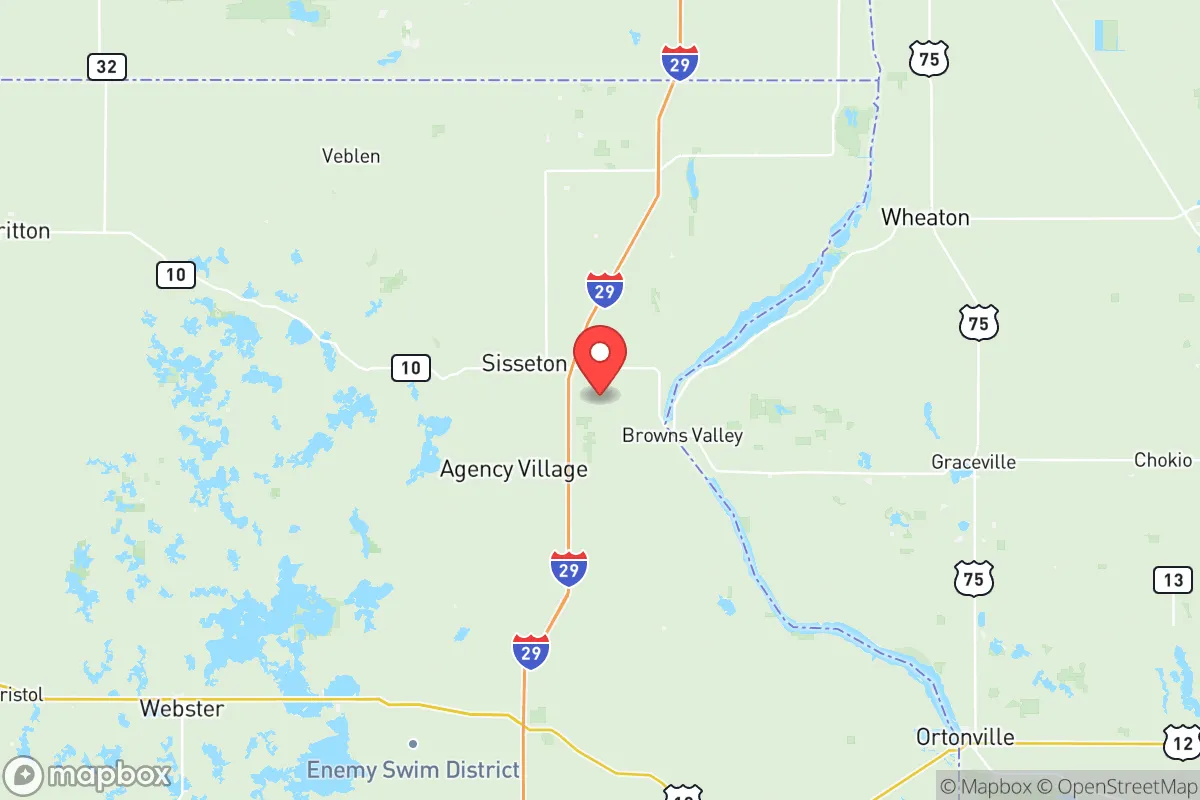
Roberts County, South Dakota, offers one of the strongest personal sovereignty environments in the upper Midwest, grounded in the state’s famously limited government, constitutional carry, and zero personal income tax. Unlike the regulatory density found in Minnesota just across the border, this county operates with a distinctly hands-off approach to personal and economic life. For individuals and families prioritizing autonomy—whether in self-defense, medical choices, or housing—the area’s legal and cultural fabric leans heavily toward self-determination. The county’s small population (roughly 10,000 residents) and rural character amplify this, as local governance tends to favor minimal interference in daily decisions.
Tax freedom and the regulatory climate in Roberts County
South Dakota’s lack of a state personal income tax is the cornerstone of financial sovereignty here, and Roberts County adds no local income tax on top of it. Property taxes are moderate compared to neighboring Minnesota (approximately 1.1% of assessed value versus 1.3%–1.5% across the border), and the state’s sales tax of 4.5% is among the lowest in the nation. Roberts County itself levies a 2% municipal sales tax in Sisseton and Rosholt, but rural unincorporated areas pay only the state rate. The regulatory posture is consistently light: no state-level building codes apply outside of incorporated towns, no mandatory vehicle emissions testing exists, and occupational licensing requirements are among the most relaxed in the country. The county’s zoning is minimal—Sisseton and Wilmont enforce basic land-use rules within town limits, but vast rural acreage operates with essentially no zoning oversight. This creates a tax and regulatory environment where annual savings for a median-income family can run several thousand dollars versus a comparable life in Minnesota or the Pacific Northwest.
Self-defense laws and the gun culture in Roberts County
South Dakota is a constitutional carry state, meaning no permit is required to carry a concealed handgun for any law-abiding adult 18 or older. Roberts County fully reflects this: there is no county-level firearms registry, no waiting periods, and no additional restrictions beyond state law. The state’s Stand Your Ground statute provides a strong legal shield for self-defense, with no duty to retreat in any place where a person has a right to be. Castle Doctrine protections apply to vehicles and homes without exception. While rural, the county has a notably robust gun culture—Summit and New Effington host informal shooting groups, and the Sisseton area has two full-service gun shops. Minnesota’s more restrictive laws (permit-to-purchase, anti-“assault weapons” language) are just a 20-minute drive east, making Roberts County a clear choice for firearm owners seeking legal certainty. No local ordinances restrict magazine capacity or firearm storage, and open carry is exercised without social friction in all towns.
Homesteading feasibility and off-grid living in Roberts County
Roberts County is one of the most off-grid-friendly places in the region, with a regulatory structure that treats self-reliance as the default rather than an exception. Rural lots of 5, 10, or 40 acres are common and reasonably priced—$1,500 to $3,000 per acre as of 2026—with no minimum dwelling size or property mandates. Claire City and Corona sit in unincorporated areas where there are no county building permits, no inspection requirements, and no occupancy certificates for owner-built homes. Off-grid infrastructure is explicitly allowed: rainwater collection is unrestricted, composting toilets are legal, and solar panels face no net-metering requirements or HOA obstacles outside the few platted subdivisions near Sisseton. The county health department requires only a percolation test for septic systems, not a mandated connection to any municipal line. In Marvin and Ortley, homes often use propane, wood heat, and well water because utilities simply don’t extend that far. The single constraint is that the county assessor must certify improvements for property tax purposes, but "improvements" can be as simple as a certified yurt or a tiny home on a permanent foundation.
Personal liberties—parental rights, medical choice, and property rights
South Dakota law provides robust protections for parental rights, including a statute (SDCL 26-1-1) affirming that parents have the fundamental right to direct the upbringing, education, and healthcare of their children. Roberts County schools in Sisseton and Rosholt have maintained notably conservative policies on curriculum transparency and opt-out provisions for sensitive subjects. Medical autonomy is broad: no vaccine mandates exist at state or county level for adults or schoolchildren, and the state prohibits medical boards from disciplining physicians for prescribing ivermectin or hydroxychloroquine off-label. Property rights are protected by South Dakota’s lack of a state property tax on personal property (vehicles, boats, RVs are not taxed), and Roberts County has never enacted a local noise or nuisance ordinance that would restrict normal agricultural or recreational activities. Free speech is well-protected; the county has no "critical race theory" bans but also no hate speech statutes that chill private discourse—a balance that appeals to conservative-leaning readers who value both protection from government overreach and airing of differing views.
Compared to most rural counties nationally, Roberts County stands out for its consistency: the legal framework from Pierre grants wide latitude, and local officials in Peever and Eden rarely add their own restrictions. Its sovereignty advantages are clearest when contrasted with Minnesota (higher taxes, gun permits, vaccine mandates) or the Dakotas' east-river counties where larger towns impose more baseline code. For a family or individual seeking maximum personal freedom with minimal bureaucratic friction, Roberts County is among the top-tier choices in the northern Plains—on par with Harding or Butte Counties further west, but with better access to healthcare and schools. The trade-offs are real (limited cell service off Highway 15, fewer immediate-urban amenities), but for those who define liberty as the right to live without asking permission, the county delivers.

* Values derived from national, state, county, city and local statistics and may differ in a specific area. Last updated: 2026-06-27T05:06:41.000Z
Narrative content on this page is AI-generated and may contain mistakes. Verify any details that matter before acting on them.
ReloMaps may earn a commission from affiliate links at no extra cost to you.

