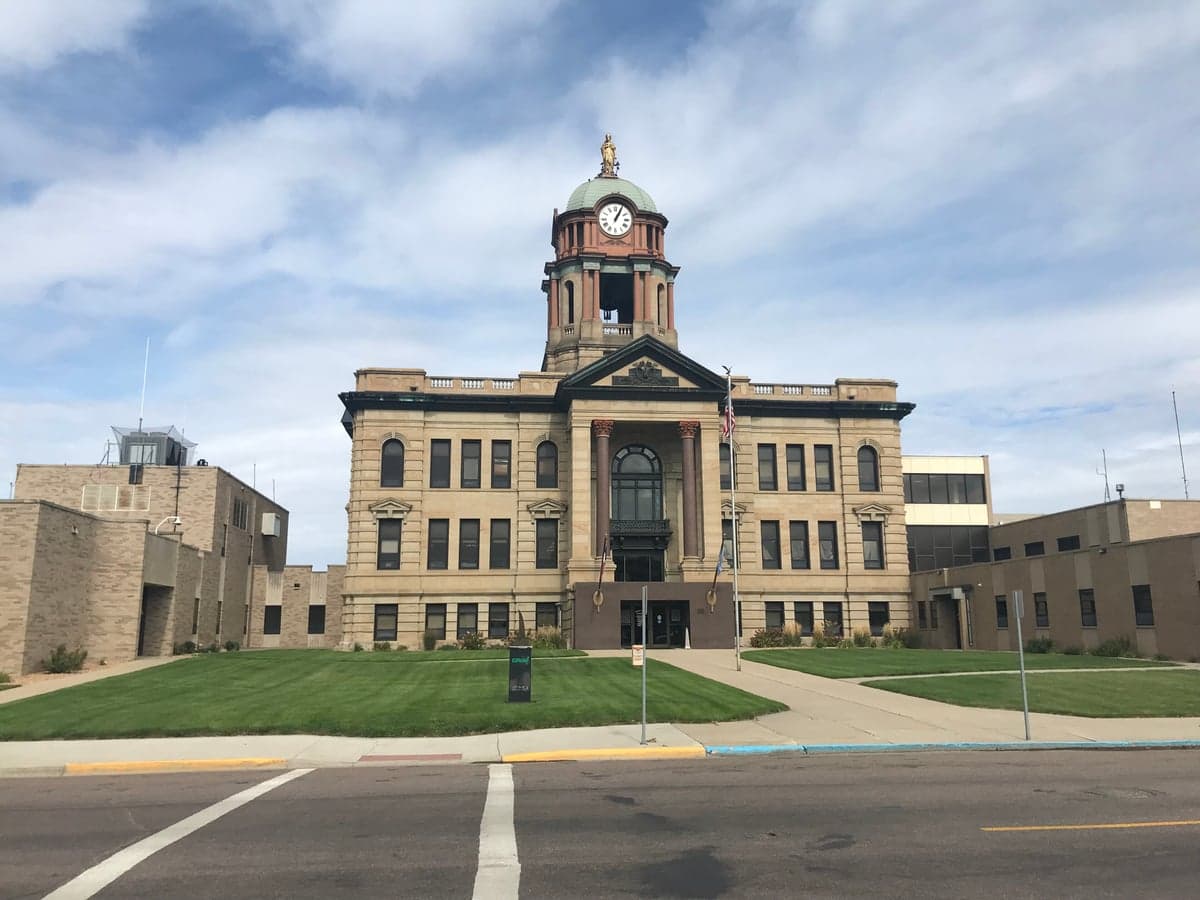
Photo: Wikipedia
Political ClimatePolitical Climate in Brown County
Showing state-level results — no local-only data available.
Local Political AnalysisPolitical Analysis of Brown County
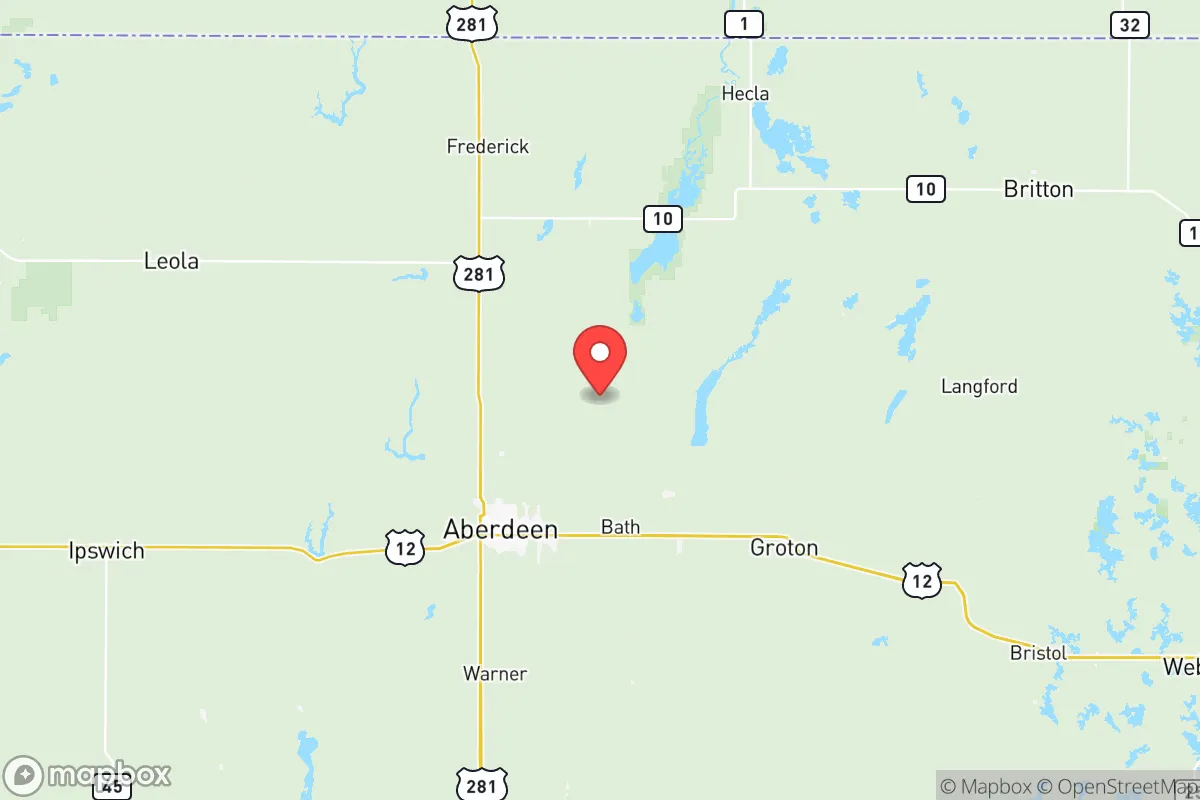
Brown County, anchored by Aberdeen, is a reliably Republican stronghold in northeastern South Dakota, with a Cook Partisan Voting Index of R+15 that places it well to the right of the national average. The county has voted for the GOP presidential candidate in every election since 2000, typically by margins of 15 to 25 points, though the rural precincts outside Aberdeen push that number higher while the city itself shows more competitive tendencies. The trajectory here is steady red, but with a subtle undercurrent of moderation in the county seat that keeps things from feeling like a monolith.
How it compares
South Dakota as a whole is deeply Republican, with no statewide Democrat holding office since 2018, but Brown County’s R+15 rating actually makes it slightly more conservative than the state’s average, which leans R+16 or so depending on the cycle. The real contrast isn’t with the state—it’s within the county itself. Aberdeen’s central and near-campus precincts, especially around Northern State University, can swing within 5 points of a Democrat, while the small towns to the north and west—like Groton, Bath, and Westport—routinely deliver 70-80% Republican margins. The swing precincts are in the suburban fringe of Aberdeen, places like the Mina Lake area and the southern edge near the Brown County Speedway, where ticket-splitting is common and local races can flip on candidate quality rather than party label. Compared to the rest of South Dakota, Brown County lacks the deep-red intensity of the western ranching counties (like Harding or Perkins) but also doesn’t have the moderate pockets you’d find in Minnehaha County’s Sioux Falls suburbs.
What this means for residents
For conservative residents, Brown County is a comfortable place to live politically—local offices are overwhelmingly held by Republicans, and the county commission, school board, and city council in Aberdeen all lean right. Tax policy is reliably low, with no county sales tax and property taxes that run about 1.1% of assessed value, which keeps the cost of living attractive for families and retirees. For liberal residents, the reality is more about finding community in specific spaces—the university, the arts scene at the Aberdeen Community Theatre, and a handful of active Democratic precinct committees that focus on local issues like infrastructure and education funding rather than national flashpoints. Socially, you won’t see many yard signs for progressive candidates outside of a few blocks near campus, but there’s also little overt hostility; the culture is more “live and let live” than confrontational, especially in Aberdeen itself.
The cultural and policy distinctions that set Brown County apart from the rest of South Dakota are subtle but real. The county has a stronger union presence than most of the state, thanks to the 3M plant and the Avera Health system, which means labor issues get more airtime at local meetings than they would in, say, Custer County. There’s also a pragmatic streak in local governance—the county commission recently approved a wind energy project near Barnard that some conservative landowners opposed, showing that economic development can sometimes trump ideological purity. If you’re moving here, expect a place where the politics are reliably red but the daily reality is more about potholes and school levies than culture wars, with Aberdeen providing a small-city buffer against the harsher edges of rural conservatism.

State Political ClimatePolitical Climate in South Dakota
State Political AnalysisPolitical Environment in the State
South Dakota is a deeply red state, with Republicans holding a supermajority in the legislature and every statewide office, but its conservatism is distinct from the firebrand style seen in states like Texas or Florida. The state has shifted rightward over the past 20 years, driven by rural cultural values and a libertarian-leaning distrust of federal overreach, though the growing population in the Black Hills region around Rapid City and the I-29 corridor near Sioux Falls has introduced a more pragmatic, business-friendly conservatism that occasionally clashes with the agrarian traditionalism of the eastern plains. For a relocator, this means a state where policy moves fast on conservative priorities, but the small population (under 1 million) keeps politics personal and less polarized than in larger states.
Urban vs. rural divide
The political map is dominated by two population centers: Sioux Falls (Minnehaha County) and Rapid City (Pennington County). Sioux Falls, the state’s economic engine, votes reliably Republican but with a moderate, suburban flavor—think pro-business, pro-growth, and less focused on social issues. In 2024, Minnehaha County went +18 for Trump, but local races often see competitive primaries between establishment and more conservative candidates. Rapid City, meanwhile, is a conservative stronghold with a strong libertarian streak, driven by military retirees, outdoor enthusiasts, and a growing tech sector. The rural counties—like Harding County in the northwest and McPherson County in the north—routinely deliver 80-90% Republican margins, powered by ranching, farming, and a deep-seated independence. The only blue dots are the tribal lands: Pine Ridge (Oglala Lakota County) and Rosebud (Todd County) vote heavily Democratic, but their populations are small and often disenfranchised by distance and voter ID laws. The divide isn’t angry—it’s more a quiet understanding that the state’s future is shaped by the urban centers, while the rural areas provide the cultural and electoral foundation.
Policy environment
South Dakota’s policy environment is defined by no state income tax, a flat property tax system, and a regulatory posture that favors low barriers for business. The state has no corporate income tax, no personal income tax, and no inheritance tax, making it a tax haven for retirees and remote workers. Education policy is decentralized: school districts have significant local control, but the state has embraced school choice through open enrollment and a modest voucher-like program for special needs students. Healthcare is a mixed bag—the state expanded Medicaid under the Affordable Care Act in 2023 via a ballot initiative (Amendment D), which passed with 56% support despite Republican opposition, reflecting a pragmatic streak. Election laws are restrictive: voter ID is required, absentee voting requires an excuse, and same-day registration is not allowed. The state also has a strict photo ID law for voting, which critics say suppresses Native American turnout. On social issues, the legislature has passed a near-total abortion ban (triggered by Dobbs), a ban on transgender athletes in K-12 sports, and a law requiring schools to notify parents of curriculum changes. Gun laws are among the most permissive in the nation: no permit required for concealed carry, no background checks for private sales, and a “stand your ground” law. For a conservative relocator, this is a low-tax, low-regulation environment; for a liberal one, it’s a place where personal liberties are heavily restricted on social issues but expansive on economic and gun rights.
Recent policy direction
The last five years have seen a sharp acceleration of conservative legislation. In 2023, Governor Kristi Noem signed HB 1080, which bans gender-affirming care for minors, and SB 46, which restricts what schools can teach about gender identity and sexual orientation. The state also passed a law requiring all public schools to display “In God We Trust” posters, and in 2024, a bill allowing teachers to carry firearms in schools without a permit. On property rights, the state has resisted county-level zoning overreach, with a 2022 law limiting the ability of counties to regulate agricultural land use. On voting, the legislature passed SB 180 in 2024, which requires all ballot drop boxes to be monitored by video and limits who can return a ballot for another person. On the libertarian side, the state has no sales tax on groceries and no tax on Social Security benefits, and in 2023, it eliminated the tax on military pensions. The direction is clear: the state is moving to codify cultural conservatism while doubling down on its low-tax, low-regulation economic model. For a relocator, this means you’ll see fewer government services but more personal freedom in areas like property use and gun ownership, balanced by strict limits on medical and educational autonomy.
Civil unrest & political movements
South Dakota is not a hotbed of civil unrest, but there are visible flashpoints. The most prominent is the Noem administration’s conflict with the Pine Ridge and Rosebud reservations over law enforcement jurisdiction and the state’s refusal to recognize tribal sovereignty on issues like marijuana legalization (the tribes have legalized it, but the state still prosecutes non-Natives on tribal land). In 2023, the governor deployed the National Guard to the southern border in Texas, which was popular with conservatives but criticized by tribal leaders as a misuse of resources. There’s also a growing “Free South Dakota” movement among libertarians and some conservatives who advocate for nullification of federal laws, particularly on gun control and environmental regulations. In 2024, a bill to allow the state to ignore federal gun laws passed the House but died in the Senate. Protests are rare and small—the largest in recent years was a 2022 rally in Pierre against the state’s COVID-19 restrictions, which drew a few hundred people. Immigration politics are muted, as the state has a very small foreign-born population (about 4%), but there’s a growing debate over refugee resettlement in Sioux Falls, which has a small but active Somali and Sudanese community. For a new resident, the political atmosphere is calm but watchful—most people agree on the basics, but the tribal-federal-state tensions are a constant undercurrent.
Projection
Over the next 5-10 years, South Dakota will likely become more conservative on social issues but more pragmatic on economic ones, driven by in-migration from blue states. The population is growing fastest in the Black Hills and the Sioux Falls metro, bringing in remote workers and retirees who value low taxes but may be less culturally conservative. This could create a split between the “liberty” wing (pro-gun, anti-tax, anti-regulation) and the “traditionalist” wing (anti-abortion, pro-religion, pro-school choice). The state’s reliance on federal funding (about 40% of the budget) means that any major federal policy shifts—like cuts to Medicaid or farm subsidies—could force a rethinking of the low-tax model. The tribal nations will continue to push for more sovereignty, and the state’s relationship with them will be a defining issue, especially as the Native American population grows (now about 9% of the state). For a relocator, the next decade will feel like a continuation of the current trajectory: more of the same, but with a younger, more diverse urban population that may soften the edges of the state’s conservatism.
Bottom line for a new resident: If you’re a conservative who values low taxes, gun rights, and a hands-off government, South Dakota is a near-ideal fit—just be prepared for harsh winters and a lack of urban amenities. If you’re a liberal, you’ll find a welcoming community in Sioux Falls or Rapid City, but you’ll be swimming against the current on most state policies, especially on social issues and voting access. The state is stable, predictable, and unlikely to surprise you—what you see is what you get, and that’s exactly how most South Dakotans like it.
* Values derived from national, state, county, city and local statistics and may differ in a specific area. Last updated: 2026-07-06T23:41:48.000Z
Narrative content on this page is AI-generated and may contain mistakes. Verify any details that matter before acting on them.
ReloMaps may earn a commission from affiliate links at no extra cost to you.

