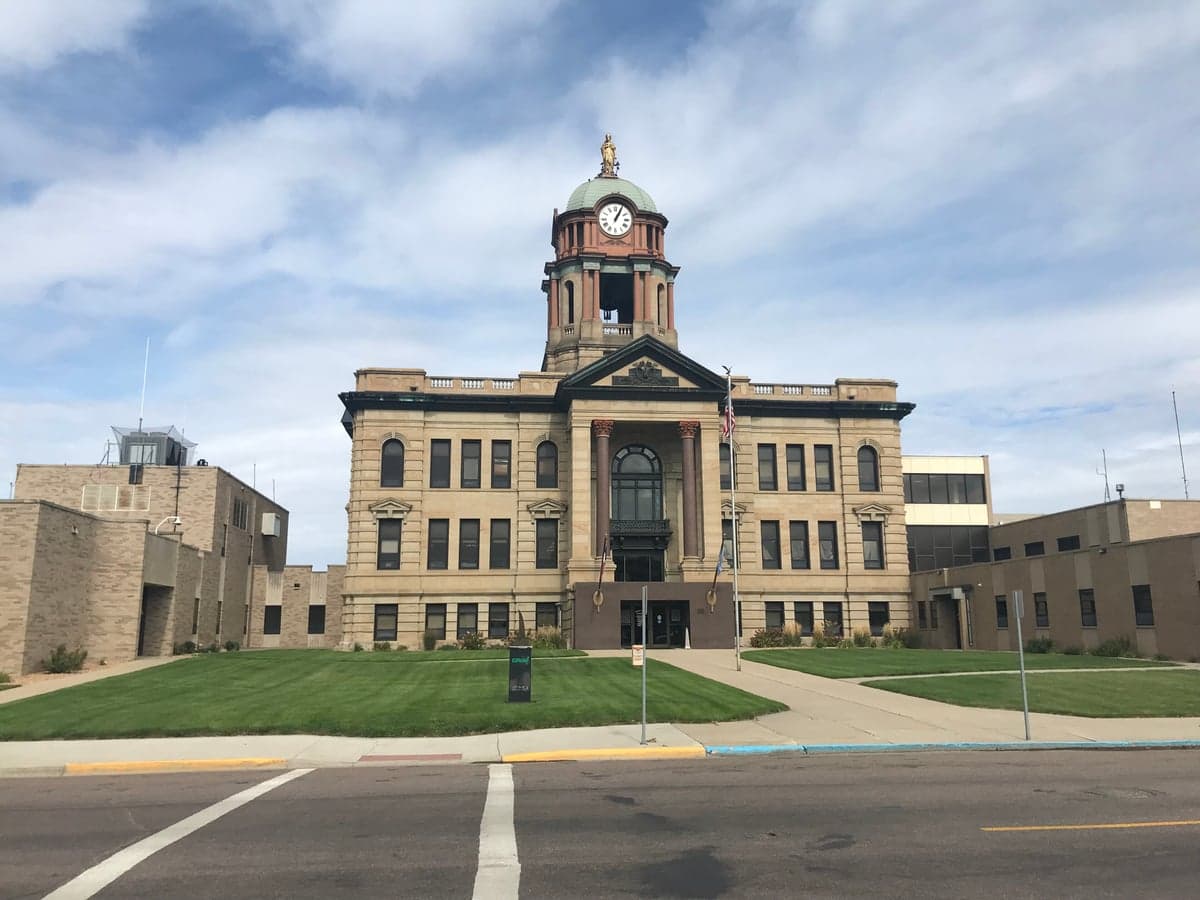
Photo: Wikipedia
Demographics of Brown County
Affluence Level in Brown County
A middle-class area roughly in line with national averages across income, home values, education, and employment.
People of Brown County
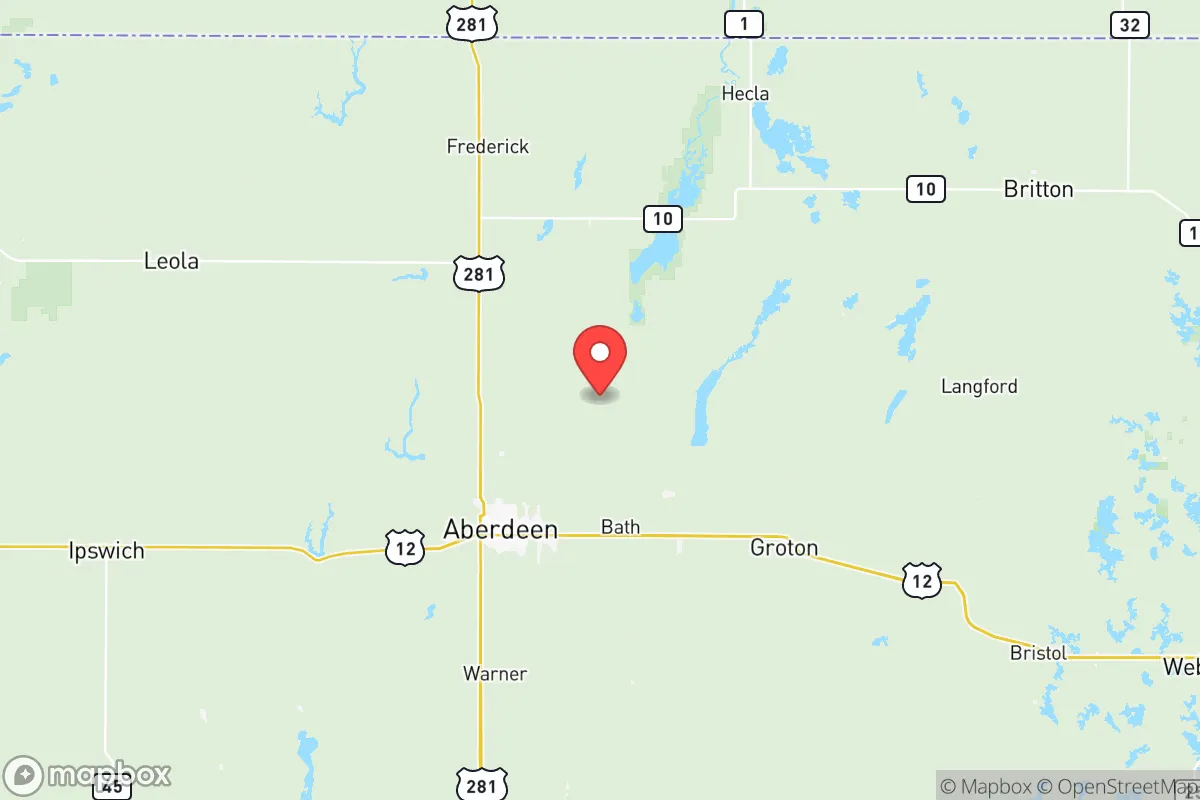
Brown County, South Dakota, is home to 38,079 residents, a population that is 84.8% white and notably less diverse than the national average, with a foreign-born share of just 2.1%. The county’s identity is rooted in its agricultural and small-town character, anchored by the regional hub of Aberdeen, and shaped by waves of German, Scandinavian, and Eastern European immigrants who arrived in the late 19th and early 20th centuries. Today, the population is stable but aging, with a modest but growing Hispanic community and a small East/Southeast Asian presence, reflecting a gradual shift from its historically homogenous European-American base.
Settlement & growth (pre-1960)
Before American settlement, the area now known as Brown County was part of the traditional territory of the Sioux (Lakota and Dakota) peoples, who used the region for hunting bison and seasonal camps. The first non-Native presence came with French fur traders in the 1700s, but permanent American settlement did not begin until after the 1859 Yankton Treaty, which opened eastern Dakota Territory to white homesteaders. The county was formally organized in 1881, and the arrival of the Chicago, Milwaukee, St. Paul and Pacific Railroad in the 1880s triggered the first major wave of settlement.
The railroad brought a flood of immigrants from Northern and Central Europe, drawn by the promise of cheap land under the Homestead Act. German immigrants were the largest group, settling heavily in and around Aberdeen, which became the county seat and commercial center. They were joined by Norwegian and Swedish families, who clustered in rural townships and in smaller communities like Frederick and Groton. A smaller but distinct wave of Russian Germans (ethnic Germans who had lived in the Volga region of Russia) arrived in the 1890s, establishing farming communities near Hecla and Stratford. These groups were overwhelmingly Lutheran or Catholic, and their churches and social organizations became the backbone of county life.
By 1910, Brown County’s population had surged to over 25,000, driven by wheat farming and the growth of Aberdeen as a railroad and milling hub. The Dust Bowl and Great Depression of the 1930s hit the region hard, causing a temporary population decline as some families left for the West Coast. However, the post-World War II era brought a modest recovery, with Aberdeen’s economy diversifying into manufacturing and education. The founding of Northern State University in Aberdeen in 1901 had already established the city as a regional educational center, and by the 1950s, the county’s population stabilized around 30,000, with the vast majority still living on farms or in small towns.
Modern era (post-1965)
The 1965 Hart-Cellar Act had a minimal direct impact on Brown County, as the region did not attract the large-scale immigration seen in coastal or Sun Belt areas. Instead, the county’s demographic story since the 1970s has been one of slow, steady change driven by domestic migration and natural population trends. The most notable shift has been the growth of the Hispanic population, which now stands at 4.4%. This community began to form in the 1990s and 2000s, as workers from Mexico and Central America were recruited by the region’s meatpacking plants and agricultural operations. Many of these families settled in Aberdeen, particularly in the southern and western parts of the city, where they have established small businesses and a Spanish-language church.
The East/Southeast Asian population, at 2.9%, is largely a product of professional migration. A significant portion of this group is tied to Northern State University, which has recruited international students from countries like South Korea, Vietnam, and China since the 2000s. Some of these graduates have remained in Aberdeen, working in healthcare, education, and technology. The Indian subcontinent population is negligible at 0.1%, consisting of a handful of professionals, primarily physicians at Avera St. Luke’s Hospital in Aberdeen. The Black population remains very small at 0.2%, with no significant enclave forming.
Domestic migration has been modest but notable. The county has seen a slow outflow of young adults to larger cities like Sioux Falls and Minneapolis, but this has been partially offset by an influx of retirees and remote workers drawn to the low cost of living and slower pace of life. Suburbanization has been limited; the only real growth area is the fringe of Aberdeen, where new subdivisions have been built on former farmland. Towns like Claremont and Warner have seen slight population declines as younger residents move to Aberdeen for jobs and services.
The future
Brown County’s population is projected to remain relatively stable over the next 10-20 years, with modest growth driven by Aberdeen’s role as a regional service center. The county is likely to become slightly more diverse, but the pace will be slow. The Hispanic share could rise to 6-8% as families grow and new workers are recruited for agriculture and manufacturing, while the East/Southeast Asian share may hold steady or increase slightly as Northern State University continues its international recruitment. The white population will continue to age, with a growing share of residents over 65, which will put pressure on healthcare and social services.
New communities are likely to concentrate in Aberdeen, particularly in the southern and eastern parts of the city, where new housing developments are planned. The smaller towns—Bath, Westport, and Putney—will continue to lose population as their residents age out and young people leave. The county’s cultural identity will remain rooted in its German-Scandinavian heritage, but with a growing Hispanic influence visible in restaurants, festivals, and bilingual signage in Aberdeen.
For someone moving in now, Brown County offers a stable, affordable, and safe environment with a strong sense of community, but it is not a place of rapid demographic change or cultural dynamism. The population is becoming slightly more diverse, but the county will remain predominantly white and rural for the foreseeable future. The key question for newcomers is whether they value the quiet, predictable lifestyle of the Plains or seek the diversity and opportunity of a larger urban center.

* Values derived from national, state, county, city and local statistics and may differ in a specific area. Last updated: 2026-07-06T23:41:48.000Z
Narrative content on this page is AI-generated and may contain mistakes. Verify any details that matter before acting on them.
ReloMaps may earn a commission from affiliate links at no extra cost to you.

