 Popular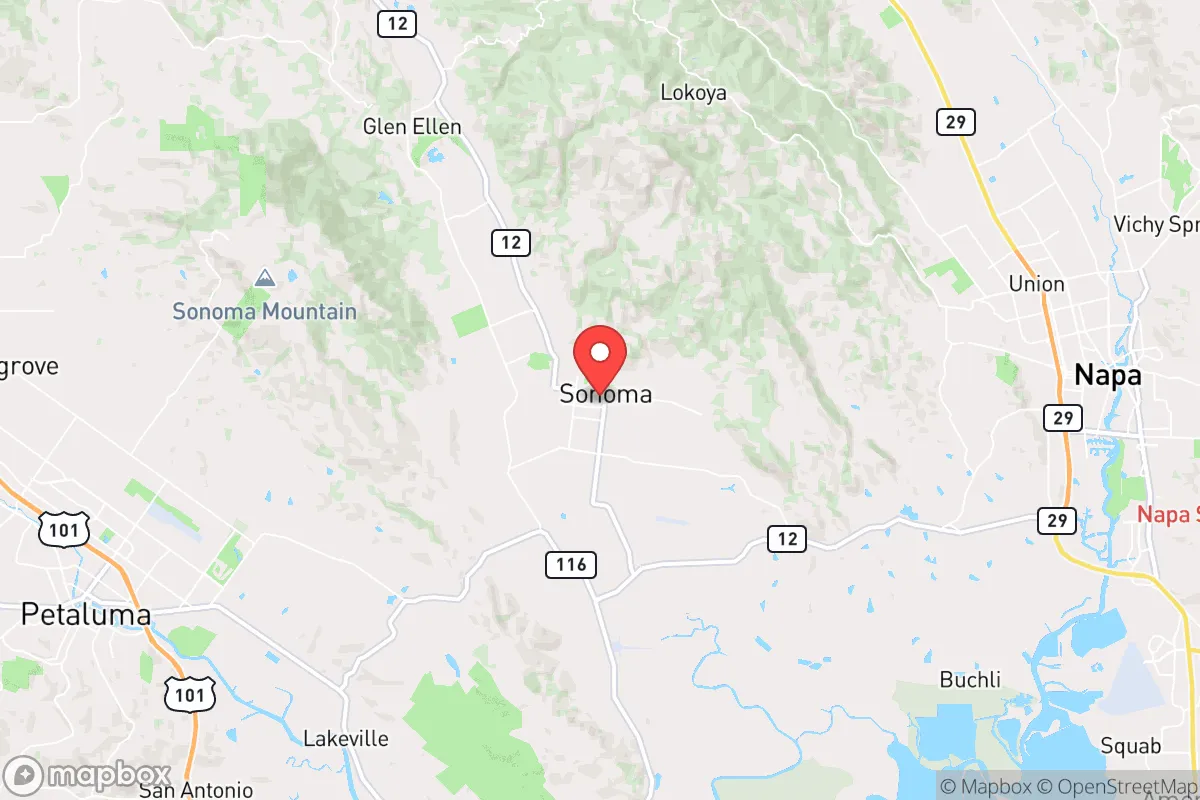
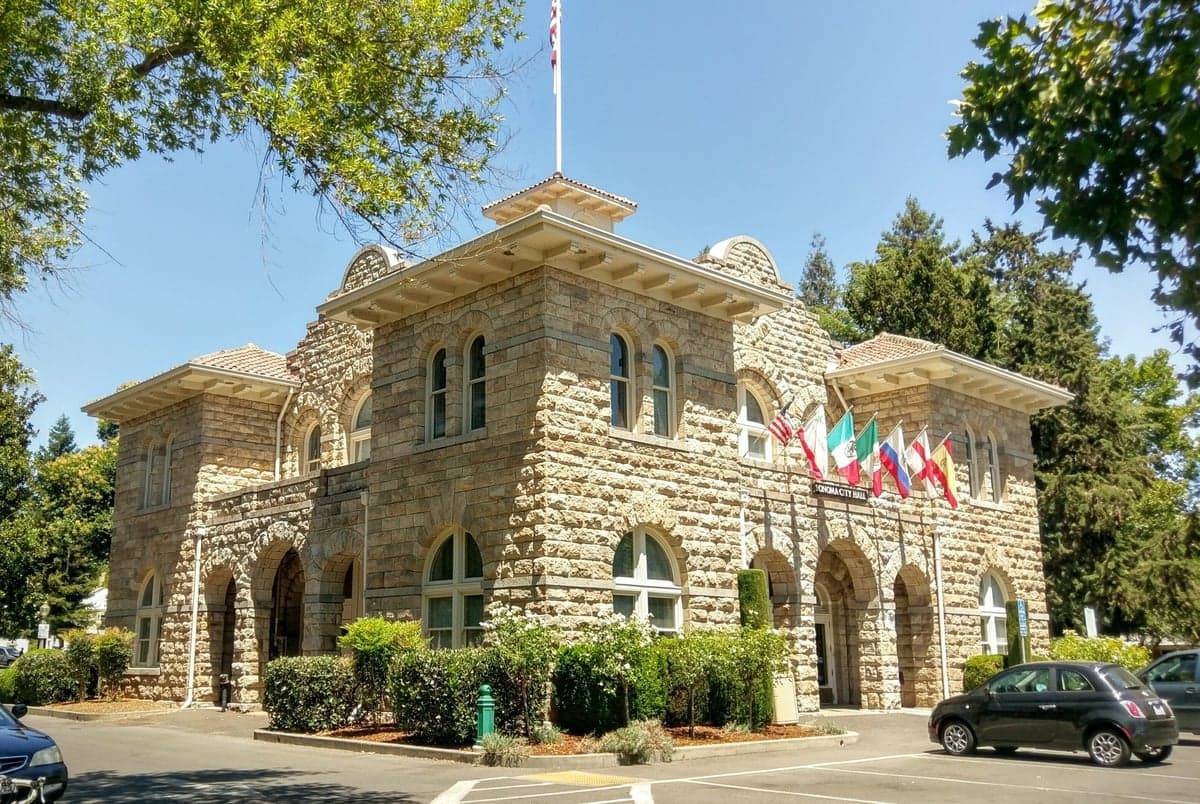
Photo: Wikipedia
Political ClimatePolitical Climate in Sonoma, CA
District shown is the primary district for this city’s centroid. Cities may span multiple districts.
Local Political AnalysisPolitical Analysis of Sonoma, CA
Sonoma, California, is a reliably Democratic stronghold, with a Cook Partisan Voting Index (PVI) of D+17, meaning it votes about 17 points more Democratic than the national average. This lean has been consistent for decades, driven by a mix of wealthy Bay Area transplants, long-time agricultural families, and a growing service-sector workforce. The city itself is more liberal than the surrounding Sonoma Valley, but the entire county has been trending blue since the 1990s, with no signs of reversing. If you’re moving here from a red state, expect to be in the minority, but not an isolated one—there are plenty of conservative-leaning pockets just a short drive away.
How it compares
Compared to California as a whole, Sonoma is slightly more liberal than the state average (California’s overall PVI is D+13, though exact figures vary by source). The real contrast comes when you look at nearby towns. Just 15 minutes north, the city of Santa Rosa is also Democratic but with a more moderate, working-class edge—think union households and a larger Latino electorate. Head 20 minutes east to the town of Sonoma proper (the city is often called “Sonoma Valley” to distinguish it from the county), and you’ll find a more conservative tilt, especially in the rural areas around Glen Ellen and Kenwood. The most dramatic political shift is 30 minutes west to the coastal town of Bodega Bay, which leans Republican by a few points, a rarity in the Bay Area. So while Sonoma City is deeply blue, the surrounding region offers a genuine mix—you can drive 20 minutes and find yourself in a precinct that voted for Trump in 2020.
What this means for residents
For liberal residents, Sonoma feels like home. Local government is dominated by Democrats, and issues like climate action, affordable housing, and public transit funding get serious attention. The city council and school board are reliably progressive, and you’ll find strong support for state-level policies like California’s high-speed rail and stricter emissions standards. For conservative residents, life is perfectly comfortable day-to-day—neighbors are polite, and the local economy (wine tourism, agriculture) is non-partisan. But politically, you’ll be out of step. Local elections rarely feature competitive Republican candidates, and conservative viewpoints on taxes, land use, or gun rights are rarely represented in public debate. That said, the area’s libertarian streak—especially among vintners and ranchers—means there’s more tolerance for fiscal conservatism than you might expect in a D+17 district. Just don’t expect to find a local GOP club with much influence.
Culturally, Sonoma stands apart from much of California by being both deeply agricultural and proudly progressive. The wine industry, which dominates the local economy, tends to attract a mix of wealthy liberals and small-business conservatives, creating a live-and-let-live atmosphere. You won’t see the same level of political activism as in San Francisco or Berkeley—people here are more focused on the harvest than on protests. But the area’s politics are unmistakably left-of-center, and that shapes everything from zoning laws (tight restrictions on new development) to local food policy (strong support for organic farming and farm-to-table initiatives). If you’re moving here, the key takeaway is this: Sonoma is a blue island in a blue state, but the surrounding valleys and coast offer enough political diversity to keep things interesting. The trajectory is steady—expect more of the same for the next decade, with perhaps a slight shift left as younger, more diverse families move in from the Bay Area.

State Political ClimatePolitical Climate in California
State Political AnalysisPolitical Environment in the State
California is a deeply blue state, with Democrats holding every statewide office and supermajorities in both legislative chambers, but its reputation as a monolithic liberal bastion oversimplifies a complex and shifting political reality. The state’s overall partisan lean has been solidly Democratic for over two decades—no Republican has won a statewide election since 2006—yet the margin has narrowed slightly in recent presidential cycles, from a 30-point Biden win in 2020 to a roughly 20-point margin in 2024. What this means for a conservative-leaning relocator is that you’ll find deep-blue coastal cities, purple inland suburbs, and deep-red rural counties, all within a few hours’ drive, and the state’s policy direction is heavily influenced by the urban centers that drive its economy and population.
Urban vs. rural divide
The political map of California is a stark story of coastal metros versus interior valleys and mountains. The San Francisco Bay Area, Los Angeles County, and the Sacramento region are the Democratic engine rooms—San Francisco itself votes about 85% Democratic, and Los Angeles County delivers roughly 2 million more Democratic votes than Republican ones. In contrast, the Central Valley and far northern counties are reliably red: Bakersfield (Kern County) voted +20 for Trump in 2024, and Redding (Shasta County) is one of the most conservative small cities in the state, with Trump winning by over 30 points. The Inland Empire—cities like Riverside and San Bernardino—has been a key battleground, shifting from purple to light blue as suburban voters, particularly Latino and Asian residents, have moved left. Orange County, once a Republican stronghold, flipped to Biden in 2020 and has stayed competitive, with cities like Irvine and Santa Ana now solidly Democratic while Yorba Linda and Huntington Beach remain conservative holdouts. The rural north, including counties like Siskiyou and Modoc, votes 70-80% Republican, but their population is tiny compared to the coastal metros.
Policy environment
California’s policy environment is defined by high taxes, heavy regulation, and expansive social services. The state has a progressive income tax with a top marginal rate of 13.3% (the highest in the nation), a state sales tax averaging around 8.5% (with local add-ons pushing it higher in cities like Los Angeles and San Francisco), and some of the highest gas taxes in the country—currently about 68 cents per gallon. Property taxes are capped at 1% of assessed value under Proposition 13, but reassessment upon sale can still hit new homeowners hard. Regulatory costs are significant: California’s environmental review process (CEQA) is frequently used to delay or block housing and infrastructure projects, and the state’s energy policies have led to some of the highest electricity rates in the continental US. On education, California spends above the national average per pupil (around $18,000), but outcomes are mixed, with large urban districts like Los Angeles Unified struggling with low test scores. Healthcare is heavily regulated, with a state-run insurance exchange (Covered California) and strict mandates for employer coverage. Election laws are among the most accessible in the country: universal mail-in ballots, same-day registration, and no-excuse absentee voting are standard, which boosts turnout but has also fueled Republican concerns about ballot security.
Recent policy direction
Recent legislation in California has pushed the state further left on nearly every front a relocator might care about. On gun rights, California has some of the strictest laws in the nation: a 10-day waiting period, an assault weapons ban, a “may issue” concealed carry regime (though a 2024 federal court ruling is challenging that), and a 2023 law (SB 2) that greatly expanded “sensitive places” where guns are banned. On parental and education rights, the state passed AB 1955 in 2024, which prohibits school districts from requiring parental notification when a child changes their gender identity—a direct counter to the “parental rights” movement. Speech is broadly protected under the state constitution, but a 2022 law (AB 587) requires social media platforms to report hate speech moderation policies, and there are ongoing debates about campus speech codes at public universities like UCLA and UC Berkeley. Privacy and surveillance: the California Consumer Privacy Act (CCPA) of 2018 and its 2020 expansion (CPRA) give residents strong data rights, but the state also has a massive surveillance apparatus—license plate readers and police drones are common in cities like San Jose and Oakland. Medical and bodily autonomy: California has codified abortion rights into state law (SB 245, 2022) and is a “sanctuary” for gender-affirming care for minors, protecting providers from out-of-state lawsuits. Property rights are weak: rent control is widespread (AB 1482 caps annual rent increases at 5% plus inflation), and the state’s housing crisis has led to laws (SB 9, 2021) that allow duplexes on single-family lots, overriding local zoning. On taxes, a 2024 ballot measure (Proposition 5) to lower the threshold for local tax increases failed, but the state’s overall tax burden remains high. Voting access has been expanded with universal mail-in ballots (permanent since 2021) and automatic voter registration, though Republicans have sued over ballot harvesting rules.
Civil unrest & political movements
California has a long history of visible political activism, from the 2020 George Floyd protests that saw widespread property damage in Los Angeles and San Francisco to ongoing pro-Palestinian encampments at UC campuses in 2024. The state’s sanctuary law (SB 54, 2017) limits local law enforcement cooperation with federal immigration authorities, and cities like San Francisco and Oakland have declared themselves “sanctuary cities,” which has led to friction with the Trump administration and periodic ICE raids in places like Fresno and Bakersfield. Secession rhetoric is mostly a fringe movement—the “Calexit” campaign failed to get on the ballot in 2018—but there is a persistent “State of Jefferson” movement in far northern counties like Siskiyou and Modoc, which have passed symbolic resolutions to secede and form a new state. Election integrity controversies are less intense than in swing states, but Republicans have raised concerns about the universal mail-in system, and in 2020, the state’s top election official (Secretary of State Shirley Weber) was sued over ballot signature verification rules. Visible flashpoints for a new resident include frequent protests at the state capitol in Sacramento, periodic clashes between far-right groups (like the Proud Boys) and antifa in cities like Berkeley, and the ongoing homelessness crisis in Los Angeles and San Francisco, which has become a political flashpoint between progressive “housing first” advocates and more conservative “law and order” factions.
Projection
Over the next 5-10 years, California’s political trajectory is likely to remain blue but with growing internal friction. Demographic trends—an aging white population, a growing Latino electorate that leans Democratic but is not monolithic, and a steady outflow of conservatives to Texas, Idaho, and Tennessee—suggest the state will stay solidly Democratic at the statewide level. However, the margin could narrow slightly as the cost of living drives out moderate and liberal families, and as the Inland Empire and Central Valley continue to grow and become more purple. The housing crisis is the wild card: if the state fails to build enough units, the ex
* Values derived from national, state, county, city and local statistics and may differ in a specific area. Last updated: 2026-09-22T20:14:07.000Z
Narrative content on this page is AI-generated and may contain mistakes. Verify any details that matter before acting on them.
ReloMaps may earn a commission from affiliate links at no extra cost to you.

