 Popular
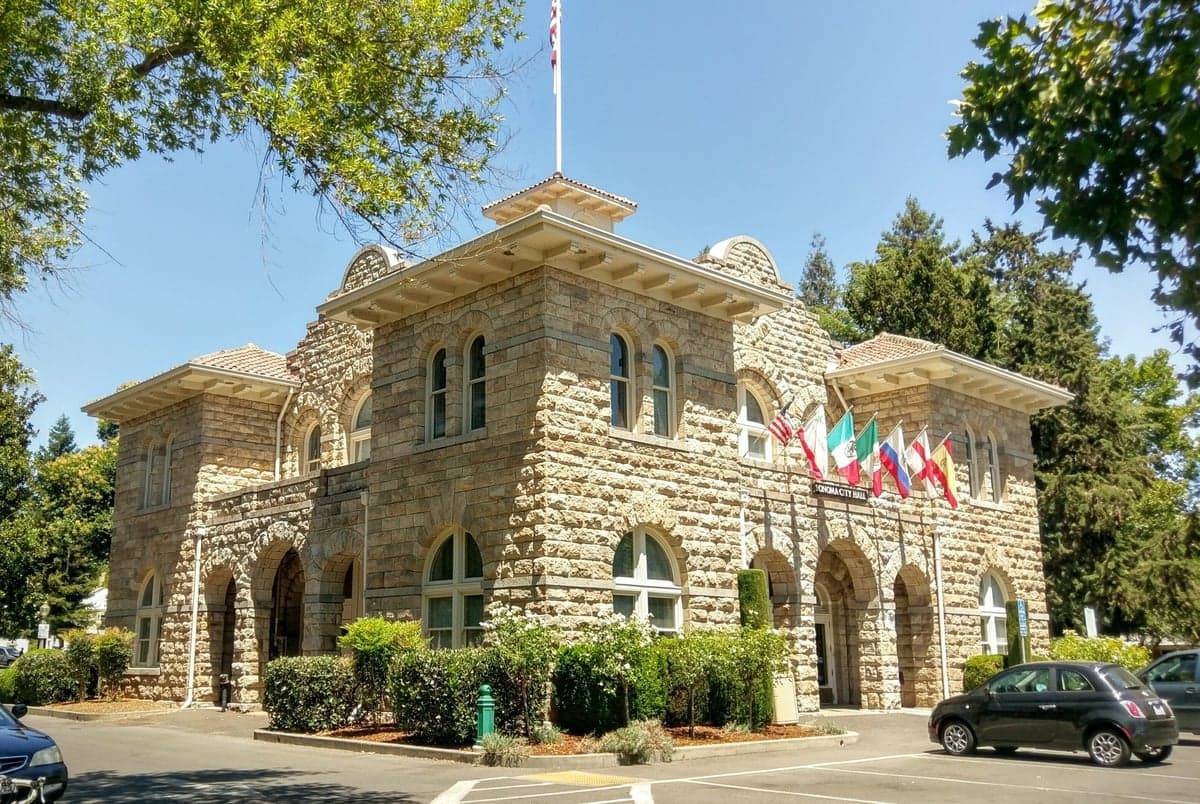
Photo: Wikipedia
Demographics of Sonoma, CA
Affluence Level in Sonoma, CA
An upper-middle-class area. Household wealth, education levels, and homeownership run ahead of national benchmarks.
People of Sonoma, CA
The people of Sonoma, California, today form a small, predominantly white community of 10,726 residents, characterized by a high proportion of college-educated professionals (47.7%) and a notably low foreign-born population (3.2%). The city’s identity is deeply rooted in its historic wine-country character, with a population that is 78.1% white and 15.8% Hispanic, reflecting a long-standing Anglo-European heritage with a modest but growing Latino presence. This is not a diverse or rapidly changing city by California standards; instead, Sonoma retains an established, affluent, and culturally homogeneous feel, where the descendants of early settlers and later waves of wine-industry professionals continue to shape daily life.
How the city was settled and grew
Sonoma’s human history begins with the Coast Miwok people, who inhabited the region for thousands of years before Spanish colonization. The first European settlement came in 1823 with the establishment of Mission San Francisco Solano, part of the Mexican land-grant system. The town’s modern population base was laid after the Bear Flag Revolt of 1846 and California statehood in 1850, when Anglo-American settlers arrived to farm wheat and later grapes. The historic Plaza District, centered on Sonoma’s central square, was built by these early American settlers, many of whom were of English, Irish, and German descent. By the late 19th century, Italian and Swiss immigrants arrived to work in the burgeoning wine industry, settling in what is now the Eastside neighborhood near the old train depot. These groups established the agricultural and viticultural foundations that still define the city. Through the early 20th century, Sonoma remained a small, predominantly white farming community, with population growth slow and steady, driven by family-run vineyards and local commerce.
Modern era (post-1965)
After the 1965 Immigration and Nationality Act, Sonoma did not experience the large-scale immigration waves seen in California’s urban centers. The foreign-born population remains very low at 3.2%, and the city’s racial composition has shifted only modestly. The most significant demographic change has been the growth of the Hispanic population, now 15.8%, largely concentrated in the Westside neighborhood and along the Napa Road corridor, where many work in vineyard maintenance, hospitality, and construction. These families are primarily of Mexican descent, with some Central American roots. Meanwhile, domestic in-migration from the San Francisco Bay Area accelerated after the 1970s, as affluent professionals and retirees sought a slower-paced wine-country lifestyle. These newcomers, overwhelmingly white and college-educated, settled in newer subdivisions like Verano and the Broadway area, driving up home prices and reinforcing the city’s upscale character. The East/Southeast Asian population (1.1%) and Indian-subcontinent population (0.8%) remain very small, with no distinct ethnic enclaves; these residents are dispersed throughout the city, often working in tech or wine-industry management. The Black population (1.3%) is similarly tiny and scattered. Overall, post-1965 Sonoma has become whiter and wealthier relative to the surrounding county, as lower-income and more diverse populations have been priced out of the housing market.
The future
Sonoma’s population is projected to remain stable or grow very slowly, constrained by high housing costs and strict land-use regulations. The city is becoming slightly more diverse, but at a pace far slower than California as a whole. The Hispanic share is expected to rise gradually, possibly reaching 18-20% by 2040, as families in the Westside and Napa Road areas age in place and new Latino workers fill service roles. However, the white, college-educated majority is likely to persist, reinforced by continued in-migration of affluent retirees and remote workers from the Bay Area. The Plaza District will remain the cultural and commercial heart, while the Verano and Broadway areas will absorb most new housing development, which is limited. No significant influx of Asian, Indian, or Black residents is expected, given the city’s high cost of living and lack of major employers outside wine and tourism. The cultural identity of Sonoma will likely remain that of a historic, wine-focused, predominantly white enclave, with a growing but still secondary Latino presence.
For someone moving in now, Sonoma offers a stable, affluent, and historically rooted community with little demographic upheaval. It is a place where the past is preserved and the future looks much like the present—a quiet, expensive, and culturally homogeneous wine-country town, best suited for those who value tradition, space, and a slow pace over diversity and urban energy.

* Values derived from national, state, county, city and local statistics and may differ in a specific area. Last updated: 2026-09-22T20:14:07.000Z
Narrative content on this page is AI-generated and may contain mistakes. Verify any details that matter before acting on them.
ReloMaps may earn a commission from affiliate links at no extra cost to you.

