 Popular
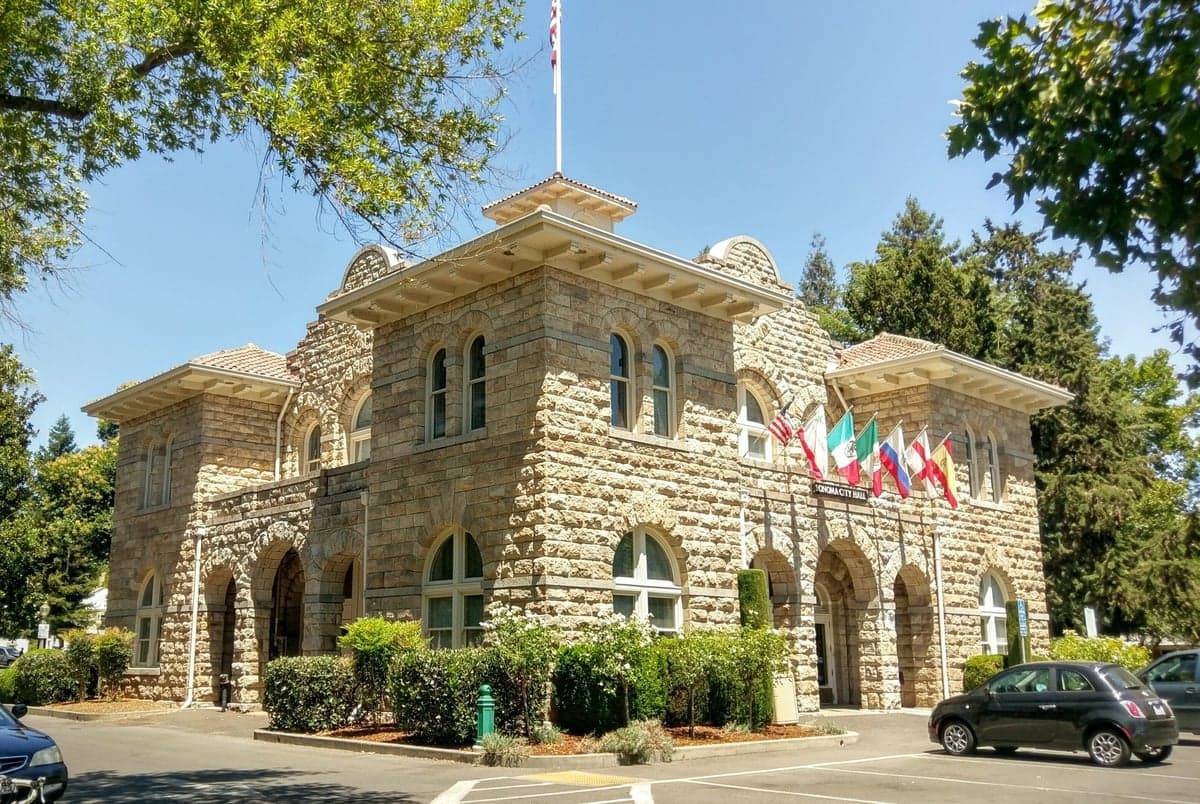
Photo: Wikipedia
Personal Sovereignty in Sonoma, CA
Viable for self-reliance. Generally workable, though some barriers may limit total independence.
What does Personal Sovereignty tell us?
Personal Sovereignty measures your capacity for self-reliance and independence with minimal government friction. Higher scores mean fewer barriers between you and the way you want to live... but it assumes you have the space you need and good neighbors.
What does this tell us?
Personal Sovereignty measures your capacity for self-reliance and independence with minimal government friction. Higher scores mean fewer barriers between you and the way you want to live... but it assumes you have the space you need and good neighbors.
State Policy
Energy independence: Importer (33% of energy produced in-state)
Personal Liberty
Homesteading

Personal Liberty Analysis
Sonoma, California, presents a complex personal sovereignty environment where the region's natural beauty and agricultural heritage coexist with some of the nation's most extensive state-level regulations. For individuals and families prioritizing autonomy, the city offers a distinct trade-off: a high degree of personal lifestyle freedom in a scenic, low-density setting, but within a state framework that imposes significant constraints on taxation, self-defense, and property use. Understanding this balance is critical for anyone evaluating Sonoma as a relocation destination, as the local culture of self-reliance often clashes with Sacramento's centralized policy approach.
Tax burden and regulatory posture in Sonoma County
California's tax burden is among the highest in the nation, and Sonoma residents feel this acutely. The state's progressive income tax tops out at 13.3% on income over $1 million, with a baseline rate of 1% for the lowest bracket. Sales tax in Sonoma is 8.75%, combining state, county, and local levies. Property taxes are capped at 1% of assessed value under Proposition 13, but annual increases are limited to 2% — a double-edged sword that protects long-term owners but creates a higher effective tax for new buyers purchasing at current market values. The regulatory environment is equally dense. California's California Environmental Quality Act (CEQA) often delays or blocks development, and Sonoma County's own zoning and agricultural preservation rules are among the strictest in the state. For example, new residential construction on agricultural land is heavily restricted, and permits for home additions or accessory dwelling units can take months to process. The state's energy code (Title 24) mandates solar panels on most new homes, and water-use regulations are stringent, especially given recurring drought conditions. This creates a high barrier to entry for those seeking to modify property or start a business, though the trade-off is preserved open space and a slower pace of development.
Self-defense and gun law specifics in Sonoma
California's firearm laws are among the most restrictive in the United States, and Sonoma operates fully within this framework. The state requires a 10-day waiting period for all firearm purchases, a background check through the California Department of Justice, and a Firearm Safety Certificate (FSC) obtained by passing a written test. Handgun purchases are limited to one per 30 days, and the state maintains a roster of approved handguns that excludes many popular models. "Assault weapons" are broadly defined and banned, including many common semi-automatic rifles with features like pistol grips or flash suppressors. Magazine capacity is limited to 10 rounds, and possession of larger magazines is a misdemeanor. Concealed carry permits (CCWs) are issued by the Sonoma County Sheriff's Office, but the process is arduous: applicants must demonstrate "good cause" beyond self-defense, complete a 16-hour training course, and undergo a background check. In practice, CCW issuance rates in Sonoma County are low compared to more rural California counties, though the 2022 Supreme Court decision in Bruen has led to some loosening of "good cause" requirements. Open carry is generally prohibited. For those prioritizing self-defense rights, Sonoma represents a significant constraint compared to states with constitutional carry or shall-issue permitting.
Self-reliance and homesteading viability: lot sizes, zoning, and off-grid feasibility
Sonoma's agricultural zoning and relatively large lot sizes offer some scope for self-reliance, but state and local regulations impose firm limits. The city itself is dense, but the surrounding unincorporated areas of Sonoma County feature minimum lot sizes of 5 to 20 acres in agricultural zones, which can support small-scale farming, orchards, or livestock. However, any structure — from a chicken coop to a barn — requires a permit, and the county's "Right to Farm" ordinance protects agricultural operations but also restricts non-agricultural uses. Off-grid living is effectively illegal in most of Sonoma County. All dwellings must be connected to the electrical grid or have a permitted solar system with battery storage, and water must come from a permitted well or municipal supply. Rainwater catchment is allowed but regulated, and composting toilets require a permit. The county's building code mandates that any habitable structure meet Title 24 energy standards, which makes truly independent off-grid setups difficult to achieve legally. For those seeking a homesteading lifestyle, the best option is to purchase a property with existing agricultural infrastructure — a farmhouse, barn, and well — and work within the permitting system for additions. The cost of land is high: agricultural parcels in Sonoma County typically start at $100,000 per acre, and improved properties with a home can easily exceed $1 million. This makes self-reliance a significant financial investment, not a low-cost escape.
Personal liberties: parental rights, medical autonomy, speech, and property
California law generally prioritizes state authority over local or parental control in several key areas. Parental rights are limited in education: the state mandates comprehensive sex education in public schools, and parents cannot opt their children out of lessons on LGBTQ+ topics or contraception. School vaccine requirements are strict, with no personal belief exemptions for required immunizations. Medical autonomy is similarly constrained. California has some of the nation's strongest vaccine mandates for school attendance and healthcare workers, and the state's public health orders during the COVID-19 pandemic — including mask mandates and business closures — were among the longest-lasting in the country. Physician-assisted suicide is legal, but recreational marijuana is fully legalized and regulated, with dispensaries operating openly in Sonoma. Free speech protections are robust under both the U.S. and California constitutions, but the state has enacted laws restricting "hate speech" in certain contexts and bans the sale of firearms at public events. Property rights are heavily circumscribed by zoning, environmental review, and rent control. Sonoma County has rent control for mobile home parks, and the state's Tenant Protection Act caps annual rent increases at 5% plus inflation (up to 10%) for most residential properties. For homeowners, the ability to remodel, add units, or subdivide is subject to extensive review, and the California Coastal Commission has jurisdiction over development in coastal zones, which includes parts of Sonoma County. This creates a regulatory environment where personal property decisions are frequently subject to government approval.
Overall, personal sovereignty in Sonoma is best understood as a constrained autonomy. The area offers genuine opportunities for self-reliance — large lots, agricultural zoning, a strong local food culture, and a community that values sustainability — but these exist within a state framework that taxes heavily, regulates pervasively, and limits individual choice in areas like self-defense, medical decisions, and property use. Compared to states like Texas, Florida, or Idaho, Sonoma ranks low on traditional measures of personal freedom. However, for those who align with California's environmental and social priorities and can navigate its bureaucratic landscape, the trade-off may be acceptable. The key is to enter with eyes open: Sonoma rewards those who work within the system, not those who seek to circumvent it, and the cost of that compliance — in time, money, and autonomy — is substantial.

* Values derived from national, state, county, city and local statistics and may differ in a specific area. Last updated: 2026-09-22T20:14:07.000Z
Narrative content on this page is AI-generated and may contain mistakes. Verify any details that matter before acting on them.
ReloMaps may earn a commission from affiliate links at no extra cost to you.

