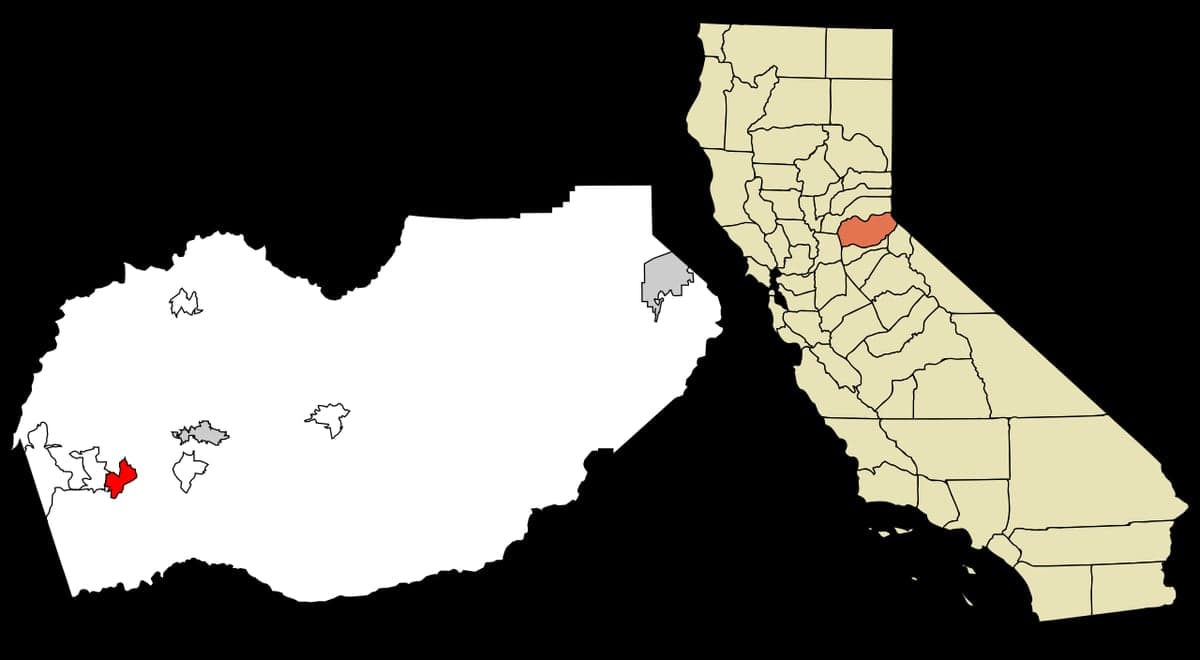
Photo: Wikipedia
Political ClimatePolitical Climate in Shingle Springs, CA
District shown is the primary district for this city’s centroid. Cities may span multiple districts.
Local Political AnalysisPolitical Analysis of Shingle Springs, CA
Shingle Springs sits in a bit of a political bubble compared to the rest of California. While the state as a whole leans heavily Democratic with a Cook PVI of D+16, this unincorporated community in El Dorado County is a reliable conservative stronghold. The county voted for Donald Trump by roughly 10 points in 2020 and 2024, a stark contrast to the statewide results where Democrats win by double digits. That said, the area isn't immune to the broader blue shift—newer residents from the Sacramento metro area are slowly nudging local politics toward the center, especially in school board and county supervisor races.
How it compares
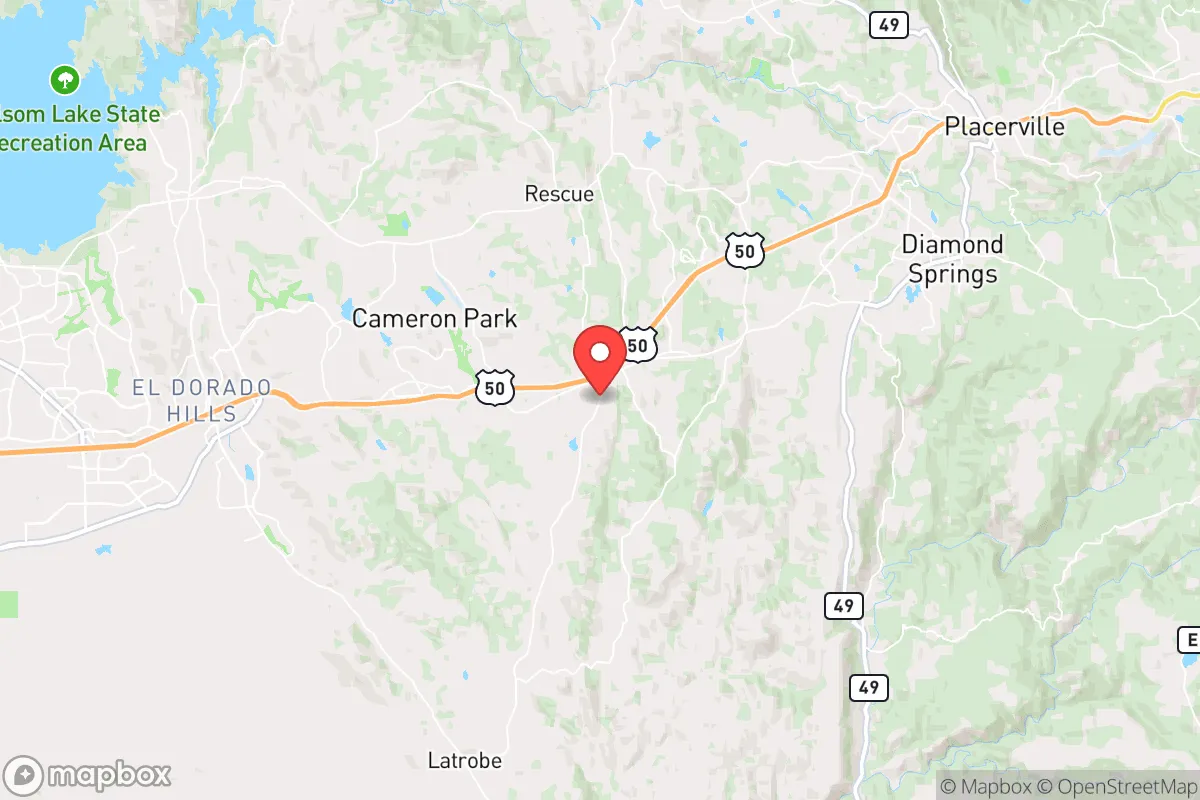
Drive 30 minutes west to Folsom or 45 minutes to Sacramento, and you're in a completely different political world. Folsom is a purple suburb trending blue, while Sacramento is deep blue. Head east up Highway 50 toward Placerville, and you'll find a similar conservative tilt, though Placerville itself has a slightly more mixed electorate due to its historic downtown and artist community. The real contrast is with the state at large: California's D+16 PVI means Democrats hold every statewide office and dominate the legislature, but in Shingle Springs, Republicans often win local races unopposed. The county's voter registration is about 40% Republican, 30% Democrat, and 30% independent or third-party—a mirror image of the state's breakdown. What this means in practice is that a conservative resident here feels politically at home, while a liberal might feel like a minority voice, especially at town hall meetings or in local Facebook groups.
What this means for residents
For conservatives, Shingle Springs offers a rare refuge where their votes actually matter in local elections. The county Board of Supervisors and school board are reliably conservative, which shapes everything from land-use decisions to curriculum choices. Gun rights are taken seriously—open carry is legal with a permit, and the county sheriff is a vocal Second Amendment supporter. For liberals, it can feel isolating, but there are active Democratic clubs in nearby Cameron Park and El Dorado Hills that provide community. The practical effect is that property taxes remain relatively low compared to coastal California, and development tends to be slower and more rural-friendly. However, state mandates on housing, energy, and environmental regulations still apply, so even conservative local officials often find themselves at odds with Sacramento. The tension between local preferences and state law is a constant theme in local politics.
Culturally, Shingle Springs is more "Gold Country" than "California." The annual El Dorado County Fair, the local 4-H and FFA programs, and the strong presence of evangelical churches define the social fabric. There's a live-and-let-live attitude, but also a wariness of government overreach. The area's trajectory is toward gradual diversification—more remote workers from the Bay Area are buying land, and they tend to bring more moderate or liberal views. Longtime residents joke that the biggest political divide isn't left vs. right, but "don't pave my road" vs. "let's keep it rural." For now, Shingle Springs remains a place where a Trump sign on a pickup truck is more common than a Harris yard sign, but that balance is shifting slowly, one new subdivision at a time.

State Political ClimatePolitical Climate in California
State Political AnalysisPolitical Environment in the State
California is a deeply blue state, with Democrats holding every statewide office and supermajorities in both legislative chambers, but its reputation as a monolithic liberal bastion oversimplifies a far more complex reality. The state hasn't voted Republican in a presidential election since 1988, and in 2024, Kamala Harris carried it by roughly 20 points. However, that margin has been shrinking from the 30-point blowouts of the Obama era, driven by a slow but steady rightward shift in the Central Valley and inland exurbs, even as the coastal metros harden their Democratic allegiance. For a conservative-leaning relocator, the practical takeaway is that you will be living under one-party rule at the state level, but your day-to-day political experience can vary wildly depending on whether you land in Los Angeles, Bakersfield, or a foothill town like Placerville.
Urban vs. rural divide
The political map of California is a study in extremes. The entire coastal corridor from San Francisco down through Los Angeles and San Diego is solidly Democratic, with San Francisco and Alameda County routinely delivering 85-90% of the vote to Democratic candidates. These metros drive the state's overall lean, powered by dense populations of college-educated professionals, tech workers, and union households. Inland, the story flips. The Central Valley — places like Bakersfield (Kern County), Fresno, and Modesto — votes reliably Republican, often by 15-20 points, fueled by oil and agriculture workers, evangelical Christians, and a growing population of conservative-leaning Latino voters. The Inland Empire around Riverside and San Bernardino is a true battleground; it voted for Obama twice, then flipped to Trump in 2020 and 2024, reflecting a working-class shift away from Democrats on cost-of-living and crime issues. The Sierra Nevada foothills — Placerville (El Dorado County) and Redding (Shasta County) — are deep red, with Shasta County being one of the most conservative in the state, a place where the local board of supervisors has openly defied state public health orders and election mandates. The political reality for a new resident is that your neighbors and local government will reflect whichever of these zones you choose.
Policy environment
California’s policy environment is defined by high taxes, heavy regulation, and expansive state government. The state has a progressive income tax with a top marginal rate of 13.3% (the highest in the nation), a state sales tax that can exceed 10% with local add-ons, and some of the highest gas taxes in the country. Property taxes are capped at 1% of assessed value under Proposition 13, but reassessment upon sale means newer homeowners often pay far more than long-term residents. The regulatory posture is aggressive: California has its own environmental review process (CEQA) that can delay or kill development, its own strict emissions standards (waived by the EPA under the Clean Air Act), and some of the nation’s toughest labor and employment laws, including a $16 minimum wage (rising to $17 in 2026) and mandatory paid sick leave. Education policy is dominated by the California Teachers Association, with per-pupil spending above the national average but middling outcomes; school choice is limited, with few charter schools and no voucher program. Healthcare is heavily regulated, with a state-run insurance exchange (Covered California) and a push toward a single-payer system that has stalled in the legislature. Election laws are among the most accessible in the country: universal mail-in voting, same-day registration, and no-excuse absentee voting are the norm, with voter turnout consistently high.
Recent policy direction
Over the past five years, California has moved decisively left on a range of issues that matter to relocators weighing personal liberties. On gun and self-defense law, the state has passed some of the nation’s strictest measures: a 2023 law (SB 2) effectively bans concealed carry in most public places, including parks, hospitals, and any business that hasn’t explicitly posted a “guns allowed” sign, and it raised the minimum age for a concealed carry permit to 21. A 2024 law (AB 28) imposes an 11% excise tax on all firearms and ammunition sales. On parental and education rights, the state has moved in the opposite direction from many red states: a 2023 law (AB 1078) prohibits school boards from banning books or curricula that discuss race, gender, or sexuality, and a 2024 law (AB 1955) bars school districts from requiring teachers to notify parents if a student changes their gender identity. On speech and privacy, California has a strong shield law for journalists and a broad consumer privacy law (CCPA/CPRA), but it also passed a 2022 law (AB 587) requiring social media companies to report their content moderation policies, which critics call a backdoor to state censorship. On medical and bodily autonomy, the state has enshrined abortion access as a constitutional right (Proposition 1, 2022) and passed a 2024 law (SB 729) requiring private insurance to cover IVF and fertility treatments. On property rights, rent control was expanded under the 2019 Tenant Protection Act (AB 1482), capping annual rent increases at 5% plus inflation, and a 2024 law (AB 2345) limits evictions for non-payment of rent to cases where the tenant owes more than one month’s rent. On taxation, a 2024 ballot measure (Proposition 5) would have lowered the threshold for local bond measures to 55%, but it failed; the state’s overall tax burden remains among the highest in the nation. On voting and ballot access, California has moved to expand access: a 2021 law (SB 503) requires counties to offer ballot drop boxes and in-person voting centers, and a 2024 law (AB 421) automatically registers eligible voters when they interact with the DMV.
Civil unrest & political movements
California has a long history of political activism, and recent years have seen both left- and right-wing movements flare up visibly. The 2020 George Floyd protests in Los Angeles, San Francisco, and Oakland were among the largest and most destructive in the country, with widespread looting and property damage that led to a lasting political backlash in suburban and working-class areas. On the right, the “Recall Newsom” movement in 2021 gathered over 1.6 million signatures and forced a special election, though Newsom survived easily. More recently, the “California Exoduster” movement — a loose coalition of conservatives and libertarians pushing for a state split or secession — has gained some traction online but no real political power; a 2024 ballot measure to study secession (Proposition 9) failed to qualify. Immigration politics are a constant flashpoint: California is a “sanctuary state” under SB 54 (2017), which limits local law enforcement cooperation with federal immigration authorities, and in 2024, the state passed AB 2465, which prohibits private prisons from holding immigration detainees. Election integrity controversies have been relatively muted compared to swing states, but in 2022, the Shasta County Board of Supervisors voted to hand-count all ballots, a decision that was later reversed under legal pressure. A new resident in a blue city like San Francisco will see frequent protests on both sides — from anti-war demonstrations to pro-life rallies — while in a red area like Redding, the political temperature is lower but the local government is often in open conflict with Sacramento.
Projection
Over the next five to ten years, California’s political trajectory points toward a slow but real moderation at the margins, even as the state remains firmly Democratic. The key demographic driver is the continued out-migration of lower-income and middle-class households — many of them moderate or conservative — to Texas, Arizona, and Nevada, replaced by a smaller number of high-income, college-educated immigrants from abroad and from other blue states. This will likely keep the coastal metros blue but deepen the red hue of the inland areas as the remaining conservative population becomes a larger share of a shrinking total. The Central Valley’s rightward shift will accelerate as Latino voters, particularly in Kern and Tulare counties, continue to break toward Republicans on economic and social issues. The Inland Empire will become more competitive, possibly flipping to Republican in presidential elections by 2032 if current trends hold. At the state level, expect continued one-party Democratic control, but with narrower legislative majorities as the rural and exurban seats become harder to hold. A new resident moving in now should expect to see the same high-tax, high-regulation policy environment for the foreseeable future, but with growing internal friction between Sacramento and the inland counties, and a possible return to a more moderate Democratic governor after Gavin Newsom’s term ends in 2027.
For a conservative-leaning relocator, the bottom line is that California offers a trade-off: you will live under a state government whose policies on guns, taxes, education, and parental rights are likely at odds with your values, but you can find local communities — in the Central Valley, the Inland Empire, or the Sierra foothills — where your vote counts and your neighbors share your worldview. The key is to choose your county carefully. If you move to Bakersfield or Placerville, you’ll have a Republican state assemblymember and a local government that pushes back against Sacramento. If you move to San Francisco or Los Angeles, you’ll be in a deep-blue environment where conservative views are a distinct minority. The state’s trajectory is toward a more polarized internal geography, not a uniform shift, so your experience will depend almost entirely on where you put down roots.
* Values derived from national, state, county, city and local statistics and may differ in a specific area. Last updated: 2026-09-28T10:05:42.000Z
Narrative content on this page is AI-generated and may contain mistakes. Verify any details that matter before acting on them.
ReloMaps may earn a commission from affiliate links at no extra cost to you.

