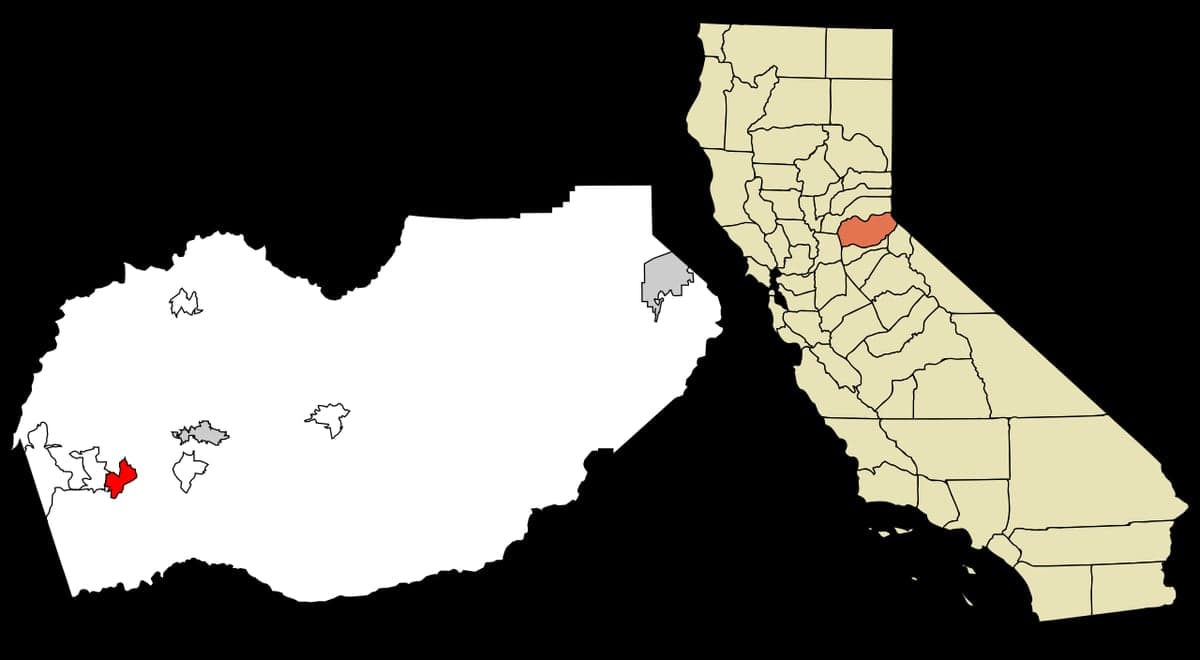
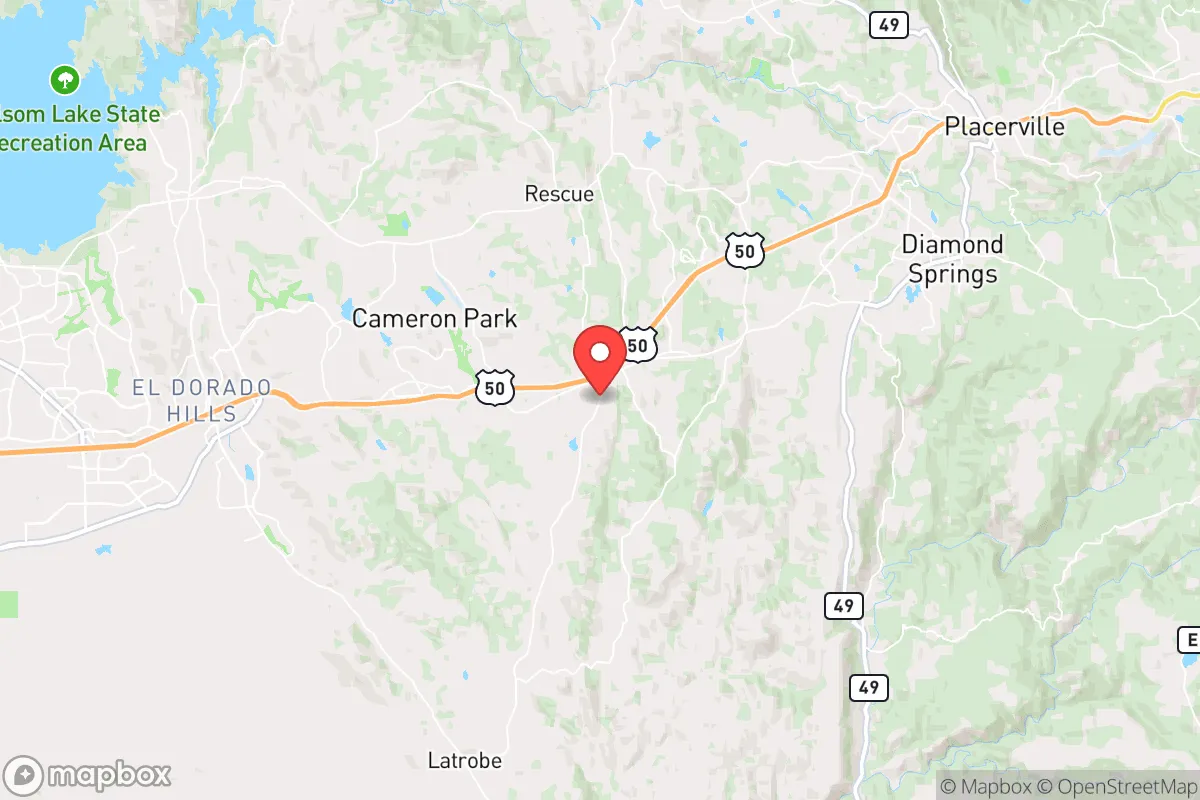
Photo: Wikipedia
Personal Sovereignty in Shingle Springs, CA
Viable for self-reliance. Generally workable, though some barriers may limit total independence.
What does Personal Sovereignty tell us?
Personal Sovereignty measures your capacity for self-reliance and independence with minimal government friction. Higher scores mean fewer barriers between you and the way you want to live... but it assumes you have the space you need and good neighbors.
What does this tell us?
Personal Sovereignty measures your capacity for self-reliance and independence with minimal government friction. Higher scores mean fewer barriers between you and the way you want to live... but it assumes you have the space you need and good neighbors.
State Policy
Energy independence: Importer (33% of energy produced in-state)
Personal Liberty
Homesteading

Personal Liberty Analysis
Shingle Springs, California, offers a nuanced personal sovereignty environment that balances the state's overarching regulatory framework with the practical autonomy of a rural, unincorporated community in El Dorado County. For individuals and families prioritizing independence, the area provides meaningful opportunities for self-reliance, particularly in housing, land use, and daily life, while operating within California's broader tax and legal structures. The key to understanding personal sovereignty here lies in the distinction between state-level mandates and local enforcement realities, where the county's conservative leanings and lower population density often translate into a lighter touch on day-to-day affairs compared to urban coastal areas.
Tax burden and regulatory posture in El Dorado County
California's state-level tax burden is among the highest in the nation, with a progressive income tax topping 13.3% and a statewide sales tax rate of 7.25% (plus local add-ons, bringing El Dorado County to roughly 7.75%). However, Shingle Springs benefits from Proposition 13 protections, which cap annual property tax increases at 2% of the assessed value and keep base rates around 1% of the purchase price. This creates predictability for long-term homeowners, though new buyers face higher initial assessments. The regulatory posture in El Dorado County is notably more permissive than in the Bay Area or Los Angeles. The county's general plan emphasizes rural character and limited commercial sprawl, meaning fewer zoning overlays and less bureaucratic friction for home-based businesses, small-scale agriculture, and property improvements. Building permits and county approvals are generally processed within standard timelines, and the local government does not impose the kind of aggressive environmental review or inclusionary housing mandates seen in larger jurisdictions. For a conservative-leaning audience, the trade-off is clear: you pay California's high income and sales taxes, but you gain a relatively hands-off county government that respects property rights and does not over-regulate rural living.
Self-defense and gun law specifics in Shingle Springs
California's firearm laws are among the strictest in the nation, and Shingle Springs residents must comply with state-level requirements including universal background checks, a 10-day waiting period, an assault weapons ban, and a roster of approved handguns. Magazine capacity is limited to 10 rounds. However, El Dorado County is a "shall-issue" jurisdiction for concealed carry permits (CCW), meaning the sheriff's office must issue a permit if the applicant meets statutory criteria—no "good cause" statement beyond self-defense is required. This is a significant advantage over many coastal counties where permits are effectively unavailable. The local sheriff, as of 2026, maintains a pro-Second Amendment stance, and processing times for CCW applications are reasonable (typically 60-90 days). Open carry of handguns is generally prohibited in California, but long guns may be carried unloaded in certain circumstances. For self-defense in the home, there are no additional local restrictions beyond state law. The practical reality is that while California's gun laws are restrictive on paper, Shingle Springs residents can legally own and carry firearms for self-defense with relative ease compared to residents of San Francisco or Los Angeles, provided they follow state procedures. The county's rural nature also means fewer "gun-free zone" designations in everyday spaces like parks and parking lots.
Self-reliance and homesteading viability: lot sizes, zoning, and off-grid feasibility
Shingle Springs is zoned primarily for residential agriculture and rural residential use, with minimum lot sizes typically ranging from 1 to 5 acres in the unincorporated areas. This makes it one of the more viable locations in California for homesteading, hobby farming, and self-sufficient living. The county allows keeping chickens, goats, sheep, and even horses on properties of sufficient size without special permits, and beekeeping is permitted with minimal registration. Vegetable gardens, fruit trees, and small-scale livestock are standard features of the landscape. Off-grid feasibility is moderate: while California building codes require connection to the electrical grid for new construction, many existing homes already have solar panels with battery backup, and the county does not actively enforce grid connection on older properties. Rainwater catchment is legal and encouraged for non-potable uses, and private wells are common—most rural parcels have their own well and septic system, providing water and waste autonomy. Propane tanks for heating and cooking are standard. The county's building department is pragmatic about alternative construction methods (e.g., straw bale, earthship) as long as they meet structural and fire safety codes. The primary constraint is fire risk: the area is in a high fire hazard severity zone, so defensible space requirements and vegetation management are mandatory, and new construction must meet wildfire-resistant building standards. For those willing to manage fire risk, Shingle Springs offers genuine homesteading potential that is rare in California's more regulated regions.
Personal liberties: parental rights, medical autonomy, speech, and property
In the realm of personal liberties, Shingle Springs reflects the broader California legal environment with some local nuances. Parental rights in education are a live issue: California law mandates that schools cannot notify parents of a student's gender identity or sexual orientation without the student's consent, a policy that has prompted some conservative families to pursue homeschooling or private religious education. The area has a robust homeschooling community, with several local support groups and hybrid homeschool programs available. Medical autonomy is constrained by California's vaccine mandates for school attendance and healthcare workers, but the county has a higher rate of medical freedom advocacy than the state average, and some local practitioners offer direct primary care and alternative medicine options. Speech and assembly rights are fully protected under the First Amendment, and the county's conservative political culture means that conservative viewpoints are not suppressed in public discourse—local government meetings, community events, and social media groups are openly conservative. Property rights are generally respected, with the county avoiding rent control, inclusionary zoning, or aggressive eminent domain practices. The main property rights friction comes from state-level environmental regulations (e.g., California Environmental Quality Act reviews for larger projects) and fire safety codes, which can limit how much vegetation you can remove or how you can develop your land. Overall, Shingle Springs offers a higher degree of personal liberty than most California communities, particularly in parental choice, property use, and political expression, while still operating within the state's legal framework on medical and educational mandates.
Compared to other areas in California, Shingle Springs stands out as a strong option for those prioritizing personal sovereignty within the state's constraints. It is significantly more autonomy-friendly than the Bay Area, Los Angeles, or Sacramento, where higher density and progressive governance create more regulatory friction. It is comparable to other Sierra foothill communities like Placerville or Grass Valley, but with slightly better access to Sacramento for employment and services. For a conservative-leaning individual or family, the trade-off is accepting California's high taxes and state-level mandates in exchange for a rural county that respects property rights, supports self-defense, and enables homesteading. The overall sovereignty environment is best described as pragmatic autonomy: you will not escape California's regulatory umbrella, but you can live a largely self-directed life with minimal local interference, especially if you own land, work remotely or locally, and engage with the community on its own terms.

* Values derived from national, state, county, city and local statistics and may differ in a specific area. Last updated: 2026-09-28T10:05:42.000Z
Narrative content on this page is AI-generated and may contain mistakes. Verify any details that matter before acting on them.
ReloMaps may earn a commission from affiliate links at no extra cost to you.

