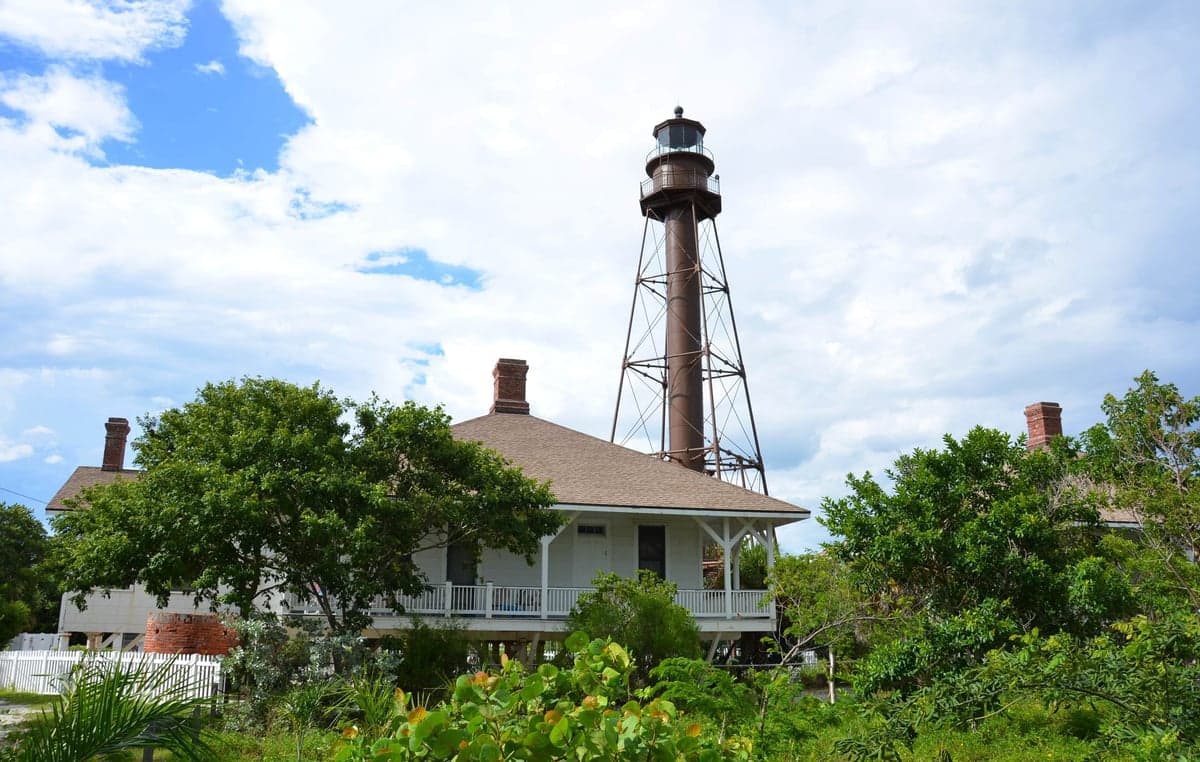
Photo: Wikipedia
Strategic Assessment of Sanibel, FL
Meaningful friction. Expect exposure to either population pressure, blast zones, or natural disaster risk. Consider buying a retreat property.
What does the Strategic Assessment tell us?
Our Strategic Assessment grades tactical survivability of an area. Major population centers, military targets, fallout zones, natural disasters, and border exposure all drive risk — lower exposure means a more defensible position in a crisis.
This is heavily inspired by Joel Skousen's Strategic Relocation book. Highly recommended you checkout the book ($)What does this tell us?
Our Strategic Assessment grades tactical survivability of an area. Major population centers, military targets, fallout zones, natural disasters, and border exposure all drive risk — lower exposure means a more defensible position in a crisis.
This is heavily inspired by Joel Skousen's Strategic Relocation book. Highly recommended you checkout the book ($)Strategic Pillars
Key Distances
Regional Safe Places
Below is our recommended "safe zones" in Florida and the surrounding area based on our strategic heuristics. For most people, it's unrealistic to live in a “safe zone” full-time due to work, family or other personal reasons. They tend to be more rural. However, many of these areas are perfect for second homes and retreat properties that double as a vacation home or even a short-term rental.

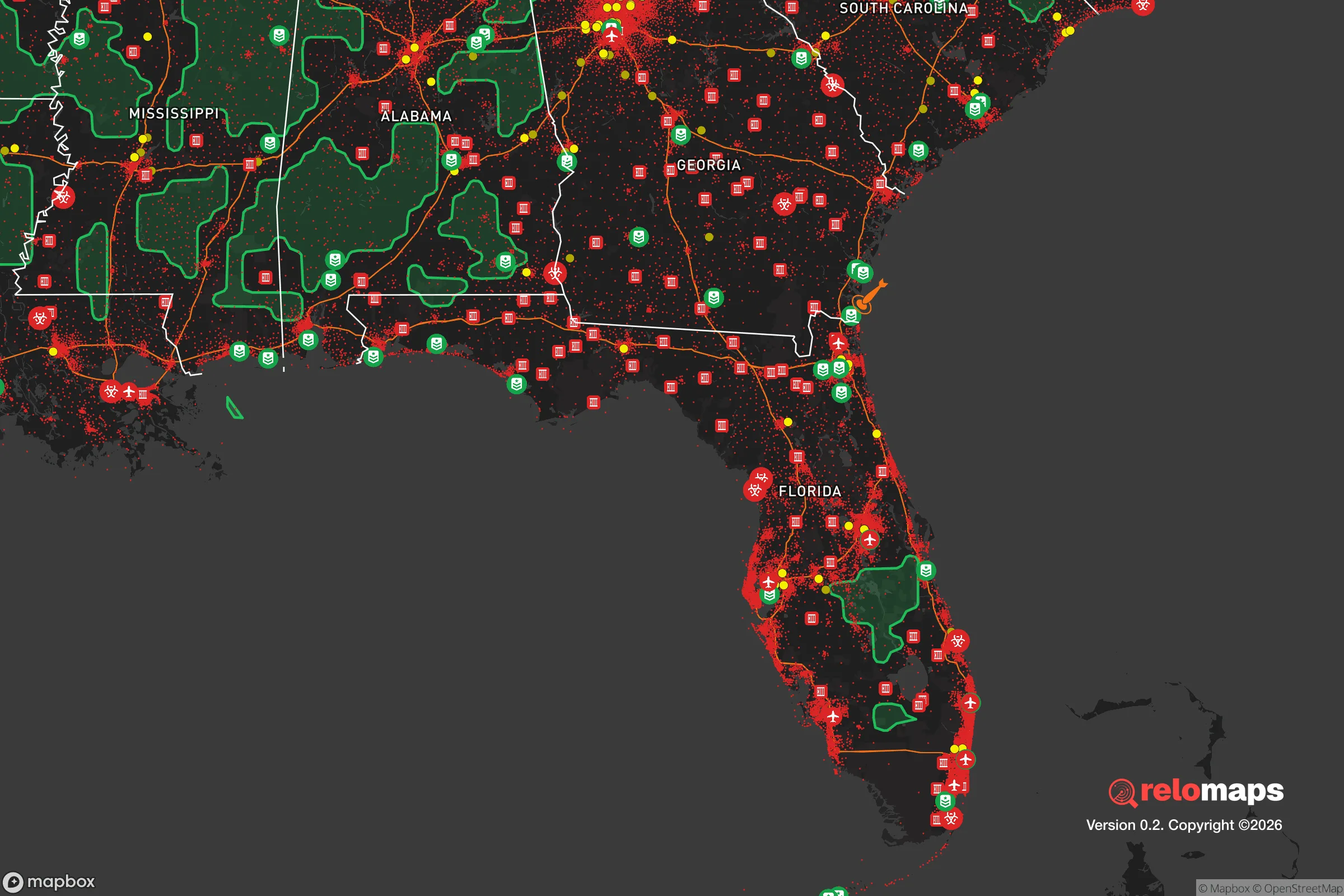


Important Note: For informational purposes only. This does not mean nothing bad ever happens in the green zones. Please use common sense. This is based on public data and modeled with AI. We tried to take a conservative approach but mistakes happen. We update this regularly as new information becomes available.
Solar Generator Recommendations
Backup power matters more here than in safer locations. We've picked three solar generators across budgets and capacity tiers — start with the budget unit if you only need a few essentials, or step up if you want to run a fridge and HVAC for days at a time.
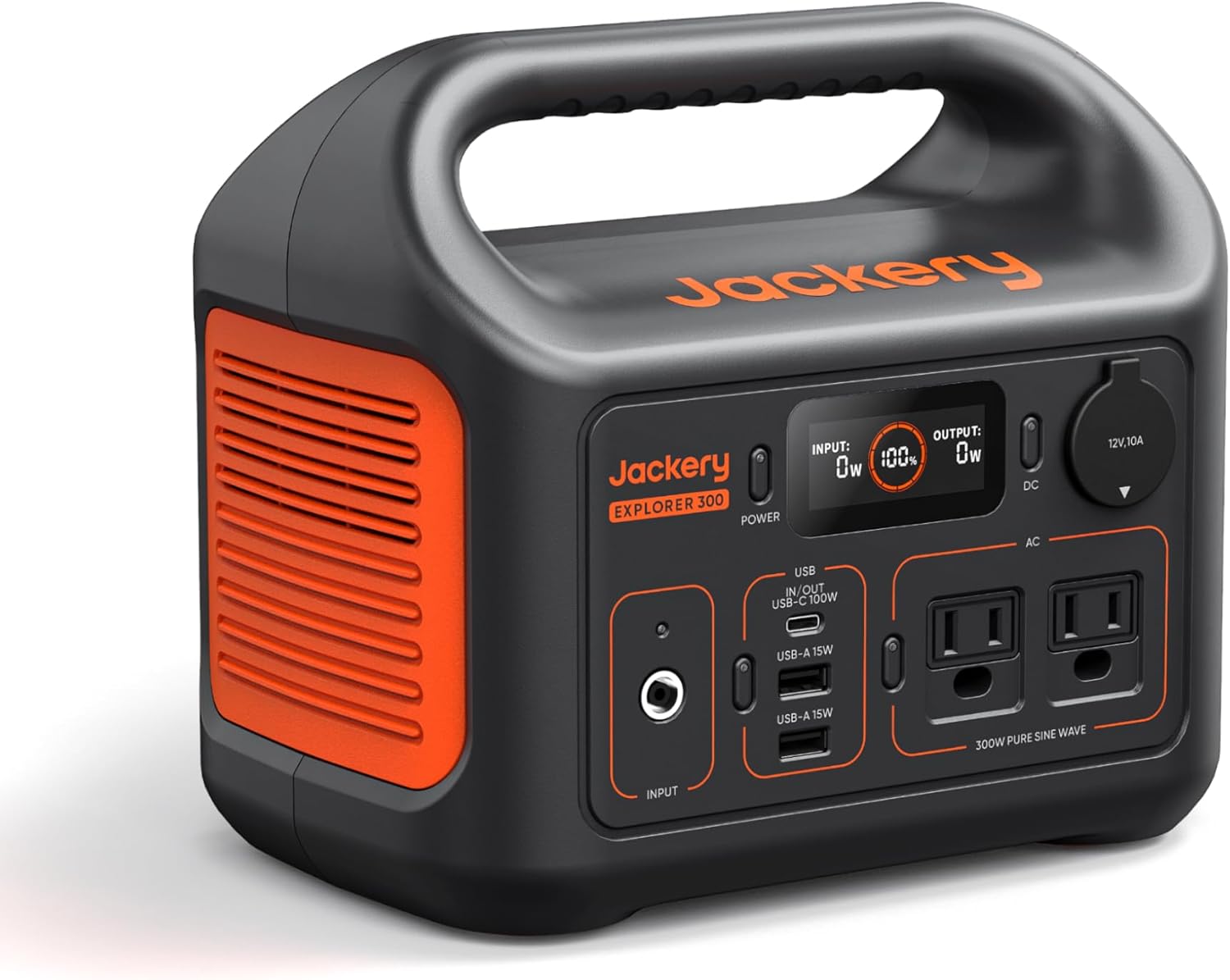
Jackery Portable Power Station Explorer 300
Budget OptionPower on the Go: Weighing only 11 lbs, it's convenient to set up and store with book-sized foldable solar panels

BLUETTI Portable Power Station AC180
Designed for both indoor and outdoor scenarios, AC180 is highly capable as it has a robost capacity and continuous output power.

EF ECOFLOW DELTA Pro Ultra Power Station
Upgraded PickEcoFlow DELTA Pro Ultra is a whole-home energy system designed to grow with your family. Integrated with the Smart Home Panel 2, it scales to meet your evolving energy needs — keeping your home powered, intelligent, and secure through every stage of life.
We earn a commission, at no additional cost to you.
Strategic Assessment Analysis
Sanibel, Florida, presents a complex strategic picture for the relocation-minded reader focused on resilience and self-sufficiency. While its barrier-island geography offers a degree of natural isolation from mainland population centers, this same geography introduces severe exposure to tropical weather and storm surge, making it a location that demands exceptional preparation rather than offering inherent safety. For the conservative-leaning individual or family prioritizing disaster readiness, Sanibel is best understood as a high-risk, high-reward outpost that requires a proactive, rather than reactive, mindset.
Geographic position and natural advantages for a strategic relocation
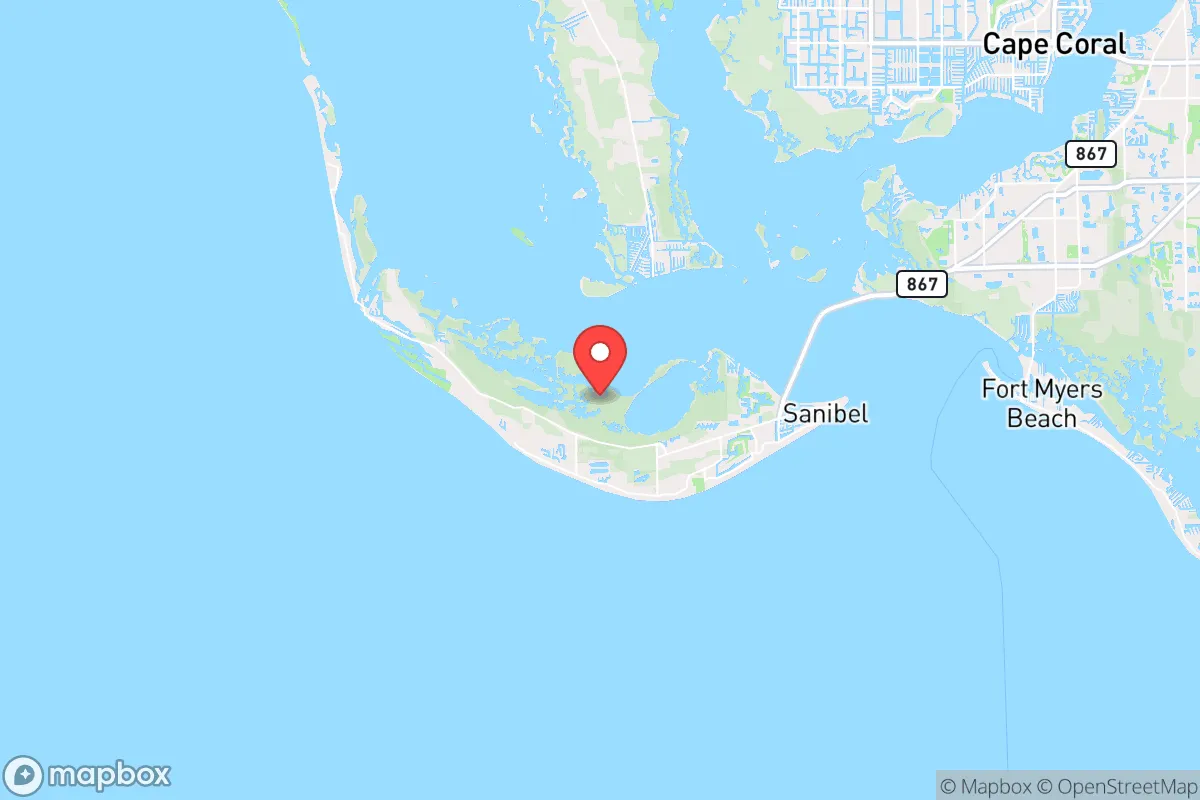
Sanibel’s primary strategic advantage is its physical separation from the dense, sprawling population of Southwest Florida’s mainland. Located in Lee County, the island is accessible only via the Sanibel Causeway, a three-mile bridge system that creates a natural chokepoint. This isolation is a double-edged sword: it reduces exposure to the everyday crime and congestion of Fort Myers (roughly 20 miles to the northeast) and Cape Coral, but it also means that in a crisis, the causeway becomes a single point of failure. The island itself is roughly 12 miles long and 3 miles wide, with a low elevation averaging just 3 to 5 feet above sea level. Its position along the Gulf of Mexico provides a buffer from the more volatile Atlantic hurricane tracks, but it remains squarely in the crosshairs of Gulf storms. The surrounding waters of Pine Island Sound and San Carlos Bay offer rich marine resources, which can support fishing and crabbing for a self-sufficient household. The J.N. "Ding" Darling National Wildlife Refuge, covering over 6,400 acres of mangrove forest and tidal flats, provides a substantial natural barrier against storm surge on the island’s northern side, though it does not eliminate the risk. For a relocator, the key takeaway is that Sanibel’s isolation is a tactical asset, but one that is entirely dependent on the integrity of its single road link and the absence of a direct hurricane hit.
Risks, exposures, and proximity to fallout-relevant landmarks
The most significant risk to Sanibel is its near-total exposure to hurricane storm surge. The island’s average elevation of 3-5 feet means that a Category 3 or higher storm can inundate the entire landmass. Hurricane Ian in 2022 demonstrated this brutally, with a storm surge of 12-15 feet that destroyed the causeway and flooded nearly every structure on the island. For a reader concerned with man-made risks, Sanibel’s proximity to the Babcock Ranch solar energy facility (about 25 miles northeast) is a minor positive, as it provides a nearby grid-independent power source. However, the island is within 100 miles of the Caloosahatchee River, which hosts the W.H. Sammis coal-fired power plant (a potential industrial accident site) and the Port of Fort Myers, a commercial shipping hub. More critically, Sanibel lies roughly 120 miles from the MacDill Air Force Base in Tampa, a major military installation that could be a target in a conflict scenario. The island’s location on the Gulf Coast also places it within the potential fallout zone of a nuclear incident at the Turkey Point Nuclear Generating Station (about 120 miles south, near Homestead), though prevailing winds typically carry fallout eastward toward the Atlantic. For the strategic relocator, the calculus is clear: Sanibel’s primary man-made risk is not direct targeting but rather the cascading effects of a disrupted mainland—fuel shortages, supply chain breakdowns, and population displacement from Fort Myers—that would isolate the island even further. The causeway, while a defensive asset, also becomes a liability if it is damaged or blocked by refugees fleeing the mainland.
Practical resilience for a relocator: food, water, energy, and defensibility
Practical self-sufficiency on Sanibel requires a fundamentally different approach than on the mainland. Fresh water is the most critical vulnerability. The island relies entirely on the Lee County water utility, which draws from the Caloosahatchee River and delivers it via a single pipeline under the causeway. A prolonged power outage or causeway failure would cut this supply. Rainwater catchment is feasible given the region’s 54 inches of annual rainfall, but storage capacity must be substantial—at least 500 gallons per person for a 30-day supply. Food resilience is moderate. The surrounding waters offer excellent fishing for snook, redfish, and trout, and the refuge’s mangroves support crab and oyster populations. However, the island has limited agricultural land; most soil is sandy and saline, making traditional gardening difficult. Raised beds with imported soil and salt-tolerant crops like sea beans and certain citrus varieties are possible. Energy independence is achievable but expensive. Solar panels are common on the island, but they must be hurricane-rated and securely mounted. Battery storage is essential, as grid outages are frequent during storm season. A backup generator with a 200-gallon propane tank is a practical minimum. Defensibility is a mixed picture. The causeway creates a natural chokepoint that can be monitored and controlled by a small group, but the island’s long, open beaches and numerous boat ramps make it vulnerable to waterborne approach. The permanent population of roughly 6,000 (pre-Ian) is small and generally affluent, which can foster a strong community response but also means fewer people with hands-on skills. For a family, the island’s limited medical facilities—only a small clinic and no hospital—mean that serious injury or illness requires a 30-minute drive to Fort Myers, a trip that may be impossible during a storm or grid-down event. Evacuation planning is non-negotiable. The county’s evacuation zones include all of Sanibel, meaning that for a Category 3 or higher storm, residents are legally required to leave. This reality undercuts the idea of “riding it out” and forces a relocator to have a pre-planned bug-out location on the mainland, with fuel and supplies staged in advance.
The overall strategic picture for Sanibel is one of a beautiful but brittle outpost. Its isolation is a genuine asset for avoiding the chaos of a mainland collapse, but that same isolation becomes a trap when the causeway is compromised. For the conservative-leaning relocator who values self-reliance and community, Sanibel offers a small, tight-knit population and abundant natural resources, but it demands a level of preparation—especially for water, energy, and evacuation—that is far above what a typical suburban or rural property requires. The island is not a survivalist’s paradise; it is a coastal community that has been tested by nature and found wanting in 2022. A family moving here must treat resilience as a full-time commitment, not an afterthought. If you are willing to invest in robust infrastructure, maintain a strict evacuation plan, and accept that the island’s beauty comes with a high baseline risk, Sanibel can be a defensible and rewarding home. If you are looking for a low-maintenance, low-risk location, look inland.

* Values derived from national, state, county, city and local statistics and may differ in a specific area. Last updated: 2026-11-16T14:27:13.000Z
Narrative content on this page is AI-generated and may contain mistakes. Verify any details that matter before acting on them.
ReloMaps may earn a commission from affiliate links at no extra cost to you.

