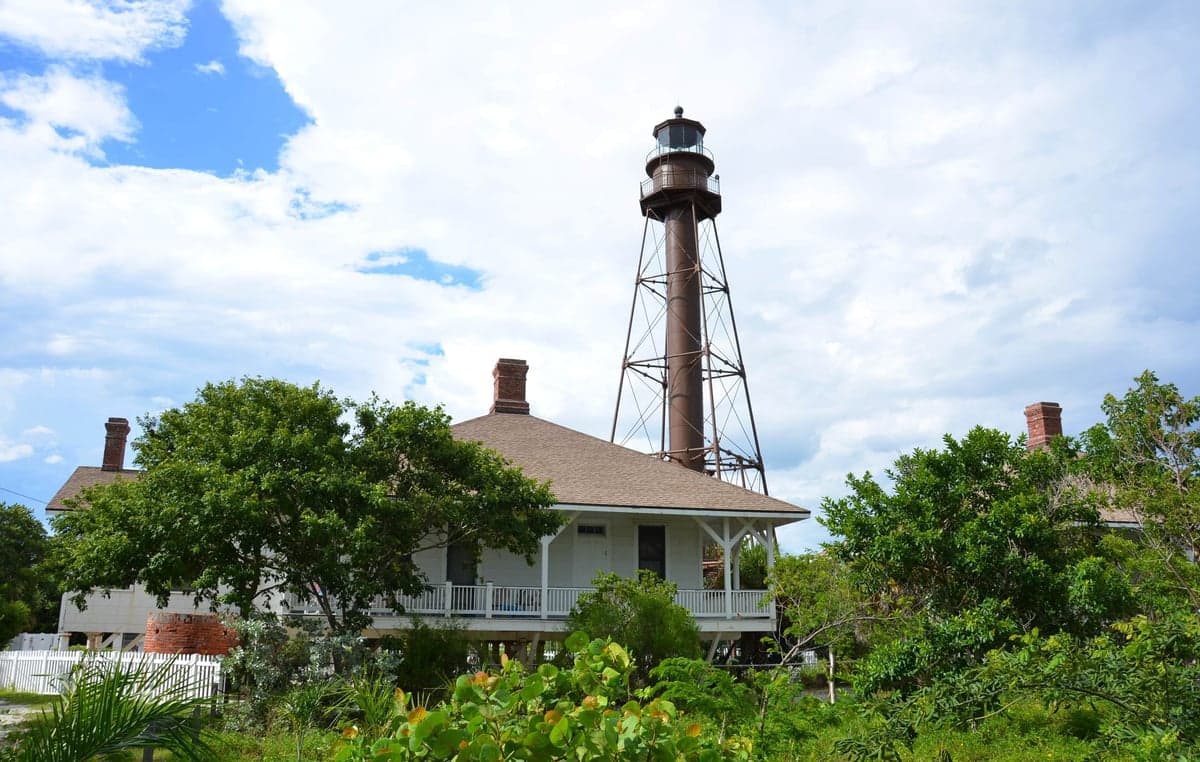
Photo: Wikipedia
Personal Sovereignty in Sanibel, FL
Viable for self-reliance. Generally workable, though some barriers may limit total independence.
What does Personal Sovereignty tell us?
Personal Sovereignty measures your capacity for self-reliance and independence with minimal government friction. Higher scores mean fewer barriers between you and the way you want to live... but it assumes you have the space you need and good neighbors.
What does this tell us?
Personal Sovereignty measures your capacity for self-reliance and independence with minimal government friction. Higher scores mean fewer barriers between you and the way you want to live... but it assumes you have the space you need and good neighbors.
State Policy
Energy independence: Importer (12% of energy produced in-state)
Personal Liberty
Homesteading

Personal Liberty Analysis
Sanibel, Florida, offers a distinctive personal sovereignty environment shaped by its unique geography as a barrier island and the overarching legal framework of Florida state law. While the island itself imposes specific land-use and building regulations to preserve its natural character, residents benefit from Florida’s strong state-level protections for gun rights, property rights, and parental autonomy, creating a nuanced balance between local environmental stewardship and individual liberty. For a relocation researcher evaluating autonomy, Sanibel represents a high-cost, high-regulation local environment nested within a generally freedom-oriented state, requiring careful consideration of trade-offs between personal independence and community preservation.
Tax burden and regulatory posture in Sanibel
Florida’s absence of a state income tax is a significant advantage for Sanibel residents, allowing individuals and families to keep more of their earnings. The state’s reliance on sales and property taxes means the effective tax burden is moderate compared to high-tax states like New York or California. However, Sanibel’s local regulatory posture is notably more restrictive than many mainland Florida communities. The city enforces strict building codes, height limits (typically no more than 35 feet), and density restrictions to protect the island’s low-rise, natural aesthetic and hurricane resilience. Permitting for new construction or major renovations can be a lengthy and costly process, with environmental reviews required for projects near wetlands or dunes. This regulatory framework is not punitive but reflects a community consensus to prioritize environmental conservation over development freedom. For a reader valuing minimal government interference, Sanibel’s local rules may feel heavy-handed, but they are transparent and consistently applied. The city also imposes a 5% tourist development tax on short-term rentals, which can affect property owners who rent out homes. Overall, the tax burden is light at the state level, but the regulatory burden is moderate to high locally, especially for those seeking to modify property or build from scratch.
Self-defense and gun law specifics on Sanibel
Florida is a “shall-issue” state for concealed carry permits, and Sanibel residents benefit from the state’s strong preemption laws, which prohibit local governments from enacting firearm regulations stricter than state law. This means Sanibel cannot ban guns in parks, restrict magazine capacities, or impose waiting periods beyond what the state mandates. Florida also has a “stand your ground” law, which removes the duty to retreat before using deadly force in self-defense when lawfully present. Open carry of firearms is generally prohibited, but concealed carry is lawful with a permit, and permitless carry (constitutional carry) was enacted in 2023, allowing law-abiding adults to carry concealed without a permit. Sanibel’s police department is professional and community-oriented, but the island’s low crime rate means self-defense scenarios are rare. For a reader prioritizing the right to bear arms, Sanibel offers full state-level protections with no local infringement. The nearest gun ranges and retailers are on the mainland in Fort Myers, about a 20-minute drive. It is worth noting that Sanibel’s hurricane evacuation zones may complicate safe firearm storage during storms, but this is a practical rather than legal concern.
Self-reliance and homesteading viability on Sanibel
Sanibel’s zoning and lot sizes make traditional homesteading—raising livestock, large-scale gardening, or off-grid living—largely impractical. Typical residential lots range from 6,000 to 10,000 square feet, with many properties in planned subdivisions that have homeowners’ association (HOA) covenants restricting agricultural uses, chickens, and even certain types of fencing. The city’s land development code prohibits keeping livestock, including goats, pigs, and horses, on residential lots. Vegetable gardening is generally allowed, but the island’s sandy soil and salt spray make it challenging without significant soil amendment and irrigation. Off-grid feasibility is extremely limited: Sanibel requires connection to the city’s water and sewer systems, and solar panel installations must comply with building codes and HOA rules. Hurricane preparedness mandates that homes have backup power sources, but full energy independence is difficult due to grid interconnection requirements. For a reader seeking a self-reliant, homesteading lifestyle, Sanibel is a poor fit. The island’s entire ethos is built around tourism and conservation, not agricultural self-sufficiency. Those serious about off-grid living should look inland to Lee County’s rural areas, such as Alva or Lehigh Acres, where acreage and looser zoning allow for more autonomy.
Personal liberties on Sanibel: parental rights, medical autonomy, speech, and property
Florida has become a national focal point for debates over personal liberties, and Sanibel residents are subject to the same state laws as the rest of Florida. Parental rights in education are strongly protected under Florida’s Parental Bill of Rights, which gives parents authority over their children’s medical decisions, education, and upbringing. School choice is robust, with charter schools, private schools, and homeschooling options available. Sanibel’s public schools, part of the Lee County School District, are well-regarded, but some families opt for private or homeschool settings for greater control over curriculum. Medical autonomy is more constrained: Florida has strict regulations on abortion (ban after six weeks, with limited exceptions) and has restricted gender-affirming care for minors. For a reader who prioritizes medical freedom, these laws may be either a positive or negative depending on personal values. Free speech is protected under the First Amendment, and Sanibel has no local ordinances that restrict political expression beyond standard time, place, and manner rules. Property rights are generally strong, with Florida’s homestead exemption protecting primary residences from creditors. However, Sanibel’s strict zoning and HOA covenants can limit what owners can do with their land, which some may view as an infringement on property autonomy. For a reader who values maximum personal liberty, Sanibel’s local restrictions are a notable trade-off against the state’s broader freedoms.
In summary, Sanibel offers a mixed personal sovereignty profile: strong state-level protections for gun rights, parental authority, and tax freedom, but a local regulatory environment that is among the most restrictive in Florida due to environmental and community preservation goals. Compared to other Florida beach towns like Destin or Sarasota, Sanibel’s regulatory burden is higher, while its tax burden remains low. For a relocation researcher, Sanibel is best suited for individuals and families who prioritize environmental quality, low crime, and state-level freedoms, and who are willing to accept local rules that limit property modifications and homesteading. Those seeking maximum personal autonomy in all dimensions—especially off-grid living, minimal regulation, and low-cost property—would find better alignment in Florida’s rural interior or less-regulated coastal communities like Cape Coral or Port Charlotte. Sanibel’s sovereignty is real but circumscribed, a deliberate choice for those who value the island’s unique character over unfettered personal freedom.

* Values derived from national, state, county, city and local statistics and may differ in a specific area. Last updated: 2026-11-16T14:27:13.000Z
Narrative content on this page is AI-generated and may contain mistakes. Verify any details that matter before acting on them.
ReloMaps may earn a commission from affiliate links at no extra cost to you.

