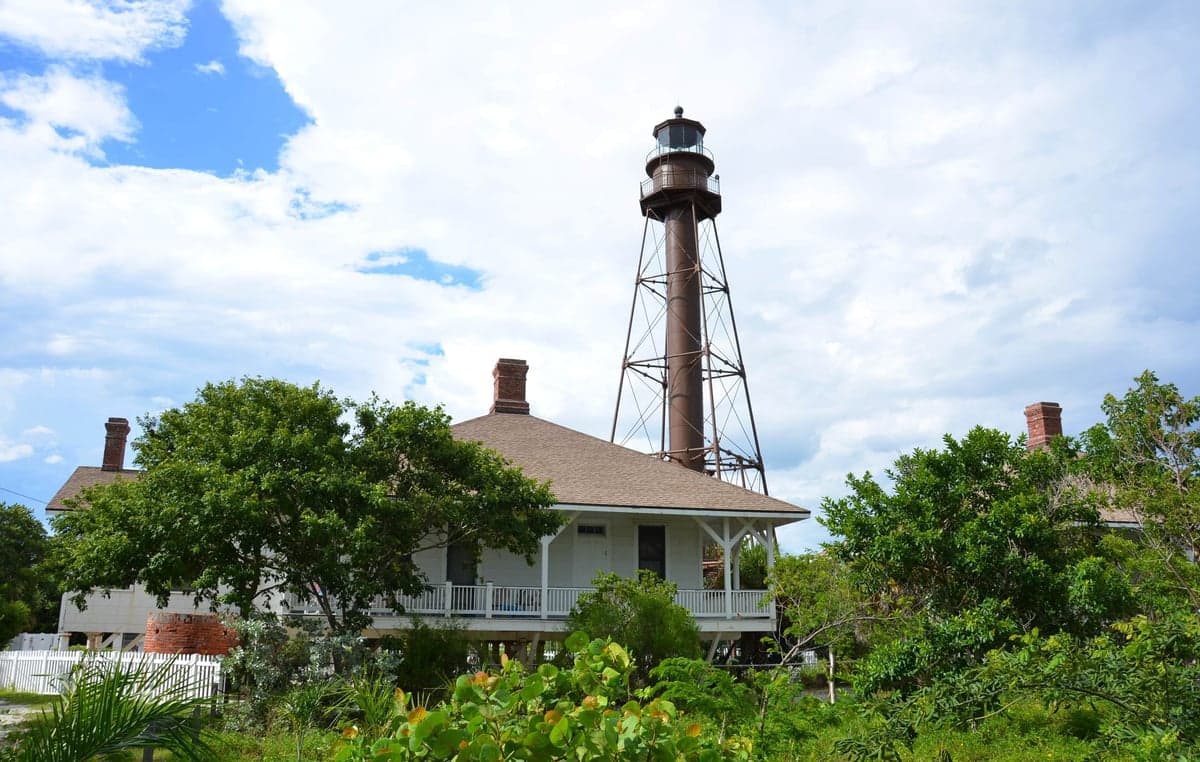
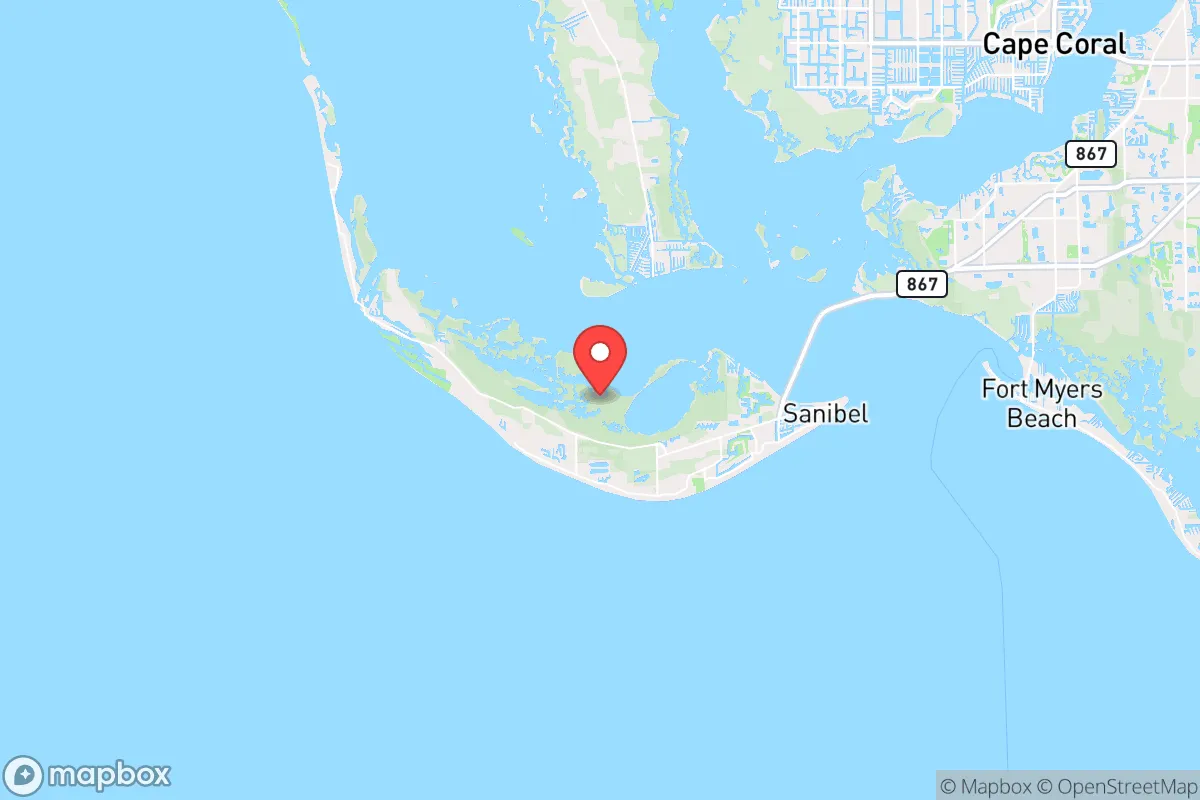
Photo: Wikipedia
Political ClimatePolitical Climate in Sanibel, FL
District shown is the primary district for this city’s centroid. Cities may span multiple districts.
* Lean and PVI are calculated from Sanibel, FL’s own 2020 presidential results (precinct returns summed to the city), with 2024 estimated from the surrounding county’s 2020–2024 shift, Cook-style. Sources: state election offices; VEST 2020 precinct results (CC BY 4.0).
Political rankings in Florida
- Most Conservative Cities in Florida
- Most Liberal Cities in Florida
- Best Liberal-Leaning Towns in the South
- Safest Liberal-Leaning Towns in the South
- Safest Conservative-Leaning Towns in the South
- Safest Liberal-Leaning Towns on the East Coast
- Safest Conservative-Leaning Towns on the East Coast
- Affordable Small Towns for Conservatives
- Most Conservative Counties in Florida
- Most Liberal Counties in Florida
Local Political AnalysisPolitical Analysis of Sanibel, FL
Sanibel leans solidly Republican, with a Cook PVI of R+14, meaning the island votes about 14 points more conservative than the national average. That’s a pretty deep red tilt, but it’s not the whole story—this is a place where the political reality is shaped more by local land-use fights and hurricane recovery than by national culture wars. The trajectory here is stable: the island’s older, wealthier, and largely white demographic keeps it reliably Republican, though you’ll find a noticeable pocket of moderate and even liberal-leaning retirees and seasonal residents who moved here for the wildlife refuges and quiet beaches, not the politics.
How it compares
Compared to Florida as a whole, Sanibel is significantly more Republican. The state overall is a purple-to-red swing state (roughly R+3 to R+5 in recent cycles), but Sanibel’s R+14 puts it in the same league as deeply conservative inland counties like DeSoto or Hardee. The contrast with nearby cities is stark: Fort Myers, just across the causeway, leans more moderate (roughly R+6 to R+8), while Cape Coral, a fast-growing suburban sprawl, is even redder than Sanibel, probably R+16 or higher. Head north to Sarasota, and you’ll find a more balanced mix, with a strong Democratic presence in the city proper. On Sanibel itself, the political vibe is less about partisan shouting and more about consensus on local issues—preserving the island’s natural character, managing sea-level rise, and rebuilding smart after Hurricane Ian. That shared focus sometimes blurs party lines in a way you don’t see in the rest of Florida.
What this means for residents
For conservative residents, Sanibel feels like a comfortable fit. Local government tends to favor limited regulation on property rights and lower taxes, and you’ll find plenty of neighbors who share your views on national issues. The downside? The island’s small population (around 6,000 year-round) means local elections are low-turnout affairs where a handful of votes can swing a council seat, so staying engaged matters more than party affiliation. For liberal residents, it’s not hostile—just a minority position. You’ll find like-minded folks at the Sanibel-Captiva Conservation Foundation or in the arts community, and the island’s strong environmental ethos aligns with progressive values on climate and conservation. You won’t face open hostility, but you’ll probably be outvoted on most partisan issues, from school board races to state legislative contests. The practical effect: both sides tend to focus on what they can agree on locally, like beach renourishment and wildlife protection, rather than re-litigating national debates.
Culturally, Sanibel stands apart from much of Florida in its deliberate small-town feel. There are no high-rises, no chain stores on the island itself, and a strict land-use code that limits development. That creates a political culture where environmental stewardship is a near-universal value, even among conservatives who might oppose similar regulations elsewhere. The policy distinction that matters most here is the island’s post-Ian rebuilding rules: strict elevation requirements and a ban on seawalls, which some see as necessary adaptation and others as government overreach. That tension—between preservation and property rights—is the real political fault line on Sanibel, more than any red-vs-blue divide. If you’re moving here, expect a place where your vote on national races is predictable, but your voice on local issues carries weight regardless of party.

State Political ClimatePolitical Climate in Florida
State Political AnalysisPolitical Environment in the State
Florida has transformed from a quintessential swing state into a solidly Republican-leaning powerhouse over the past decade, with the GOP now holding a supermajority in both legislative chambers and every statewide office. The shift is dramatic: in 2012, Barack Obama narrowly won the state; by 2024, Donald Trump carried it by over 13 points, a margin driven by massive in-migration from blue states and a decisive rightward shift among Hispanic voters, particularly in Miami-Dade and the I-4 corridor. For a relocator, this means a state government that is aggressively conservative on taxes, education, and cultural issues, while local politics in places like Tallahassee, Orlando, and Gainesville remain reliably blue.
Urban vs. rural divide
The political map of Florida is a study in stark contrasts. The major metropolitan areas—Miami-Dade, Broward, Palm Beach, Orange (Orlando), and Leon (Tallahassee)—are Democratic strongholds, with Broward and Orange routinely delivering 60-70% of the vote to Democrats. But the real story is the suburban and exurban explosion of red: counties like St. Johns (St. Augustine), Sumter (The Villages), and Collier (Naples) are among the most Republican in the nation, routinely voting 65-75% GOP. The I-4 corridor, stretching from Tampa through Lakeland to Daytona Beach, is the classic battleground, but even here, fast-growing suburbs like Wesley Chapel and Winter Garden have shifted right. The Panhandle, from Pensacola to Panama City, is deeply red, while the rural interior—places like Okeechobee, DeSoto, and Hardee counties—votes overwhelmingly Republican. The biggest shift has been in Miami-Dade, once a Democratic firewall, where Cuban-American and Venezuelan-American voters have pushed the county to a near-tossup, with Trump losing it by only 2 points in 2024 after Obama won it by 20 in 2012.
Policy environment
Florida’s policy environment is defined by low taxes, light regulation, and a hands-on approach to cultural issues. There is no state income tax, and the corporate tax rate is a flat 5.5%. Property taxes are moderate, with a $50,000 homestead exemption and a 10% cap on annual assessment increases for primary residences. The regulatory posture is business-friendly: Florida is a right-to-work state, and permitting for construction is generally faster than in the Northeast or California. On education, the state has a robust school choice program, including the Family Empowerment Scholarship, which allows state funds to follow students to private or charter schools. Healthcare policy is mixed: Florida did not expand Medicaid under the ACA, leaving roughly 800,000 residents in the coverage gap, but the state has a competitive insurance market. Election laws have tightened: mail-in ballot requests expire every two years, drop boxes are restricted to early voting sites and must be monitored, and voter ID is required. The state also has a “stand your ground” self-defense law and a permitless carry law for firearms (effective July 2023).
Recent policy direction
Over the past five years, Florida has enacted a series of high-profile laws that signal a clear direction. On gun rights, the 2023 permitless carry law (HB 543) allows any adult legally able to own a firearm to carry it concealed without a permit, though open carry remains illegal. On education and parental rights, the Parental Rights in Education Act (HB 1557, 2022), dubbed “Don’t Say Gay” by critics, prohibits classroom instruction on sexual orientation and gender identity through third grade, later expanded through 12th grade. The Stop WOKE Act (HB 7, 2022) restricts workplace and classroom discussions of race and privilege. On speech and privacy, the state has banned TikTok on government devices and passed a social media law (SB 7072, 2024) requiring age verification and parental consent for minors under 16. On medical and bodily autonomy, Florida banned abortion after six weeks (HB 5, 2023), with exceptions for rape, incest, and the life of the mother, and has restricted gender-affirming care for minors (SB 254, 2023). Property rights remain strong, with no statewide rent control and a “live local” law that preempts local short-term rental regulations. On voting, SB 90 (2021) added new ID requirements for mail ballots and limited drop box hours, while SB 7050 (2024) banned ranked-choice voting and restricted third-party voter registration groups.
Civil unrest & political movements
Florida has seen its share of political flashpoints. The 2020 Black Lives Matter protests in Miami, Orlando, and Jacksonville were large but largely peaceful, though looting occurred in downtown Miami. The state’s response was aggressive: Governor DeSantis declared a state of emergency and deployed the Florida Highway Patrol and National Guard, and the 2022 “anti-riot” law (HB 1) created new felonies for participating in violent assemblies and blocking roadways. Immigration politics are front and center: the state passed SB 1718 (2023), which requires businesses with 25+ employees to use E-Verify, bans local “sanctuary” policies, and makes transporting undocumented immigrants into the state a felony. This has led to a visible exodus of some immigrant workers from agriculture and construction in places like Immokalee and Homestead. There is no serious secession or nullification movement, but there is a vocal “Free Florida” wing within the GOP that pushes for further state sovereignty. Election integrity remains a live issue: the state created the Office of Election Crimes and Security in 2022, which has prosecuted dozens of cases of alleged voter fraud, mostly involving felons who voted before their rights were restored. A new resident would notice the omnipresence of political signage, especially in suburban and rural areas, and the frequency of political rallies and candidate visits in the I-4 corridor.
Projection
Over the next 5-10 years, Florida is likely to become even more Republican, driven by two powerful demographic forces: continued in-migration from high-tax, high-cost states (New York, California, Illinois) and the ongoing rightward shift of Hispanic voters, especially in Miami-Dade and Osceola counties. The state’s population is projected to grow by another 3-4 million by 2035, with most new residents settling in the exurban rings of Tampa, Orlando, and Jacksonville—areas that already lean red. The Democratic Party’s base will shrink to a few urban cores and college towns, making it increasingly difficult to win statewide elections. However, this trajectory could moderate if national political winds shift or if the state’s housing affordability crisis (driven by high insurance costs and rising property taxes) slows in-migration. A relocator moving in now should expect a decade of continued conservative governance on taxes, education, and cultural issues, with the possibility of further restrictions on abortion and transgender rights, but also a stable, business-friendly environment with no state income tax and a growing economy.
For a new resident, the bottom line is that Florida offers a predictable, low-tax, and culturally conservative state government, but with significant local variation. If you live in Miami Beach, Orlando, or Tallahassee, you’ll experience a blue city in a red state, with local policies on housing, policing, and public space that may differ sharply from state law. If you settle in Naples, The Villages, or St. Augustine, you’ll be in deep-red territory where state and local politics align. The practical takeaway: your daily life will be shaped more by your county commission and city council than by Tallahassee, but the state’s policy direction is clear and unlikely to reverse soon. For conservatives, it’s a welcoming environment; for liberals, it’s a place where your vote may not carry statewide weight, but your local community can still reflect your values.
* Values derived from national, state, county, city and local statistics and may differ in a specific area. Last updated: 2026-11-16T14:27:13.000Z
Narrative content on this page is AI-generated and may contain mistakes. Verify any details that matter before acting on them.
ReloMaps may earn a commission from affiliate links at no extra cost to you.

