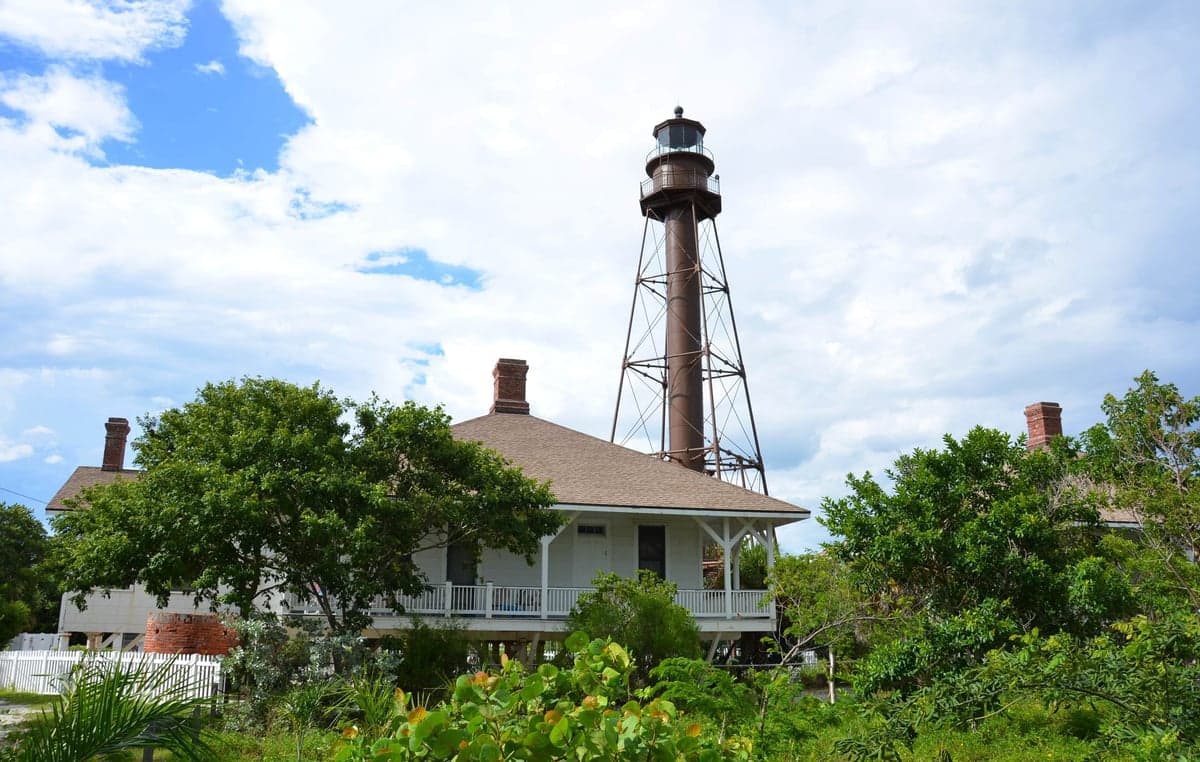
Photo: Wikipedia
Demographics of Sanibel, FL
Affluence Level in Sanibel, FL
A wealthy area with high-earning, well-educated households. Incomes, home values, and educational attainment meaningfully outpace national averages.
People of Sanibel, FL
The people of Sanibel, Florida, today form a small, affluent, and predominantly older community of 6,402 residents, characterized by a notably high education level—61.6% hold a college degree—and a strong seasonal population that swells with snowbirds and vacationers. The island’s permanent population is overwhelmingly White (95.1%), with very small minority shares: Hispanic (0.7%), Black (0.9%), East/Southeast Asian (0.7%), and Indian subcontinent (0.4%). Foreign-born residents make up just 1.6% of the population, reflecting a community shaped more by domestic in-migration than international immigration, and one that prizes environmental preservation, low-density living, and a quiet, nature-oriented lifestyle.
How the city was settled and grew
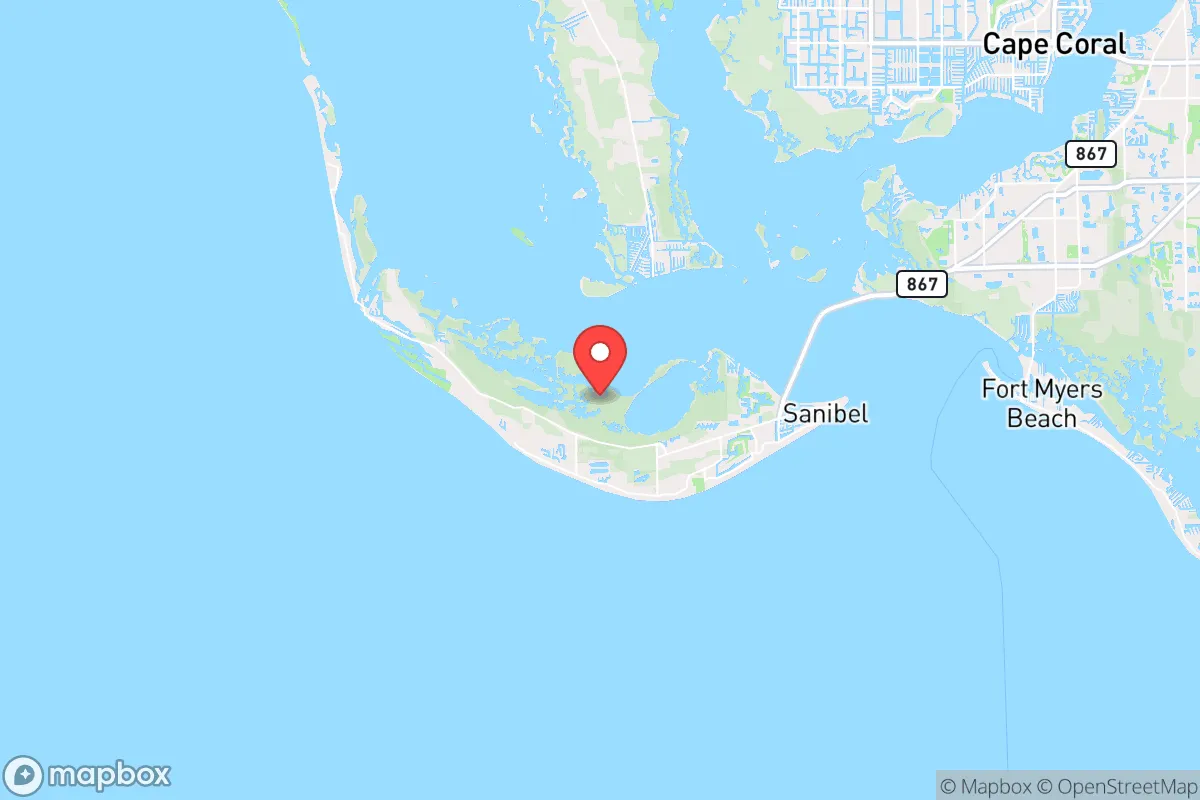
Sanibel’s human history is almost entirely a 20th-century story. Unlike many Florida towns, it has no colonial or 19th-century settlement roots; the island was largely uninhabited before the 1900s due to its isolation, mosquito swarms, and lack of fresh water. The first permanent residents arrived after the turn of the century, drawn by fishing, small-scale farming, and the promise of a remote coastal life. The Pointe Santo area, near the island’s eastern end, was among the earliest settled pockets, where a handful of families built simple fishing cottages. The real turning point came with the construction of the Sanibel Causeway in 1963, which connected the island to the mainland for the first time. Before that, access was only by boat, keeping the population tiny—fewer than 200 year-round residents as late as the 1950s. The causeway opened the floodgates for development, and the population grew rapidly through the 1970s and 1980s as retirees, second-home buyers, and nature enthusiasts discovered the island’s shell-strewn beaches and wildlife refuges. The Gulf Pines neighborhood, along the island’s central Gulf-side road, was one of the first subdivisions built after the causeway, attracting upper-middle-class families from the Midwest and Northeast.
Modern era (post-1965)
The post-1965 era on Sanibel is defined not by immigration-driven diversity but by a deliberate, conservation-minded growth model. After the causeway opened, the island’s population surged from under 1,000 in 1970 to over 5,000 by 1990, driven almost entirely by domestic migration from other parts of Florida and the U.S. Northeast and Midwest. In 1974, Sanibel residents voted to incorporate as a city specifically to control overdevelopment, enacting strict land-use codes that limited building heights, preserved natural habitats, and capped density. This regulatory framework attracted a specific type of resident: affluent, environmentally conscious, and often older. The Dunes neighborhood, a gated community on the island’s western end, became a magnet for wealthy retirees and seasonal residents from the Northeast. Meanwhile, the East End—the less developed, more rural side of the island—attracted a mix of full-time families and long-time locals who valued space and quiet. The racial and ethnic composition has remained remarkably stable: the White share has hovered above 94% for decades, with the small Black and Hispanic populations concentrated in service-industry roles, many commuting from mainland Fort Myers. The East/Southeast Asian and Indian subcontinent communities are tiny and dispersed, with no distinct ethnic enclave on the island.
The future
Sanibel’s population is likely to remain small, old, and overwhelmingly White for the foreseeable future. The city’s strict growth management, combined with very high property values and a limited housing stock, creates a high barrier to entry for younger families and more diverse populations. The median age is already well above the national average, and the share of residents under 18 is low. The West Gulf Drive corridor, which saw significant redevelopment after Hurricane Ian in 2022, is attracting some younger, wealthier buyers from coastal markets like Naples and Sarasota, but these newcomers are demographically similar to the existing population. The foreign-born share (1.6%) is unlikely to rise significantly, as the island lacks the rental housing, public transit, and service-sector job base that typically attracts immigrants. The most notable demographic shift may be a gradual increase in the share of residents who are fully retired, as more second-home owners convert their properties into permanent residences. For someone moving in now, Sanibel will remain a place where neighbors are likely to be older, White, college-educated, and deeply invested in environmental stewardship—a community that values stability and preservation over growth and change.
Sanibel is becoming an even more exclusive, age-restricted-in-practice community, where the high cost of entry and strict development rules ensure that the population profile changes very slowly. For a family or individual seeking a tight-knit, nature-focused, and politically conservative-leaning environment with minimal demographic turnover, the island offers exactly that—but at a premium price and with limited amenities for younger residents.

* Values derived from national, state, county, city and local statistics and may differ in a specific area. Last updated: 2026-11-16T14:27:13.000Z
Narrative content on this page is AI-generated and may contain mistakes. Verify any details that matter before acting on them.
ReloMaps may earn a commission from affiliate links at no extra cost to you.

