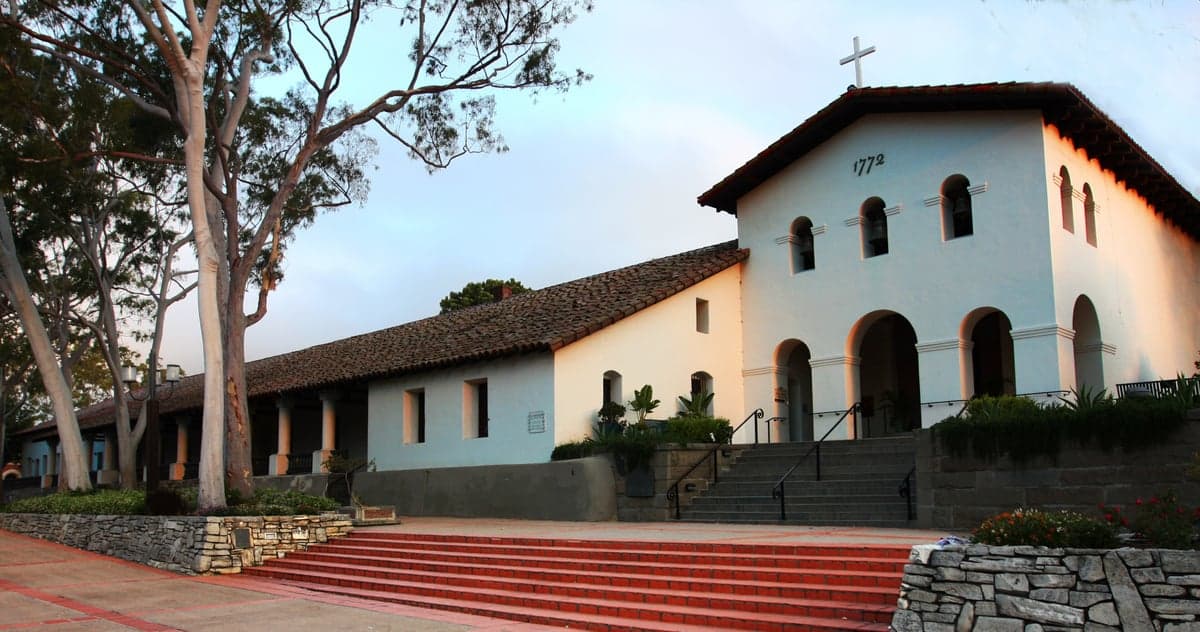
Photo: Wikipedia
Political ClimatePolitical Climate in San Luis Obispo, CA
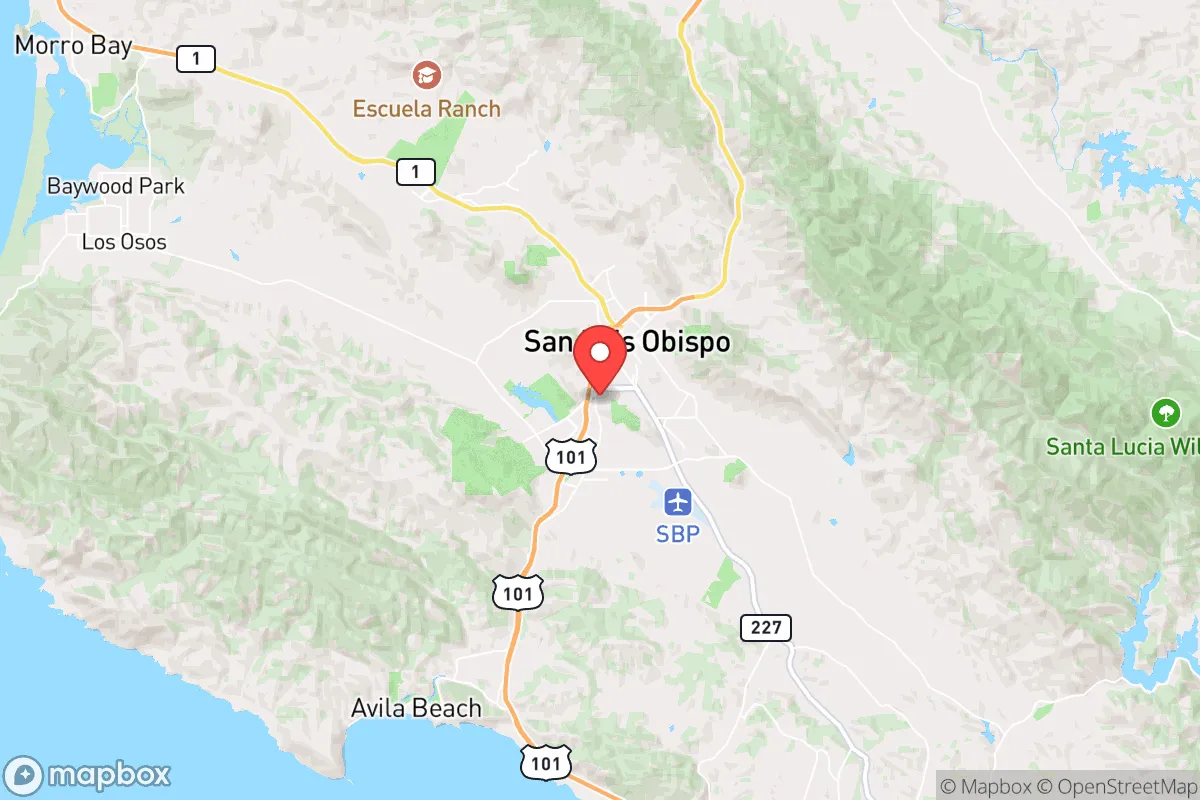
District shown is the primary district for this city’s centroid. Cities may span multiple districts.
Local Political AnalysisPolitical Analysis of San Luis Obispo, CA
San Luis Obispo leans solidly Democratic, with a Cook PVI of D+13 that makes it slightly more liberal than California as a whole (D+12). That one-point difference might seem small, but it reflects a real shift: SLO County used to be a swing area, and the city itself has been trending bluer over the past decade, driven by Cal Poly's growing student population and an influx of remote workers from the Bay Area and Los Angeles. The county as a whole still has conservative pockets—especially in the rural North County towns like Paso Robles, Atascadero, and Templeton—but the city of SLO is now the Democratic anchor, consistently delivering margins that push the county's overall results leftward.
How it compares
Compared to California's statewide PVI of D+12, San Luis Obispo's D+13 is a modest but meaningful difference. In practice, that means SLO votes like a slightly more progressive version of the state average—think similar to parts of Sonoma County or Santa Cruz, but without the same intensity. The surrounding county, San Luis Obispo County, has a PVI of R+8, which tells you how sharply the city contrasts with its own backyard. Drive 20 minutes north to Paso Robles, and you'll find a Republican-leaning community where Trump won by 12 points in 2020; head 15 minutes south to Arroyo Grande, and it's a toss-up. The city itself, however, is reliably Democratic: Biden won SLO by 35 points in 2020, and local races often see Democrats winning by similar margins. The key difference from the state is that SLO's liberalism is more moderate—less focused on housing density battles or radical policy shifts, and more centered on environmentalism, local agriculture, and quality-of-life issues.
What this means for residents
For liberal residents, SLO's lean means you'll find a city council that generally supports climate action, affordable housing initiatives (though progress is slow), and pedestrian-friendly urban design. The local Democratic Party is active, and progressive causes like renewable energy and public transit expansion get real traction. For conservative residents, the reality is more nuanced: you're not shut out of local politics, but you'll need to organize in the county-level races or in the North County to feel represented. The city's zoning and land-use debates often split along ideological lines, with conservatives pushing for property rights and less regulation, while liberals advocate for denser development and environmental protections. In practice, this means both sides can find common ground on issues like preserving open space or supporting local small businesses, but fights over housing policy and tax measures can get heated. The political culture is generally civil—SLO is not a place where you'll see shouting matches at city council meetings—but the underlying tensions are real, especially as the city's demographics shift.
One cultural distinction worth noting: SLO's politics are heavily shaped by Cal Poly, which brings a steady stream of young, left-leaning voters but also a significant number of conservative students from agricultural backgrounds. The university's influence means the city's political discourse often revolves around student housing, rental regulations, and the tension between "town and gown." Meanwhile, the surrounding county's agricultural economy—wine, cattle, and row crops—keeps conservative voices loud in the rural areas. If you're moving here, expect a place where you can have a beer with someone who voted differently than you, but where the city's trajectory is clearly moving left, and that trend shows no signs of reversing in the next decade.

State Political ClimatePolitical Climate in California
State Political AnalysisPolitical Environment in the State
California is a solidly Democratic state with a Cook PVI of D+12, meaning it leans about 12 points more Democratic than the national average in presidential elections. Over the past 20 years, the state has shifted from a competitive purple state—George W. Bush lost it by just 10 points in 2004—to a deep blue stronghold, driven largely by the massive population and political weight of the coastal metros. For a conservative-leaning relocator, the practical reality is that statewide elections are rarely competitive, but local politics vary dramatically depending on where you land, and the state’s policy direction is set by a dominant progressive coalition in Sacramento.
Urban vs. rural divide
The political map of California is a story of two worlds. The Democratic stronghold is anchored by the Los Angeles metro area (home to nearly 10 million people), the San Francisco Bay Area (including San Jose and Oakland), and the state capital of Sacramento. These three regions alone produce enough votes to decide statewide elections. In contrast, the Central Valley—cities like Bakersfield, Fresno, and Modesto—tends to lean conservative, though not as overwhelmingly as the rural north. The true Republican heartland is inland Southern California, particularly San Diego County’s eastern suburbs and the Inland Empire cities of Riverside and San Bernardino, where working-class and exurban voters have shifted right in recent cycles. The rural far north, including counties like Shasta (Redding) and Siskiyou, is deeply red, but its population is tiny. A few notable flips: Orange County, once a GOP bastion, has trended blue since 2016, while Ventura County has become reliably Democratic. For a conservative, the most politically comfortable areas are often the exurbs of Bakersfield, the eastern parts of San Diego County, and the Central Valley towns like Clovis and Visalia, where local elections are still competitive.
Policy environment
California’s policy environment is defined by high taxes, heavy regulation, and a strong social safety net. The state has a progressive income tax with rates up to 13.3% (the highest in the nation), a state sales tax that averages 8.85% with local add-ons, and property taxes capped at 1% of assessed value under Proposition 13, though reassessment on sale can be a shock. The regulatory posture is aggressive: California has its own environmental standards (e.g., CARB vehicle emissions rules), strict labor laws (overtime, paid family leave, and a $16 minimum wage as of 2024), and a robust public sector. Education policy is dominated by the California Teachers Association, with per-pupil spending around $15,000, but outcomes vary widely—wealthy coastal districts outperform, while inland districts struggle. Healthcare is heavily regulated, with a state-run exchange (Covered California) and a push toward single-payer, though it hasn’t passed. Election laws are among the most liberal: universal mail-in ballots, same-day registration, and no-excuse absentee voting. For a conservative, the policy environment feels like a constant headwind, but the trade-off is world-class infrastructure, public services, and a climate that attracts global talent.
Recent policy direction
Recent legislation shows a clear progressive trajectory. On gun rights, California has some of the strictest laws in the nation: a 10-day waiting period, an assault weapons ban, a “may issue” concealed carry regime (tightened further by SB 2 in 2023, which restricted carry in most public places), and a red flag law. Parental and education rights have been a flashpoint: AB 1955 (2024) prohibits school districts from requiring parental notification when a child changes gender identity, and the state has mandated ethnic studies and LGBTQ+ inclusive curricula. Speech is broadly protected under the state constitution, but AB 587 (2023) requires social media platforms to report hate speech moderation, and there’s a growing push to regulate disinformation. Privacy and surveillance: the California Consumer Privacy Act (CCPA) and its expansion (CPRA) give residents strong data rights, but law enforcement use of facial recognition is restricted. Medical and bodily autonomy is fully protected, with a constitutional amendment (Prop 1, 2022) enshrining abortion and contraceptive rights. Property rights are constrained by rent control (AB 1482 caps annual increases at 5% plus inflation) and strict zoning laws, though recent reforms (SB 9, 2021) allow duplexes on single-family lots. Taxation is trending upward: Prop 30 (2022) would have raised taxes on high earners for EV subsidies, but it failed; a wealth tax is being debated. Voting access has expanded: Prop 17 (2020) restored voting rights to parolees, and automatic voter registration is in place. For a conservative, the direction is clear: more regulation, more mandates, and less local control, especially on education and housing.
Civil unrest & political movements
California has a long history of protest and activism. The 2020 George Floyd protests in Los Angeles, Oakland, and San Francisco were among the largest and most destructive in the nation, with looting and arson in downtown LA and the Oakland Auto Row. Homelessness encampments, particularly in San Francisco’s Tenderloin and Los Angeles’ Skid Row, have become visible political flashpoints, with ongoing battles over sweeps and housing-first policies. Immigration politics are intense: California is a sanctuary state (SB 54, 2017), limiting local law enforcement cooperation with ICE, and the border crisis has fueled activism in both directions—pro-immigrant rallies in San Diego and anti-immigrant sentiment in inland areas like Temecula. Secession rhetoric is mostly a fringe movement (CalExit), but it resurfaces periodically. Election integrity controversies have been minimal compared to swing states, but the 2021 recall of Governor Gavin Newsom failed by a wide margin, showing the limits of GOP organizing. For a new resident, the most visible political movements are likely to be homelessness advocacy, environmental protests (e.g., against oil drilling in Kern County), and school board battles over curriculum and parental rights, especially in suburbs like Temecula and Orange County.
Projection
Over the next 5-10 years, California’s political trajectory is likely to remain solidly Democratic, but with growing internal tensions. Demographic shifts are key: the state’s population has declined slightly since 2020 (down about 500,000), driven by out-migration of lower-income and middle-class families to Texas and Arizona, while high-income and foreign-born residents continue to arrive. This is making the electorate more affluent and more progressive, but also more geographically concentrated in coastal cities. The Central Valley and Inland Empire are growing faster, but not fast enough to flip the state. The biggest wildcard is housing: if the state’s recent upzoning reforms (SB 9, SB 10) actually produce more supply, it could slow out-migration and stabilize the tax base. If not, the affordability crisis will deepen, potentially fueling a populist backlash—but that backlash is more likely to take the form of moderate Democrats (like the “Blue Dog” coalition) than a GOP resurgence. For a conservative moving in now, expect the state to remain a policy laboratory for progressive ideas, with continued expansion of healthcare, education mandates, and climate regulation. The practical effect is that you’ll have less local control over schools and housing, but you’ll also benefit from strong public services and a dynamic economy.
For a new resident, the bottom line is that California offers a high-quality, high-cost lifestyle with a political environment that is unapologetically progressive. If you’re conservative, you can find like-minded communities in the Central Valley, the Inland Empire, or the eastern exurbs of San Diego, but you’ll be voting in a state where your presidential and gubernatorial votes are effectively symbolic. The trade-off is access to world-class natural beauty, a diverse economy, and a culture that prizes innovation and tolerance. Just be prepared for high taxes, strict regulations, and a political climate that will feel like a constant cultural headwind if you lean right. It’s not a place for someone who wants to “win” politically, but it can be a great place to live if you’re willing to adapt.
* Values derived from national, state, county, city and local statistics and may differ in a specific area. Last updated: 2026-08-03T15:48:31.000Z
Narrative content on this page is AI-generated and may contain mistakes. Verify any details that matter before acting on them.
ReloMaps may earn a commission from affiliate links at no extra cost to you.

