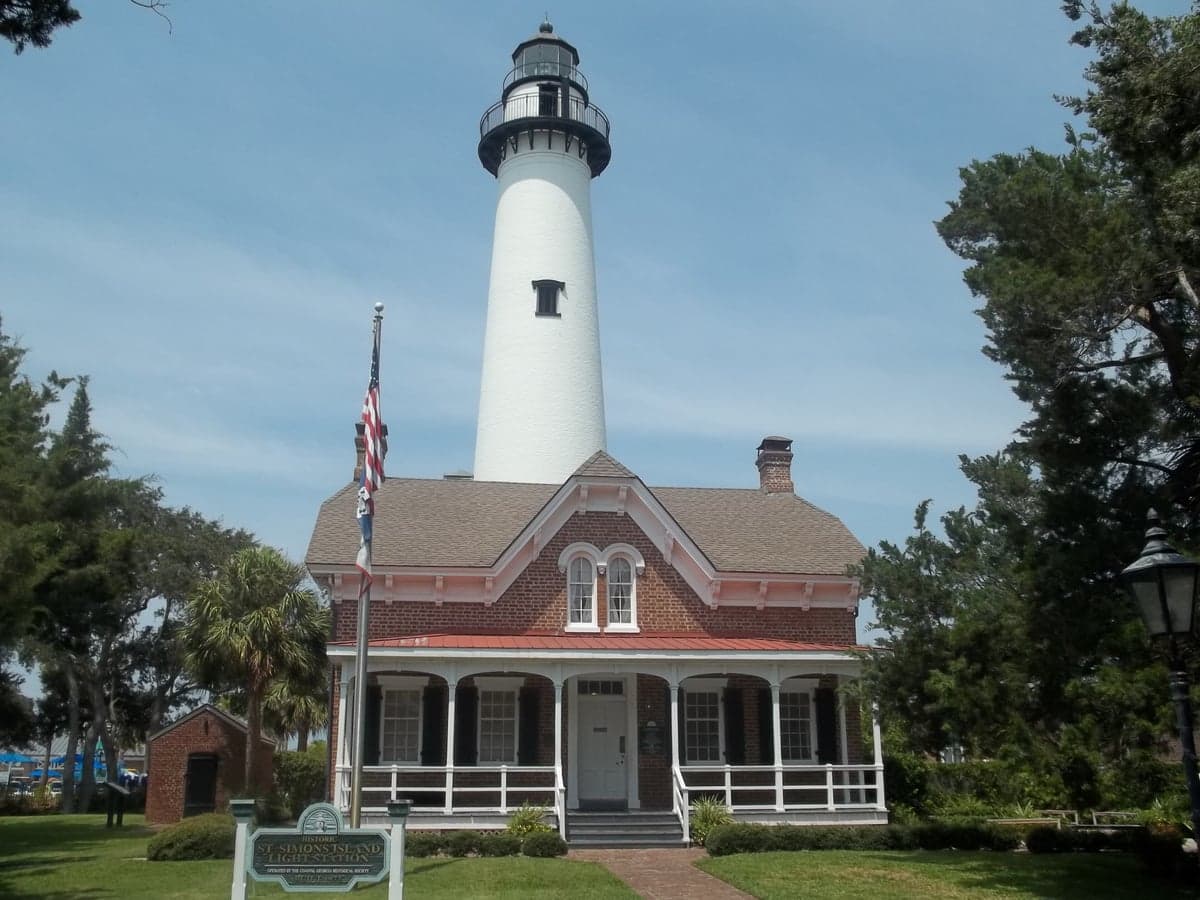
Photo: Wikipedia
Political ClimatePolitical Climate in Saint Simons Island, GA
District shown is the primary district for this city’s centroid. Cities may span multiple districts.
Local Political AnalysisPolitical Analysis of Saint Simons Island, GA
Saint Simons Island has long been a reliably Republican stronghold, and that hasn't changed much. The area carries a Cook Partisan Voting Index of R+8, meaning it votes about eight points more Republican than the national average. In practice, that translates to GOP candidates routinely winning by double digits here, even in years when statewide races in Georgia are tight. The island's political DNA is rooted in its demographics—older, wealthier, and more retirement-oriented than the mainland—which tends to favor conservative candidates. But don't mistake that for a monolith; the island has a noticeable, if quiet, liberal minority, especially among younger families and newcomers from more progressive parts of the country.
How it compares
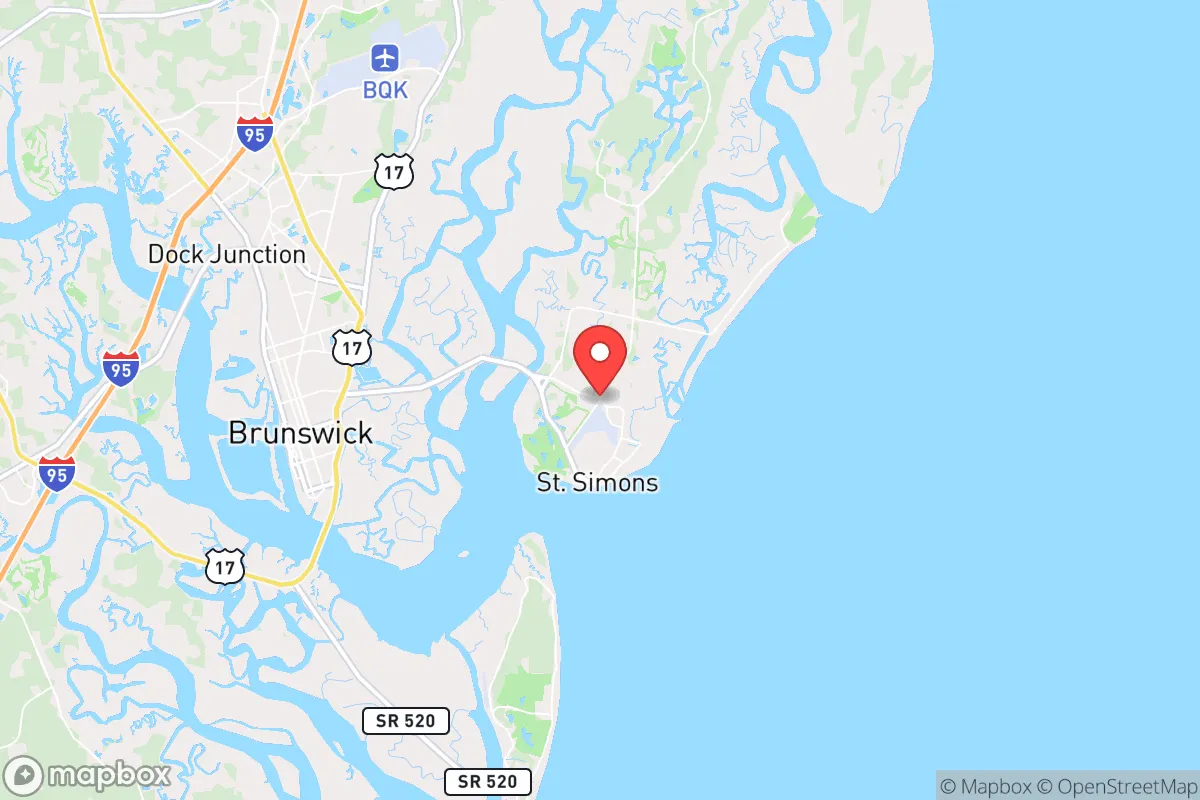
Compared to the rest of Georgia, Saint Simons Island is noticeably more conservative. The state as a whole has shifted leftward over the past decade, driven by explosive growth in metro Atlanta and its suburbs, but the Golden Isles have moved in the opposite direction. Nearby Brunswick, just across the causeway, is more Democratic-leaning, with a higher proportion of working-class and minority voters. Farther inland, towns like Jesup and Waycross are even more conservative than the island, but they lack the coastal affluence that shapes Saint Simons' particular brand of Republicanism—fiscally cautious, environmentally aware (at least on paper), and socially moderate on some issues like LGBTQ rights. The island's politics feel more like a wealthy Florida beach town than a typical Georgia county seat.
What this means for residents
For conservative residents, life is comfortable. Local elections are rarely competitive, and Republican candidates can expect to win without much effort. The local Republican Party is well-organized, and conservative viewpoints dominate civic conversations, from the Rotary Club to the homeowners' associations. For liberal residents, the reality is more nuanced. You won't face hostility, but you'll often feel like a minority voice. The local Democratic Party is small but active, and progressive candidates occasionally run credible races for county commission or school board, though they rarely win. The real tension isn't between left and right—it's between growth and preservation. The island's political fights are more likely to be about zoning, density, and environmental protection than about national culture wars. That said, national issues do seep in: gun rights, abortion, and election integrity are live topics, but they're debated with a coastal politeness that can feel surreal to someone from a more polarized area.
Culturally, Saint Simons Island stands apart from inland Georgia in a few key ways. The island's economy depends heavily on tourism and second-home owners, which creates a built-in constituency for maintaining the area's natural beauty and low-key atmosphere. You'll find more Teslas and Priuses per capita here than in most of rural Georgia, and the local farmers' market is a serious institution. But the island also has a strong military presence—the nearby Kings Bay Naval Submarine Base is a major employer—which reinforces conservative values. The result is a place where you can have a neighbor who flies a Trump flag and another who volunteers for the local Democratic party, and both will wave to you at the grocery store. The trajectory is toward more of the same: the island's limited developable land and high property values will keep it from changing too fast, so the political balance is likely to hold steady for the foreseeable future.

State Political ClimatePolitical Climate in Georgia
State Political AnalysisPolitical Environment in the State
Georgia has transformed from a reliably Republican stronghold into the nation’s most competitive swing state over the past two decades, with a partisan lean that now sits almost exactly at the national average. The state’s 16 electoral votes flipped to Joe Biden in 2020 by a razor-thin 0.23% margin, and both Senate seats went Democratic in the 2021 runoffs, yet Republicans still control the Governor’s mansion and both chambers of the state legislature. This split reality means Georgia is a true battleground where no single coalition dominates, and the trajectory is toward continued tight competition driven by explosive growth in the Atlanta metro area.
Urban vs. rural divide
The political map of Georgia is a textbook case of the urban-rural chasm. Metro Atlanta, home to roughly 60% of the state’s population, is the engine of Democratic growth. The core counties of Fulton (Atlanta), DeKalb, and Clayton are deep blue, delivering margins of 70-85% for Democrats. The key shift has been in the northern Atlanta suburbs: Cobb, Gwinnett, and Henry counties, once reliably Republican, have flipped blue since 2016 due to an influx of diverse, college-educated professionals. For example, Gwinnett County voted for Donald Trump by 12 points in 2012 but backed Biden by 18 points in 2020 — a 30-point swing in eight years. Meanwhile, rural and exurban Georgia remains deeply Republican. Counties like Murray, Gilmer, and Union in the north Georgia mountains routinely vote 80%+ Republican. The state’s second-largest metro, Augusta (Richmond County), leans Democratic but is surrounded by deep-red rural counties. Savannah (Chatham County) is a Democratic island in a sea of Republican southeast Georgia, while Columbus (Muscogee County) and Macon (Bibb County) are purple-to-blue urban centers. The result is a state where statewide races are decided by the Atlanta suburbs, while rural areas have almost no say in the outcome.
Policy environment
Georgia’s policy environment reflects its divided government. The state has a flat income tax rate of 5.49%, which is being phased down to 4.99% by 2029 under a 2022 law. Sales tax is 4% state-level, with local options pushing it to 7-8% in most areas. Property taxes are relatively low, with a median effective rate around 0.87% of home value. The state is a “right-to-work” state with no state-level minimum wage above the federal $7.25. On education, Georgia has a robust school choice landscape: the state offers a $6,500 tax-credit scholarship for private school tuition, and in 2024 expanded the Georgia Promise Scholarship Act, which provides $6,500 vouchers for students in low-performing schools. The state also has a constitutional amendment banning same-sex marriage (though unenforceable after Obergefell) and a 2019 “heartbeat” abortion law (HB 481) that bans abortion after about six weeks, which was blocked by courts but reinstated after the Dobbs decision in 2022. Georgia does not have a “red flag” gun law, allows permitless carry (SB 319, passed in 2022), and has a “stand your ground” self-defense statute. Election laws were tightened via SB 202 in 2021, which added a photo ID requirement for absentee ballots, limited drop boxes, and reduced the runoff period from nine weeks to four.
Recent policy direction
The last five years have seen Georgia move in a distinctly conservative direction on several fronts, even as the state’s electorate has become more competitive. On gun rights, the 2022 permitless carry law (SB 319) allows any legal gun owner to carry a concealed firearm without a license, making Georgia one of 25 states with such a law. On education, the 2024 Georgia Promise Scholarship Act created a $6,500 voucher for students in the bottom 25% of schools, a major win for school choice advocates. On medical and bodily autonomy, the 2019 “heartbeat” abortion law (HB 481) now bans abortion at roughly six weeks, with no exceptions for rape or incest, only for medical emergencies. On property rights, Georgia is a “taxpayer bill of rights” state in practice, with a 2023 law capping annual property tax assessment increases at 3% for homesteaded properties. On voting, SB 202 (2021) added strict ID requirements for absentee ballots, banned mobile voting centers, and made it a crime to hand out food or water to voters waiting in line. The state also passed a 2023 law (SB 222) banning gender-affirming care for minors, and a 2022 law (HB 1084) restricting how race and gender can be taught in public schools, often called the “divisive concepts” law. On privacy and surveillance, Georgia has no comprehensive data privacy law, though a 2023 bill (HB 133) created a limited consumer data privacy framework that takes effect in 2025.
Civil unrest & political movements
Georgia has been a flashpoint for political activism on both sides. The 2020 election cycle saw massive protests in Atlanta following the murder of George Floyd, with the city becoming a center of the Black Lives Matter movement. The 2021 Senate runoffs drew unprecedented national attention and spending, with both parties organizing heavily in the Atlanta suburbs. The 2021 passage of SB 202 sparked intense backlash, with Major League Baseball moving the 2021 All-Star Game from Atlanta in protest. On the right, the “Stop the Steal” movement was strong in rural Georgia, with Trump allies challenging the 2020 results and a controversial hand recount of all 5 million ballots. In 2024, the state saw a high-profile election interference case against Trump and 18 co-defendants in Fulton County, which has become a rallying point for conservative activists. Immigration politics are less visible than in border states, but the 2024 passage of SB 452, which requires local law enforcement to cooperate with ICE, has stirred protests in Atlanta’s immigrant-heavy communities like Clarkston and Chamblee. There is no sanctuary city policy in Georgia; state law prohibits any local “sanctuary” ordinances. Secession or nullification rhetoric is minimal, though some rural county commissions have passed symbolic “Second Amendment sanctuary” resolutions.
Projection
Over the next 5-10 years, Georgia is likely to remain a toss-up state, but the demographic trends favor Democrats in the long run. The Atlanta metro area is growing by about 100,000 people per year, and the new arrivals are disproportionately young, diverse, and college-educated — all groups that lean Democratic. By 2030, the Atlanta metro is projected to add another 1 million residents, mostly in the suburban counties that have already flipped blue. However, rural Georgia is also growing, albeit slowly, and the state’s Republican-leaning exurbs (like Forsyth and Cherokee counties) are among the fastest-growing in the nation. The wild card is the state’s black population, which makes up about 33% of the electorate and votes overwhelmingly Democratic, but has lower turnout rates than white voters. If Democratic turnout operations continue to improve, the state could become reliably blue by 2032. Conversely, if Republicans can hold the line in the outer suburbs and continue to make inroads with Hispanic and Asian voters (who are growing fast in Gwinnett and Cobb), the state could remain competitive for another decade. For a new resident, expect continued political volatility, with close statewide elections and a legislature that remains Republican-controlled but with shrinking majorities.
For a relocator, the bottom line is that Georgia offers a conservative policy environment — low taxes, strong gun rights, school choice, and restrictions on abortion and transgender care — but with a political climate that is increasingly contested. A conservative family moving to a place like Woodstock or Canton in Cherokee County will find a deeply red community with excellent schools and low crime. A liberal family moving to Decatur or the Old Fourth Ward in Atlanta will find a progressive urban enclave with strong public transit and cultural amenities. The key is choosing the right county: the political divide in Georgia is not just between cities and rural areas, but between individual suburbs that can swing 40 points in partisan lean within a 15-mile drive. Know your county, and you’ll know your political reality.
* Values derived from national, state, county, city and local statistics and may differ in a specific area. Last updated: 2026-09-17T20:21:40.000Z
Narrative content on this page is AI-generated and may contain mistakes. Verify any details that matter before acting on them.
ReloMaps may earn a commission from affiliate links at no extra cost to you.

