 Popular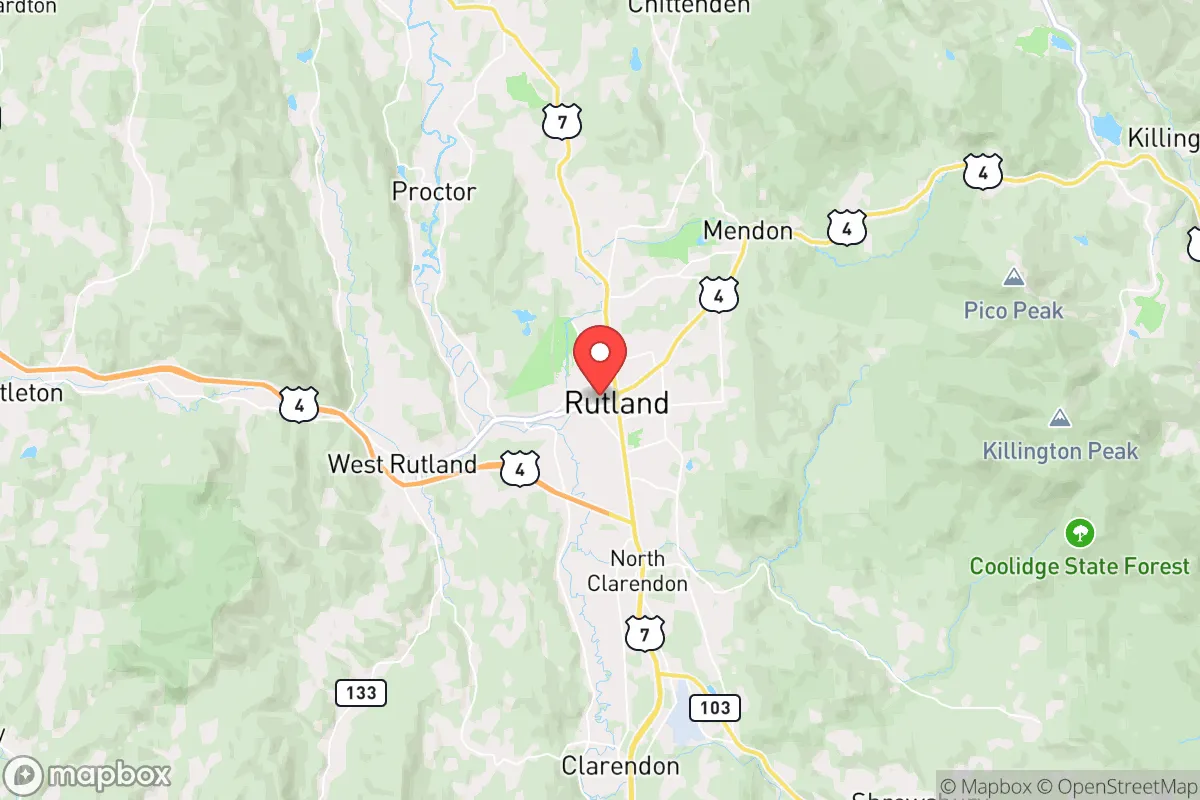
Photo by Nikunj Singh on Unsplash
Political ClimatePolitical Climate in Rutland, VT
District shown is the primary district for this city’s centroid. Cities may span multiple districts.
Inherited from parent state — no local data available.
Local Political AnalysisPolitical Analysis of Rutland, VT
Rutland, Vermont, leans solidly Democratic, with a Cook PVI of D+17 that mirrors the state’s overall D+17 rating. This isn’t a recent shift—it’s been a reliably blue stronghold for decades, though the flavor of that blue has changed. Back in the 1990s, Rutland was more of a working-class Democratic town, with a strong union presence and a pragmatic, “live and let live” attitude. Today, the politics are more uniformly progressive, especially among younger residents and newcomers drawn to the area’s affordability and outdoor access. The trajectory is steady: expect Rutland to stay D+17 or even nudge a point or two bluer as the state’s rural-urban divide deepens.
How it compares
Compared to the rest of Vermont, Rutland is politically average—the state’s D+17 PVI is identical, so you’re not getting a more or less liberal experience here than in Burlington or Montpelier. But the contrast with nearby towns is stark. Drive 20 minutes east to Killington, and you’ll find a more libertarian-leaning, resort-driven electorate that often votes Republican in local races. Head 15 minutes west to Fair Haven, and you’re in a town that went for Trump in 2020 by a narrow margin, reflecting its more rural, agricultural base. Rutland itself is the urban core of the region, so it draws the bulk of the state’s progressive energy—think local food co-ops, climate action groups, and a vocal LGBTQ+ community—while the surrounding towns remain more mixed. The state’s overall D+17 masks this patchwork: Rutland County as a whole is about D+10, meaning the city pulls the county left, but the outlying areas are closer to even.
What this means for residents
For liberal residents, Rutland is comfortable. You’ll find local government aligned with your values on issues like renewable energy, affordable housing initiatives, and public transit expansion. The city council and school board are reliably progressive, so policy fights are usually about how fast to move, not which direction. For conservative residents, it’s more of a mixed bag. You won’t feel isolated—there’s a strong, if quieter, Republican presence in the county, and the state’s gun laws are relatively moderate compared to New York or Massachusetts. But you’ll likely be outvoted on most local issues, from zoning to tax increases. The practical effect is that conservatives here often focus on state-level races (where Vermont’s governor has been a Republican since 2017) rather than city politics. Both sides can agree on one thing: the cost of living is lower than in Chittenden County, which keeps the political temperature cooler than in Burlington’s hyper-competitive scene.
Culturally, Rutland stands apart from the rest of Vermont in a few ways. It’s less crunchy than the Mad River Valley and less academic than Montpelier. The city has a grittier, post-industrial feel—think old brick factories turned into artist lofts, not organic farms. This means policy debates here are more about economic revitalization than environmental purity. You’ll hear more talk about job training and downtown redevelopment than about banning leaf blowers. The state’s universal healthcare and paid family leave laws apply equally, but Rutland’s implementation is more pragmatic: the local hospital is a major employer, and the city has embraced workforce housing projects that some wealthier towns have resisted. For a newcomer, the political climate is welcoming if you’re left-of-center, but perfectly livable if you’re not—just expect to be the minority voice at town meeting.

State Political ClimatePolitical Climate in Vermont
State Political AnalysisPolitical Environment in the State
Vermont is one of the most reliably Democratic states in the country, with a Cook PVI of D+17, meaning it votes about 17 points more Democratic than the national average in presidential elections. That said, the state’s political reality is far more nuanced than a simple blue label suggests. Over the past 20 years, the Democratic coalition has solidified in the urbanized Chittenden County corridor, while the rest of the state has drifted rightward, creating a sharp urban-rural split that defines nearly every local and state-level race. For a conservative-leaning relocator, the takeaway is clear: you’ll find plenty of like-minded neighbors in the hill towns and northern counties, but state policy will consistently lean left.
Urban vs. rural divide
The political map of Vermont is essentially a tale of two landscapes. The Democratic stronghold is centered on Burlington and the surrounding Chittenden County suburbs like South Burlington, Essex Junction, and Williston. This metro area, home to roughly a quarter of the state’s population, reliably delivers 70-80% Democratic margins in statewide races. The University of Vermont and the tech/healthcare sectors in Burlington drive this lean. In contrast, the rural counties—Orleans, Essex, Franklin, and Rutland—have been trending Republican for a decade. In 2024, Donald Trump won Orleans County by 20 points, a flip from 2016 when it was a toss-up. The town of St. Johnsbury in Caledonia County is a microcosm: a working-class hub that voted for Obama twice but has since swung hard to the right. The divide isn’t just about party—it’s about lifestyle. Rural Vermonters resent the state’s gun laws, land-use regulations, and education mandates, while urbanites prioritize climate action and social equity. This tension plays out in the state legislature, where the Democratic supermajority often overrides rural opposition.
Policy environment
Vermont’s policy environment is among the most progressive in the nation, with a tax structure that reflects it. The state has a progressive income tax with a top rate of 8.75% on income over $213,150, and property taxes are high—averaging about 1.8% of home value—to fund the state’s school system. There is no sales tax on most goods, but a 6% sales tax applies to prepared food, lodging, and some services. The regulatory posture is heavy: Vermont has some of the strictest land-use laws in the country under Act 250, which can make building or expanding a home a multi-year process. Education policy is centralized; the state’s universal pre-K and school choice system (for towns without a public high school) is popular, but the per-pupil spending is among the highest in the nation. Healthcare is dominated by the state-run Vermont Health Connect exchange, and the state is actively pursuing a single-payer system, though it hasn’t fully implemented one. Election laws are among the most accessible: automatic voter registration, same-day registration, and universal mail-in ballots for all elections. For a conservative, the policy environment means higher taxes and more bureaucracy, but also a well-funded safety net and high-quality public services.
Recent policy direction
The last five years have seen Vermont accelerate leftward on several fronts. In 2023, the legislature passed Act 47, which created a state-run gun storage program and expanded the state’s “red flag” law to allow family members to petition for temporary firearm removal. In 2024, Act 181 overhauled the state’s land-use regulations, further restricting development in rural areas to meet climate goals. On education, Act 1 (2023) codified a statewide “affirming” policy for transgender students, including parental notification requirements that sparked backlash. On the libertarian side, Vermont has no “right-to-work” law, and union membership remains high. Property rights are constrained by Act 250 and local zoning; you cannot simply build a cabin on your land without extensive permitting. Medical and bodily autonomy is fully protected: Vermont was the first state to legalize same-sex marriage via legislation (2009) and has codified abortion rights into law. Privacy and surveillance are relatively strong—the state has a data privacy law (Act 171 of 2020) that limits how companies can collect and sell personal data. Voting access is the most liberal in the nation: universal mail-in ballots, no voter ID requirement, and same-day registration. For a conservative, the recent direction means tighter gun laws, more state control over land use, and a school system that prioritizes progressive social values.
Civil unrest & political movements
Vermont is not known for large-scale civil unrest, but there are organized movements on both sides. The left is dominated by the Vermont Progressive Party, which holds seats in the legislature and pushes for single-payer healthcare and a Green New Deal. The right is organized around the Vermont Republican Party and the Rutland County Tea Party, which focus on gun rights, school choice, and property tax reform. In 2020, Black Lives Matter protests in Burlington were large but peaceful, leading to the city’s defunding of its police department by 30% (later partially restored). Immigration politics are relatively quiet—Vermont has no sanctuary city policies, but Burlington’s police department does not inquire about immigration status. Election integrity controversies are minimal; Vermont’s mail-in voting system is widely trusted, though some rural Republicans have raised concerns about ballot harvesting. A notable flashpoint is the “Secession of the Northeast Kingdom” movement, a fringe but vocal group in Orleans and Essex counties that advocates for rural counties to break away and form a more conservative state. It’s not serious, but it reflects the deep frustration rural Vermonters feel with Montpelier’s policies.
Projection
Over the next 5-10 years, Vermont’s political trajectory is likely to continue its current path: the Democratic supermajority in the legislature will hold, driven by in-migration of remote workers and retirees from blue states like New York and Massachusetts. Chittenden County will grow, while rural counties will continue to lose population and political influence. The state will likely pass a single-payer healthcare system, further tighten gun laws, and increase property taxes to fund education. For a conservative moving in now, expect to be a permanent minority in state politics, but with a strong local community in your town. The rural-urban divide will only deepen, and you’ll likely see more towns considering local opt-outs from state mandates, like the “Second Amendment Sanctuary” resolutions passed in over 50 towns since 2020. The biggest wildcard is the state’s aging population—Vermont has the second-oldest median age in the country, and as older, more conservative residents pass away, the electorate will shift further left.
For a new resident, the bottom line is this: Vermont offers a high quality of life with excellent schools, low crime, and stunning natural beauty, but you’ll pay for it with high taxes and a state government that actively pursues progressive policies. If you’re conservative, you’ll find your people in the rural towns and northern counties, but you’ll need to accept that state law will often run counter to your values. If you’re liberal, you’ll feel right at home in Burlington or Montpelier, but you’ll encounter a stubborn rural resistance that can make statewide change slow. Either way, Vermont is a place where your vote matters locally, even if the state’s overall direction is set by the urban corridor.
* Values derived from national, state, county, city and local statistics and may differ in a specific area. Last updated: 2026-06-14T04:33:35.000Z
Narrative content on this page is AI-generated and may contain mistakes. Verify any details that matter before acting on them.
ReloMaps may earn a commission from affiliate links at no extra cost to you.

