 Popular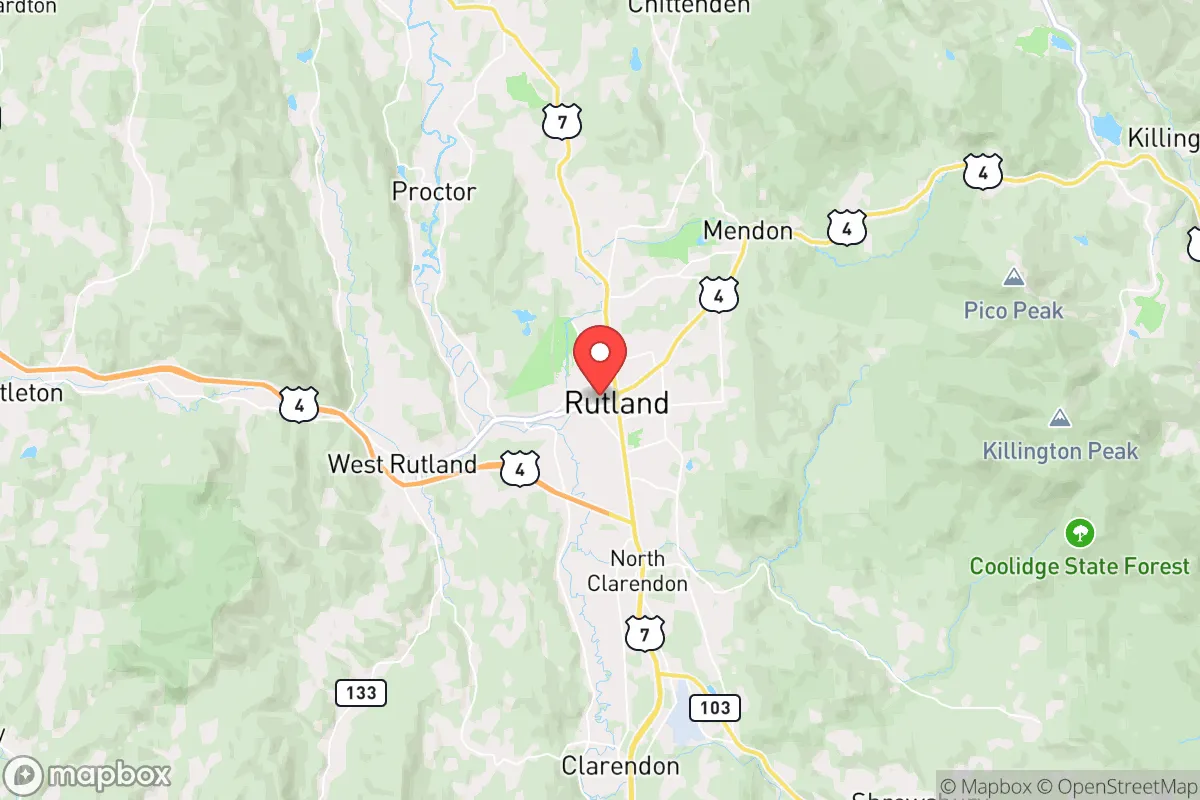
Photo by Nikunj Singh on Unsplash
Personal Sovereignty in Rutland, VT
Moderate friction. Expect trade-offs in some aspect of personal liberty and independence.
What does Personal Sovereignty tell us?
Personal Sovereignty measures your capacity for self-reliance and independence with minimal government friction. Higher scores mean fewer barriers between you and the way you want to live... but it assumes you have the space you need and good neighbors.
What does this tell us?
Personal Sovereignty measures your capacity for self-reliance and independence with minimal government friction. Higher scores mean fewer barriers between you and the way you want to live... but it assumes you have the space you need and good neighbors.
State Policy
Energy independence: Importer (15% of energy produced in-state)
Personal Liberty
Homesteading

Personal Liberty Analysis
Rutland, Vermont, offers a notably mixed environment for personal sovereignty, where a strong local tradition of self-reliance and a relatively low cost of living intersect with a state government that imposes some of the nation's highest tax burdens and most comprehensive regulatory frameworks. For the individual or family prioritizing autonomy, the city itself provides a tangible sense of independence in daily life, but this is consistently balanced against state-level policies that can feel constraining. The key to understanding personal sovereignty here is recognizing that Rutland operates as a pragmatic, blue-collar counterpoint to Vermont's more progressive state-level leanings, creating a unique landscape where local grit and state oversight coexist.
Tax burden and regulatory posture in Rutland and Vermont
Vermont's tax burden is among the highest in the nation, and Rutland residents feel this acutely. The state levies a progressive income tax with rates ranging from 3.35% to 8.75% on higher earners, and property taxes are notably high, driven largely by school funding. The statewide property tax rate for the 2025-2026 fiscal year is approximately $1.59 per $100 of assessed value for residential property, though local municipal taxes in Rutland City add roughly another $0.50 to $0.70, bringing the combined effective rate to over $2.00 per $100 in many cases. This is a significant cost for homeowners. Sales tax is 6%, with no local option, and meals and rooms taxes add 9% and 10% respectively. The regulatory posture is similarly heavy: Vermont has stringent land use laws under Act 250, which applies to any development over 10 acres or involving substantial construction, requiring a state permit that can be time-consuming and costly. For small businesses, the state's regulatory environment is often described as burdensome, with complex permitting for everything from home-based enterprises to construction. However, Rutland City itself has a more business-friendly local government than many Vermont municipalities, actively courting development and streamlining local permitting where possible. The net effect is a state-level tax and regulatory climate that feels restrictive, but a local environment that offers some relief through pragmatic administration and a lower cost of living than Chittenden County (Burlington area).
Self-defense and gun law specifics in Vermont
Vermont has a strong historical tradition of firearm ownership, and its laws reflect a baseline of personal liberty in this area, though recent changes have tightened some restrictions. The state is a constitutional carry jurisdiction, meaning no permit is required to carry a concealed or open firearm for anyone legally allowed to possess one. This is a significant advantage for those prioritizing self-defense autonomy. However, in 2023, Vermont enacted a ban on "assault weapons" and large-capacity magazines (over 10 rounds for long guns, 15 for handguns), and raised the minimum purchase age for all firearms to 21. These laws are currently subject to legal challenges, but as of 2026, they remain in effect. The state also has a "red flag" law (Extreme Risk Protection Order) allowing for temporary firearm seizure based on a court order. Background checks are required for all firearm sales, including private transactions, through a state system. For the self-defense-minded individual, the core right to carry without a permit is preserved, but the types of firearms and accessories available are more restricted than in many other states. Rutland County itself has a strong hunting and sporting culture, and local gun shops and ranges are readily available. The practical reality is that while the state has moved left on gun policy, the day-to-day exercise of the right to keep and bear arms remains robust, particularly for traditional firearms used for hunting, sport, and home defense.
Self-reliance and homesteading viability in the Rutland area
Rutland's setting in the Taconic Mountains and its rural character make it a viable location for those seeking a self-reliant lifestyle, though with important caveats. Within Rutland City, standard residential lots are typically a quarter-acre or less, limiting space for significant gardening or livestock. However, the surrounding towns of Rutland Town, Mendon, Pittsford, and Clarendon offer affordable land with acreage, often available for $5,000 to $15,000 per acre, far less than in southern New England or the Burlington area. Zoning in these towns is generally permissive for small-scale agriculture, including keeping chickens, goats, and even a few pigs or sheep, though larger livestock operations may require a permit. Off-grid living is legally feasible but practically challenging. Vermont has no statewide ban on off-grid systems, but local building codes and Act 250 can impose requirements. For example, composting toilets and solar power are permitted, but you must meet health and safety standards. The state's net metering policy is favorable for solar, allowing homeowners to offset electricity costs. Water rights are generally tied to property ownership, and drilling a well is common. The growing season is short (roughly 120-140 days), limiting what can be grown, but cold-hardy crops and season extension techniques (hoop houses) are widely used. The regulatory hurdle for a full homestead—raising animals, growing food, and generating power—is moderate: doable with research and compliance, but not a free-for-all. The real barrier is often the upfront cost of land and infrastructure, not the law itself.
Personal liberties in Rutland: parental rights, medical autonomy, speech, and property
Personal liberties in Rutland are a patchwork of strong local norms and state-level constraints. Parental rights are generally respected, with Vermont law affirming parents' authority over their children's education, healthcare, and upbringing. The state does not have a specific "parental bill of rights" law, but court precedent supports parental decision-making. School choice is available through public school open enrollment and a robust system of independent (private) schools, though no voucher program exists. Homeschooling is legal with minimal regulation: parents must file an enrollment notice annually and provide a "narrative of progress," but there are no standardized testing requirements or curriculum mandates. Medical autonomy is a mixed bag. Vermont has strong protections for reproductive rights, including abortion access without gestational limits, and allows physician-assisted suicide (Act 39). However, vaccine mandates for school attendance are strict, with no philosophical exemption; only medical and religious exemptions are permitted, and the religious exemption has been narrowed in practice. COVID-era mandates were enforced, and the state retains authority to impose public health orders. Free speech is robust, with no notable local restrictions beyond standard defamation and incitement laws. Rutland's public forums, including city council meetings and local media, are active and open. Property rights are where state-level regulation bites hardest. Act 250 and local zoning can significantly restrict what you can do with your land, from building a shed to subdividing a lot. The state's land use planning is comprehensive, and property owners must navigate a permitting process that can feel intrusive. However, Rutland County's relatively low land values mean that the financial burden of these regulations is less acute than in wealthier parts of the state. Overall, personal liberties are strong in areas of speech, education, and reproductive choice, but constrained in public health mandates and property development.
Compared to other regions in the Northeast, Rutland offers a relatively high degree of personal sovereignty for those willing to navigate Vermont's tax and regulatory landscape. The city's working-class ethos and rural surroundings provide a tangible sense of independence that is harder to find in more urbanized or wealthier parts of the region. For the individual or family who values self-reliance and is prepared to manage a higher tax burden and a more active state government, Rutland presents a viable, affordable option where personal freedom in daily life—from carrying a firearm to homeschooling to growing your own food—remains genuinely accessible. It is not a libertarian haven, but it is a place where a determined person can carve out a significant degree of autonomy.

* Values derived from national, state, county, city and local statistics and may differ in a specific area. Last updated: 2026-06-14T04:33:35.000Z
Narrative content on this page is AI-generated and may contain mistakes. Verify any details that matter before acting on them.
ReloMaps may earn a commission from affiliate links at no extra cost to you.

