 Popular
Photo by Nikunj Singh on Unsplash
Quality of Life in Rutland, VT
Above-average quality of iife. The area offers a reasonable cost of living, decent mobility, and a mix of neighborhood amenities.
What does Quality of Life tell us?
Quality of Life blends cost of living, nearby amenities, socioeconomic signals, and neighborhood character. City-level scores represent the whole municipality; individual neighborhoods can differ.
What does this tell us?
Quality of Life blends cost of living, nearby amenities, socioeconomic signals, and neighborhood character. City-level scores represent the whole municipality; individual neighborhoods can differ.
Cost of Living
26% below national average
The Real Cost of Living in Rutland, VT for 2026
| Tier | Individual | Family (4) |
|---|---|---|
| Survival | $15k | $28k |
| Comfortable | $34k | $50k |
| Luxury | $99k+ | $154k+ |
| Elite (Top 5%) | $117k+ | $182k+ |
109%
The Area Signal
A metric tracking the socioeconomic signals of the area.
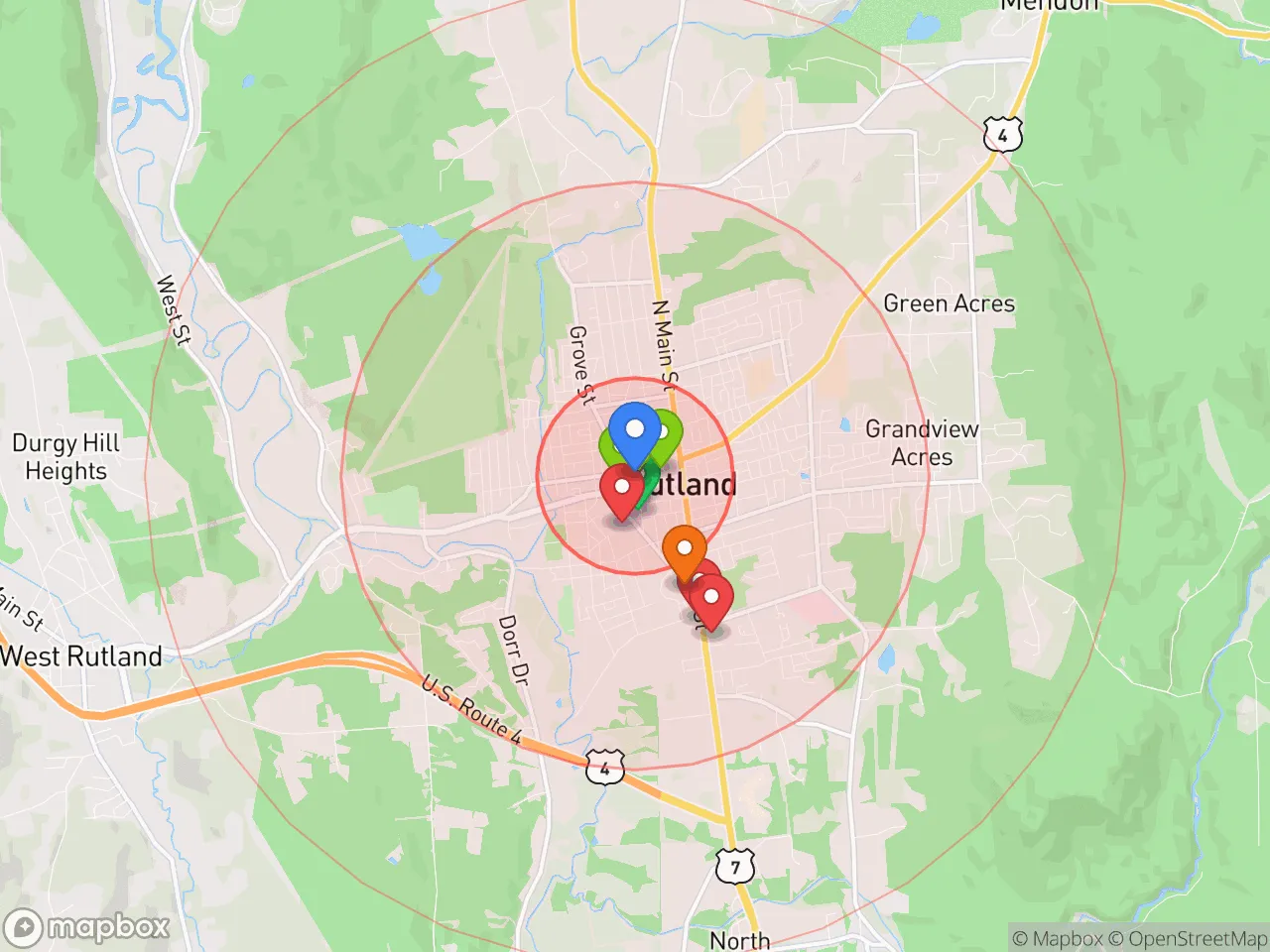
Hobbies
Explore the areaGroceries
3 within 10 miles
Gas
20 within 10 miles
Hospital
1 within 20 miles
Airport
PDX — Portland International Jetport
Post Office
USPS — Rutland, VT
Critical Amenities
Quality-of-Life Analysis
Rutland, Vermont, presents a distinctive quality-of-life profile defined by its stark affordability in a state known for high costs. With a cost-of-living index of 74 (26% below the national average), the city attracts a mix of working-class families, remote professionals, and outdoor enthusiasts who prioritize financial breathing room over urban amenities. The median household income hovers around $50,000, reflecting a blue-collar and service-oriented economic base, while the population of roughly 15,000 includes a growing number of newcomers drawn by the city’s proximity to Killington and the Green Mountain National Forest.
How Rutland's housing costs compare to Burlington and other Vermont cities
Rutland’s housing market is the city’s most compelling draw. The median home value sits at $176,400—less than half the Vermont state median of roughly $350,000 and a fraction of Burlington’s $450,000+ median. Median rent is $942 per month, making it one of the most affordable rental markets in New England. This price gap is driven by Rutland’s slower economic growth and an older housing stock, but it also means that a household earning the area median income can comfortably afford a mortgage on a three-bedroom home. By contrast, comparable small cities like Barre or Bennington have median home values in the $200,000–$230,000 range, while Stowe and Manchester exceed $500,000. The average commute of 14.7 minutes is among the shortest in Vermont, reinforcing that daily life here is hyper-local—most residents work, shop, and recreate within a 15-minute radius of downtown.
What daily life is like for families: schools, amenities, and recreation
Daily life in Rutland revolves around a compact, walkable downtown core and immediate access to outdoor recreation. The Rutland City Public Schools system serves about 2,500 students, with Rutland High School offering a career and technical education center that draws students from surrounding towns. For families, the nearby Wonderfeet Kids’ Museum and the Rutland Free Library provide year-round programming, while the Pine Hill Park trail network offers 16 miles of mountain biking and hiking within city limits. Grocery shopping is served by a Hannaford and a Price Chopper, and the downtown has seen a modest revival with independent restaurants like Table 24 and The Downtown Grocery. However, retail options are limited—residents often drive 45 minutes to Burlington or 90 minutes to Albany, New York, for major shopping or specialized medical care. The city’s rhythm is quiet and seasonal: summer brings farmers’ markets and the Vermont State Fair, while winter shifts focus to skiing at Killington (20 minutes away) and snowshoeing in the Green Mountain National Forest.
Rutland is best suited for those who value low housing costs, short commutes, and outdoor recreation over urban nightlife, cultural density, or high-end shopping. Remote workers, early retirees, and families on a budget will find the affordability transformative—a $176,400 home here would cost $400,000+ in most other Vermont towns. The trade-offs are real: the job market is concentrated in healthcare, retail, and manufacturing (with Casella Waste Systems and Rutland Regional Medical Center as top employers), and the city’s opioid-related challenges have been well-documented. But for someone who wants a base camp for skiing, hiking, and a low-stress daily routine, Rutland offers a quality of life that few other places in the Northeast can match at this price point.

Crime in Rutland, VT
Higher crime rates than 60% of comparable U.S. locations.
Violent CrimeViolent Crime Analysis
Property CrimeProperty Crime Analysis
Crime Analysis
Rutland, Vermont, presents a safety picture that warrants careful consideration, particularly for those relocating from areas with lower crime rates. The city's violent crime rate of 457.7 incidents per 100,000 residents and property crime rate of 3,107.3 per 100,000 place it significantly above both state and national averages, a reality shaped in part by local criminal justice policies that prioritize rehabilitation over incarceration. While Rutland offers a small-city New England atmosphere, prospective residents should weigh these crime statistics against the community's ongoing efforts to address public safety.
Crime in context
Rutland's violent crime rate is roughly 1.3 times the national average and substantially higher than Vermont's statewide rate, which is among the lowest in the country. Property crime in the city is even more pronounced, exceeding the national average by a factor of about 1.6. These figures are influenced by Rutland's status as a regional hub for services and its proximity to larger metropolitan areas, which can attract transient populations. A key contributing factor is the progressive judicial philosophy prevalent in Vermont's court system, where district attorneys and judges often emphasize alternatives to incarceration. This approach, while intended to reduce recidivism, has in practice led to higher rates of repeat offending and a perception among residents that consequences for property and drug-related crimes are insufficient. The result is a cycle where offenders are quickly returned to the streets, undermining deterrence and victim confidence in the justice system.
What residents experience
Daily life in Rutland is marked by a tangible awareness of property crime, with theft, burglary, and vehicle break-ins being the most common concerns. Residents report that car break-ins and package thefts are routine occurrences, particularly in downtown neighborhoods and near the city's commercial corridors. Violent crime, while less frequent, includes aggravated assault and robbery, often linked to drug activity and disputes. The city's police department has implemented community policing initiatives and a real-time crime center to improve response, but staffing challenges persist. Many residents express frustration that repeat offenders face minimal jail time, a direct consequence of the area's liberal sentencing guidelines. This dynamic creates a sense of vulnerability, especially for families and older residents, who may feel that the system prioritizes offender rights over public safety.
Neighborhood-level variation is notable, with areas like the Northwest and Southeast quadrants experiencing higher crime concentrations, while more affluent residential streets near the Rutland Country Club and along the city's outskirts report fewer incidents. However, the city's compact size means that crime patterns can shift quickly, and no area is entirely insulated from the broader trends. For those considering a move, consulting the Rutland Police Department's monthly crime maps and speaking with local real estate agents about block-level safety is advisable. Ultimately, Rutland's crime profile reflects a community grappling with the consequences of progressive justice policies, making it a location where vigilance and proactive safety measures are essential.
* Values derived from national, state, county, city and local statistics and may differ in a specific area. Last updated: 2026-06-14T04:33:35.000Z
Narrative content on this page is AI-generated and may contain mistakes. Verify any details that matter before acting on them.
ReloMaps may earn a commission from affiliate links at no extra cost to you.

