 Popular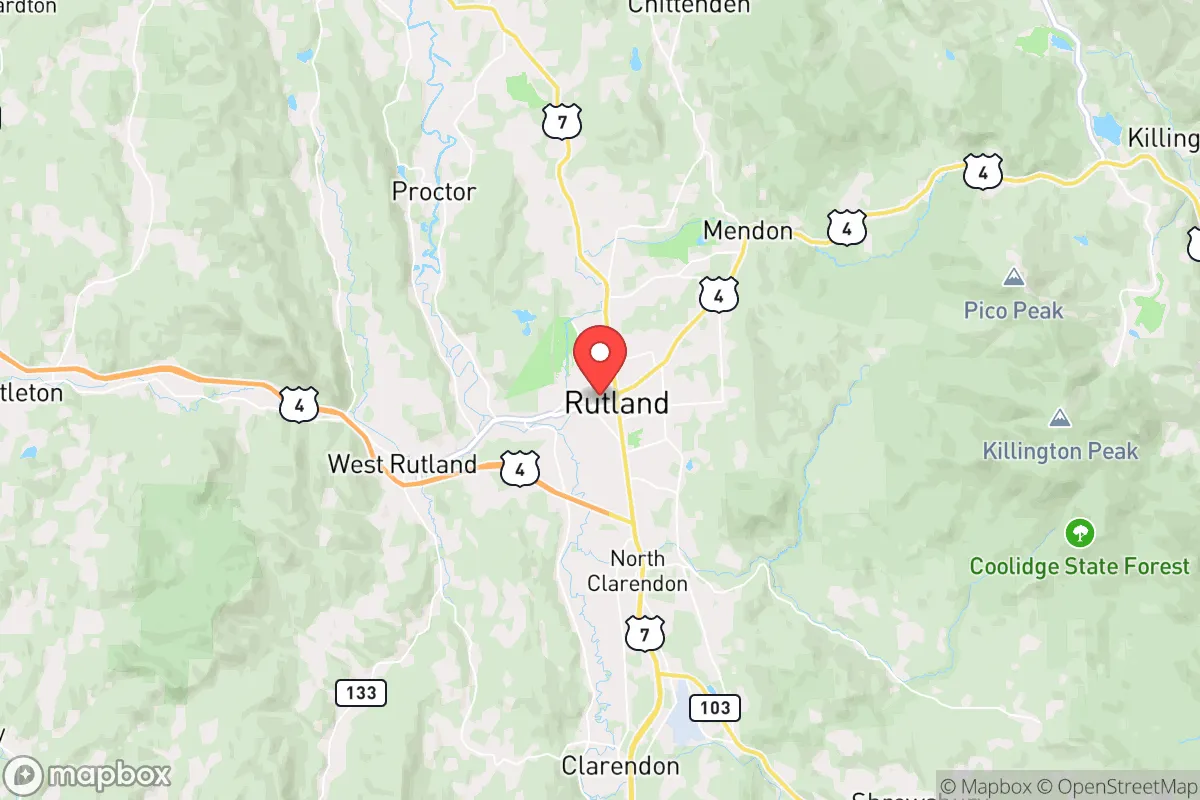
Photo by Nikunj Singh on Unsplash
Demographics of Rutland, VT
Affluence Level in Rutland, VT
A below-average socioeconomic profile. Incomes, home values, and educational attainment trail the U.S., with higher poverty and unemployment.
People of Rutland, VT
The people of Rutland, Vermont, today form a predominantly white, working-to-middle-class community of roughly 15,700 residents, marked by a strong sense of local identity and a slower pace of life than much of New England. With a foreign-born population of just 1.0% and a 93.8% white demographic, Rutland is one of the least ethnically diverse cities in Vermont, though it has seen modest growth in its Hispanic (2.5%) and East/Southeast Asian (0.7%) communities. The city’s character is shaped by its industrial past, a recent downtown revitalization push, and a population that is older and less college-educated (32.2%) than the state average, giving it a grounded, blue-collar feel. For a relocating family or individual, Rutland offers affordability and community grit, but the social fabric remains largely homogeneous and locally rooted.
How the city was settled and grew
Rutland’s population history begins with European settlers arriving after the city was chartered in 1761, primarily from Connecticut and Massachusetts. The first wave was drawn by fertile valley land and the promise of self-sufficient farming, settling in what is now the Center Rutland neighborhood, the original village core along Otter Creek. The city’s explosive growth came in the mid-19th century with the discovery of high-quality marble deposits. Irish immigrants, fleeing the Great Famine, arrived in large numbers between 1840 and 1860 to work the quarries and mills, establishing a dense, working-class enclave in the West Rutland district (now a separate town but historically the industrial heart). A second wave of Italian immigrants followed in the 1880s and 1890s, also drawn to the marble industry, and they concentrated in the Meadow Street area and the Pleasant Street corridor, building the city’s Catholic churches and social clubs. French-Canadian families, migrating south from Quebec for railroad and mill jobs, settled in the North Rutland neighborhood, creating a distinct Franco-American community that still holds cultural events today. By 1900, Rutland was a booming industrial city of over 11,000, with a population that was overwhelmingly white, European-born or first-generation, and Catholic.
Modern era (post-1965)
After the marble industry declined in the mid-20th century, Rutland’s population peaked at roughly 19,000 in 1960 and then began a slow, steady decline. The post-1965 immigration reforms had almost no effect on Rutland’s demographics; unlike Burlington or Winooski, the city did not attract refugee resettlement or significant new immigrant communities. The small Hispanic population (2.5%) is largely domestic in-migration from other U.S. states, concentrated in the more affordable South Rutland and East Rutland neighborhoods near the hospital and retail corridors. The East/Southeast Asian community (0.7%) is tiny and dispersed, with no single ethnic enclave. The Black population (0.7%) remains very small and is scattered citywide, with no historic Black neighborhood. The most notable modern shift has been domestic: an influx of retirees and remote workers from southern New England and New York, drawn by low housing costs, settling in the Northwest Rutland area near the golf course and in the newer subdivisions off West Street. This group is whiter and more affluent than the existing population, slightly raising the college-educated share to 32.2%.
The future
Rutland’s population is projected to remain stable or decline slightly over the next decade, with no major demographic transformation on the horizon. The city’s foreign-born share (1.0%) is unlikely to rise significantly, as the region lacks the job base or resettlement infrastructure to attract international migrants. The Hispanic and East/Southeast Asian shares may grow incrementally through natural increase and domestic moves, but will remain small single-digit percentages. The most significant demographic trend is aging: Rutland’s median age is above the state average, and the city is seeing more deaths than births. The new residents arriving are predominantly white domestic migrants—retirees, second-home buyers, and a small number of remote workers—who tend to settle in the West Street corridor and the Rutland Country Club area, reinforcing the city’s homogeneous character. The cultural identity is slowly shifting from a blue-collar marble town to a more service-oriented, recreation-focused community, but the social fabric remains deeply rooted in its European-American, Catholic heritage.
For someone moving to Rutland now, the city offers a stable, affordable, and safe environment with a strong sense of local history, but it is not a place of rapid demographic change or ethnic diversity. The population is becoming slightly older, slightly more educated, and slightly more oriented toward outdoor recreation and tourism, but the core identity—white, working-class, and locally connected—remains intact. New arrivals should expect a welcoming but insular community where fitting in often means participating in local civic life and embracing the city’s unhurried, small-city rhythm.

* Values derived from national, state, county, city and local statistics and may differ in a specific area. Last updated: 2026-06-14T04:33:35.000Z
Narrative content on this page is AI-generated and may contain mistakes. Verify any details that matter before acting on them.
ReloMaps may earn a commission from affiliate links at no extra cost to you.

