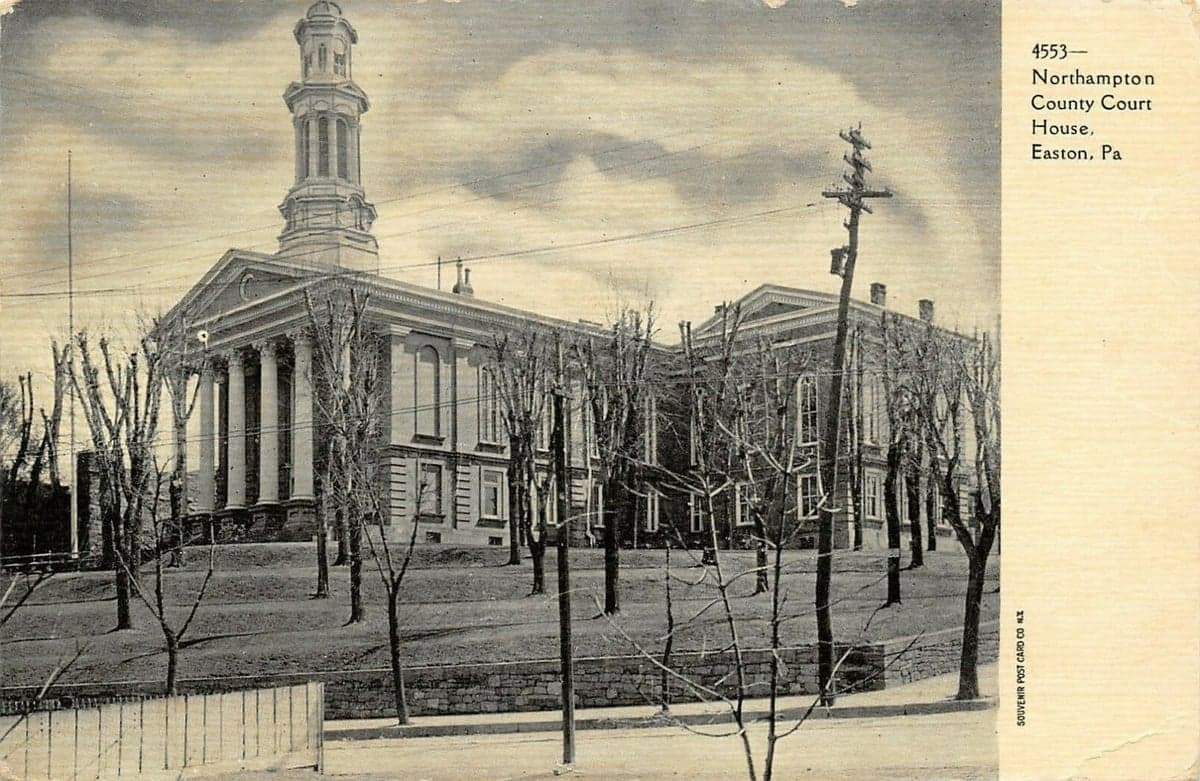
Photo: Wikipedia
Political ClimatePolitical Climate in Northampton County
Showing district-level results — no local-only data available.
Local Political AnalysisPolitical Analysis of Northampton County
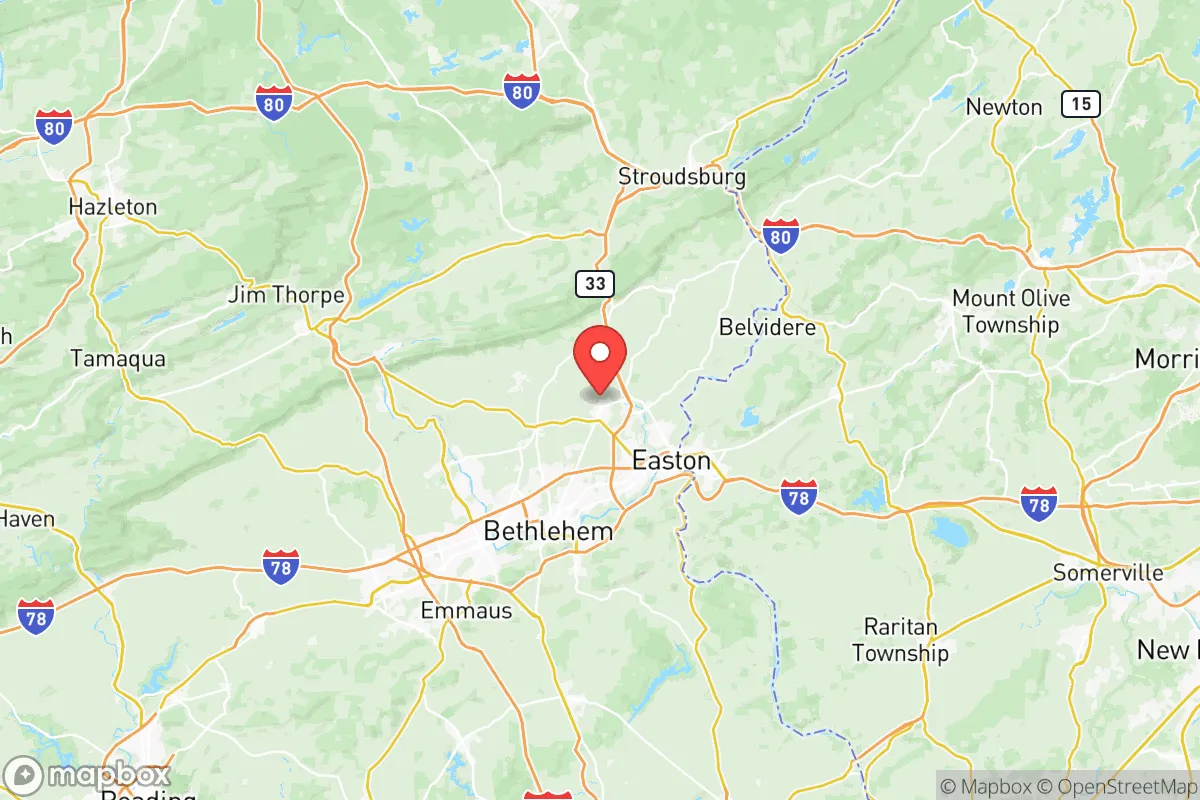
Northampton County, Pennsylvania, sits as one of the most politically competitive counties in the state, with a Cook Partisan Voting Index (PVI) of R+1, meaning it leans just slightly Republican compared to the nation. This places it to the right of Pennsylvania as a whole, which holds a PVI of EVEN, but the county’s reputation as a true bellwether is well-earned: it flipped from Obama in 2012 to Trump in 2016, then to Biden in 2020, and back to Trump in 2024. The real story, though, isn’t just the countywide number—it’s the stark internal divide between the urbanized, blue-leaning eastern end and the more rural, red-leaning western half.
How it compares
Compared to Pennsylvania’s statewide EVEN rating, Northampton County’s R+1 PVI reflects a slightly more conservative tilt, but the margin is razor-thin. The county’s political geography is a microcosm of the state’s broader urban-rural split. In the east, Bethlehem and Easton are Democratic strongholds, with Bethlehem’s south side and Easton’s downtown precincts routinely delivering 60-70% of the vote for Democratic candidates. Meanwhile, the western townships—Moore Township, Bushkill Township, and Plainfield Township—are reliably Republican, often voting 65% or more for GOP candidates. The swing precincts that decide the county are in the suburban middle: Hanover Township (Northampton County side), Bethlehem Township, and Lower Nazareth Township. These areas are filled with families who moved out of the cities for more space but still commute to Lehigh Valley jobs, and they’ve been trending slightly more Democratic in recent cycles, though not enough to offset the rural GOP turnout. In 2024, Trump won the county by about 1.5 points, a narrower margin than his 2020 loss, suggesting the R+1 label is holding steady.
What this means for residents
For conservative residents, the R+1 lean means their votes matter—a lot. A Republican candidate can win the county with strong turnout in the western townships and a decent showing in the swing townships, but they can’t take anything for granted. Local GOP officials tend to focus on property taxes and school funding, which resonate across the county. For liberal residents, the county’s competitiveness means their activism has real impact. Democratic organizing in Bethlehem and Easton is robust, and progressive candidates often win countywide races by running up the score in those cities while keeping losses manageable in the west. The practical effect is that county council and row office races are often decided by fewer than 2,000 votes, so every precinct canvass matters. Neither side feels politically isolated, which keeps civic engagement high—voter turnout in Northampton County regularly exceeds the state average by 3-5 points.
Culturally, the county’s political split mirrors a deeper identity divide. The Lehigh River physically separates the old industrial cities from the farmlands, and that boundary still shapes local policy debates. In Bethlehem and Easton, you’ll find strong support for public transit expansion, affordable housing initiatives, and arts funding—the Bethlehem SteelStacks redevelopment is a point of pride. In the western townships, the conversation is more about preserving agricultural zoning, opposing new warehouse development, and keeping school taxes low. One notable policy distinction: Northampton County has a home rule charter that gives the county executive significant power, and recent executives have been moderate Democrats, which has kept the county’s budget balanced without major ideological fights. The result is a place where you can have a Trump flag on your porch in Moore Township and a Harris sign in your yard in Bethlehem, and both neighbors will wave hello at the grocery store. That’s not true everywhere in Pennsylvania, and it’s why Northampton County remains a fascinating place to live.

State Political ClimatePolitical Climate in Pennsylvania
State Political AnalysisPolitical Environment in the State
Pennsylvania is the ultimate swing state, with a Cook PVI of EVEN that perfectly captures its role as a national battleground. Over the past 20 years, the state has shifted from a reliably blue-leaning Rust Belt stronghold to a true toss-up, driven by the collapse of union-based Democratic dominance in the west and the explosive growth of the Philadelphia suburbs in the east. The result is a state that is politically schizophrenic — it voted for Obama twice, flipped to Trump in 2016, then went for Biden in 2020 by a razor-thin margin, and in 2024 it was once again decided by less than two points. For a relocator, this means your vote actually matters here, but it also means the political culture is a constant tug-of-war between two very different Pennsylvanias.
Urban vs. rural divide
The political map of Pennsylvania is a textbook study in the urban-rural split. The two major Democratic strongholds are Philadelphia and Pittsburgh, which together account for roughly a quarter of the state's population but deliver massive vote margins for Democrats. Philadelphia alone routinely gives Democrats a 400,000-vote cushion, while Allegheny County (Pittsburgh) adds another 150,000. The suburbs of Philadelphia — places like Bucks County, Montgomery County, and Delaware County — have shifted hard to the left over the past decade, turning from classic swing suburbs into reliably blue territory. Meanwhile, the vast rural expanse of central and northern Pennsylvania, including counties like Lycoming, Bradford, and Tioga, votes overwhelmingly Republican. The key swing regions are the northeastern corner around Luzerne County (Wilkes-Barre) and the western exurbs of Pittsburgh in Westmoreland County — these are the places where working-class voters have flipped from Obama to Trump and back again. The Lehigh Valley (Allentown, Bethlehem, Easton) is the state's most competitive metro, often deciding statewide races by a few thousand votes.
Policy environment
Pennsylvania's policy environment reflects its divided government. The state has a flat income tax rate of 3.07%, one of the lowest in the nation, and a sales tax of 6% (8% in Philadelphia). Property taxes are high by national averages, especially in the Philadelphia suburbs, and there is no statewide homestead exemption, which is a common complaint among homeowners. The regulatory posture is moderate — Pennsylvania is not Texas, but it is also not California. The state has a prevailing wage law that drives up construction costs, and it is one of the few states that still has a full state-run liquor store system (the PLCB), though recent reforms have allowed beer and wine sales in grocery stores. Education policy is a major flashpoint: the state has one of the most inequitable school funding systems in the country, with wealthy suburban districts spending vastly more per pupil than rural ones, and a 2023 court ruling declared the system unconstitutional. School choice is limited compared to states like Florida or Arizona, though there is a small tax credit scholarship program. Election laws are relatively accessible — no-excuse mail-in voting was enacted in 2019 and has become a partisan lightning rod, with Republicans consistently trying to repeal it.
Recent policy direction
The last five years have seen Pennsylvania lurch in contradictory directions, depending on which party held the governor's mansion. Under Democratic Governor Josh Shapiro (elected 2022), the state has moved left on several fronts. In 2023, Shapiro signed an executive order removing college degree requirements for most state jobs, and his administration has pushed for increased funding for public transit and environmental programs. On gun policy, Pennsylvania remains a shall-issue state for concealed carry, but Shapiro has advocated for universal background checks and red flag laws, neither of which has passed the Republican-controlled legislature. On abortion, the state has no trigger law — abortion remains legal up to 24 weeks — and Shapiro has pledged to veto any restrictions. On parental rights and education, the state has seen fierce battles over library books and curriculum in districts like Central Bucks and Pennridge, but no major statewide legislation has passed. On voting, the legislature has repeatedly attempted to tighten voter ID requirements and repeal no-excuse mail voting, but Shapiro has vetoed those bills. Property rights are generally strong, though the state's Act 2 of 2023 limited local governments' ability to regulate oil and gas drilling, a win for the energy industry in the western part of the state.
Civil unrest & political movements
Pennsylvania has been a hotspot for political activism on both sides. The 2020 election aftermath saw massive protests in Philadelphia over police reform, while rural counties saw pro-Trump caravans and "Stop the Steal" rallies. The state was ground zero for election integrity controversies, with Trump's legal team filing dozens of lawsuits in Pennsylvania courts, most of which were dismissed. The Lancaster County area has become a hub for conservative activism, including the "Moms for Liberty" movement, which has been particularly active in school board races. On the left, the Pittsburgh area has seen strong labor and environmental activism, particularly around the closure of coal plants and the transition to renewable energy. Immigration politics are less visible here than in border states, but Philadelphia is a sanctuary city, which has been a recurring point of contention in the legislature. There is no serious secession or nullification movement in Pennsylvania, though some rural counties have passed symbolic resolutions declaring themselves "Second Amendment sanctuaries."
Projection
Over the next 5-10 years, Pennsylvania is likely to remain a swing state, but the demographic trends favor Democrats in the long run. The Philadelphia suburbs are growing and becoming more diverse and more liberal, while the rural counties are aging and shrinking. However, the in-migration patterns are complex — the state is losing population overall, but gaining in the southeastern corner and in some smaller cities like State College and Bethlehem. The wild card is the energy transition: if natural gas and petrochemical industries continue to grow in western Pennsylvania, that could stabilize Republican support in places like Washington County and Greene County. A relocator moving in now should expect the political environment to remain intensely competitive, with no single party dominating. That means policy will continue to be a mix of conservative fiscal elements (low income tax) and liberal social policies (abortion access, mail voting), with gridlock on most hot-button issues.
For a new resident, the bottom line is that Pennsylvania offers a genuinely competitive political environment where your vote carries weight. Conservatives will find a state with low income taxes, strong gun rights, and a growing rural activist movement, but they will also face a Democratic governor who can veto most of their legislative priorities. Liberals will find strong labor unions, a robust social safety net in the cities, and a governor who shares their values, but they will be frustrated by a legislature that is gerrymandered to favor rural Republicans. The practical takeaway is that Pennsylvania is not a place where you can assume your politics are the default — you will encounter the other side regularly, and the state's laws reflect that tension. If you want a place where your vote is genuinely contested and where the political culture is shaped by real debate, Pennsylvania delivers that in spades.
* Values derived from national, state, county, city and local statistics and may differ in a specific area. Last updated: 2026-06-22T21:42:36.000Z
Narrative content on this page is AI-generated and may contain mistakes. Verify any details that matter before acting on them.
ReloMaps may earn a commission from affiliate links at no extra cost to you.

